


Cannes is synonymous with the glamour of its film festival, but outside those famous twelve days in May, many travelers wonder whether the city’s cinemas and movie culture are actually worth carving out time for. Cannes Cinéma, the local association that coordinates municipal cinemas and film events year-round, sits at the heart of that question. If you are planning a few days on the French Riviera, should you spend one of your evenings in a darkened theatre instead of on the Croisette at sunset? The answer depends on what you love about travel in the first place.
Get the latest updates straight to your inbox!
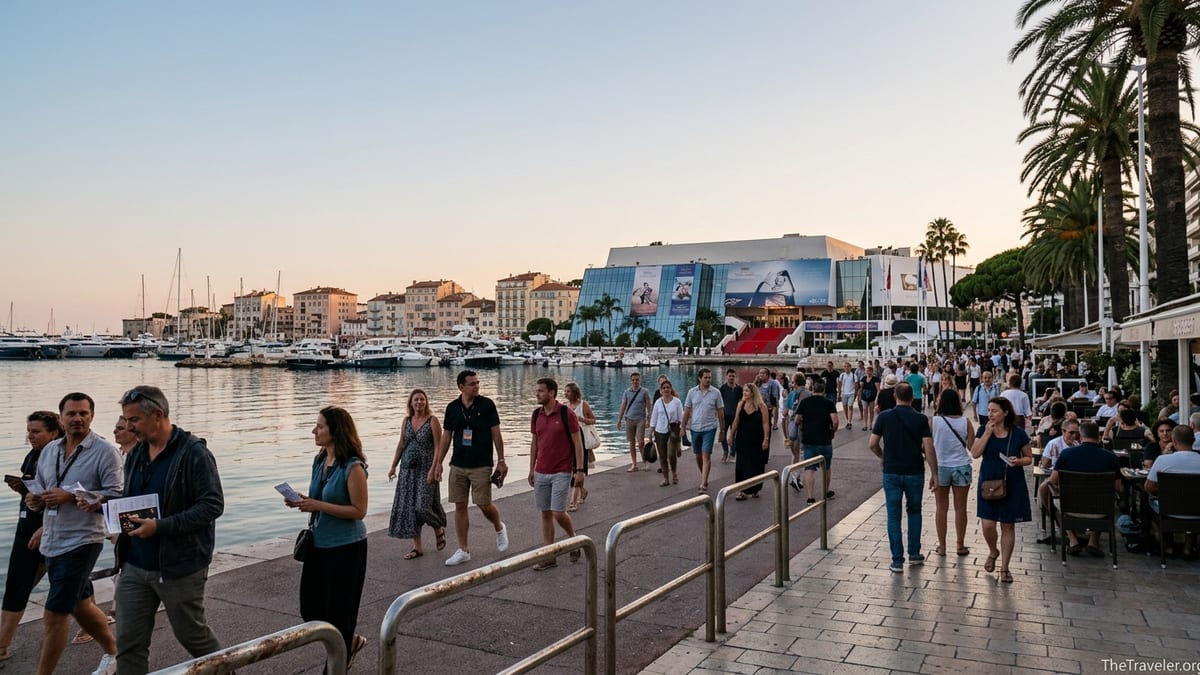
Cannes, a UNESCO City of Film
Cannes is not just the backdrop for an annual festival; it has been officially recognised by UNESCO as a City of Film, reflecting a deep, year‑round commitment to cinema. The municipality highlights that there are multiple private multiplexes, association cinemas and three municipal cinemas managed by the Cannes Cinéma association, creating an unusually dense network of screens for a town of about 75,000 residents. Walk through the centre and you feel it in the film posters, outdoor photo exhibitions and the way local events quietly orbit around cinema.
This context matters when assessing whether Cannes Cinéma is worth a visit. You are not choosing between a generic mall multiplex and a beach bar. You are plugging into a local ecosystem that includes arthouse programming, heritage screenings, school outreach and partnerships with the Festival de Cannes. For example, during the festival, official selection films are sometimes rerun for locals and cinephiles at partner venues around town, so a municipal cinema screening can be your way into the same line‑up the global press is talking about.
Cannes Cinéma’s role goes beyond scheduling movies. The association helps run events like the Rencontres cinématographiques de Cannes and educational workshops that bring directors, technicians and critics into local theatres. Even if you are in town on an ordinary November weekday, you might find a Q&A with a documentary filmmaker or a themed retrospective running in one of the municipal venues. This is a city where a rainy Tuesday night can unexpectedly turn into a memorable cultural encounter.
For many travelers, that UNESCO designation is a cue that cinema here is treated as part of the city’s identity on the same level as its marinas or luxury boutiques. If you tend to seek out local theatres in places like Bologna, Busan or Telluride, Cannes belongs on that same list. Cannes Cinéma is the entry point to experiencing that side of the city rather than just photographing the festival staircase.
What Exactly Is Cannes Cinéma?
Cannes Cinéma is a non‑profit association that coordinates part of the city’s film life rather than a single building with a neon sign. It manages several municipal cinemas and works with schools, cultural organisations and the Festival de Cannes to make sure cinema is accessible to residents and visitors outside the peak festival period. In practical terms, that means it curates series, retrospectives and special events that you will see advertised at local theatres, libraries and tourist offices.
The association’s municipal venues are typically smaller than the big commercial multiplexes, with programming that leans toward auteur films, world cinema, restored classics and themed cycles. Instead of a wall of identical superhero sequels, you might find a week devoted to contemporary African cinema, a tribute to Agnès Varda, or a run of recent Cannes Directors’ Fortnight titles presented with discussions. This is where you go in Cannes if you want to feel like part of a local audience rather than an anonymous tourist.
Because Cannes Cinéma is publicly supported, ticket prices at its venues are often lower than at commercial complexes. While exact tariffs change, you can expect standard adult tickets to be roughly in line with typical French art‑house cinemas, which often fall in the 7 to 10 euro range, with discounts for students, seniors and multi‑ticket passes. For a couple, an evening here can easily cost less than a round of cocktails on the Croisette while offering a much richer sense of place.
Importantly, Cannes Cinéma also serves as a bridge between the rarefied world of the Festival de Cannes and everyday filmgoers. During certain programmes, such as cinephile initiatives aimed at young audiences, accredited students and locals can watch films from the official selection in regular cinemas, including the modern Cineum multiplex, under the same technical conditions as festival premieres. Even if you are not accredited, simply sharing a lobby with badge‑wearing students and critics during these events can feel like stepping into the beating heart of the festival.
Festival Season: When Cannes Cinéma Shines Brightest
If you are in Cannes during the Festival de Cannes in May, the value of visiting Cannes Cinéma or related venues is at its peak. While the most talked‑about premieres take place inside the Palais des Festivals, the festival also uses other cinemas across the city, including Cineum in the La Bocca district and various smaller theatres. Some of the official selection titles are re‑screened here, especially for cinephile and educational programmes, giving non‑industry visitors a better chance to get in.
For instance, the “3 Days in Cannes” initiative allows selected young cinephiles to attend festival screenings, many of which are held not only in the Grand Théâtre Lumière but also in partner cinemas around town. Participants often report catching competition films in large, technically advanced auditoriums such as those at Cineum, sitting alongside a mix of locals, journalists and film students. Even if you are not part of these schemes, being in Cannes at that moment means cinemas across the city are buzzing, with late‑night showings, sidebar selections and conversations spilling onto sidewalks.
On the public side, the Cinéma de la Plage programme is one of the most accessible film experiences during the festival period. Every evening, a large outdoor screen on Macé Beach (renamed for a star during the festival) hosts free screenings, often of Cannes Classics or cult favorites connected to the year’s line‑up. There are typically around a dozen nights of films each year, with several hundred deckchairs laid out in the sand. You can arrive with nothing more than a light sweater and watch a restored classic under the stars, framed by the Bay of Cannes and the lights of the Croisette.
Even if you never set foot on the red carpet, combining an afternoon exploring Le Suquet or the Lérins Islands with an evening at Cinéma de la Plage or a screening in a municipal cinema offers a way to participate in the festival atmosphere. You might find yourself sitting next to festival volunteers, local families and visiting cinephiles comparing notes on films that will not reach general release for months. For film lovers, these shared experiences are often more vivid than glimpsing celebrities from behind a barrier.
Year‑Round Moviegoing: Cineum, Olympia and the Municipal Screens
Outside festival season, the question becomes whether Cannes Cinéma and the city’s theatres still justify a night of your itinerary. The answer increasingly leans yes, largely thanks to the opening of Cineum in the La Bocca area in 2021. This striking contemporary multiplex houses 12 screens, including an IMAX auditorium with more than 500 seats, a ScreenX room with 270‑degree projection and a premium large format hall equipped with advanced sound systems. For blockbuster releases that take full advantage of state‑of‑the‑art projection, Cineum is arguably one of the strongest venues on the French Riviera.
Travelers staying in central Cannes can reach Cineum by bus in around 15 to 20 minutes, or by car in about 10 minutes, and the area is served by new underground parking at Place Roubaud with several hundred spaces and generous free parking periods on many days. That makes an evening show convenient even if you are based near the Croisette. You might, for example, have dinner at a brasserie in Cannes La Bocca, park for a few euros, and watch a major release in IMAX before heading back to your hotel.
Closer to the traditional tourist core, the Olympia cinema near Rue d’Antibes continues to play a key role for mainstream releases. This privately run theatre, with multiple screens and regular first‑run programming, is where many visitors will catch a new French comedy or Hollywood title after a day on the beach. Standard tickets here tend to be similar to other French city‑centre cinemas, and it participates in occasional promotions and parking partnerships from the city, easing the cost of an impromptu movie night.
The municipal cinemas coordinated by Cannes Cinéma add a complementary layer, particularly if you are interested in arthouse or subtitled screenings. While their exact programmes vary, they typically include a mix of French and international films, some in original version with French subtitles, along with special events such as director Q&As or thematic series. For example, a week in autumn might feature a small festival of Nordic cinema, with visiting filmmakers introducing their work, while spring could bring a focus on local French productions set on the Riviera.
Cost, Logistics and Language: Practical Considerations
For many travelers, the key question is not just “Is it culturally interesting?” but “Is it worth the time and money compared with everything else in Cannes?” On costs, cinema in France is generally good value compared with other Western European countries. Full‑price tickets in Cannes usually sit below what you would pay for a cocktail at an upscale Croisette hotel bar, and municipal cinemas can be cheaper still. If you plan to see more than one film, ask about multi‑film cards or discount days, which many French cinemas offer.
Transport and parking are manageable, especially if you plan ahead. Central Cannes is walkable, with the Olympia and some municipal cinemas within a short stroll of the train station and the Palais des Festivals. For Cineum and the La Bocca area, the municipal parking garage at Place Roubaud offers several hundred covered spaces and free parking windows on many days, including often a few free hours daily and flat evening rates. That makes it realistic to drive from neighbouring towns like Antibes or Fréjus for a film without worrying about excessive parking costs.
Language is a more nuanced issue. Mainstream American and British films in commercial cinemas are often shown in dubbed French versions (marked “VF” for version française), but many screenings, especially at Cineum and in festival contexts, are offered in original language with French subtitles (“VO” or “VOSTFR”). If you do not speak French, check listings carefully or ask at the box office to ensure you choose a VO screening. For French or non‑English‑language films, subtitles are typically in French only, which may be challenging for some visitors but can still be rewarding if you are comfortable following with partial understanding.
Timetables can skew later than in some countries, with popular evening shows starting around 8:30 or 9:00 p.m., particularly on weekends. During the high summer season, combining a late sunset stroll along the Croisette with a 10:00 p.m. showing at Olympia or Cineum is a common pattern for locals. Booking ahead is rarely essential outside festival dates for most films, though opening weekends of major blockbusters in premium formats like IMAX can sell out, so it is wise to reserve online or at the kiosk earlier in the day.
Who Will Get the Most Out of Cannes Cinéma?
Whether Cannes Cinéma is worth your time depends heavily on your travel style. If you are a passionate film buff, the answer is almost always yes. You will appreciate the chance to see Cannes competition titles in off‑festival reruns, discover lesser‑known international films in municipal cinemas, or simply experience a long‑anticipated blockbuster in one of the most advanced IMAX theatres on the Riviera. For many cinephiles, just sitting in the dark in a Cannes auditorium carries a certain thrill, knowing that the city’s screens are central to world cinema.
For cultural travelers who may not be hardcore film obsessives but enjoy connecting with local life, a movie night can be an excellent way to balance the sometimes rarefied atmosphere of luxury boutiques and yacht marinas. Buying a ticket alongside local families, students and retirees, then discussing the film over a glass of wine in a side‑street bar, offers a perspective on Cannes that you will not get from the festival red carpet or designer shop windows.
Families may find certain aspects of Cannes Cinéma particularly useful. On hot or windy days when the beach is less appealing, a matinee at Cineum or a central cinema can be a welcome break, especially for children who need downtime. Big animated releases and family blockbusters are usually well represented, and the comfortable, modern facilities of Cineum, with ample parking and nearby eateries, make logistics straightforward even with young kids in tow.
On the other hand, travelers with very limited time in Cannes, such as cruise passengers spending only a few hours ashore, may not find a cinema visit the best use of their stay. In that case, the city’s film culture can be sampled more efficiently through outdoor photo exhibitions, the star‑themed handprints near the Palais des Festivals, or simply observing the cinema‑related artwork scattered along the streets. A full evening in a theatre is better suited to those staying at least one night in town.
The Takeaway
So, is Cannes Cinéma worth visiting during a trip to Cannes? For anyone with even a moderate interest in film or local culture, the answer is usually yes, especially if you are staying more than one night or visiting during the festival period in May. The combination of municipal cinemas, the high‑tech Cineum multiplex, central venues like the Olympia and city‑backed events such as Cinéma de la Plage creates a layered, accessible film ecosystem that goes far beyond a once‑a‑year red carpet spectacle.
Practically, a night at the cinema in Cannes is relatively affordable compared with many other local activities and logistically simple thanks to walkable central venues and well‑organised parking options in areas like La Bocca. For solo travelers and couples, it can anchor an atmospheric evening out; for families, it is a reliable, air‑conditioned fallback when the weather or energy levels do not suit another beach session.
Most importantly, spending time in a Cannes cinema connects you to the city’s deeper identity as a place where films are not just consumed but celebrated, debated and nurtured. Whether you are watching a restored classic on the beach, a competition film in a municipal theatre, or a blockbuster in IMAX at Cineum, you are participating in the same cinematic tradition that has made Cannes a world reference point for nearly a century. If that idea resonates with you, then carving out an evening for Cannes Cinéma will almost certainly feel like time well spent.
FAQ
Q1. Is Cannes Cinéma a single cinema or a group of venues?
Cannes Cinéma is an association that coordinates several municipal cinemas and film events across the city, rather than one standalone movie theatre.
Q2. Can I watch Cannes Film Festival movies without accreditation?
During the festival, some screenings are open to the public, including free Cinéma de la Plage shows and occasional reruns in local cinemas, but most premieres require accreditation or invitations.
Q3. Is it worth going to Cineum in La Bocca if I am staying near the Croisette?
Yes, if you enjoy high‑quality projection and sound. Cineum offers IMAX and other premium formats and is reachable by a short drive or bus ride with convenient parking.
Q4. Are films in Cannes cinemas usually in English or French?
Mainstream films may be dubbed into French, but many screenings, especially at Cineum and festival‑related events, are shown in original language with French subtitles. Look for “VO” or “VOSTFR” in listings.
Q5. How much does a cinema ticket cost in Cannes?
Prices vary by venue and format, but standard tickets are typically in the mid‑single to low‑double digit euro range, with discounts for students, seniors and multi‑ticket passes.
Q6. Do I need to book cinema tickets in advance?
Outside festival dates, advance booking is usually only necessary for major new releases or premium formats like IMAX. During the festival, reservations and early arrival are strongly recommended.
Q7. Is visiting a cinema in Cannes a good idea for families?
Yes. Cinemas like Cineum and central venues offer family‑friendly films, comfortable facilities and a welcome break from the sun or crowds, especially on hot or rainy days.
Q8. How do I get to Cineum Cannes without a car?
You can reach Cineum by local bus from central Cannes in about 15 to 20 minutes, or by taxi and ride‑hailing services. Many visitors also combine it with a stroll around Cannes La Bocca.
Q9. Are there special film events outside the May festival?
Yes. Cannes Cinéma and partner venues host retrospectives, mini‑festivals, educational screenings and filmmaker Q&As throughout the year, particularly in autumn and winter.
Q10. If I only have one evening in Cannes, is a cinema visit still recommended?
If you love film, a single evening at a Cannes cinema can be memorable. Otherwise, first‑time visitors may prefer to prioritise the old town, the seafront and outdoor nightlife.