


Dubai International Airport, better known simply as DXB, is one of the world’s busiest international hubs and a major gateway between Europe, Asia, Africa and the Americas. For many travelers it is a first encounter with the Middle East, and the airport’s scale, shopping and 24/7 operations can feel overwhelming. This concise guide brings together current, real-world information to help you move through DXB’s three terminals with confidence, whether you have a tight connection, a long overnight layover or you are starting and ending your trip in Dubai.
Get the latest updates straight to your inbox!
Understanding DXB’s Terminals and Layout
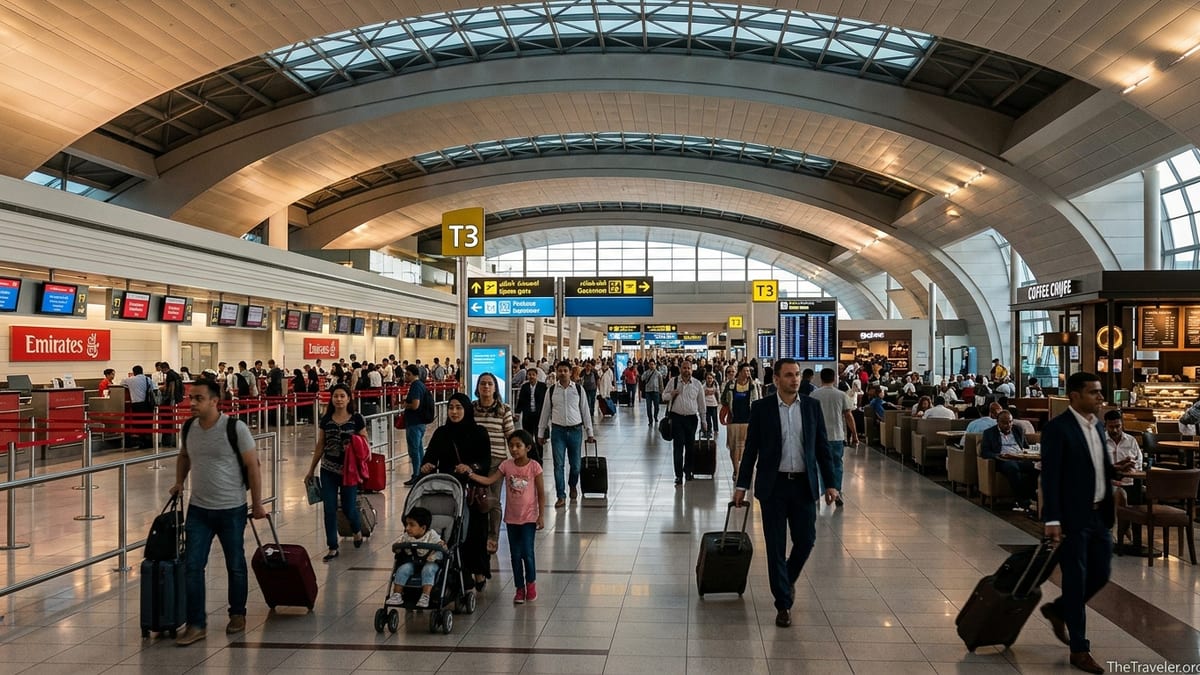
Dubai International Airport has three passenger terminals: Terminal 1, Terminal 2 and Terminal 3. Terminal 1 handles most full-service international airlines such as British Airways, Lufthansa, Air France, Saudia and Qatar Airways. Terminal 2 is the smaller, more utilitarian terminal on the north side of the airfield, used heavily by flydubai and a mix of regional and charter carriers. Terminal 3 is the largest and most modern, used almost exclusively by Emirates and its partners. Recent airport guides published in 2025 and 2026 emphasize this three-terminal structure as the basic orientation point for all passengers.
Terminals 1 and 3 sit next to each other along Airport Road and share airside connections. Once you have cleared security and passport control, it is possible for eligible passengers to transfer between Concourse D (Terminal 1) and Concourses A, B and C (Terminal 3) using the internal train and walkways. In practice, many travelers with lounge access in the “wrong” concourse walk or ride the train between them, then return to their departure gate with time to spare. By contrast, Terminal 2 is separate and not connected airside, so moving between T2 and the other terminals requires going landside and taking a shuttle or road transport.
The airport is laid out in long concourses, so walking distances can be significant. For example, some long-haul Emirates flights depart from the far end of Concourse A in Terminal 3, which can easily be a 10 to 15 minute walk from the central security area even if you use moving walkways. Families or travelers with reduced mobility can request assistance in advance through their airline, and it is sensible to build in extra time for boarding when your boarding pass shows gates in the higher number ranges.
DXB operates around the clock, and peak times shift through the day. Very early morning and late evening waves see large clusters of long-haul departures and arrivals, especially in Terminal 3, while mid-morning and mid-afternoon can feel calmer. Allowing at least three hours for an international departure and more if you need to change terminals is a practical rule, particularly during these busy waves when queues for security and immigration build up quickly.
Arrivals, Immigration and Baggage Claim
On arrival at Dubai International Airport, you will first follow signs to passport control. Travelers from many countries can obtain a visa on arrival, while others must arrange a visa in advance; airlines typically check this at your point of origin, but you should still verify requirements before you fly, as visa policies can change. Holders of certain Gulf Cooperation Council nationalities and registered residents can use dedicated e-gates or smart gates, which can significantly speed things up when queues are long.
At busier times, such as shortly after large A380 aircraft arrive from Europe or North America, queues at immigration in Terminals 1 and 3 can stretch to 30 minutes or more. Travelers sometimes report moving through in less than 10 minutes late at night or during quieter mid-day arrivals, so the experience varies. If you want to hedge against delays, several ground service providers sell “fast track” or meet-and-greet services that include being met at the gate, guided through separate immigration counters where available, and escorted to baggage claim. These services are typically priced in the range of tens of US dollars per person and must be booked in advance.
Baggage claim areas in all three terminals are located immediately after immigration. Most long-haul flights to Terminal 3 have plentiful baggage carousels, and bags often arrive within 20 to 30 minutes of landing, though delays do happen during peak waves. Porters are available in the arrivals halls, and tipping is customary but not mandatory. If your bag does not appear, you will need to report it at your airline’s baggage desk in the same hall, so keep your baggage tag receipts accessible until you leave the airport.
Once you exit customs, you will step into the public arrivals halls, which are busy with hotel representatives, family greeters and pre-booked driver services holding signs. If you have arranged a transfer through your hotel, they will typically direct you to a clearly marked meeting point within the arrivals area. It is practical to agree a backup plan with your driver, such as waiting at a specific café or near the taxi rank, in case you are delayed at immigration and cannot be contacted immediately on your phone.
Transport into the City and Between Terminals
Dubai’s public transport offers a straightforward way into the city from DXB. The Dubai Metro Red Line has two stations directly connected to the airport: “Airport Terminal 1” and “Airport Terminal 3.” Both are on the main Red Line that runs along Sheikh Zayed Road through Deira, Downtown Dubai, Business Bay, Dubai Marina and beyond. Recent metro guides confirm that the airport stations fall in a fare zone where a typical journey to central areas such as Burj Khalifa / Dubai Mall or Mall of the Emirates costs only a few dirhams when using the reusable Nol card.
For most visitors with luggage, especially families or those arriving late at night, official Dubai taxis are the most convenient option. Taxis line up outside each terminal, are metered, and include an additional airport starting charge that makes the initial fare slightly higher than in the city. A typical ride from Terminal 3 to Downtown Dubai often costs the equivalent of around 15 to 25 US dollars, depending on traffic and exact destination, while a trip to Dubai Marina can be more. Ride-hailing services operate at the airport as well, but designated pickup points are usually located a short walk from the main exits, and you must follow signage or ask staff to be directed to the correct area.
If you are connecting between Terminals 1 and 3 on separate tickets or after leaving the secure area, you can either walk along the signposted sidewalks, take a short taxi ride, or ride the metro one stop between the two airport stations. Many travelers report simply using the metro to hop between Terminals 1 and 3: you tap in at one station, ride a single stop, and exit at the other station after just a few minutes. For Terminal 2, there is no metro station directly attached; travelers typically transfer by taxi or by a shuttle bus that connects Terminal 2 with Terminals 1 and 3, allowing for a 15 to 30 minute journey depending on traffic and bus timing.
Intercity buses from DXB connect to destinations in other emirates such as Sharjah and Abu Dhabi, usually departing from designated bus stands outside the terminals or from nearby bus stations reachable by taxi or metro. For example, a common pattern for budget travelers is to take the metro from Airport Terminal 1 station to a major bus station like Al Ghubaiba and then transfer to an intercity bus operated by Dubai’s Roads and Transport Authority. These options are attractive for cost-conscious travelers but require more time and comfort with public transport compared to a door-to-door car transfer.
Check-in, Security and Smart Gates
Dubai International Airport uses a layered security system with checks at both terminal entrances and at the main security points before departures. In Terminals 1 and 3, you pass your luggage through an x-ray machine as you enter the building, then proceed to your airline’s check-in desks, and finally go through passport control and another security screening before entering the departures concourse. At busy times, each of these steps can involve separate queues, so practical experience suggests arriving three hours before your international departure, or earlier if you are flying in economy during a known peak period, such as late evening long-haul waves.
Smart gates are a key feature that speeds things up for eligible passengers. These automated passport control gates are available at several points in Terminals 1 and 3 and can be used by UAE citizens, residents and some visitors who have registered biometric data. Travelers who have used them report passing through exit or entry formalities in under five minutes when the smart gate area is not crowded. If you are eligible, look for clearly marked “Smart Gate” signage rather than joining the general immigration line.
Emirates and some other carriers offer online check-in, self-service kiosks and bag-drop counters in Terminal 3. In practice, passengers with only carry-on luggage who have checked in online can often proceed directly to departures, avoiding the check-in hall altogether, though you still need to respect security and immigration queues. Many airlines flying from Terminal 1 offer similar self-service options, but legacy full-service carriers may still emphasize staffed counters, especially for those with complex itineraries or special service needs.
Liquids, aerosols and gels security rules are broadly similar to those in Europe and North America: containers over 100 milliliters are typically not allowed in carry-on, and all must fit into a transparent plastic bag during screening. Security officers are generally efficient but firm. Travelers have reported that items such as power banks and laptops must be removed from bags for separate scanning, and that food items, especially fresh fruits or large containers, may be inspected more carefully. Packing your electronics and small liquids where they are easy to remove will help reduce delays at the screening belt.
Lounges, Wi-Fi, Food and Shopping
Dubai International Airport is known for its extensive lounge network. Terminal 3 alone has multiple Emirates-branded lounges for Business and First Class across Concourses A, B and C, along with several independent lounges such as Plaza Premium and Ahlan Lounges that accept walk-in passengers or holders of lounge membership programs. Recent lounge guides list more than 20 lounges across all terminals, including independent facilities in Terminal 1’s Concourse D and a smaller but useful lounge in Terminal 2. Many travelers with cards that provide access via programs like Priority Pass or DragonPass choose between these independent lounges based on crowding and proximity to their gate.
Walk-in access prices for independent lounges at DXB generally fall in the range of the equivalent of 40 to 60 US dollars for a stay of up to four hours, according to 2025 and 2026 price lists from regional ground service companies. These lounges usually offer hot and cold buffet food, coffee machines, soft drinks, a small selection of alcoholic beverages where permitted, Wi-Fi, showers in many locations and sometimes quiet or nap areas. Reviews often note that lounges in the newer sections of Terminal 3, especially in Concourse A and B, feel more spacious and modern than those in older concourses.
Free Wi-Fi is available throughout DXB. To connect, you typically choose the airport network, then either start browsing directly or complete a quick registration page. Speeds are generally adequate for messaging, social media and basic streaming, although performance can slow during very busy periods when many people are online in the same gate area. If you need more stable connectivity for remote work, some lounges and cafes provide their own Wi-Fi networks, which can be less congested. Many travelers also buy a local SIM card from telecom counters in the arrivals halls, which often run promotions for visitors, combining data and local calls.
Food and shopping are an integral part of the DXB experience. Each terminal has a mix of international fast-food chains, coffee brands and local Middle Eastern eateries. In Terminal 3, for example, you will find recognizable names serving burgers, pizza and sandwiches alongside shawarma stands and bakeries offering Arabic sweets. Prices are generally higher than in the city, but not dramatically more than at other major global hubs. Duty-free shops stock a wide range of cosmetics, perfume, electronics, confectionery and luxury goods. Travelers regularly compare DXB’s duty-free pricing with that of their home airports, often finding better value on certain items like fragrances and chocolates, while high-end electronics may not always be cheaper than online prices back home.
Sleeping, Showers and Long Layovers
DXB’s 24/7 operations mean that overnight layovers are common. In Terminals 1 and 3, you will find quiet seating areas with recliner-style chairs in some gates, though these are quickly occupied during busy nights. Some travelers spread out on the floor or across standard row seating using eye masks and travel pillows. If you value sleep and privacy, several options exist inside the secure area: small capsule-style “sleep pods” or mini hotel rooms are installed in parts of Terminal 3, and there is a full transit hotel within the concourse that rents rooms in blocks of several hours. These paid options typically cost significantly more than a standard budget hotel in the city but can be worth it on a very short overnight connection.
Shower facilities are available in many of the paid lounges across all three terminals, except in a few smaller lounges where space is limited. Travelers using independent lounges in Terminals 1 and 3 often mention clean showers with towel service and basic toiletries included in the access fee. For passengers without lounge access, some terminals have pay-per-use shower facilities, although their exact locations and availability can change as areas are refurbished, so it is sensible to check airport maps or ask at an information desk upon arrival.
If you have a long daytime layover of six hours or more and a valid visa, leaving the airport to see part of the city is a realistic option. Practical examples from recent travelers include taking the metro or a taxi from Terminal 3 to Dubai Mall and the Burj Khalifa area, spending a few hours there, then returning to the airport with at least two hours to spare. Because the airport is relatively close to central Dubai, total travel time into the city center can be under 30 minutes by taxi under normal traffic conditions. Always keep in mind the time needed for re-clearing security and immigration when you come back.
For those who prefer to stay near the airport, there are several hotels within a short drive, ranging from international chains attached directly to Terminals 1 and 3 to mid-range hotels in the surrounding Al Garhoud and Deira neighborhoods. Some offer free shuttles to the terminals and are popular with passengers on forced overnight stays where the airline provides accommodation. Booking a room for a “day use” period, such as 9 a.m. to 6 p.m., can also be a comfortable solution for travelers arriving early in the morning and departing late at night on the same day.
Special Services, Families and Accessibility
DXB provides a range of services aimed at families, passengers with reduced mobility and travelers needing additional assistance. Most terminals have family restrooms and baby changing rooms, and you will find children’s play areas in selected concourses, particularly in parts of Terminal 3. During school holiday peaks, airport staff and airlines sometimes organize small activity corners or distribute coloring books and toys, especially on long-haul family routes operated by Emirates. If you are traveling with young children, arriving early and locating a play area near your gate can help them burn off energy before a long flight.
Passengers who require wheelchair assistance or have reduced mobility can request support through their airline at the time of booking or at least 48 hours before travel. DXB is equipped with ramps, elevators and accessible restrooms, and airport staff commonly assist with wheelchair pushes from check-in through security and right to the aircraft door. While walkways in long concourses can be lengthy, there are electric carts operating in some sections, particularly in Terminal 3, and these may be offered to passengers who have difficulty walking long distances.
For travelers with sensory sensitivities, such as those on the autism spectrum, Dubai Airports has in recent years published guidance aimed at helping them prepare for the journey. This includes visual guides showing what to expect at check-in, security and boarding, as well as tips on quieter areas of the terminal. In practice, seeking out less crowded seating away from busy food courts and main walkways can reduce overstimulation. Noise-canceling headphones, sunglasses and familiar comfort items are commonly recommended by frequent travelers who manage sensory challenges at large hub airports.
Prayer rooms, medical clinics and pharmacies are available throughout the airport. Prayer rooms are clearly signposted and segregated for men and women, reflecting local customs, and are used both by passengers and staff. Medical clinics can assist with minor illnesses or travel-related issues such as dehydration or lost medication. Pharmacies stock a range of over-the-counter products familiar to international travelers, though brand names may differ, so carrying a written note of active ingredients for critical medications is a sensible precaution.
The Takeaway
Dubai International Airport is a major global hub, but with some preparation it becomes manageable and even enjoyable. Understanding the basic terminal layout, especially the distinction between Terminals 1 and 3 on one side and the more remote Terminal 2 on the other, helps you plan your connections and ground transport. Allowing adequate time for check-in, security and immigration is particularly important during the busiest late-night and early-morning banks of long-haul flights.
Real-world traveler experiences highlight a few consistent themes: the metro is an efficient, inexpensive way into the city during operating hours; official taxis and pre-booked cars provide straightforward door-to-door transfers; and DXB’s many lounges can transform a long layover into something much more comfortable, especially when you need a shower or a quiet place to work. Free Wi-Fi, extensive food and shopping, and 24/7 operations mean there is always something to do while you wait for your flight.
Ultimately, whether you are transiting between continents, starting a vacation in Dubai or returning home after a business trip, this airport rewards those who plan ahead. Confirm your terminal in advance, keep an eye on gate changes using the information screens, and do not hesitate to ask airport staff for directions when in doubt. With these practical tips, DXB becomes less an obstacle to your journey and more a well-equipped waypoint along the way.
FAQ
Q1. Which terminal will I use at Dubai International Airport?
Most international airlines use Terminal 1, flydubai and some regional carriers typically use Terminal 2, and Emirates flights usually operate from Terminal 3. Always check your booking or boarding pass, as occasional changes occur.
Q2. How much time do I need at DXB before an international flight?
A practical guideline is to arrive at least three hours before departure, and earlier during busy late-evening or early-morning waves, especially if you need to check luggage or are traveling with family.
Q3. Is there a metro from Dubai International Airport into the city?
Yes. The Dubai Metro Red Line serves Airport Terminal 1 and Airport Terminal 3 stations, connecting the airport with areas such as Deira, Downtown Dubai, Business Bay, Dubai Marina and beyond at modest fares.
Q4. How can I transfer between terminals at DXB?
Terminals 1 and 3 are adjacent and connected airside and landside, so you can walk, ride the metro one stop or use internal transport. Terminal 2 is separate on the other side of the airfield and is reached by shuttle bus, taxi or private car from Terminals 1 or 3.
Q5. Are there good lounge options if I am not flying Business or First Class?
Yes. Independent lounges in all three terminals sell access for a fixed fee and also accept many lounge membership programs. They usually provide food, drinks, Wi-Fi and showers, making them popular during long layovers.
Q6. Can I sleep at Dubai International Airport during a long layover?
You can rest on regular seating or recliner chairs in many gate areas, and Terminal 3 has sleep pods and a transit hotel where you can rent a bed by the hour. Nearby off-airport hotels with shuttles are another option for overnight rest.
Q7. Is Wi-Fi free at DXB and is it reliable?
Free Wi-Fi is available throughout the airport. It is usually fast enough for messaging and streaming, though it can slow down in very crowded areas. Lounges and some cafes also offer their own networks, which may be less congested.
Q8. Can I leave the airport to visit the city on a long layover?
If your nationality or visa status allows entry to the United Arab Emirates and you have enough time, you can leave the airport. Many travelers use layovers of six hours or more to visit places like Dubai Mall or the Burj Khalifa area before returning to the airport to clear security again.
Q9. What services are available for families traveling with children?
DXB offers family restrooms, baby changing facilities, children’s play areas in selected concourses and priority services for families on many airlines. Arriving early and locating play spaces and child-friendly food outlets helps make the journey smoother.
Q10. How accessible is DXB for passengers with reduced mobility or sensory sensitivities?
The airport provides wheelchair assistance arranged through airlines, ramps, elevators, accessible restrooms and relatively smooth surfaces throughout the terminals. Travelers with sensory sensitivities can benefit from quieter seating areas away from main walkways and may find airport-produced visual guides useful when planning their journey.