


Gamla Stan, Stockholm’s Old Town, is one of those places that divides travelers. Some fall hard for its crooked lanes, honey-colored facades and Christmas-card charm. Others walk away saying it felt crowded, pricey, and a little too polished. If you are planning a trip to Stockholm in 2026 and wondering whether Gamla Stan is really worth your limited time, it helps to know not just what it looks like, but how it feels at street level, what surprises first-time visitors, and how to navigate the mix of history and heavy tourism.
Get the latest updates straight to your inbox!
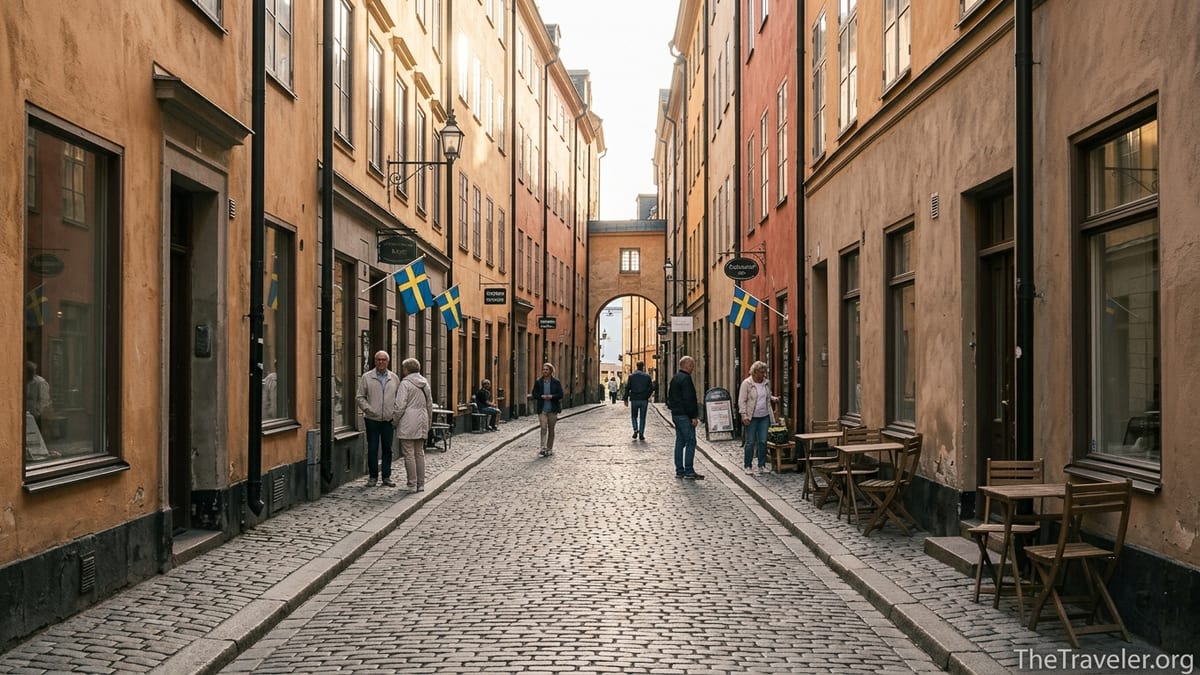
A Compact Island Packed With History
Gamla Stan is where Stockholm began in the 1200s, on a tight cluster of islands that once functioned as a fortified trading town. Today, most visitors spend their time on Stadsholmen, the main Old Town island, but technically the district also includes Riddarholmen and tiny Helgeandsholmen, where Parliament sits. Walking from one end of Gamla Stan to the other takes around ten to fifteen minutes, which means you can see a lot of history in a very small area.
The first impression most travelers mention is the architecture: narrow cobbled streets like Västerlånggatan and Österlånggatan framed by tall, ocher-and-rust townhouses from the 16th and 17th centuries. Many of the buildings lean slightly, creating a canyon effect that feels medieval even when you are queuing for coffee. Around Stortorget, the main square, you see the classic postcard view of colorful gabled houses that appears in almost every article or Instagram post about Stockholm.
Gamla Stan is still a working neighborhood, not just an open-air museum. Offices, apartments, schools and churches share space with souvenir shops and ice cream counters. Step off the main tourist arteries onto side lanes like Prästgatan or Kindstugatan and you are suddenly walking past quiet doorways, bicycles leaned against stone walls, and locals heading home with grocery bags. This contrast between busy and calm is one reason many travelers say Gamla Stan feels more lived-in and less theme-park-like than some Old Towns in continental Europe.
History is not confined to plaques. The Nobel Prize Museum sits right on Stortorget in the former Stock Exchange Building, while Storkyrkan, Stockholm’s medieval cathedral, hides just behind the Royal Palace. A ten-minute walk brings you to Riddarholmen Church, one of the city’s oldest buildings, with royal tombs and an instantly recognizable spire. For visitors interested in European history or architecture, this density of landmarks in such a walkable area is one of the strongest arguments for spending real time in Gamla Stan rather than treating it as a quick photo stop.
What Travelers Love Most About Gamla Stan
When people rave about Gamla Stan after a trip, they usually talk about atmosphere first. Arrive early on a summer morning, before day-trippers and cruise ship groups, and the streets can feel almost private. You might have the stone steps down to Mårten Trotzigs Gränd, the narrowest alley in Stockholm, nearly to yourself, hearing only the distant horn of a ferry and the clack of your shoes on the cobbles. In winter, especially in December, the same alleys glow with warm window light and strings of stars hung between buildings, creating the kind of Nordic Christmas scene travelers fantasize about.
Food is another highlight. For a classic Swedish lunch, visitors often head to traditional restaurants like Den Gyldene Freden or Magnus Ladulås, which serve dishes such as meatballs with lingonberries and buttery mashed potatoes, or herring with crispbread and aquavit. Budget-conscious travelers may prefer simple cafés off the main streets, where a fika of coffee and a cinnamon bun or cardamom bun might cost the equivalent of 5 to 7 US dollars. Many find that ducking into one of these smaller cafés for half an hour is when Gamla Stan feels most authentic, especially if you snag a window table and watch tour groups drift past outside.
Gamla Stan is also a favorite for first-time Stockholm photographers. The views across the water from the western quays, where you can frame City Hall’s brick tower across Riddarfjärden, are particularly popular around sunset. Travelers who stay in Gamla Stan, in small hotels or guesthouses along Skeppsbron or in the back streets above Stortorget, often say their best memories are not big sights but late-evening walks through nearly empty streets lit by gas-style lanterns. Unlike newer parts of the city, Gamla Stan’s tight grid makes it easy to wander without constantly checking a map.
Finally, many travelers appreciate how easy it is to combine Gamla Stan with the rest of Stockholm. The Old Town sits between the modern downtown on Norrmalm and the restaurant-filled slopes of Södermalm. Two metro stations, Gamla stan and Slussen, connect you directly to the city’s wider transport network, and a standard single metro ticket currently costs a bit over 40 Swedish kronor, valid across metro, buses and some ferries for 75 minutes. That means you can sleep in Gamla Stan, spend the day at newer museums like the Vasa Museum or Fotografiska, and still be back in the Old Town for a late stroll without worrying about taxis.
The Downsides: Crowds, Souvenirs and Sticker Shock
The same elements that make Gamla Stan appealing also produce most of the complaints. In peak season, roughly June through August and again in December, the main streets can get extremely crowded, especially when multiple cruise ships are in port. Travelers arriving around midday often describe Västerlånggatan as a slow-moving river of people, with tour leaders holding umbrellas aloft and selfie sticks jutting into every frame. If your idea of Old World charm involves quiet contemplation, these crowds can erode the magic quickly.
With crowds come tourist traps. Many ground-floor spaces in Gamla Stan now hold souvenir shops selling troll dolls, Viking helmets, and mass-produced “Swedish design” items. Ice cream stands advertise “world’s best gelato,” and restaurant hosts coax passersby toward set menus in several languages. Prices in these heavily trafficked areas tend to be higher than in more local neighborhoods. A simple pasta or pizza along the main drag can easily cost 200 to 250 kronor before drinks, which some travelers feel does not match the quality.
Another frequent surprise is how polished parts of Gamla Stan feel. While the facades and paving stones are old, many interior spaces have been renovated to contemporary Scandinavian standards, with sleek lighting and modern art on walls. For some, this mix of medieval street plan and modern interiors is part of the charm. For others expecting a more rough-edged, lived-in Old Town, it can feel slightly sterile. Reviews sometimes mention that after an hour on Västerlånggatan, they were ready to cross the bridge to Södermalm or Kungsholmen for a dose of everyday Stockholm.
Lastly, accommodation costs can be higher on the island. Hotels in Gamla Stan often charge a premium for historic buildings and central location. Travelers on a strict budget might find better value a metro stop or two away in areas like Södermalm or Vasastan, where you can still walk or ride the metro into the Old Town in under fifteen minutes. Many repeat visitors choose that compromise: visit Gamla Stan often, but sleep elsewhere.
What May Surprise You When You Visit
First-time visitors often expect Gamla Stan to feel like a small open-air museum you can “do” in an hour or two. In reality, if you explore beyond the most famous streets, the island reveals more layers than many anticipate. One unexpected aspect is how quickly you can transition from busy to serene. Turn off Västerlånggatan into a narrow passageway like Sven Vintappares Gränd and within seconds the noise drops. A few steps later you might be standing in a tiny inner courtyard, with laundry hanging above and a single café terrace squeezed into a corner.
Another surprise is seasonal difference. In early summer, late light means you might be walking cobbled streets in soft sunshine after 10 p.m., while in December it can be dark by mid-afternoon, with snow or sleet reflecting the glow of shop windows. Travelers who visit during Nobel Week in early December notice special lighting and events around the Old Town, while on ordinary January evenings Gamla Stan feels more subdued, with fewer shops open late and more locals than tourists on the streets. Some winter visitors actually report liking Gamla Stan better when it is cold, quiet, and slightly austere.
Travelers are also sometimes taken aback by the small scale of key sights. Stortorget looks huge in photographs, but in real life it is a compact square you can cross in under a minute. The Royal Palace, on the other hand, spreads across several courtyards and façades, and its interiors can consume several hours of a day. The daily changing of the guard, a free spectacle that many visitors watch, feels more intimate than the grand parades at Buckingham Palace, with horses and marching bands winding along streets that are barely wider than their own formation.
Finally, expect some practical quirks. Cobblestones can be slippery in rain or snow, and the steep alleys connecting upper and lower streets challenge travelers with mobility issues or heavy luggage. In summer, aggressive seagulls sometimes swoop down on outdoor diners, particularly at cafés near waterfront squares. Locals will tell you not to leave food unattended on an outdoor table, especially around busy terraces. These details rarely ruin trips, but they do surprise unprepared visitors.
Iconic Experiences You Should Not Miss
Even skeptical travelers who are wary of “must-see” lists usually agree that a few Gamla Stan experiences justify the hype. High on that list is simply walking without an agenda. Starting at the Gamla stan metro station, you can drift up towards Stortorget, dive into Mårten Trotzigs Gränd to feel the walls narrowing around you, then emerge onto the broader streets near the Royal Palace. Allowing time for spontaneous stops in courtyards and small churches reveals more of the district’s character than rushing between a checklist of landmarks.
Visiting the Royal Palace is another signature experience. The complex includes several museums, from the Royal Apartments with their ceremonial rooms and chandeliers to the Treasury where Sweden’s crown jewels are displayed. Buying a combined ticket lets you visit multiple sections in one day. Travelers who time their visit to coincide with the changing of the guard can watch uniformed soldiers and often a band or mounted troops parade through the palace courtyard, a spectacle that feels particularly impressive if you arrive early enough to stand near the front.
The Nobel Prize Museum on Stortorget offers a different kind of insight. Exhibitions rotate but generally focus on the life stories of laureates, the development of the prizes, and the scientific and cultural breakthroughs they recognize. Some visitors mention enjoying small touches, such as chairs signed by laureates hanging from the ceiling or temporary exhibits about Nobel Banquet menus. Although the museum is not huge, those with an interest in science, literature or peace movements often find it absorbing for an hour or two.
Rounding out the experience, many travelers cap their Gamla Stan visit with a fika or dinner that lingers into the evening. You might settle into a centuries-old vaulted cellar restaurant for a candlelit meal of reindeer or salmon, or keep things simple with coffee and a slice of apple cake at a bakery that has been in business since the 18th century. Walking back to your accommodation or across the bridge afterwards, with the palace lit up and the city’s newer districts glowing across the water, is when many visitors decide that yes, Gamla Stan really was worth the trip.
When, How Long and How Much Time to Spend
For most itineraries, Gamla Stan fits naturally into a one- to three-day Stockholm stay. If you have only one full day in the city, you can comfortably devote half of it to the Old Town: a morning wander with coffee, a midday palace or museum visit, lunch in a side-street restaurant, and an afternoon stroll along the waterfront before moving on to other districts. With more time, many travelers return to Gamla Stan on several different days at different times to see how the mood changes with light and crowds.
Season will shape your experience. From late June through August, expect long days, busier streets, and higher prices on accommodation. This is also when Gamla Stan hosts a range of outdoor events, and when cruise ship calls are most frequent, so morning and late evening are the best windows for quieter exploration. In shoulder seasons like May, early June and September, you may find a more relaxed pace with nearly as much light. December brings Christmas markets in and around the Old Town, along with festive windows and seasonal menus featuring dishes like julbord buffets.
On the budget side, Gamla Stan can be visited quite cheaply if you are selective. Simply walking the streets is free, and many travelers keep costs down by choosing one paid attraction, such as the Royal Palace or Nobel Prize Museum, and then focusing on atmosphere rather than multiple ticketed sites. A typical sit-down lunch in the Old Town might run 150 to 250 kronor before drinks, while a takeaway hot dog or simple bakery snack might cost roughly a third of that. Coffee prices are broadly similar to the rest of central Stockholm.
Transport costs are predictable and straightforward. Most visitors take the metro to Gamla stan station, then explore on foot. A single ticket on Stockholm’s public transport system is valid for 75 minutes and is enough to get you from almost any central neighborhood into the Old Town and back out again if you time connections well. Because of Gamla Stan’s central location, many hotels in surrounding districts like Norrmalm and Södermalm are within a 15- to 25-minute walk of Stortorget, so you may find you rarely need more than one or two paid rides per day.
How to Experience the “Real” Gamla Stan
To decide whether Gamla Stan is worth your time, it helps to think about how you will approach it. If you treat the area solely as a backdrop for quick photos between souvenir shops, you may come away feeling it is overrated. If, instead, you slow down and look for small details and local rhythms, the same streets often feel different. One practical strategy is to walk the main arteries once, then spend most of your visit on side streets and back alleys where everyday life unfolds.
Timing matters. Arriving before 9 a.m. in high season or after dinner in winter can transform your perception. Many office workers and residents commute through Gamla Stan on weekday mornings, picking up coffee at small bakeries and chatting in Swedish on tram stops, a scene that feels very different from the midday tourist rush. Evening walks, particularly in cooler months, often feature more locals walking dogs than groups following guides. Travelers who deliberately plan at least one early or late visit often report feeling they “met” a more authentic Old Town.
Choosing where you spend your money also shapes your experience. Instead of buying multiple generic souvenirs, you might seek out artisan workshops and small galleries that still operate in the Old Town’s narrow buildings. Buying a hand-thrown ceramic cup or a locally designed print directly from an artist creates a very different memory than grabbing a magnet from a bin. Similarly, opting for a family-run restaurant on a quiet lane instead of a place advertising multi-language menus on Stortorget can lead to warmer service and more distinctive cooking.
If you are sensitive to crowds, consider building your Gamla Stan visit around off-peak days and hours. When large events are happening in Stockholm, such as Midsummer celebrations or major concerts, Old Town streets can be especially full. On rainy or chilly days outside the height of summer, by contrast, Gamla Stan quickly becomes less congested, and the glow of cafes and shop windows against wet cobblestones creates a different kind of charm. For many travelers, seeing this softer side is what finally tips their verdict toward “definitely worth it.”
The Takeaway
So is Gamla Stan worth visiting? For most travelers, the answer is yes, as long as you understand what it is and what it is not. It is a compact, atmospheric Old Town where centuries of Swedish history are built into every corner, and where you can eat well, take memorable photos, and get a strong sense of Stockholm’s origins in just a few hours. It is not a secret, quiet neighborhood untouched by tourism, and in peak season its busiest streets can feel commercial and crowded.
If you enjoy historic districts, walkable cities, and café-hopping, Gamla Stan is likely to be a highlight of your Stockholm trip. Even travelers who prefer more contemporary neighborhoods often agree that skipping the Old Town entirely would leave a major gap in their understanding of the city. The key is to give it enough time, choose your moments carefully, and balance the famous views with quieter corners.
In practical terms, plan for at least half a day in Gamla Stan, longer if you want to visit multiple museums and linger over meals. Use the Old Town as both a destination and a crossroads, walking across its bridges to explore Södermalm, Norrmalm and beyond. Treat the area with curiosity rather than checklist urgency, and be ready for both the obvious beauty and the surprising ordinariness of a place where people still live, work and go about daily life.
Approached in this spirit, Gamla Stan usually delivers what travelers hope for: a vivid, walkable slice of Scandinavian history that feels real rather than reconstructed. With realistic expectations and a little planning around crowds and costs, it is a part of Stockholm that earns its reputation and, for many visitors, lingers in memory long after the trip ends.
FAQ
Q1. How much time do I really need in Gamla Stan?
Most travelers find that half a day is enough for a relaxed walk, a visit to one major attraction like the Royal Palace or Nobel Prize Museum, and a meal. If you love historic districts or want to visit several museums, plan a full day and expect to return in the evening for another stroll.
Q2. Is Gamla Stan too touristy to be enjoyable?
The main streets can feel very touristy, especially in summer and in December, but many side alleys and courtyards remain relatively quiet. By visiting early or late, and focusing on smaller cafés, galleries and back streets rather than only the busiest lanes, most visitors still find the atmosphere charming.
Q3. Is it worth staying overnight in Gamla Stan, or should I sleep elsewhere?
Staying in Gamla Stan gives you magical early-morning and late-night access when crowds are light, but hotels often cost more than in nearby areas like Södermalm or Vasastan. If you are on a tighter budget, sleeping just outside the Old Town and walking or taking the metro in is a good compromise.
Q4. Are restaurants in Gamla Stan very expensive?
Prices in the busiest parts of Gamla Stan tend to be higher than in more local neighborhoods, and some menus target tourists. However, if you look beyond the main streets, you can find mid-range cafés, bakeries and smaller restaurants where a meal or fika costs about the same as in the rest of central Stockholm.
Q5. Is Gamla Stan suitable for travelers with limited mobility?
Gamla Stan’s cobblestones, hills and narrow alleys can be challenging for wheelchairs, strollers or anyone with balance issues, especially in rain or snow. Some main routes and squares are relatively flat, but it is wise to allow extra time, wear supportive shoes, and check in advance whether specific attractions have accessible entrances.
Q6. What is the best time of year to visit Gamla Stan?
Late spring, early summer and early autumn offer a good balance of daylight and manageable crowds. Summer has lively street life but can be busy, while December brings Christmas markets and festive lights along with darkness and colder weather. Winter months outside the holidays are quieter and can feel more local.
Q7. Can I see Gamla Stan on a tight budget?
Yes. Walking the streets, exploring alleys, and enjoying the views is free. You can keep costs down by limiting paid attractions to one or two, choosing simple cafés or takeaway food, and using public transport rather than taxis. A single metro ticket covers your ride into and out of the Old Town within its time limit.
Q8. Is Gamla Stan safe at night?
Gamla Stan is generally considered safe, and many travelers enjoy evening walks there. As in any busy city area, keep an eye on your belongings, especially around crowded bars and metro stations, but violent crime is rare and the Old Town usually feels calm once day visitors leave.
Q9. Do locals actually spend time in Gamla Stan, or is it only for tourists?
Locals work, live and study in Gamla Stan, and many Stockholm residents come for specific restaurants, historic churches or cultural events. While they might avoid the most crowded streets in high season, the Old Town still plays an active role in city life beyond tourism.
Q10. If I am short on time in Stockholm, should I prioritize Gamla Stan over other sights?
If you have only one day in Stockholm, Gamla Stan is usually worth including because it gives you a strong sense of the city’s history and layout in a compact area. You can pair a few hours in the Old Town with one other major attraction, such as the Vasa Museum or a harbor ferry ride, to get both historic and waterfront perspectives on the city.