


Stockholm’s Gamla Stan, the atmospheric Old Town spread across a small island of cobbled lanes and crooked townhouses, is one of Europe’s most walkable historic quarters. It is compact enough to explore in a day, yet layered with royal history, Nobel Prize stories, tiny alleyways and some of the city’s most characterful cafes. This guide walks you through the best walking tours to book, where to stop for fika, and the essential historic experiences that turn a simple stroll into a memorable Stockholm day.
Get the latest updates straight to your inbox!
Why Gamla Stan Is Perfect for Walking Tours
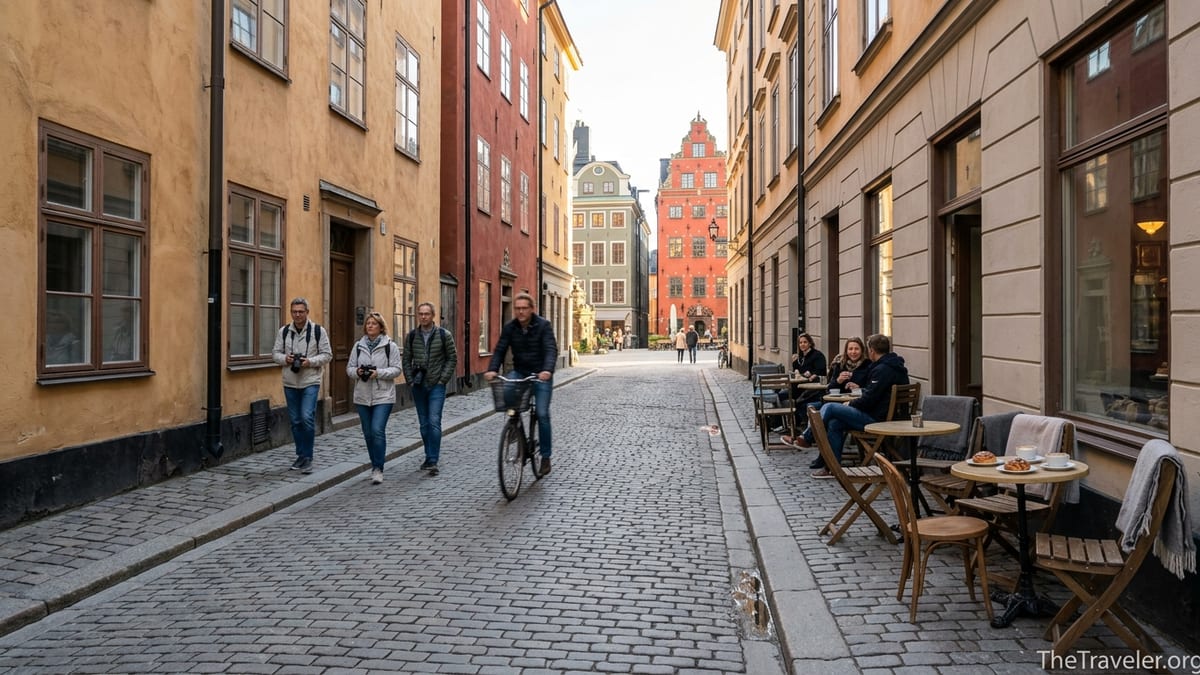
Gamla Stan is effectively an open-air museum, but one that still functions as a living neighborhood. The island holds the Royal Palace, Stockholm Cathedral, the Nobel Prize Museum and a maze of medieval streets, all within a few minutes’ walk of each other. For visitors, that means you can cover a huge amount of history and culture on foot in half a day, then slow down in the afternoon for fika or a lingering dinner.
The layout makes walking tours particularly rewarding. Streets such as Västerlånggatan, once a commercial road outside the original city walls, are now among the busiest pedestrian arteries lined with cafes, bakeries and small shops. Turn a corner and you are suddenly in a silent alley like Staffan Sasses Gränd, hemmed in by centuries-old stone. A good guide will constantly toggle between these grand and intimate spaces, explaining how Stockholm grew from a fortified trading post into a royal capital.
Weather is another reason to favor walking. From late spring through early autumn, Gamla Stan is often at its best in the early evening when the low Nordic light hits the facades in shades of gold and terracotta. Even in winter, many guided walks operate with smaller groups; you might find the streets quieter, and you can warm up with frequent coffee stops.
Most organized Gamla Stan walking tours last 1.5 to 2 hours and cover roughly two kilometers at a gentle pace. Prices typically start around 250 to 450 Swedish kronor per adult for a group tour, with private options costing more but allowing customization to your interests, whether that is royal history, architecture, photography or food.
How to Choose the Right Gamla Stan Walking Tour
Once you begin researching, you will see a wide range of Gamla Stan tours: classic history walks, themed ghost tours, food-focused routes and combination packages that bundle Old Town with a boat trip or a museum visit. The best starting point is to decide how structured you want your day to be. If you are visiting Stockholm for the first time, a standard Old Town highlights tour in the morning works well, leaving you free later to revisit favorite corners on your own.
Look closely at group size and timing. Small-group tours, often capped at 10 to 15 people, feel far more intimate on the narrow lanes than larger bus-tour groups. Some operators run early departures around 9:00 a.m., which let you see Stortorget and Västerlånggatan before they fill with day-trippers. Evening tours, departing around 6:00 or 7:00 p.m., can be especially atmospheric, with stories about medieval punishments, guilds and merchants fitting the dimly lit squares.
Consider what is included. Some walks simply cover the streets and exterior landmarks, while others include prebooked entry to sites like the Royal Palace apartments or the Nobel Prize Museum. Packages with entrance tickets will cost more, but they also save you queue time in peak summer. If you are staying centrally, choose a tour that departs from Gamla Stan’s metro station or directly from the main square, Stortorget, so you can easily arrive on foot or by public transport.
Finally, read recent descriptions rather than relying on older brochures. Opening hours in Stockholm’s attractions adjust seasonally, and some tours modify routes in winter when certain palace sections are closed. When in doubt, message the operator to confirm whether your tour will go inside any buildings, how many rest or bathroom breaks there are, and whether there is flexibility for a cafe stop.
Self-Guided Route: A Classic Gamla Stan Walk With Fika Stops
If you prefer to explore at your own pace, it is easy to build a self-guided route that mirrors the structure of professional tours while giving you maximum freedom to linger over coffee or photos. A common starting point is the Gamla Stan metro station. From there, walk up to Västerlånggatan and let yourself be drawn into the bustle of its souvenir stores and bakeries before quickly dodging onto one of the side alleys, where the crowds thin and the cobblestones feel more ancient.
Continue toward Stortorget, the main square. Here you are surrounded by some of Gamla Stan’s most photographed facades, steeply gabled in mustard, brick red and olive tones. On one side of the square sits the Nobel Prize Museum in the former Stock Exchange building, while cozy cafes occupy the opposite row of houses. This is a natural moment to stop for your first fika of the day, with options ranging from simple filter coffee and a cinnamon bun to more elaborate cakes and sandwiches.
From Stortorget, make your way to the Royal Palace, a few minutes’ walk away. On the way, you pass Stockholm Cathedral, with its copper-green spire rising above the rooftops. The lanes around the palace open suddenly onto views of the water and the modern city beyond, highlighting how compact Stockholm’s historic core really is. Many visitors time their walk to catch the changing of the guard, usually held around midday on select days, then duck back into Gamla Stan’s alleys when the ceremony crowds disperse.
After the palace, loop back via the quieter eastern streets such as Österlånggatan and the tiny perpendicular alleys that slope down toward the harbor. Here it is easy to forget how close you are to the main tourist drag. You might finish your circuit at one of the cafes or restaurants tucked in vaulted cellars for a late lunch, or cross the bridge to nearby islands if you plan to continue your day at museums like the Vasa Museum or Skansen.
Essential Historic Experiences: Palaces, Nobel Stories and Hidden Alleys
Gamla Stan’s headline historic experience is the Royal Palace, one of the largest palaces in Europe and still the monarch’s official workplace. Visitors can explore the ornate Royal Apartments, where state visits and formal functions take place, as well as the Tre Kronor Museum in the vaults, which tells the story of the earlier medieval castle that once stood here. Depending on the season, a standard palace ticket is typically in the low hundreds of kronor and allows you to see several sections without rushing.
Just behind the palace, Stockholm Cathedral provides a different lens on history, from its medieval foundations to its role in royal weddings and coronations. Many walking tour guides use the space around the cathedral to explain the Reformation in Sweden, the power of the Lutheran church, and how faith intertwined with royal authority. The interior is relatively modest compared to some European cathedrals, which makes details like the carved wooden Saint George and the Dragon statue stand out even more.
In Stortorget, the Nobel Prize Museum offers an engaging way to connect Gamla Stan with modern global history. Exhibitions focus on laureates’ lives, artifacts and ideas, and the museum frequently runs guided tours, temporary exhibitions and family activities. Visitors can see everything from original notes and objects belonging to laureates to displays explaining how the prizes are selected. If you are traveling in October, the museum often hosts events around the Nobel announcements, which can add an extra buzz to your visit.
For many travelers, though, the most memorable historic experiences are the quietest. Narrow alleys such as Mårten Trotzigs Gränd, often described as Stockholm’s narrowest street, create an almost theatrical sense of enclosure as you squeeze up or down the stairs. Other passages open unexpectedly onto pocket squares with wells or old merchant houses. When booking a tour, ask if your guide includes at least a couple of these lesser-known alleys; on your own, simply allow yourself to follow the slightest curve in the street to see where it leads.
Where to Fika: The Best Cafes in Gamla Stan
No Gamla Stan walking tour is complete without at least one proper fika stop. The Old Town’s cafes range from historic konditori serving traditional pastries to contemporary coffee bars focused on specialty beans. Expect to pay roughly 40 to 60 kronor for a coffee and around the same again for a cinnamon bun or slice of cake, with prices higher for elaborate desserts or savory plates.
On and around Stortorget, classic cafes occupy centuries-old buildings with low ceilings and thick stone walls. One well-known spot serves coffee, hot chocolate and open sandwiches in a building on the square, with generous seating in its vaulted cellar that feels like a medieval tavern minus the smoke. It is an ideal refuge on cold or rainy days, especially if you can claim a window seat looking out at the colorful facades and people crossing the square.
A short walk away, along the main streets and cross alleys, you will find cozy options like Bellmans Café on Västerlånggatan and small independent spots such as Cafe Krans, which pair strong coffee with hearty sandwiches, soups and homemade cakes. Locals often combine their Old Town errands with a stop at one of these cafes, especially in the quieter weekday mornings when tourists have not yet arrived. Traditional konditori, some of which have operated for generations, still serve classics like kanelbulle (cinnamon buns), chokladbollar (chocolate oatmeal balls) and seasonal treats.
Hidden-courtyard cafes are another hallmark of Gamla Stan. Several bistros and bakeries tuck their outdoor tables in small, sheltered squares, creating a cocoon from the busier shopping streets. In summer, these spots fill with a mix of Stockholmers and visitors lingering over second or third coffees. In winter, many bring out wool blankets and heaters so you can still enjoy the crisp air while staying warm. When you plan your walking tour, it is worth earmarking at least two likely cafe stops so you can flex with the weather and crowds.
Dining in Historic Cellars and Classic Old-Town Restaurants
As afternoon turns into evening, Gamla Stan shifts from sightseeing hub to one of Stockholm’s most atmospheric dining districts. Many restaurants occupy medieval cellars or narrow townhouses, with arched brick ceilings, candlelight and closely set tables that amplify the murmur of conversation. Prices are higher here than in some outer neighborhoods, but in exchange you get a rare blend of historic setting and refined modern cooking.
Historic establishments such as Den Gyldene Freden and Fem små hus illustrate this blend especially well. These long-running restaurants are known not only for their age and literary connections but also for serving hearty Swedish dishes like herring, meatballs and reindeer in rooms that feel suspended in time. Booking ahead for dinner is advisable, especially on weekends and in high season, when both visitors and locals are keen to secure a table underground rather than risk the weather outdoors.
Along the main streets like Västerlånggatan and Österlånggatan you will also find a spectrum of more casual options, from gastropubs serving classic Swedish fare at lunch-friendly prices to pizzerias and international restaurants. For travelers on a tighter budget, look for lunch specials advertised on chalkboards outside; these often offer a main course, salad and coffee for a more approachable price during the middle of the day.
If you enjoy combining food with history, consider a guided food tour through Gamla Stan in the late afternoon, which might include tastes of cured salmon, local cheeses and Swedish pastries alongside stops at historic points. These tours typically cost more than standard walking tours, but they effectively replace a meal and can be a relaxed way to learn about Swedish culinary traditions without committing to a full fine-dining reservation.
Practical Tips for Booking and Timing Your Old Town Experience
To make the most of your time, think about Gamla Stan as a flexible anchor for your day. Many visitors choose to start with a guided tour around mid-morning, take a long fika or lunch break, then explore one or two major attractions such as the Royal Palace or Nobel Prize Museum in the afternoon. This pattern avoids the earliest commuter rush while still giving you plenty of daylight for photos and wandering.
When booking guided walks, look for operators that offer free cancellation within a day or two of departure and that clearly state whether the tour runs in light rain or snow. Stockholm’s weather can change quickly, so having the option to adjust helps, particularly if you are traveling with children. Guides generally recommend comfortable shoes with a good grip; Gamla Stan’s cobblestones can be slick after rain or snow, and there are gentle slopes throughout the district.
Public transport access is straightforward. The Gamla Stan metro station sits at the southern edge of the island, and several bus lines pass nearby. If you stay in central districts such as Norrmalm or Södermalm, walking to Gamla Stan often takes 10 to 20 minutes, crossing bridges with expansive views of the Old Town’s skyline. Many boat tours that circle the inner archipelago also depart from quays close to Gamla Stan, making it easy to combine a historical walk with time on the water.
Finally, consider seasonality. In peak summer, midday crowds can be intense on Västerlånggatan and Stortorget, so early morning or late evening tours feel calmer. In shoulder seasons like May, September and early October, you are more likely to enjoy cool but comfortable temperatures, thinner crowds and easier restaurant reservations. In winter, darkness falls early, but the streets gain an extra layer of romance from lantern light and, around December, Christmas market stalls on the main square.
The Takeaway
Gamla Stan is one of those rare historic districts that rewards both structure and spontaneity. A well-chosen walking tour can unlock layers of royal, religious and civic history that you might otherwise overlook, while the compact scale invites detours whenever a narrow alley or inviting doorway catches your eye. Between landmark visits, cafe stops and slow loops along the waterfront, you can easily spend a full day here without ever feeling rushed.
If you have just one day in Stockholm, making Gamla Stan your base and building the rest of your plans around it is a sound strategy. Start with a guided walk or detailed self-guided route in the morning, save time for a museum or palace visit, then let the late afternoon unfold at a cobbled-square cafe before settling into a cellar restaurant for dinner. By the end of the day, you will have experienced not only Stockholm’s postcard views but also the small rituals of daily life that give the city its character.
FAQ
Q1. How long should I plan for a Gamla Stan walking tour?
Most guided Gamla Stan walking tours last 1.5 to 2 hours, which is enough to cover the key streets, squares and viewpoints at a relaxed pace. If you add palace or museum visits and several fika breaks, plan to spend at least half a day, and ideally a full day, in the Old Town.
Q2. Is it better to book a guided tour or explore Gamla Stan on my own?
Both options work well. A guided tour is valuable for first-time visitors who want context on royal history, architecture and the Nobel tradition. Exploring on your own offers more flexibility for photography and cafe hopping. Many travelers combine a morning guided tour with independent wandering later.
Q3. Are Gamla Stan walking tours suitable for children and older travelers?
Yes, but keep the cobblestones and occasional slopes in mind. Strollers can be used, though the ground is uneven in places, and those with mobility issues may prefer shorter tours that focus on the main squares and wider streets. Choosing a small-group or private tour allows you to adjust the pace and number of rest stops.
Q4. What should I wear and bring for a Gamla Stan walking tour?
Comfortable shoes with good grip are essential due to cobblestones and potentially wet surfaces. Dress in layers, as temperatures can shift quickly, and carry a light waterproof jacket outside high summer. A reusable water bottle, gloves in cooler months and a small backpack for camera or extra clothing make the walk more comfortable.
Q5. Can I visit the Royal Palace and Nobel Prize Museum during the same visit?
Yes. The Royal Palace and the Nobel Prize Museum are within an easy walk of each other and can be comfortably visited in one day along with a Gamla Stan walking tour. Many travelers tour the palace in late morning, break for lunch or fika around Stortorget, then spend one to two hours at the museum in the afternoon.
Q6. Are there good cafes in Gamla Stan for a traditional Swedish fika?
Gamla Stan is one of Stockholm’s best areas for fika. Around Stortorget and along nearby streets you will find historic konditori and modern cafes serving coffee, tea, cinnamon buns and cakes. Prices are higher than in some residential neighborhoods but the historic atmosphere and people-watching from cobbled squares add a lot of value.
Q7. When is the best time of year to take a Gamla Stan walking tour?
Late spring through early autumn offers the mildest weather and longest daylight. May, June and September are especially pleasant, with fewer crowds than peak summer. Winter tours are still worthwhile, particularly around December when Christmas lights and markets add extra charm, but be prepared for cold temperatures and early darkness.
Q8. Do Gamla Stan tours run if it rains or snows?
Most operators run tours in light rain or snow, though routes may adjust slightly for safety. Tours may be canceled or rescheduled only in severe weather. If you book in advance, check the operator’s cancellation policy and keep an eye on your email or phone for any last-minute updates.
Q9. Is Gamla Stan safe to walk around in the evening?
Gamla Stan is generally considered safe, and many visitors enjoy strolling its lanes after dark to see the buildings lit up. As in any city, normal precautions apply: keep an eye on your belongings, stick to lit streets and be aware of late-night closing times for public transport if you are staying in another district.
Q10. How much should I budget for a day in Gamla Stan?
As a rough guide, expect to pay the equivalent of a few hundred kronor for a group walking tour, plus additional costs for palace or museum tickets. A coffee and pastry might be around 80 to 120 kronor, and a sit-down dinner in a cellar restaurant can range from moderate to high depending on your choices. Walking itself is free, so you can adjust your spending through your selection of tours, cafes and restaurants.