


More news on this day
Dubai and Abu Dhabi remain among the Middle East’s most-visited cities, but a new round of military strikes elsewhere in the region has pushed governments to refresh travel guidance, with a major focus on unpredictable security conditions and the possibility of sudden flight disruption.
Get the latest news straight to your inbox!
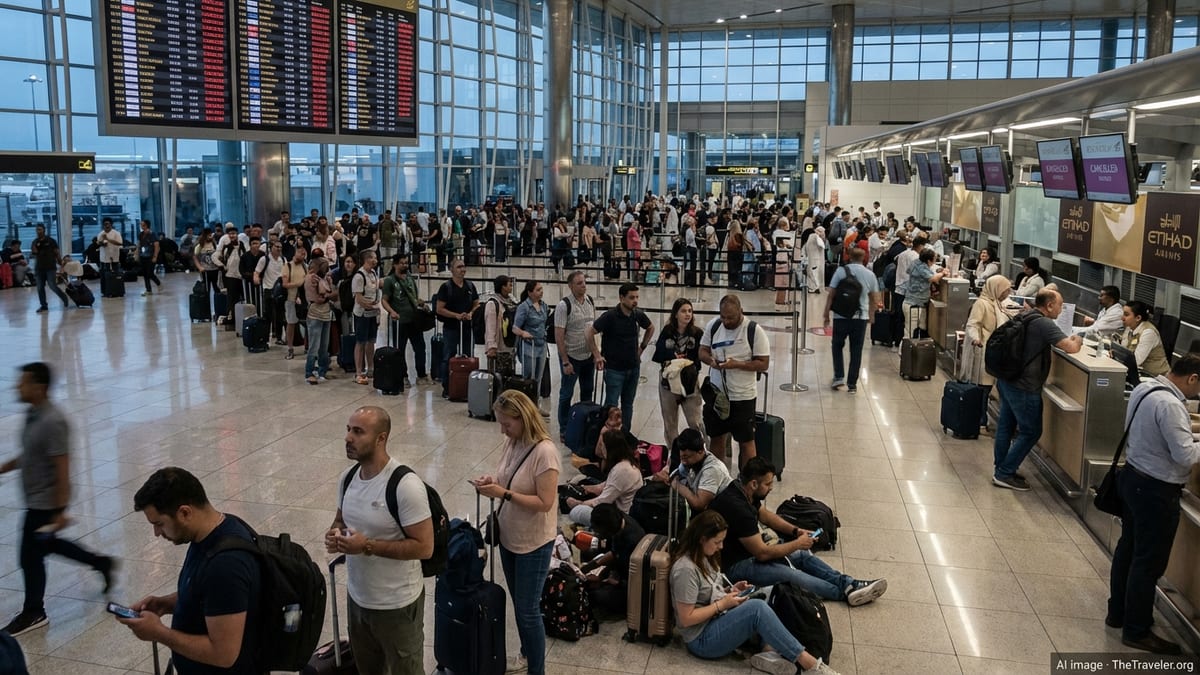
What current travel advisories say about the UAE
As of August 29, 2026, the U.S. Department of State lists the United Arab Emirates at Level 3, “Reconsider Travel,” citing terrorism and armed conflict. The advisory also highlights an ongoing threat of drone and missile attacks linked to wider regional hostilities and notes that commercial flights have faced disruptions during periods of escalation.
Other government advisories broadly echo the same theme: day-to-day life in the UAE’s main cities can feel normal, but conditions across the region can change quickly, and disruptions can be immediate. Australia’s Smartraveller guidance, current on September 16, 2026, says to reconsider the need to travel to the UAE due to an unpredictable security situation in the UAE and the region, pointing to recent military strikes and the possibility of airspace closures and flight cancellations that can affect Dubai and Abu Dhabi airports.
Canada’s Travel Advice and Advisories page for the UAE shows an update date of September 15, 2026 and presents its advisory framework for risk levels. Travelers using Canadian guidance often pair the UAE page with Canada’s broader Middle East crisis information to assess knock-on impacts such as airspace changes, delays, and rerouting.
Why “regional strikes” matter for Dubai and Abu Dhabi travelers
The primary practical risk for most visitors is not street-level instability in Dubai or Abu Dhabi, but the ripple effects from conflict elsewhere: shifting airline routings, sudden airspace restrictions, and short-notice schedule changes. Publicly available guidance from Australia specifically warns that UAE airspace may open or close at short notice, affecting operations at Abu Dhabi and Dubai International airports.
Published coverage in UAE media has also focused on how quickly flight status can change. The National reported in early September 2026 that heightened regional security conditions were resulting in delays and cancellations, and that airlines were warning schedules could change at short notice. A follow-up report described renewed disruptions affecting both Dubai International Airport and Abu Dhabi’s Zayed International Airport in the same week, with multiple factors compounding operational challenges.
For travelers, this means the “safety” question often becomes a trip-continuity question: whether you can get in and out on your planned dates, and how resilient your itinerary is if your flight is delayed, diverted, or canceled. That matters most for short stays, cruises and tours on tight schedules, and passengers making long-haul connections through Dubai or Abu Dhabi.
Air travel and airport operations: what to watch right now
If you are flying to Dubai (DXB) or Abu Dhabi (AUH), the most useful habit is to treat your flight as changeable until you are on the ground at your destination. Several advisories and recent reporting emphasize that airspace decisions can happen quickly during escalation, leading to delays, diversions, and cancellations with little notice.
Travelers should monitor three things in parallel: your airline’s flight-status tool, your airport’s departure and arrival boards, and any government advisory updates for the UAE and key transit points. Australia’s guidance explicitly recommends checking airport and airline operations and the status of any border crossing before traveling by air, land, or sea.
On the airline side, policies vary by carrier, fare type, and the nature of a disruption. Emirates’ published disrupted-travel guidance describes rebooking on the first available connection when a flight is disrupted, and also outlines waiver-style flexibility in certain circumstances, including date changes within a set window around the original travel date. If your itinerary is time-sensitive, consider confirming the conditions for rebooking, refunds, and hotel coverage for long delays before you depart.
On-the-ground safety in Dubai and Abu Dhabi: practical, non-alarmist guidance
Within the cities, standard big-city precautions remain relevant, alongside heightened situational awareness due to the regional backdrop. Australia’s advisory recommends staying aware of your surroundings, monitoring warning systems, and avoiding locations that could be considered high-risk targets, including sensitive infrastructure and government-related sites.
Travelers should also remember that the UAE has strict laws and enforcement practices that can catch visitors off guard. UK travel guidance highlights significant legal and cultural differences, including severe penalties for drug-related offenses and the risk of arrest even for residual amounts detected by airport screening. The same UK guidance notes that some products containing cannabidiol (CBD) can be illegal, and that travelers should be cautious with skincare products or e-cigarette refills that may contain prohibited ingredients.
Medication rules are another frequent stumbling block. UK entry-requirements guidance says there are strict rules for bringing medicines into the UAE, with advance approval required for medications categorized as narcotic, psychotropic, controlled, or semi-controlled. It also notes typical processing times and that transiting passengers who do not pass immigration are treated differently than visitors entering the country.
How to decide: who should go, who should reconsider, and how to reduce risk
Whether it is “safe” to travel depends on your tolerance for uncertainty and your ability to absorb disruption. Travelers on flexible schedules, staying in central areas, and flying nonstop in and out of the UAE may feel comfortable proceeding while taking extra precautions. Those on tightly timed itineraries, traveling for major events with fixed dates, or relying on complex multi-country connections should weigh the elevated possibility of last-minute airspace or schedule changes.
Whatever you decide, align your plan with the current advisory level that applies to you and your insurance. The U.S. advisory explicitly recommends having a plan to depart that does not depend on government help and purchasing travel insurance that covers medical care and trip interruption. Australia’s guidance also underscores the potential for movement restrictions and travel disruption if the situation deteriorates.
If you go, reduce exposure to disruption: choose changeable or refundable bookings where possible, keep your stay in the region shorter if your trip is discretionary, and avoid building your itinerary around a single must-catch connection. Consider keeping digital and printed copies of key documents, ensuring your phone can receive airline notifications, and carrying essential items in your hand baggage in case checked luggage is delayed during rebooking or rerouting.