


More news on this day
The United Arab Emirates is working to move off elevated foreign travel warning lists that tightened during the 2026 Middle East security crisis, even as several major governments continue to flag terrorism risks and the possibility of renewed regional escalation.
Get the latest news straight to your inbox!
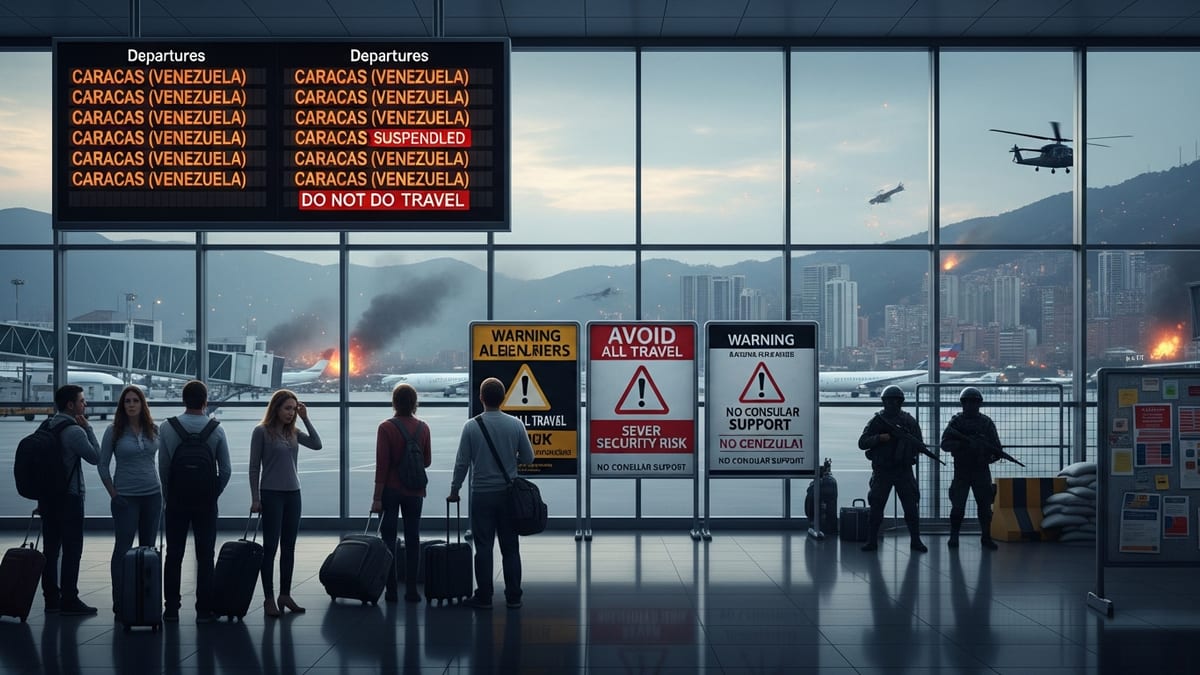
Why major governments still keep the UAE under elevated advisories
Publicly available travel-advice pages in September 2026 show that the UAE remains under heightened caution language in several key source markets, reflecting a mix of security concerns and the broader regional context rather than a single, UAE-specific incident. The U.S. Department of State’s advisory for the UAE is currently listed as Level 3, “Reconsider Travel,” citing terrorism and armed conflict, and referencing the ongoing threat of drone and missile attacks linked to the 2026 hostilities involving the United States and Iran, as well as potential disruptions to commercial flights.
Australia’s Smartraveller also places the UAE at a Level 3 setting, “Reconsider your need to travel,” with continued emphasis on terrorism risks and the possibility that travelers could face difficulty departing if security conditions worsen. The UK’s Foreign, Commonwealth and Development Office maintains detailed safety-and-security guidance for the UAE, including terrorism-related precautions, and continues to update the destination’s travel-advice page.
Canada’s Travel Advice and Advisories page for the UAE was updated on September 15, 2026, underscoring how closely governments are monitoring the region and refreshing guidance as conditions evolve. While advisory wording differs by country, the shared theme across these sources is that regional volatility can translate into fast-moving aviation disruption and changes in on-the-ground security posture.
What changed in 2026: conflict spillover and real travel disruption
The UAE’s global aviation role makes it particularly sensitive to changes in risk perception. During the early stages of the 2026 Middle East crisis, wide-ranging airspace closures and mass flight cancellations across the region caused a sudden squeeze in departure options for travelers attempting to reroute. Published coverage during that period described limited evacuation flights operating even as commercial air traffic remained heavily disrupted.
Security concerns also flared again in August 2026. Associated Press coverage reported renewed missile-related alerts in the UAE and a subsequent UAE move to suspend trade with Iran. Such developments can influence how foreign ministries assess near-term risk, especially when incidents are tied to broader state-to-state confrontation rather than localized crime trends.
In the U.S. advisory, the State Department notes that, after hostilities began on February 28, 2026, an ongoing threat environment persisted alongside “significant disruptions to commercial flights.” The same advisory indicates that, as of August 29, 2026, family members may again join U.S. government employees assigned to the UAE, a detail that signals some easing in the operating posture even as the overall advisory level remains elevated.
How the UAE is trying to rebuild travel confidence
The UAE’s path off warning lists typically depends on foreign governments’ risk frameworks, but the country can influence the conversation by demonstrating operational readiness, crisis response capacity, and coordination that reduces traveler exposure to disruption. In March 2026, the UAE Ministry of Foreign Affairs published an update describing coordination with the National Emergency Crisis and Disaster Management Authority to facilitate the return of stranded Golden Visa holders and residents through air and land entry points. While such efforts primarily address inbound return travel, they also form part of a broader narrative that systems are in place to manage shocks.
For tourism-facing destinations like Dubai and Abu Dhabi, confidence-building also comes from keeping airports and airlines functioning normally, maintaining consistent visitor-facing communications, and limiting the spread of misinformation. Governments that publish travel advice often note that conditions can change quickly, and the UAE has an incentive to show stability not just day-to-day, but under stress.
Another lever is ensuring that travelers can obtain timely consular support and clear entry guidance. Foreign ministries commonly steer travelers toward official local rules and reminders about legal differences, documentation requirements, and security awareness. When these elements are predictable and well communicated, they can reduce incidents that sometimes feed into advisory language.
What this means for travelers booking UAE trips now
For travelers, elevated advisories do not automatically mean a trip is impossible, but they can have practical consequences. Travel insurance policies may treat “Reconsider Travel” destinations differently, potentially affecting coverage for trip cancellation, medical care, or disruption tied to security events. Travelers considering the UAE should check how their insurer defines advisory-related exclusions and whether the policy references specific government advisory levels.
Flight reliability is the other major consideration. Advisories that highlight the possibility of disruption are a reminder to build in flexibility, confirm airline rebooking rules, and monitor official airline notices in the days leading up to departure. During periods of regional tension, routing changes can be sudden, and travelers connecting through major UAE hubs may want longer connection times and backup options.
Finally, travelers should read the full advisory text, not just the headline level. In the U.S. advisory, for example, the risk indicators specifically reference terrorism and armed conflict, and the guidance highlights potential targets such as tourist locations, transportation hubs, and shopping areas. Australia and the UK similarly emphasize situational awareness and attention to official warnings. The practical takeaway is that planning should include both normal travel precautions and a contingency plan for rapidly changing conditions.