


More news on this day
Escalating regional conflict involving Iran, the United States and their allies has pushed the United Arab Emirates onto higher alert and led to new government travel advisories, leaving many would-be visitors questioning whether it is still safe to visit Dubai and Abu Dhabi in late 2026.
Get the latest news straight to your inbox!
What the latest government advisories say
As of late August 2026, the United States has raised its travel advisory for the United Arab Emirates to Level 3, urging travelers to reconsider travel because of terrorism and armed conflict. The updated advisory notes that hostilities between the United States and Iran since February 28 have created an ongoing threat of drone and missile attacks and have already caused significant disruption to commercial flights in the region.
Publicly available information on the same advisory explains that Iranian officials have stated an intention to target locations in the UAE associated with the United States, including military and certain commercial facilities. U.S. government personnel in the country face additional movement restrictions, and travel to sensitive sites such as energy infrastructure requires special authorization, underlining how seriously officials view the risk environment.
Advice from other governments is more moderate but still cautious. Updated travel guidance from the United Kingdom in September highlights a high threat of terrorism in the UAE and warns that recent strikes and retaliatory attacks by Iran in the wider region have increased the risk of further escalation. The guidance stresses that attacks could be indiscriminate and may include locations visited by foreign nationals.
New Zealand’s official advice, revised on September 22, 2026, rates the UAE at its second tier of four, recommending increased caution due to the unpredictable regional security situation, the threat of terrorism, and the possibility of drone and missile attacks. Dutch guidance currently assigns a “yellow” code for most of the country, including Dubai and Abu Dhabi, advising travelers to remain alert but not telling them to cancel trips outright.
Security situation in Dubai and Abu Dhabi
Despite the heightened advisories, there have been no recent direct strikes on central Dubai or Abu Dhabi. The main concerns relate to the possibility of attacks on specific strategic targets and the risk of miscalculation in the broader conflict. Travel advice from the United Kingdom and other governments continues to describe the UAE’s internal security and policing as robust, while acknowledging that the threat of terrorism exists and that public places popular with foreigners could be affected in an incident.
Regional media reports and local commentary describe life in Dubai and Abu Dhabi largely continuing as normal, with offices, shopping malls, restaurants and hotels open. However, residents have experienced periodic air-defense activity and civil defense alerts since the wider conflict escalated earlier in the year. Public safety messaging in the UAE explains that national warning systems can push alerts to phones and broadcast channels if a serious incident occurs, instructing people in affected areas to seek shelter or avoid certain locations.
Embassy notices for residents and visitors in the UAE emphasize preparedness rather than immediate danger. Recent security alerts have advised travelers to keep their phones charged, carry identification, monitor news and official channels for changes to airspace status, and have a basic contingency plan for extended airport delays or temporary shelter in place. While these steps do not mean an attack is expected at a particular time, they reflect the volatile backdrop to travel decisions in late 2026.
Travelers should also remember that the UAE enforces strict public order and cybercrime laws. Publicly sharing sensitive security information, posting unverified rumors, or filming and distributing images of any incident involving military or critical infrastructure can lead to legal consequences. This legal environment aims to limit panic and misinformation but is an additional factor visitors need to understand if an emergency occurs during their stay.
Flight operations and potential disruption
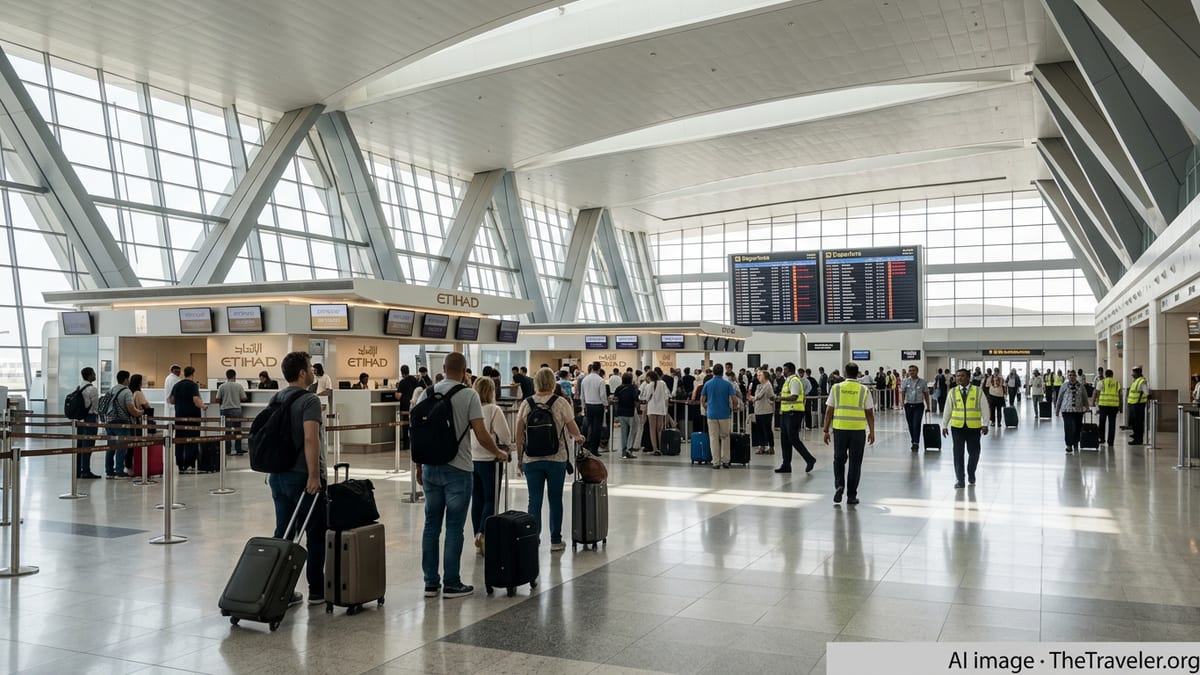
Commercial aviation into Dubai International Airport and Abu Dhabi International Airport remains active, and both hubs are still functioning as major transit points between Europe, Asia and Africa. However, airspace restrictions and conflict-related activity elsewhere in the region have led to intermittent disruption. Local and international media coverage in mid-September pointed to temporary suspensions of some regional routes, with carriers such as Emirates, Etihad, flydubai and Air Arabia listing cancellations or schedule adjustments on flights crossing affected areas.
The experience earlier in the year, when missile activity prompted brief suspensions of operations at Dubai-area airports, illustrates the type of disruption travelers could face again if tensions spike. On those occasions, flights were temporarily halted, some aircraft diverted to other airports in the Gulf, and passengers reported extended waits on the ground while airspace was assessed for safety. Operations later resumed, but it took time for airlines to work through backlogs of delayed and rerouted services.
Current travel advisories from several governments explicitly warn that further drone or missile attacks anywhere in the region could trigger short-notice airspace closures over the Gulf, the Gulf of Oman or parts of the Arabian Sea. This would likely lead to diversions, cancellations and missed connections even if Dubai and Abu Dhabi themselves remained physically unaffected. Travelers with complex itineraries, including those transiting to Asia or Africa, are therefore being encouraged by airlines and insurance providers to book flexible tickets and allow extra connection time where possible.
For those already booked to travel in the coming weeks, the most useful information will come from airline status pages, airport announcements and official embassy channels on the day of travel. If flights operate as scheduled, the experience at the airport is expected to be broadly familiar, although some passengers report slightly longer security and document checks and a higher visible presence of security personnel in terminal areas.
How different travelers are weighing the risks
The mixed international guidance is contributing to varied responses among travelers. Some countries currently urge citizens to reconsider travel to the UAE, while others permit leisure travel with caution. For many individual travelers, the key question is not whether Dubai and Abu Dhabi are open, but whether the residual risk of being caught up in a regional incident is acceptable for a holiday or business trip.
Recent coverage in consumer travel media notes that bookings to Dubai have slowed but not collapsed, and that large events and trade shows scheduled for the final quarter of 2026 remain on the calendar for now. Travel agents interviewed in that reporting describe more clients asking detailed questions about missile defense, shelter arrangements and insurance coverage, rather than canceling outright. Some corporate travelers are still flying in for meetings and conferences but adding stricter internal approval processes and more robust contingency plans.
On social platforms and forums, travelers with imminent trips are seeking reassurance from residents and recent visitors, while others say they have postponed optional journeys until there is more clarity about the trajectory of the conflict. Many of those who have chosen to proceed with visits to Dubai or Abu Dhabi in recent weeks report that day-to-day life feels normal on the ground, with busy malls and well-occupied hotels, even as they remain aware of the elevated regional risk.
Ultimately, the decision to travel is becoming highly personal and dependent on risk tolerance. Families with young children and those who have alternative vacation options may be more inclined to defer, while travelers with nonrefundable bookings, work commitments or family ties in the UAE may decide that the benefits of travel still outweigh the risks when combined with careful preparation.
Practical advice if you decide to go
For travelers who choose to continue with plans to visit Dubai or Abu Dhabi, official advisories and security guidance suggest several practical steps. First, check your own government’s travel advisory and register your trip if a registration service is available. This allows consular staff to push alerts directly to you if the situation changes. Because the security environment is fluid, advisories are being reviewed frequently, and the level or wording can change at short notice.
Second, contact your airline and accommodation provider before departure to confirm that flights and reservations remain active and to understand their policies on rebooking if airspace is closed or routes are altered. Many airlines now allow date changes or route adjustments for passengers affected by conflict-related disruption, particularly on itineraries transiting the Gulf. Booking travel insurance that explicitly covers war- and terrorism-related disruption remains challenging, but it is important to read policy wording carefully and obtain written confirmation of what is and is not covered.
Third, once in the UAE, consider simple preparedness measures. Keep your passport, some cash and essential medicines in an accessible place, know the emergency contact numbers for your embassy or consulate, and familiarize yourself with safety instructions from local authorities and your hotel. In the event of a significant regional incident while you are there, you may be advised to stay indoors, avoid windows, or temporarily remain in your accommodation until the all clear is given.
Finally, balance security awareness with respect for local laws and customs. The UAE maintains strict rules on public behavior, photography, alcohol, relationships and commentary on local politics and security. Visitors are advised in country information pages and travel advice to dress modestly in certain areas, avoid public displays of affection, and refrain from posting critical or inflammatory content online. Understanding and following these rules not only reduces the risk of legal issues but can also make it easier to focus on monitoring the regional situation calmly and making informed decisions about your movements while in Dubai or Abu Dhabi.