


For many travelers, a Lindblad Expeditions voyage sits in the same mental file as an African safari or a trek to Everest Base Camp: a once in a lifetime trip with a once in a lifetime price tag. Lindblad, which operates small expedition ships in partnership with National Geographic, has built its reputation on accessing remote wildlife destinations like Antarctica, the Galapagos, and Alaska with scientists, naturalists, and photographers on board. The question most travelers end up asking is not whether the trips look extraordinary, but whether the high fares are genuinely worth it compared with other adventure cruise brands.
Get the latest updates straight to your inbox!
Who Lindblad Expeditions Is Really For
Lindblad Expeditions specializes in small ship expedition cruising, with most ships carrying between roughly 48 and 148 guests. The line focuses on wildlife rich regions such as the Galapagos, Antarctica, the Arctic, Alaska, Costa Rica and Panama, and parts of Indonesia and the South Pacific. Rather than casinos and stage shows, a typical evening on a Lindblad ship means a recap from naturalists, a talk from an onboard marine biologist, or photography tips from a National Geographic certified photo instructor.
The company’s heritage matters here. Lindblad’s founder led some of the first tourist voyages to Antarctica in the 1960s and to the Galapagos soon after, and the line still positions itself as an expedition specialist rather than a luxury brand. In practice, most itineraries appeal to travelers who care more about wildlife encounters, scientific context, and time off the ship in Zodiacs and kayaks than they do about marble bathrooms or butler service.
In 2025 and 2026, the typical Lindblad guest is often a well traveled couple in their 50s to 70s, frequently from North America or Europe, with a strong interest in nature and photography. Families do travel on certain departures, particularly in the Galapagos and Alaska during school holidays, but the vibe remains low key and learning oriented rather than resort like. If your ideal cruise is a floating resort with multiple restaurants, shows, and nightlife, Lindblad is unlikely to feel worth the premium.
On the other hand, if you are the kind of traveler who will happily sit in a Zodiac for an hour watching penguins porpoise through Antarctic waters or hike slowly across lava fields in the Galapagos while stopping every few meters to identify plants and birds, you are closer to Lindblad’s core audience.
What the Onboard Experience Actually Feels Like
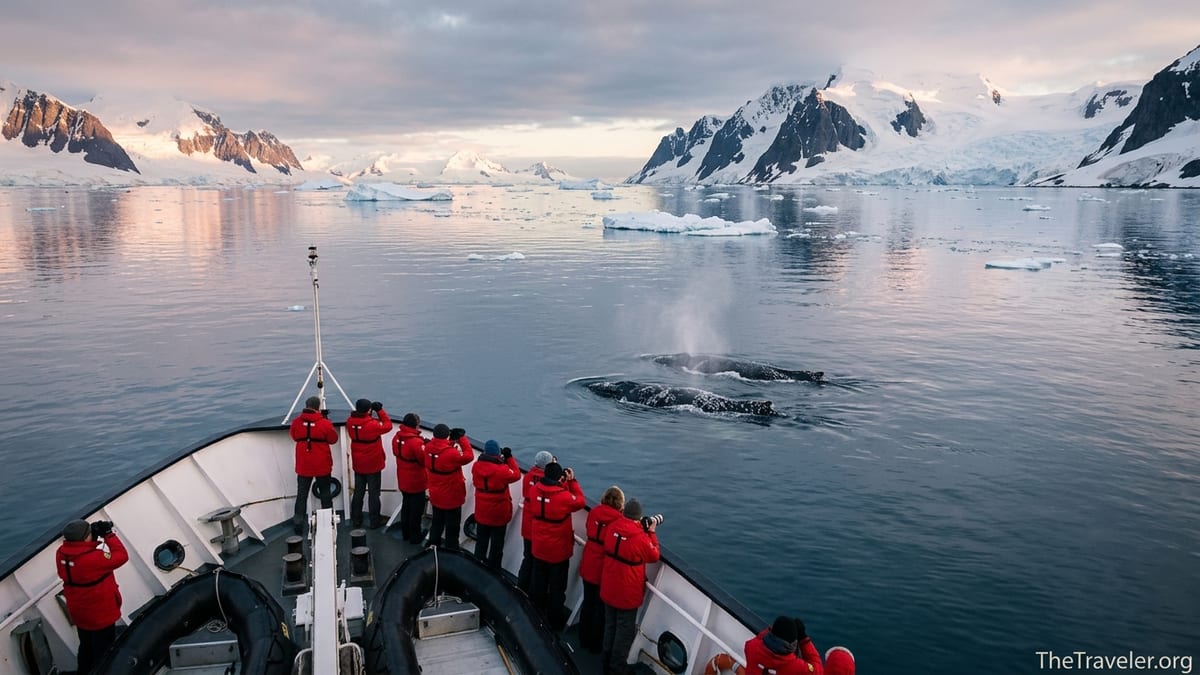
A typical Lindblad expedition day starts early. On an Antarctica sailing aboard National Geographic Resolution, for example, you may be woken by an announcement around 7 a.m. that a pod of humpback whales is off the bow, with guests heading up to the observation deck in parkas before breakfast. After a hearty buffet and made to order eggs, you might board Zodiacs for a landing at a penguin colony, followed by an afternoon of kayaking among icebergs if conditions allow.
The ships themselves vary. Newer polar class vessels like National Geographic Endurance and National Geographic Resolution have X-Bow hulls designed for comfort in rough seas, ample viewing lounges with floor to ceiling windows, and modern cabins, some with balconies. In warmer regions, smaller ships such as National Geographic Orion and National Geographic Venture carry fleets of Zodiacs, kayaks, and paddleboards and often include snorkeling equipment. In the Galapagos, the all suite National Geographic Islander II offers a more upscale feel with just 48 guests in 26 suites and an approximate 1:1 guest to crew ratio, along with Ecuadorian staff and guides who focus on local culture as well as wildlife.
Crucially, Lindblad’s onboard culture is informal. Dress is relaxed, with fleece and hiking pants standard at dinner. Instead of assigned seating and elaborate menus, you can expect open seating, reasonably refined but unpretentious cuisine, and staff who remember your name by day two. Evenings revolve around recaps, short lectures about what you saw that day, and previews of tomorrow’s landings, often supported by maps, satellite images, and wildlife ID slides. On many voyages, the ships also host working scientists who share their research, whether that is tagging whales in Antarctica or monitoring coral reefs in the Pacific.
Guests who value this educational focus consistently highlight it in reviews of recent voyages to places like the Galapagos and Alaska. Travelers returning from spring 2025 sailings on ships such as National Geographic Venture in Baja California and National Geographic Endeavour II in the Galapagos frequently describe the experience as more akin to a floating field camp with hotel level comforts than to a conventional cruise.
Wildlife Access and Expedition Gear: Where Lindblad Excels
If there is one area where Lindblad generally justifies its premium pricing, it is in wildlife access. The line’s itineraries are structured to spend as much time as possible off the ship, with multiple Zodiac outings, snorkeling opportunities in tropical regions, and hikes tailored to a range of fitness levels. Ships in Antarctica and the Arctic carry ice capable hulls and extensive gear to get you close to wildlife while respecting environmental regulations.
For instance, on a typical 10 or 11 day Antarctica itinerary on National Geographic Endurance, guests may experience landings on the Antarctic Peninsula, Zodiac cruises around iceberg filled bays, and visits to research stations, weather permitting. The ships are equipped with remotely operated vehicles, hydrophones to listen to whale vocalizations, and sometimes underwater cameras that capture what is happening below the surface and stream it into the lounge. On a “Fly the Drake” expedition, where travelers skip the rough Drake Passage by charter flight to King George Island, recent guests have reported exceptional penguin and whale viewing combined with more time spent exploring and less time crossing open ocean.
In the Galapagos, Lindblad has long term relationships with local guides and communities, and its ships operate under strict Ecuadorian park regulations. A week aboard National Geographic Islander II or Endeavour II typically includes daily snorkeling with sea lions and tropical fish, Zodiac landings on multiple islands to see blue footed boobies, marine iguanas, and giant tortoises, and kayaking in sheltered bays. Guests consistently comment that wildlife appears unafraid, often approaching humans, which amplifies the sense of immersion.
Even in less remote regions like Alaska’s Inside Passage, Lindblad’s smaller ships can access narrow fjords and shallow coves that larger cruise liners must bypass. A coastal voyage on National Geographic Quest or Venture might include Zodiac landings on wild beaches, hikes through temperate rainforest to see salmon streams and bears in season, and extended time drifting near glacier fronts while naturalists scan for harbor seals and mountain goats. For travelers who prioritize quality and intimacy of wildlife encounters, these elements are central to the value proposition.
How Much a Lindblad Expedition Really Costs
Lindblad’s biggest drawback for many travelers is price. While exact fares fluctuate based on season and demand, recent published rates for popular itineraries provide a clear picture of the investment required. A typical 7 night Galapagos voyage aboard National Geographic Endeavour II or Islander II often runs in the neighborhood of 10,000 to 12,000 US dollars per person in 2025 for an entry level cabin, before international flights. In Antarctica, a 12 day voyage on National Geographic Endurance or Resolution frequently starts around 15,000 to 18,000 dollars per person in a lower category cabin, with longer itineraries that include South Georgia or the Falklands climbing well above 20,000 dollars.
Alaska and Baja California trips are somewhat more approachable but still firmly in premium territory. A 7 night Inside Passage journey on National Geographic Venture or Quest in peak summer can easily land in the 7,000 to 9,000 dollar range per person. These fares usually include all shore excursions, Zodiac outings, most onboard activities, and many non alcoholic beverages, plus gratuities on some departures. However, they do not typically include international airfare, pre or post trip hotels beyond those bundled into select itineraries, or optional travel insurance.
What is important to recognize is that Lindblad’s per night pricing is generally higher than mainstream expedition competitors. Independent comparisons between Lindblad, Hurtigruten Expeditions, Quark Expeditions, and Aurora Expeditions often place Lindblad among the more expensive options for similar polar itineraries. At the same time, Lindblad emphasizes that it operates smaller ships, often with higher staff to guest ratios and expedition teams that include photographers, multiple naturalists, and sometimes visiting scientists, all of which add to operating costs.
Travelers constrained by budget but attracted to the general style of trip sometimes look for last minute discounts or shoulder season departures, though availability can be limited on popular routes. Others consider similar itineraries with different operators to save several thousand dollars per person. Whether Lindblad’s premium feels worth it depends largely on how much value you place on their educational programming, small ship size, and brand reputation.
Strengths, Weaknesses, and How It Compares to Rivals
In guest feedback and independent expert reviews, two strengths come up repeatedly for Lindblad: the quality of the expedition staff and the depth of educational content. Guests returning from Antarctica, the Galapagos, and Alaska voyages in 2024 and 2025 frequently describe naturalists who are not only knowledgeable but also gifted communicators, along with National Geographic photo instructors who spend significant time helping guests improve their images, whether using a professional DSLR or a smartphone.
Compared with some rivals, Lindblad tends to lean more heavily into science and conservation. Partnerships with organizations such as National Geographic support citizen science initiatives, from plankton sampling to contributing wildlife sightings to research databases. This appeals strongly to travelers who want their trip to feel purposeful, not just scenic. The line has also invested in newer hardware, with purpose built polar ships launched in recent years that improve comfort and safety in ice laden waters.
On the downside, Lindblad’s pricing is consistently at the higher end of the expedition market, and recent years have seen noticeable fare increases as demand has strengthened. Prospective guests also sometimes report frustrations around pre trip communication and booking logistics, especially during periods of high demand or operational disruption. A small minority of travelers have shared negative experiences related to cancellations or itinerary changes, particularly in challenging destinations like Antarctica where weather and sea ice can force last minute adjustments.
When lined up against competitors, the trade offs become clear. Quark Expeditions, for example, is often praised for offering strong polar itineraries and modern ships at slightly lower prices, with a similar emphasis on adventure. Hurtigruten Expeditions tends to combine expedition cruising with a Scandinavian sustainability focus and can be more budget friendly, though ships are sometimes larger. Aurora Expeditions, especially on its newer X Bow vessels, offers a comparable blend of comfort and adventure in the polar regions. Lindblad stands out most for its National Geographic partnership, its legacy in the Galapagos and Antarctica, and its very strong expedition teams, but travelers pay a premium for those advantages.
Which Travelers Will Find Lindblad Worth Booking
Lindblad is most likely to feel worth the cost for travelers who have a specific, long held dream destination that aligns with the company’s strengths. If you have spent decades imagining walking among king penguins on South Georgia, snorkeling with sea lions in the Galapagos, or watching brown bears fish for salmon in an Alaskan river, and you want those experiences framed by scientists and conservationists, Lindblad is a strong candidate.
Travelers who are new to cruising but experienced in independent adventure travel often find Lindblad a good bridge. Compared with organizing a multi day Antarctic skiing expedition or a self guided Amazon journey, Lindblad provides comfort and safety with a structure that still feels adventurous. Small ships and a casual onboard atmosphere appeal to people who might feel out of place on a 3,000 passenger megaship but are comfortable at a remote ecolodge or safari camp.
By contrast, if you are primarily price sensitive or interested in seeing a region in a more relaxed, less activity heavy way, a different line may make more sense. In Alaska, for example, a mainstream cruise line can show you glaciers and whales from a large ship at a fraction of the cost, even if you miss out on Zodiac landings and guided hikes. In Antarctica and the Arctic, operators like Hurtigruten and some newer boutique lines can provide a solid expedition experience for significantly less, particularly if you are flexible on exact travel dates and ship features.
Families should also consider the match carefully. Lindblad offers family friendly programming and dedicated kids departures on select itineraries, especially in the Galapagos and Alaska, and multi generational groups often rave about the educational benefits. However, the lack of traditional children’s entertainment, pools, or kids clubs means these trips work best for children and teens who are genuinely engaged by wildlife and nature, not those looking for slides and arcades.
The Takeaway
Lindblad Expeditions is not a bargain, and it does not pretend to be. Prices for its wildlife and adventure cruises to marquee destinations like Antarctica, the Galapagos, and Alaska often sit above those of comparable expedition lines. Yet for travelers who prioritize expert led wildlife encounters, deep educational programming, and a small ship environment, many find that the experience justifies the cost, especially for a once in a lifetime trip.
The line’s strengths include its long history in expedition cruising, high caliber naturalists and photo instructors, and itineraries that maximize time off the ship. Its weaknesses center on high fares, occasional pre trip communication frustrations, and the inherent unpredictability of itineraries in remote, weather dependent regions. Whether Lindblad is worth booking comes down to how much you value intellectual engagement and access in the field compared with comforts on board and savings in your wallet.
If you dream of standing on the bow of a small ship as whales surface beside you in the polar twilight, paddling a kayak past a calving glacier, or watching blue footed boobies dance at arm’s length on a Galapagos beach, and you want those experiences interpreted by scientists and storytellers, Lindblad should be on your shortlist. If you are mainly looking for the lowest price or the most luxurious suite, you may find better value with other operators. As with any major trip investment, the key is to align the operator’s strengths with your own travel priorities.
FAQ
Q1. How far in advance should I book a Lindblad expedition cruise?
For peak season itineraries such as Antarctica between December and February or Galapagos departures over major holidays, booking 12 to 18 months in advance is often advisable to secure preferred cabin categories. Shoulder season voyages and less in demand regions may have availability closer to departure, but waiting usually reduces your choice of dates and cabins.
Q2. Are Lindblad cruises suitable for travelers with limited mobility?
Lindblad ships have varying levels of accessibility, and most landings are by Zodiac on uneven terrain or beaches, which can be challenging. Guests should be able to navigate stairs on board and step in and out of small boats with assistance. If you have limited mobility, it is important to discuss your specific needs with the company or a travel advisor before booking, as some itineraries and ships are more accommodating than others.
Q3. What is typically included in a Lindblad expedition fare?
Most Lindblad fares include accommodation, all or most meals, non alcoholic beverages, daily excursions, Zodiac trips, use of expedition gear like boots or snorkeling equipment in certain regions, and onboard lectures. Alcoholic drinks, premium coffees, spa services, and optional extensions before or after the trip are usually extra. Airfare to the embarkation point and travel insurance are also not included unless specified in a bundled package.
Q4. How rough are the seas on Lindblad’s polar expeditions?
Conditions vary by route and time of year. Crossings such as the Drake Passage to Antarctica can be very rough, even on modern X Bow ships designed to improve comfort in heavy seas. Many guests take motion sickness medication as a precaution. In contrast, coastal routes in Alaska or sheltered parts of the Galapagos are often relatively calm. If you are very prone to seasickness, you may want to consider a Fly the Drake itinerary or focus on regions with more protected waters.
Q5. Do Lindblad expeditions have a dress code?
The atmosphere on Lindblad ships is informal, and there is no strict dress code. During the day, functional outdoor clothing suitable for the climate is standard, such as waterproof jackets, hiking pants, and sturdy shoes. In the evenings, smart casual attire like trousers and a sweater is typical, but formal wear is neither required nor expected.
Q6. How do Lindblad’s Galapagos trips differ from other operators?
Lindblad’s Galapagos voyages emphasize small groups, experienced naturalist guides, and a strong educational component through its partnership with National Geographic. Ships like National Geographic Islander II are relatively small and include daily snorkeling, kayaking, and guided walks on multiple islands. Other operators in the region may offer similar itineraries at lower prices but with larger groups or less emphasis on onboard lectures and photography instruction.
Q7. What is the typical age range on a Lindblad expedition?
The core demographic on many Lindblad voyages is couples and solo travelers in their 50s to 70s, though there is often a spread from active retirees to middle aged professionals. Family oriented departures in places like Alaska and the Galapagos attract more children and teenagers, especially during school breaks. The vibe tends to be more about shared interests in nature and learning than about age.
Q8. Can I travel solo on a Lindblad expedition, and is there a single supplement?
Solo travelers are welcome on Lindblad voyages, and it is common to see a noticeable number of solo guests. Some sailings and cabin categories offer reduced or waived single supplements, while others charge close to double occupancy rates. If you are traveling solo, it is worth asking about specific departures that are more solo friendly or working with a travel advisor who tracks promotions.
Q9. How environmentally responsible are Lindblad’s operations?
Lindblad highlights its environmental commitments, including investments in newer, more efficient ships, partnerships with conservation organizations, and guest facing initiatives such as limiting single use plastics. The line also adheres to local regulations in sensitive regions and supports various research projects. That said, any cruise has an environmental footprint, so travelers who are particularly concerned may also want to consider carbon offsetting and choosing itineraries that minimize long haul flights.
Q10. Is travel insurance necessary for a Lindblad expedition cruise?
Travel insurance is strongly recommended for Lindblad expeditions, and certain itineraries may require minimum levels of coverage, especially in remote regions like Antarctica. Policies that include trip cancellation, medical coverage, and evacuation are particularly important given the high cost of these trips and the logistical challenges of reaching medical care in remote areas. Always review the specific insurance requirements for your chosen itinerary before final payment.