


Families and frequent international travelers increasingly look beyond basic credit card coverage and domestic health plans when they head abroad. MSH, known globally as MSH International and MSH Americas in North America, positions itself as a specialist in international health and travel insurance, serving everyone from short-term tourists to long-term expatriates. But is MSH travel insurance actually a good fit for families and international travelers in 2026, and how does it perform in real-world situations?
Get the latest updates straight to your inbox!
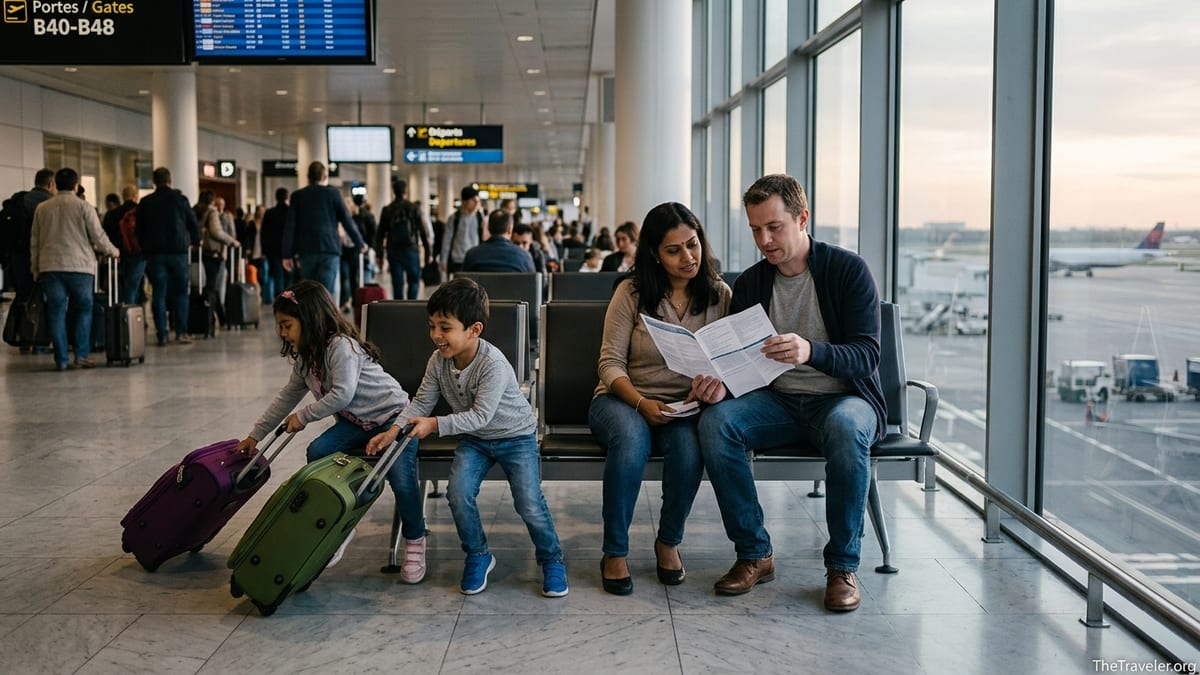
Who MSH Travel Insurance Is Designed For
MSH is primarily an international health insurance provider that has built out travel and assistance products around that core. Its marketing focuses on people who spend significant time outside their home country: expatriate employees, digital nomads, international students, and families relocating abroad. The flagship offerings include comprehensive international health plans such as First’Expat+ and Relais’Expat+ for long-term stays, and Start’Expat or similar packaged plans for trips of less than a year, alongside a standalone assistance product branded as MSH Assistance.
For a family, this means MSH is not just selling a one-off policy for a single two-week vacation. Instead, it aims to cover all or most of a family’s medical needs abroad, then layer on classic travel benefits like emergency evacuation, repatriation, and some non-medical assistance. For example, a couple moving from France to Dubai with two children might use an MSH international health plan to cover everyday pediatric visits and prescriptions, while relying on MSH Assistance for emergency medical evacuation or repatriation to Europe if a serious illness occurs.
MSH also actively targets the Americas region through MSH Americas, which works with schools, universities, and organizations to insure international students and teachers, as well as individual travelers. In practice, this can look like a Canadian student heading to Spain for a semester on an MSH-backed student plan that satisfies university and visa requirements, or a U.S. remote worker based periodically in Mexico who wants a flexible, cross-border health and travel solution.
Because of this focus, MSH tends to be most attractive to travelers planning longer international stays, repeated trips, or true relocation, rather than families who only take one short overseas vacation every few years. That said, its short-term and assistance packages can still work well for more occasional travel, provided families understand what is and is not included.
Key Benefits for Families and Long-Term Travelers
MSH emphasizes a few core benefits that are particularly relevant to families. First, its international health plans are customizable. Families can choose coverage levels for hospitalization, outpatient care, maternity, dental and vision, and in some cases third-party liability. These plans typically include hospitalization and medical evacuation as standard benefits, so you do not need to bolt on separate evacuation coverage. For a family moving to Singapore or the United Arab Emirates, where private hospital costs are high, this bundled approach can reduce the risk of catastrophic expenses.
Second, the company promotes its emergency assistance capability. MSH advertises 24/7 access to assistance teams worldwide, with the promise of rapid support and coordination in emergencies. The dedicated MSH Assistance product lists emergency medical transportation, repatriation, assistance in the event of death, and services like arranging the repatriation of children under 18 if a parent is hospitalized. For a single parent traveling with two kids in Thailand, that provision can be critical if the parent becomes seriously ill and needs the children escorted home.
Third, MSH leans on its global reach and multilingual support. It reports more than 700,000 members in nearly 200 countries and multiple claims centers worldwide, along with staff speaking dozens of languages. For a French-speaking family relocating to Canada or a Brazilian family moving to Portugal, being able to communicate in their own language about complex medical and billing questions can make a sizeable difference in day-to-day use of the plan.
Finally, the digital experience is positioned as a convenience factor. Claims can typically be submitted by taking a photo of receipts through the MSH app, and members receive downloadable insurance certificates that can be provided to schools, consulates, or hospitals abroad. For example, a family of four relocating to Dubai could upload emergency room bills from a child’s asthma flare-up directly from a smartphone, rather than having to mail paper documents internationally.
What MSH Assistance and Travel Products Actually Cover
Beyond comprehensive health insurance, families considering MSH specifically for travel protection should examine the dedicated assistance and short-term products. MSH Assistance, which can be purchased separately, focuses on emergencies rather than routine care. Typical benefits include emergency medical transportation, repatriation to either the country of expatriation or the country of origin, and assistance in the event of death such as handling formalities and the return of remains.
Personal assistance benefits can be especially relevant to parents. Examples include repatriation of children under 18 if an insured adult is hospitalized, organizing a family member’s presence during the insured person’s hospitalization, and arranging an early return home in the event of the serious illness or death of a close relative. A concrete scenario might be a family based in Qatar for work: if one parent is hospitalized for a sudden cardiac issue while on a trip to Turkey, the assistance service could arrange for the children to be flown back home and for a grandparent to travel to support them.
Non-medical features often include personal liability coverage for bodily injury or property damage caused to third parties, as well as certain legal assistance provisions. For example, if a child accidentally breaks an expensive display item in a hotel in Italy, MSH’s liability coverage could respond up to the policy limit, subject to the specific conditions. Some travel packages, especially those linked to European markets, also bundle in limited baggage coverage, legal fee advances, and access to digital services for storing travel documents.
Families should pay attention to the distinction between assistance and full health insurance. Assistance products are built to handle acute emergencies and logistics, not routine medical visits or non-urgent treatment. If you plan to spend six months in Spain with school-age children, a plan like Start’Expat or a broader international health policy will be more suitable for covering pediatric check-ups, vaccinations, and ongoing prescriptions, with MSH Assistance as the emergency backbone.
Costs, Value, and Real-World Price Points
MSH does not publish comprehensive global pricing tables, and premiums vary based on age, country of residence, coverage level, and family composition. However, some indicative figures from MSH Assistance give a sense of cost for emergency-focused coverage. For example, a family assistance package for members under age 36 has been listed at under 500 euros per year, while a similar package for families with members 36 and older is priced moderately higher. While these amounts can change, they illustrate that annual emergency assistance for a whole family can cost roughly the same as a mid-range family vacation in Europe or a single transatlantic airfare.
For full international health coverage, premiums are typically higher, reflecting the broader scope of benefits. A family of four relocating from Canada to the United Arab Emirates on a comprehensive MSH health plan might face annual premiums in the low to mid four-figure euro or dollar range, depending on deductibles and add-ons like maternity or dental. Compared with local private health insurance in some destinations, MSH can be competitive, particularly when global portability and evacuation are factored in. However, families on very tight budgets or those mainly seeking coverage for a short holiday may find such comprehensive plans more than they need.
The value proposition depends heavily on your travel profile. A family that spends ten months of the year outside its home country, moving between Europe, the Middle East, and Asia, will extract more value from a globally valid, multi-country policy than a family taking a single two-week trip to Mexico. For that occasional trip, a one-off MSH travel policy or even another insurer’s simple medical-only plan might be more cost-effective, especially if your domestic health insurance already offers some out-of-country emergency coverage.
It is also important to consider opportunity cost compared with alternatives. Some international insurers or regional players may offer cheaper premiums for similar benefits in specific corridors, such as between Western Europe and Southeast Asia. Families should obtain quotes from MSH and competitor brands, adjust deductibles and benefit limits, and then compare not just price but also claims reputation and assistance responsiveness in their likely destinations.
Coverage Gaps, Exclusions, and Potential Downsides
Like all travel and international health insurers, MSH policies contain exclusions and limitations that can affect families. Common exclusions in MSH healthcare terms and conditions include non-emergency travel and accommodation costs related to treatment, pre-existing conditions that were not declared at enrollment, and certain high-risk sports or activities. For example, solo mountaineering above a certain altitude, off-piste skiing outside marked open trails, or extreme canyoning can fall outside standard coverage. Parents planning an adventure-heavy family ski trip in the Alps should confirm whether their teens’ freestyle terrain park sessions are considered covered skiing or excluded extreme sports.
Mental health and behavioral conditions may be covered only to a limited extent, or under specific conditions and caps. Similarly, dental care is often restricted to emergency treatment for acute pain or trauma, and routine dental check-ups or orthodontics for children will usually require a separate dental module or a more comprehensive plan. A family relying on a basic assistance package might find that a teenager’s chipped tooth from a pool accident abroad is only partially reimbursed or not covered beyond immediate pain relief.
Real-world user experiences point to another potential downside: administrative complexity and delays in claims processing. Public discussions in Canada, where MSH handles out-of-country claims for many federal employees, highlight cases where reimbursement took several months or longer, and in some instances claims were denied due to late submission. In one scenario, a family dealing with a five-figure hospital bill abroad reported a long lag between treatment and final resolution of the claim, with exchange rate calculations applied at the time of review rather than on the service date, which affected the reimbursement amount.
Emergency assistance response times can also vary. Some travelers have reported long wait times on phone lines before getting through to a live assistance coordinator, leading them to pay out of pocket at foreign hospitals and sort out reimbursement later. While others describe positive experiences with MSH resolving complex cross-border billing issues, the variance suggests that families should be prepared to advocate for themselves, keep thorough documentation, and understand that real-time support may not always be instantaneous in high-volume periods.
How MSH Compares With Alternatives and Credit Card Coverage
For many families, the first question is whether any extra travel insurance is needed at all, given existing benefits through credit cards or employer health plans. MSH itself acknowledges that most credit cards have limited emergency travel and assistance benefits that typically apply only for short trips, often capped at a fixed number of days per journey and subject to strict conditions. After that period, families may have no coverage unless they purchase separate international health or travel insurance. This gap is especially relevant to global nomads and expatriates who live abroad for extended stretches.
Compared with the off-the-shelf travel policies sold by airlines and online booking engines, MSH’s strength lies in its integration with full-scale international health insurance. A U.S. family moving to Portugal, for example, might find that basic airline-offered travel insurance covers only lost baggage and trip cancellation, with modest medical limits. An MSH plan can instead provide high or unlimited hospital coverage, worldwide evacuation, and ongoing outpatient treatment, with the option to continue coverage after moving to another country. That continuity is something many simple short-trip policies do not offer.
Against other international insurers, MSH competes with brands that also specialize in expatriate and student coverage. The differences often come down to network strength, claims service, and pricing in particular regions. Some insurers may offer more inclusive coverage for pre-existing conditions or shorter waiting periods for maternity benefits, while MSH might be more flexible on multi-country coverage and language support. For a French family splitting time between Paris, Montreal, and Dubai, being able to use the same insurer across all three locations could outweigh small premium differences.
Families should also weigh the implications of MSH acting as a third-party administrator for employer plans. In Canada, for example, MSH processes travel-related claims for large public sector health plans. When you buy separate travel insurance on top of this, that policy often becomes a last payer, so you must first make a claim through MSH. This coordination can be beneficial if done smoothly, but it may also lengthen timelines for reimbursement. Understanding the order in which different insurers pay is crucial before a crisis occurs abroad.
Practical Tips for Families Considering MSH
Before purchasing, families should map out their likely travel and living patterns for the next 12 to 24 months. A family of four that plans one three-week European road trip this year and mostly domestic travel next year may be better off with a single-trip or annual multi-trip policy that focuses on emergency medical and evacuation benefits, potentially from MSH Assistance. In contrast, a family relocating to the Netherlands for three years with frequent side trips to other European countries is more likely to benefit from a comprehensive MSH international health plan with embedded assistance features.
It is critical to request and read the full policy wording, not just the marketing brochure. Pay particular attention to exclusions related to pre-existing conditions, pregnancy and childbirth, mental health, high-risk sports, and travel to countries with active security advisories. If you know your child has a chronic asthma condition or you plan to give birth abroad, ask MSH directly how those situations are treated, whether there are waiting periods, and what documentation is required for coverage to apply.
Families should also run realistic cost scenarios. For instance, estimate what a three-day hospitalization for appendicitis in the United States or Singapore might cost, and then check the policy’s per-incident and annual limits, deductibles, and co-insurance. If MSH offers a plan with a higher deductible but significantly lower annual premium, calculate whether the savings make sense given your risk tolerance. Likewise, if you are mainly worried about evacuation from a remote island or conflict zone, a focused assistance product with strong evacuation benefits might provide better value than a top-tier health plan you rarely use.
Finally, set up practical systems before departure. Save MSH emergency numbers in your phone, print or download digital ID cards for each family member, and brief older children on who to call in an emergency. In destinations where English or French is not widely spoken, consider carrying a short written explanation in the local language that identifies MSH as your insurer and provides contact details for billing departments at hospitals and clinics.
The Takeaway
MSH travel and international health insurance is broadly well-suited to families and international travelers who spend substantial time outside their home country, especially expatriates, international students, and globally mobile professionals. Its key strengths lie in customizable long-term health coverage, integrated emergency evacuation and repatriation benefits, and multilingual assistance supported by a global network. For a family relocating abroad or living between countries, that combination can provide a level of continuity and security that short-trip travel policies and basic credit card coverage usually cannot match.
At the same time, MSH is not a perfect fit for every traveler. Premiums for comprehensive international health plans can be high for families who primarily take short vacations, and assistance or travel products may have exclusions and administrative complexities that frustrate some users. Publicly shared experiences show both smooth, helpful support and significant delays or disputes in claims, underlining the importance of reading conditions closely and managing expectations.
For families weighing whether MSH is “good,” the answer is nuanced. It is often a strong option for long-term or frequent cross-border living, where predictable, integrated coverage is worth paying for. For a single holiday or low-risk, short-term trip, a simpler and cheaper policy from MSH or another reputable insurer might be more appropriate. The best approach is to compare quotes, scrutinize benefits and exclusions in detail, and choose a level of protection tailored to your family’s actual travel patterns, health needs, and budget rather than relying on brand recognition alone.
FAQ
Q1. Is MSH travel insurance suitable for a one-time family vacation of two weeks?
For many families taking a single short trip, MSH can be suitable, especially if you choose a focused assistance or short-term travel medical product. However, some families may find that a simpler single-trip policy from any reputable provider with strong emergency medical and evacuation limits offers adequate protection at a lower price. MSH tends to be most cost-effective when your family travels internationally more frequently or stays abroad for longer periods.
Q2. Does MSH cover pre-existing medical conditions for children?
Coverage for pre-existing conditions depends heavily on the specific plan and on whether the condition was declared and accepted at enrollment. Some international health plans may provide coverage for stable, well-controlled conditions, possibly after a waiting period, while basic travel assistance products may exclude them. Parents of children with asthma, diabetes, or other chronic conditions should disclose these in detail during underwriting and obtain written confirmation of what is and is not covered.
Q3. Are adventure sports covered under MSH travel insurance?
Standard MSH policies often exclude or restrict coverage for high-risk activities such as mountaineering above certain altitudes, off-piste skiing outside marked open trails, bobsleigh, or technical canyoning. More conventional sports like resort skiing on marked runs or recreational scuba diving within depth limits may be covered, but it is crucial to verify this in the policy wording. If your family’s trips routinely involve extreme sports, you may need to purchase additional coverage or look for a specialist insurer.
Q4. How does MSH handle emergency medical evacuation for families?
MSH’s assistance services typically coordinate emergency transportation to the nearest appropriate medical facility or, in serious cases, repatriation to the insured person’s country of expatriation or origin. When parents are hospitalized, benefits can include organizing the repatriation of children or arranging for a family member to travel and stay with them. In practice, this might involve chartering an air ambulance from a remote island to a regional hospital and then arranging commercial flights home for the rest of the family, all subject to medical approval and policy limits.
Q5. Can MSH insurance satisfy visa requirements, such as for a Schengen visa?
Some MSH products are designed to meet common consular requirements, providing emergency medical coverage and repatriation benefits above typical minimum thresholds. However, not every plan will automatically satisfy every visa rule. For Schengen or student visas, you should confirm that your chosen MSH policy clearly states geographic coverage for the required region, includes repatriation, and specifies adequate medical limits on the certificate that you submit with your application.
Q6. What is the claims process like with MSH for medical expenses abroad?
MSH encourages members to use its app or online portal to submit claims, often by uploading photos of invoices and medical reports. In simple cases, reimbursement can be relatively straightforward. That said, publicly reported experiences highlight that complex or high-value claims, especially when MSH acts as a third-party administrator for another plan, may involve longer processing times and requests for additional documentation. Keeping detailed records and submitting claims promptly after treatment is essential.
Q7. Does MSH cover routine medical care, like pediatric check-ups and vaccinations?
Only comprehensive international health plans from MSH are designed to cover routine and preventive care. Travel-focused assistance policies generally concentrate on emergencies and may not pay for regular pediatric visits, vaccinations, or non-urgent consultations. A family relocating abroad that wants full access to everyday healthcare would likely need a broader MSH international health plan rather than relying solely on a basic travel product.
Q8. How does MSH interact with existing employer or government health plans?
In many cases, MSH administers or complements employer-sponsored and public sector health plans, particularly for out-of-country medical expenses. If you already have such coverage, any additional standalone travel insurance you buy may operate as a last payer, meaning you must claim through the employer or government-linked MSH plan first. This coordination can affect both the speed and amount of reimbursement, so it is important to understand the order of coverage before traveling.
Q9. Is MSH a good option for international students and their families?
MSH works directly with schools and universities to insure international students and teachers, offering plans that meet institutional and immigration requirements. For a student traveling alone, these can be convenient, integrated solutions. For families joining a student for extended stays or combining student coverage with broader family travel, it may be worth comparing the university-linked MSH plan with stand-alone family policies to determine which combination provides the best coverage and value.
Q10. How should families decide whether MSH is the right choice for them?
Families should start by assessing how often and how long they travel abroad, the destinations they visit, and any known medical needs. They should then gather quotes from MSH and a few competing providers, carefully comparing benefits such as medical limits, evacuation, pre-existing condition treatment, maternity and child coverage, and claims service reputation. If your family spends large portions of the year living or studying outside your home country, MSH’s integrated international health and assistance solutions can be a strong contender. For occasional short trips, a simpler, less expensive policy might offer more appropriate value.