


For many travelers, Shamakhi is little more than a coffee-and-photo stop on the road from Baku to Lahij or Gabala. Tour vans pull up to the grand Juma Mosque, guests snap a few pictures, and within an hour they are back on the highway. Yet this small hillside city, once the capital of the Shirvanshah state and today a center of wine and nature tourism, rewards travelers who slow down. The question is not whether you can see Shamakhi on a quick stop, but whether you should. In many cases, the answer is that Shamakhi is worth at least an overnight stay, and sometimes even a full weekend.
Get the latest updates straight to your inbox!
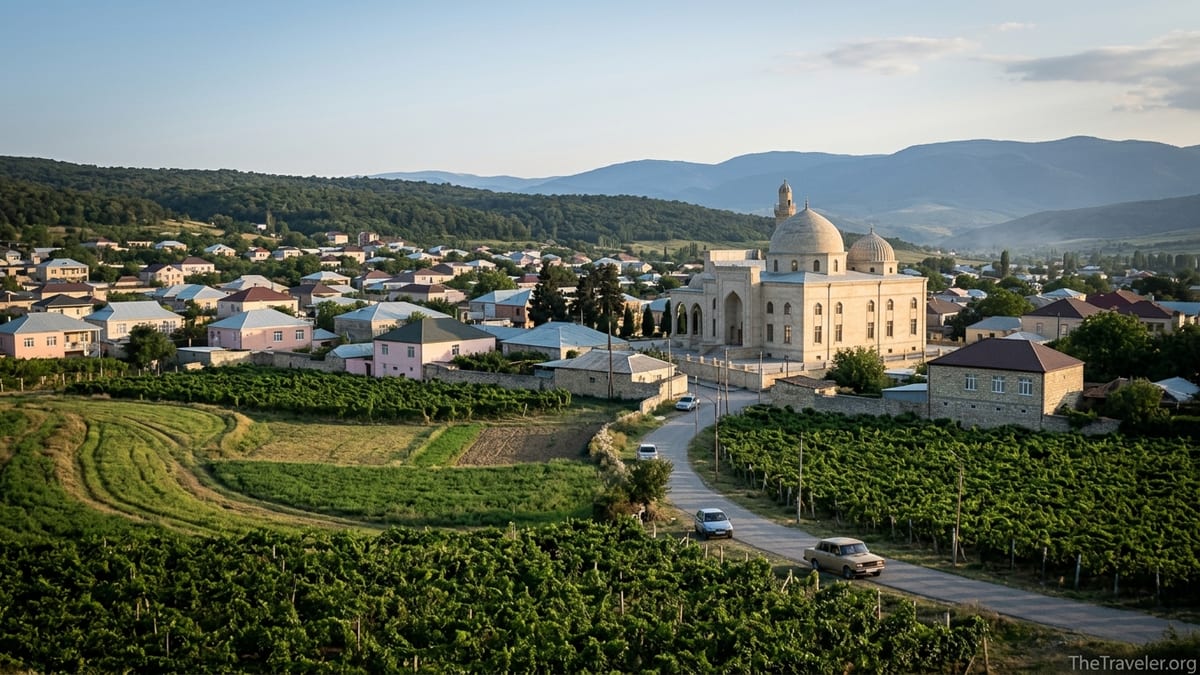
Where Shamakhi Fits Into an Azerbaijan Itinerary
Shamakhi lies roughly 120 kilometers west of Baku, along the main highway that continues toward Gabala and Sheki. In practical terms, that makes it one of the first substantial stops once you leave the capital for the mountains. Most guided day tours from Baku bundle Shamakhi with Lahij, a highland copper-craft village, or with Gabala’s lakes and cable cars, giving the city only an hour or two of attention on the way. In travel agency brochures, Shamakhi is routinely described as a “short stop” or “en‑route visit,” a sign of how it is perceived in mainstream tourism.
The drive from Baku usually takes around two to two and a half hours, depending on traffic and whether you pause at the Diri Baba Mausoleum near Gobustan. Shared taxi drivers from Baku’s intercity bus terminal often quote prices that work out cheaper than private tours if you are comfortable with basic Russian or Azeri and a more local experience. Road conditions on the main route are generally good, though weather can slow things down in winter. All of this makes Shamakhi highly accessible for an overnight escape from the capital.
Because Shamakhi sits at a crossroads, it naturally competes with other destinations for your limited time. Travelers with four or five days in Azerbaijan often debate whether to spend extra hours in Shamakhi or push on to Gabala’s mountain resort scene or Sheki’s caravanserais. The result is that many visitors underestimate how much there is to do in and around Shamakhi itself, especially if they enjoy wine, hiking, and quiet countryside stays.
Understanding where Shamakhi fits geographically helps set expectations. This is not a remote alpine village that requires backroads and long transfers. Shamakhi is a comfortable, mid‑sized town within easy reach of Baku that works either as a leisurely stand‑alone break from the capital or as a gentle first step into Azerbaijan’s interior, before continuing deeper into the Caucasus.
Cultural Depth: More Than a Single Mosque Stop
On a fast day tour, the cultural experience of Shamakhi is usually distilled into one headline sight: the Juma Mosque. This large hilltop complex dominates local postcards and is promoted as one of the oldest mosques in the Caucasus. Many groups spend less than forty minutes here, enough time to admire the symmetrical courtyard, step into the cool prayer hall outside service times, and listen to a brief explanation from a guide before moving on.
Stay longer in town, though, and the Juma Mosque becomes a starting point rather than the main event. Visiting outside the peak tour bus window, often late afternoon or early morning, allows space to notice details such as the thick stone walls, the play of light in the central hall, and the quieter side courtyards where locals sit under old mulberry trees. If you are interested in architecture, you can take time to compare the reconstructed sections with surviving older stonework and discuss with a guide how the building has been rebuilt after earthquakes and conflicts.
Beyond the mosque, Shamakhi’s history as a Silk Road and literary center reveals itself in smaller, less obvious places. Locals point out sites associated with medieval Shirvanshah rulers and poets whose works are still studied in Azerbaijan today. While you will not find a dense cluster of museums with English labels, wandering the central streets, visiting the small local history museum if open, and talking with residents in tea houses gives a sense of a town that once rivaled Baku long before oil reshaped the country’s economy.
For travelers who prefer immersive cultural experiences over ticking off a checklist of monuments, this slower rhythm is precisely where Shamakhi becomes worthwhile. Having a full afternoon and evening in the town lets you watch the change from day trippers to local life, when the call to prayer echoes across the hills and families stroll around neighborhood parks that no tour brochure mentions.
Wine Country and Slow Tourism Around Shamakhi
One of the strongest arguments for staying in Shamakhi is its role in Azerbaijan’s emerging wine tourism scene. The surrounding hills are dotted with vineyards owned by producers that supply both local shops and international markets. Travel itineraries and wine tour brochures increasingly describe the Shamakhi region as a “recognized center of winemaking,” with new tasting rooms and events such as seasonal wine festivals drawing visitors.
About a 15 to 20 minute drive from town, the village of Meysari has become a reference point for travelers interested in organic and boutique wines. Several Baku-based tour operators now offer day trips that combine Shamakhi Juma Mosque with tastings at a Meysari‑area winery, where visitors can try a flight of local reds and whites, often paired with village cheeses, olives, and flatbreads. Spending the night in or near Shamakhi rather than racing back to Baku allows you to enjoy these tastings at a more relaxed pace and still be safely off the road by dusk.
Wine travel here is less polished than in established regions such as Tuscany or the Douro Valley, which can be part of its appeal. Instead of long lists of single‑vineyard releases, expect a concise menu of blends, often poured by staff who may not speak fluent English but are genuinely proud of their product. Prices are usually accessible by European standards; a tasting set can cost similar to a modest dinner in Baku, and bottles are often positioned as affordable souvenirs rather than luxury investments. For many visitors, sharing a bottle with a vineyard view of rolling hills and distant Caucasus peaks becomes the highlight of their Shamakhi stay.
Beyond formal wineries, the region’s agricultural character shows in roadside stalls selling seasonal fruit, honey, and homemade preserves. In late summer and autumn, you may pass small trucks piled with grapes or apples on the road between Shamakhi and nearby villages. Choosing to stay overnight gives you time to stop at these stands, chat with farmers through gestures or translation apps, and experience the area as a living countryside rather than scenery behind a bus window.
Nature, Hiking and Starry Skies in the Shamakhi Hills
Surrounded by wooded hills and pastures, Shamakhi is one of the easiest mountain gateways to reach from Baku. Around 20 to 25 kilometers from town, the Pirgulu area, which includes a state reserve and highland meadows, offers cooler temperatures in summer and access to forested walking trails. Travelers who base themselves in Shamakhi for a night can arrange a taxi or private driver to Pirgulu for half‑day hikes among beech trees and open views toward the Greater Caucasus.
The same highlands host an astrophysical observatory that occasionally opens for visitors by prior arrangement or as part of organized tours. On clear nights, the darker skies around Pirgulu provide star visibility that contrasts sharply with Baku’s coastal haze and city lights. Staying in Shamakhi instead of returning to the capital makes it logistically easier to schedule an evening visit or simply step outside a hillside guesthouse to see a wide band of stars.
Another nature‑focused option that has grown in recent years is the Shamakhi safari park concept, where herds of deer and other animals move around a wide fenced territory in the region’s mountain‑wooded zone. Experiences here sit somewhere between a wildlife reserve and a managed park; expectations should be adjusted accordingly. For families or travelers with limited mobility, though, these parks can provide an accessible way to enjoy open terrain and learn about local species without extensive hiking.
For many visitors, the most memorable natural moments around Shamakhi are unscheduled: morning mist rising from the hills outside a small hotel, or a picnic on a grassy slope with locally baked bread and fresh herbs bought in town. These are experiences that simply are not possible on a rapid stop where the only outdoor time is the mosque courtyard and a brief roadside viewpoint.
Practicalities: Accommodation, Food and Getting Around
The number of hotels and guesthouses in and around Shamakhi has grown gradually as domestic tourism increases. You will find a mix of simple family‑run places in town and resort‑style properties a short drive into the hills, sometimes marketed to Baku residents seeking weekend nature escapes. Prices generally sit below those of comparable options in Gabala or Sheki, which can be an advantage for budget‑conscious travelers willing to trade slightly more basic service for quieter surroundings.
Within Shamakhi itself, most accommodation is clustered along or near the main road, with easy access to small supermarkets, bakeries, and tea houses. A typical mid‑range guesthouse room might include breakfast of eggs, cheese, tomatoes, cucumbers, bread and tea, reflecting local habits rather than international buffet standards. Travelers who value silence should confirm room locations in advance, since some properties sit directly on busier sections of the highway where traffic noise continues into the night.
Dining options remain modest but improving. In addition to simple canteens serving kebabs, stews, and pilaf, newer venues have appeared that lean into wine tourism, pairing grilled meats and salads with regional vintages by the glass. Do not expect extensive vegetarian menus, but travelers who eat dairy and eggs can usually find vegetable stews, lentil soups, salads, and bread‑based dishes. It is always worth carrying a translation app or small phrase list to communicate dietary needs, as English menus are not universal outside major tourist stops.
Getting around without a car is manageable but requires some planning. Taxis in town are relatively easy to find for short hops between the mosque, bus station, and accommodations. Reaching wineries or highland areas typically means hiring a driver by the hour, something your guesthouse or hotel can arrange. Costs will vary with season and fuel prices, but they are often reasonable when split between two or three travelers. Returning to Baku the next day is straightforward by shared taxi or minibus, though departures are more frequent in the morning than late evening.
When Shamakhi Is Worth More Than a Stop
Whether Shamakhi deserves more than a quick pause on your route from Baku comes down to your interests and trip length. If your primary goal is to photograph landmark buildings, sleep in caravanserais, and ride mountain cable cars, you may indeed prefer to move directly toward Gabala or Sheki. In that case, a one‑hour stop to stretch your legs at Juma Mosque, perhaps with a coffee at a roadside cafe, gives a brief but pleasant glimpse of the region without significantly extending your travel day.
However, Shamakhi becomes genuinely rewarding when you have at least one full day and a night to spend. Travelers who enjoy wine tasting, quiet countryside hotels, and easy access to forested walks will find that the combination of Juma Mosque, a visit to a Meysari‑area winery, and an excursion toward Pirgulu or the highland meadows fills a relaxed itinerary. Add unhurried meals, time for casual conversation with locals, and perhaps an evening under the stars, and Shamakhi feels much less like a transit stop and more like a compact rural retreat.
Shamakhi can also break up what would otherwise be a very long travel day. Instead of driving from Baku to Sheki in one stretch, some travelers choose to overnight in Shamakhi or its nearby resorts, then continue the next morning via the winding road past Lahij or along the highway toward Gabala. This approach is particularly appealing in winter or early spring, when early nightfall and variable weather make shorter driving stages safer and more comfortable.
In that sense, Shamakhi is best understood not as a rival to better‑known destinations but as a flexible building block in an Azerbaijan itinerary. For some visitors it will remain a convenient cultural interlude; for others, especially those curious about the country’s wine and nature tourism, it is worth designing a full weekend around.
The Takeaway
Shamakhi’s reputation as “that mosque stop on the way from Baku” does it a disservice. While it can certainly function as a brief pause on a longer journey, the town and its surroundings offer a more layered experience for travelers willing to give it time. Historic religious architecture, emerging vineyards, accessible highland landscapes, and a slower pace of life all become visible only when you stay beyond the standard tour‑bus hour.
If your schedule in Azerbaijan is very tight and your interests lean heavily toward the grand set‑piece sights further west, then a quick visit to Juma Mosque may be enough. But if you have even one spare night in your itinerary and are drawn to quieter, less commercial corners of a country, Shamakhi is worth more than a passing glance from a bus window. In many ways, the decision comes down to how you prefer to travel: collecting quick impressions or settling in, however briefly, to feel the rhythm of a place.
FAQ
Q1. Is Shamakhi worth staying overnight, or is a quick stop from Baku enough?
For travelers interested only in seeing Juma Mosque and continuing to Lahij or Gabala, a short stop can work. If you enjoy wine tasting, nature walks, and quieter countryside stays, an overnight or weekend in Shamakhi is usually worth the extra time.
Q2. How long does it take to get from Baku to Shamakhi, and what is the road like?
The drive typically takes around two to two and a half hours from central Baku under normal conditions. The main highway is generally in good shape, though traffic and winter weather can slow the journey, so it is wise to allow some buffer time.
Q3. What are the main things to do in Shamakhi besides visiting Juma Mosque?
Beyond the mosque, visitors often explore nearby vineyards and wineries around Meysari, take drives or hikes toward Pirgulu and the surrounding hills, visit small local museums when open, and simply enjoy the atmosphere of a historic regional town with tea houses and markets.
Q4. Can I visit a winery near Shamakhi without joining a large tour group?
Yes. Many travelers arrange private drivers through their guesthouse or hire a taxi in town to reach nearby wineries. Booking ahead is helpful, especially on weekends or during harvest season, to confirm opening hours and tasting availability.
Q5. Is Shamakhi a good base for hiking and nature activities?
Shamakhi works well as a soft adventure base. It offers easy vehicle access to forested areas and highland meadows near Pirgulu and other villages, with opportunities for light hikes and scenic walks rather than demanding multi‑day treks.
Q6. What kind of accommodation can I expect in Shamakhi?
Accommodation ranges from simple family guesthouses in town to more resort‑style properties in the surrounding hills. Rooms are generally clean and functional, with breakfasts based on local products, but service and facilities can be simpler than in major resort areas.
Q7. Is Shamakhi suitable for independent travelers without a rental car?
It is possible, though some planning is required. Shared taxis and minibuses connect Baku and Shamakhi, and local taxis can cover short distances. For wineries and highland areas, you will likely need to hire a driver by the hour, which guesthouses can usually help arrange.
Q8. When is the best time of year to visit Shamakhi?
Late spring and early autumn are especially pleasant, with mild temperatures, green hills, and active vineyards. Summer can be warm in town but cooler in the nearby highlands, while winter may bring snow to surrounding roads and a quieter atmosphere.
Q9. How does Shamakhi compare with Gabala or Sheki for first‑time visitors?
Gabala offers more developed resort infrastructure and activities such as cable cars, while Sheki is stronger on historic architecture and caravanserai charm. Shamakhi is smaller and quieter, appealing most to those who value wine countryside, short hikes, and a low‑key rural feel.
Q10. Is Shamakhi safe and comfortable for solo travelers?
Shamakhi is generally considered safe, and solo travelers commonly visit as a day trip or for short stays. As in any small town, using normal precautions, staying in established accommodations, and arranging reliable transport make visits straightforward and comfortable.