

If you are driving into Great Smoky Mountains National Park from Gatlinburg, chances are you will see signs for Sugarlands, a name that covers both the official Sugarlands Visitor Center inside the park and the popular Sugarlands Distilling Company in downtown Gatlinburg. With traffic often crawling along the Parkway and over Newfound Gap Road, many travelers wonder if Sugarlands is worth the stop or if they should keep driving toward overlooks, trailheads, and quieter corners of the Smokies. The honest answer depends on your interests, timing, and how you like to travel. This guide breaks down exactly what you can expect, who will get the most out of a stop, and when it makes sense to roll on by.
Get the latest updates straight to your inbox!
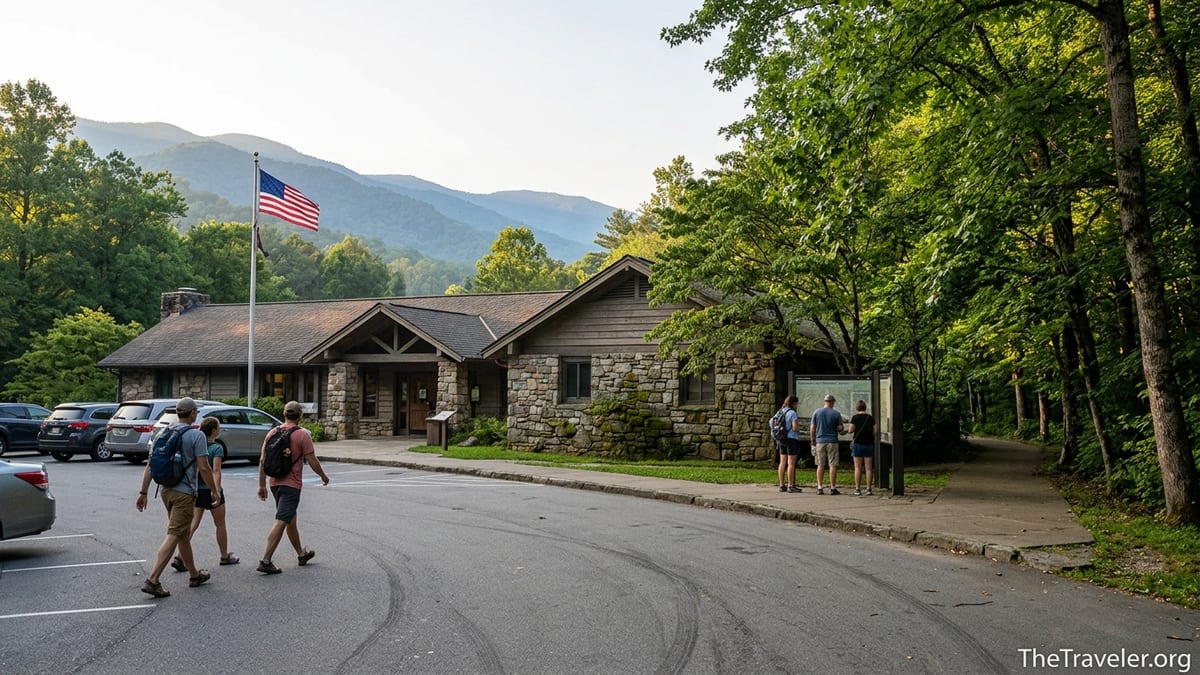
What “Sugarlands” Actually Refers To
On most Smokies itineraries, “Sugarlands” means one of two places. First is Sugarlands Visitor Center, the main Great Smoky Mountains National Park visitor center on the Tennessee side, about 2 miles from downtown Gatlinburg along Newfound Gap Road. It sits just inside the official park boundary and functions as park headquarters for most casual visitors, with rangers, maps, and basic exhibits on the natural and cultural history of the area.
The second is Sugarlands Distilling Company, a rustic, industrial-style moonshine distillery at 805 Parkway in downtown Gatlinburg. It is not inside the national park and is more of an entertainment stop: moonshine tastings, cocktail flights, live music, and a large retail space selling flavored spirits and branded merchandise. Many visitors hit both on the same day, pairing hiking and scenic drives with a tasting back in town.
Confusion often starts because maps, blogs, and even locals casually say “Sugarlands” without specifying which one. If you are planning your drive over Newfound Gap Road toward Cherokee, Sugarlands Visitor Center is the relevant stop. If you are walking the Gatlinburg strip looking for a nightlife-style experience with tastings and music, that is Sugarlands Distilling Company. Knowing which one fits your plans will help you decide whether the detour is worthwhile.
For road trippers with limited time, it can help to think of the visitor center as a practical stop for orientation and short walks, while the distillery is more of a paid, adult-focused attraction that is easiest to enjoy if you are already staying or strolling in downtown Gatlinburg.
Why Sugarlands Visitor Center Is Often Worth the Stop
If your primary goal is experiencing Great Smoky Mountains National Park, Sugarlands Visitor Center is one of the most efficient places to get your bearings. The center typically offers free maps, current trail condition updates, and ranger advice that can save you from closed roads, washed-out trails, or unrealistic plans. For example, it is not unusual for visitors to show up intending to hike Alum Cave or reach Clingmans Dome only to learn at the desk that a storm washed out a section of trail or that fog has socked in the views. A five-minute conversation can redirect you to something like Laurel Falls or Chimney Tops picnic area instead of wasting a day.
Inside, you will find a small but well-done natural history museum with taxidermy black bears, birds, and displays on salamanders, wildflowers, and park geology. Families often find this a useful warm-up for younger kids who may be nervous about wildlife or need a visual introduction to what they will see outdoors. Because there is no admission fee, the exhibit hall is an easy 30-minute stop while someone in the group speaks with a ranger or browses the bookstore.
Outside, short interpretive walks start right from the visitor center. The Sugarlands Valley Nature Trail is a paved, relatively flat loop through river-bottom forest that works for strollers and many wheelchairs. Another short path leads along the river, with footbridges and mossy rocks that give a taste of the Smokies without the commitment of a longer hike. Travelers who are only passing through on a scenic drive often appreciate that they can stretch their legs and use restrooms here without sacrificing hours of daylight.
Practical services are another reason to pull in. Restrooms are usually cleaner and more plentiful than those at pullouts up Newfound Gap Road, and you can refill water bottles from indoor fountains instead of relying on purchased drinks in Gatlinburg. In peak summer and October foliage season, that alone can justify a brief stop before you ascend into heavier traffic and scarcer facilities.
When You Might Want to Keep Driving Past Sugarlands Visitor Center
There are legitimate situations where Sugarlands Visitor Center adds little to your day. If you have already spent time in the park and know your route well, stopping again can feel redundant. For example, someone who has visited several times, knows exactly where the Alum Cave trailhead and Clingmans Dome parking lot are, and checks the National Park Service alerts page in the morning may prefer to skip the inevitable congestion around the visitor center parking lot.
Time of day and season also matter. On busy holiday weekends, it is common to see a line of vehicles waiting to turn into the parking area, with rangers directing traffic. If your main objective is to reach a sunrise or sunset viewpoint such as Newfound Gap, lingering here could cost you the best light. Similarly, during peak fall color in mid to late October, you may decide to continue driving to secure a parking space at popular overlooks before they fill.
Another reason to keep driving is if your group has no interest in exhibits or ranger talks and prefers wilder spots. Newfound Gap Road quickly leads you out of the valley and into the higher elevations, where you can pull off at quiet overlooks with sweeping views and no buildings in sight. Travelers who find visitor centers too busy or commercial may be happier bypassing Sugarlands entirely and heading straight to trailheads like Chimney Tops picnic area or the Newfound Gap overlook on the state line.
Finally, if you are simply transiting between Gatlinburg and Cherokee and are already running late, adding a stop here may not make sense. The drive between Sugarlands Visitor Center and Oconaluftee Visitor Center near Cherokee is roughly an hour in normal conditions, and that can stretch on days with slow-moving traffic or wildlife jams. In that case, it may be wiser to pause later at Oconaluftee, where the adjacent Mountain Farm Museum gives you a different style of historical experience without forcing an extra stop.
Using Sugarlands as a Launch Pad for Short Hikes and Scenic Drives
One of the strongest arguments for stopping at Sugarlands Visitor Center is its strategic position at the junction of key park roads. From the parking lot, Fighting Creek Gap Road branches west toward Laurel Falls and Little River Road, while Newfound Gap Road climbs southeast toward higher elevations and the North Carolina side. This makes Sugarlands an ideal place to decide whether your group is up for waterfalls, river drives, or high ridges.
For instance, the popular Laurel Falls Trailhead sits less than 4 miles up Fighting Creek Gap Road. Many visitors park at the visitor center first to use restrooms, confirm current trail conditions, and then drive the short distance to the trailhead. Laurel Falls offers a paved path to a multi-tiered waterfall with good photo opportunities, and it typically takes most visitors around 2 hours round-trip at a moderate pace. Having starting information from Sugarlands can help you determine whether the trail is appropriate for your fitness level and schedule.
Another example involves the decision to attempt drives like Clingmans Dome Road or continue all the way across to Cherokee. Rangers at Sugarlands can tell you if fog or afternoon thunderstorms are likely to obscure views. They may suggest alternatives such as stopping at Chimneys picnic area for a riverside lunch, taking one of the shorter “quiet walkway” trails along Newfound Gap Road, or turning off toward the scenic Little River Road loop instead of committing to a longer drive in poor weather.
Some hikers also use Sugarlands as a logistics hub. Longer routes, such as segments of the Cove Mountain Trail that eventually connect back toward the visitor center, require shuttles or careful time planning. Discussing your plans with staff at the backcountry information desk can reveal issues like stream crossings at high water or sections affected by downed trees. For visitors undertaking their first Smokies hike, that conversation alone can be the difference between a memorable day and a frustrating one.
What to Expect at Sugarlands Distilling Company
If your question about “stopping at Sugarlands” is really about Sugarlands Distilling Company in downtown Gatlinburg, the experience is very different from the visitor center in the park. This is a full-fledged entertainment venue built around moonshine, whiskey, and flavored spirits, often ranked among the top attractions in Gatlinburg. Expect a lively, sometimes crowded scene, especially on weekends and evenings during peak season, with music pouring out onto the street and groups lining up for tastings.
The heart of the visit is the tasting bar. Guests pay a modest fee for a guided flight of small pours, usually rotating through a mix of classic clear moonshine, flavored options like apple pie or peanut butter, and cream-based liqueurs. Staff members, often known for high-energy banter, explain each sample, offer cocktail suggestions, and keep the group moving. For many visitors, this is as much a comedy show as a tasting, and it has become a popular activity for bachelor and bachelorette groups, friends’ trips, and couples’ getaways.
Beyond the basic tasting, Sugarlands offers bookable tours and experiences that go behind the scenes. Options often include a still house tour where you walk through the production area and learn how Appalachian moonshine is made, a premium whiskey or “Hidden Stave” style experience with higher-end pours, or cocktail-focused classes that end with drinks you create yourself. Prices typically start around ten dollars for straightforward tours and increase for more in-depth or premium tastings, making this a relatively accessible activity compared with more elaborate distillery experiences elsewhere.
Because the distillery sits right on the Gatlinburg Parkway, it is easiest to visit on foot if you are already downtown. Parking in central Gatlinburg can be expensive, with private lots often charging a flat day rate that can easily run into double digits, so those simply passing through by car may need to weigh the time and cost of finding a spot against how interested they are in the tasting experience.
Is Sugarlands Distilling Company Worth a Detour?
Whether Sugarlands Distilling Company is worth an intentional detour instead of just a convenient stop depends largely on how much you enjoy spirits, social atmospheres, and branded attractions. Travelers who are curious about moonshine or who love comparing regional distilleries tend to rate the experience highly. Reviews frequently mention engaging staff, generous tasting pours, and a fun environment that feels more personal than some of the larger competitors in town. If you enjoy flavor-driven spirits and do not mind crowds, planning a dedicated couple of hours here can be rewarding.
On the other hand, travelers seeking quiet, nature-focused trips may find the distillery to be sensory overload after a peaceful day in the park. The combination of loud music, amplified tasting hosts, and a steady stream of groups cycling through can feel jarring. If you are visiting the Smokies primarily for wildlife, photography, or backcountry hiking, you might prefer to keep driving to a quieter town like Townsend or spend your evening in a cabin rather than returning to the Gatlinburg strip for nightlife.
Another factor is how the distillery fits into your overall budget and transportation plans. After a tasting, many people purchase bottles of their favorite flavors, such as butter pecan cream or traditional clear moonshine, as souvenirs or gifts. Prices are comparable to other craft spirits, so picking up several bottles can add up. Because you will be sampling alcohol, you will need to consider a designated driver, walking from your lodging, or using local transit and rideshare options where available, which may be another reason not to make a long, out-of-the-way drive solely for this stop.
For most visitors already staying in Gatlinburg, Sugarlands is worth including as part of an evening on the Parkway, especially if you pair it with dinner and a stroll past other attractions. For those staying farther away or simply transiting through the area by car, it becomes a matter of whether an alcohol-centered attraction aligns with your travel priorities.
How to Decide: Quick Scenarios for Different Travelers
It can help to walk through a few real-world scenarios. Imagine a family of four driving in from Pigeon Forge for a single afternoon in the park. They want a short hike, some mountain views, and to be back in town for dinner. For them, a quick stop at Sugarlands Visitor Center makes sense: use restrooms, pick up a paper map, ask a ranger about a child-friendly trail like the Sugarlands Valley Nature Trail or Laurel Falls, then head out. With limited time, they can skip the distillery and focus on daylight in the mountains.
Now picture a couple on a long road trip from Atlanta to Asheville, passing over Newfound Gap Road with all their luggage in the car. They are excited for the drive and a picnic at an overlook but have no extra time built into the schedule. In this case, they might keep driving past the visitor center to secure a good roadside pullout before lunchtime, then stop at Oconaluftee Visitor Center later if they still want an exhibit or ranger interaction. Detouring back into Gatlinburg for a distillery stop would likely feel rushed and introduce parking hassles.
Consider, too, a friends’ weekend based in a downtown Gatlinburg hotel. They spend a full day hiking and return to town in the late afternoon. After cleaning up, they can walk along the Parkway, join a tasting at Sugarlands Distilling Company, listen to live music, and then grab dinner at a nearby restaurant without ever needing to move the car. For this group, the distillery is not just worth stopping for; it is part of what makes Gatlinburg appealing compared with a quieter mountain town.
Finally, think about solo travelers or photographers who are in the Smokies for sunrise light and wildlife. They may prefer to bypass both the visitor center and the distillery during the busiest hours, using early morning and late afternoon for remote trailheads and overlooks instead. If they do stop at Sugarlands Visitor Center, it may be at opening time, when the parking lot is quiet and rangers have more time to discuss lesser-known trails and backcountry options.
The Takeaway
Whether Sugarlands is worth stopping for or whether you should simply keep driving comes down to matching the stop to your style of travel. Sugarlands Visitor Center inside Great Smoky Mountains National Park is usually worth a brief pause at least once per trip, especially for newcomers. It offers restrooms, free exhibits, and up-to-date advice that can help you choose trails and scenic drives wisely, and it sits at a convenient junction for routes toward Laurel Falls, Little River Road, and Newfound Gap.
Sugarlands Distilling Company in downtown Gatlinburg, by contrast, is best treated as an optional entertainment stop. It rewards visitors who enjoy tastings, lively crowds, and a bit of moonshine history wrapped in a modern, tourist-friendly package. For those who see the Smokies mainly as a nature retreat, it may be better saved for a rainy afternoon or skipped in favor of quieter evenings.
If you are short on time, prioritize the mountains themselves. Use Sugarlands Visitor Center as a quick tool to improve your day, then head straight for overlooks, trailheads, and rivers. If you have more flexibility and appreciate local spirits and social energy, build the distillery into a relaxed evening in town. In both cases, Sugarlands can add something worthwhile to your trip, but it should support your Smokies experience rather than compete with the main attraction: the park’s ridges, forests, and endlessly changing light.
FAQ
Q1. Is Sugarlands Visitor Center free to visit?
Yes, Sugarlands Visitor Center is free. There is no admission charge to enter the building, view the exhibits, speak with rangers, or use the restrooms, though you will pay normal parking fees required within Great Smoky Mountains National Park if you leave your vehicle for more than a very short stop.
Q2. How much time should I budget for Sugarlands Visitor Center?
Most travelers are comfortable with 30 to 60 minutes. That usually allows time for parking, restrooms, a walk through the exhibit hall, a few questions at the ranger desk, and a quick stroll on one of the short nature trails starting near the building.
Q3. Is Sugarlands Distilling Company family friendly?
Yes, families do visit Sugarlands Distilling Company, and minors are allowed inside the building, but only adults of legal drinking age can participate in tastings or purchase alcohol. The atmosphere is lively and sometimes loud, so parents should consider whether that environment suits their children.
Q4. Do I need to reserve a tour at Sugarlands Distilling Company in advance?
Basic tastings often operate on a first-come basis, while specialty tours and premium experiences may require or strongly recommend reservations, especially on weekends and during peak travel seasons. Checking availability and booking ahead can help you avoid long waits.
Q5. Can I walk from Sugarlands Visitor Center to downtown Gatlinburg?
While the distance between Sugarlands Visitor Center and downtown Gatlinburg is only a few miles, it is along a busy mountain highway with limited pedestrian infrastructure. Most visitors drive or use local transit options between the two rather than attempting to walk.
Q6. Is parking at Sugarlands Visitor Center difficult?
Parking can be tight during busy times, especially on weekends in summer and in October. Early morning and late afternoon usually offer easier parking, while midday may require circling the lot or waiting briefly for a space.
Q7. Do I need a parking tag if I only stop briefly at Sugarlands Visitor Center?
The national park generally requires a parking tag if your vehicle is parked for more than a very short period. Rules and enforcement can change, so it is wise to check the latest information on-site or with rangers when you arrive.
Q8. How long does a tasting at Sugarlands Distilling Company take?
A standard guided tasting typically lasts around 20 to 30 minutes, depending on how busy it is and how many flavors are being poured. If you add time for browsing the store or joining a tour, plan on at least an hour in total.
Q9. Is Sugarlands Distilling Company worth visiting if I am not a big drinker?
If you are not interested in sampling spirits, the value is more limited, though you might still enjoy the atmosphere, live music, and people watching. In that case, it is better to visit briefly while already walking the Parkway rather than making a special trip just for the distillery.
Q10. Which should I prioritize if I only have time for one stop: Sugarlands Visitor Center or the distillery?
If your main reason for being in the area is Great Smoky Mountains National Park, prioritize Sugarlands Visitor Center for its orientation, exhibits, and access to trails and scenic drives. If your focus is nightlife and local flavors in Gatlinburg, and you are comfortable around alcohol-centered venues, the distillery may be the more memorable choice.