


Few places in Istanbul divide opinion quite like the Basilica Cistern. photos of endless columns reflected in still water make it look unmissable, yet some travelers walk out wondering if they just paid premium prices for a 30 minute stroll underground. With ticket costs rising in recent years, heavy crowds in high season and plenty of competing sights nearby, it is fair to ask whether the Basilica Cistern is overrated or genuinely worth your time and money.
Get the latest updates straight to your inbox!
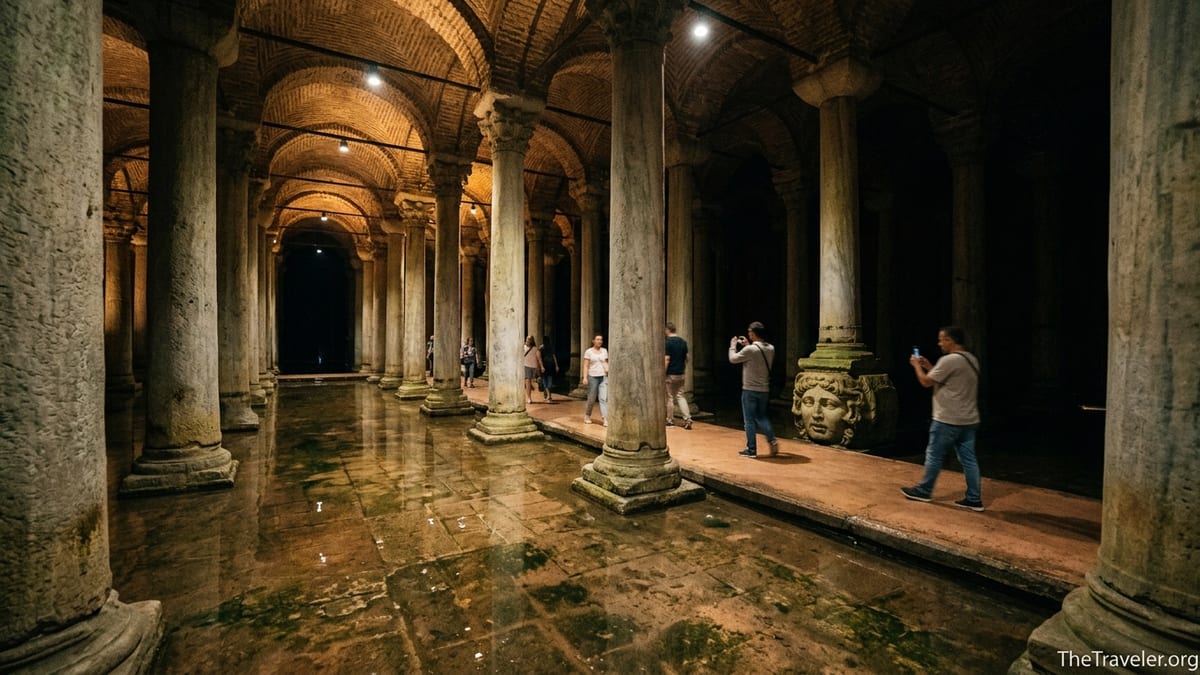
What Exactly Is the Basilica Cistern?
The Basilica Cistern, known locally as Yerebatan Sarnıcı, is a vast underground water reservoir built in the 6th century during the reign of Byzantine Emperor Justinian I. It once supplied water to the Great Palace of Constantinople and nearby buildings. Today, instead of water up to the ceiling, you walk along a raised pathway between more than 300 marble columns, many recycled from earlier Roman structures. The dim lighting, vaulted brick ceilings and shallow pools create the moody atmosphere you see in so many photographs.
The site sits just a few minutes’ walk from Hagia Sophia and the Blue Mosque in Sultanahmet, making it very easy to slot into any classic Istanbul itinerary. After a long restoration that started around 2017, the cistern fully reopened to visitors in 2022 with upgraded lighting, reinforced walkways and curated art installations. For many visitors, the combination of raw history and modern presentation is precisely what makes it so memorable.
Part of the cistern’s mystique comes from small details rather than grand scale. Two Medusa heads supporting columns in a far corner, one sideways and one upside down, now draw almost everyone’s camera. There is also a “Weeping Column” with teardrop shaped carvings, often described as a tribute to workers who built the cistern. These features, along with the echoing soundscape and cool air, give the place a distinct personality compared with traditional museums full of glass cases.
Importantly, a visit is relatively short. Even at a relaxed pace, most travelers spend 30 to 45 minutes inside, perhaps up to an hour if they pause for photos and read the information panels. That compact experience is one reason some people leave feeling it was either the perfect intense hit of atmosphere or surprisingly brief for the price.
Current Prices, Opening Hours and Practical Details
As of mid 2026, tickets for foreign visitors are significantly more expensive than for locals. Recent published prices for daytime entry list a foreign adult ticket around the high hundreds of Turkish lira, while Turkish citizens and students pay far less. Prices have been adjusted several times per year in the past, so treat any specific amount you see as approximate and be prepared for small increases by the time you arrive.
The cistern is run by Istanbul Metropolitan Municipality rather than the national museum authority, which has two important consequences. First, it is not included in the official Istanbul Museum Pass or Museum Pass Türkiye, so even if you have one of those cards for Topkapı Palace, the Archaeology Museums or other state run sites, you still need to buy a separate Basilica Cistern ticket. Second, ticketing is handled either at the on site ticket office beside the entrance on Yerebatan Street or through the municipality’s chosen online vendor, which in recent years has been the Passo system. At times, travelers have reported that online ticket slots sell out or temporarily disappear, so do not panic if you cannot book weeks in advance; same day on site purchase has usually remained possible, though queues can be long.
Usual daytime opening hours are roughly 09.00 to 18.30, with last entry a little before closing to allow visitors to clear the site. In recent seasons, the city has also run a separate “night shift” opening, typically starting around 19.30 and running to late evening, with its own dedicated ticket. These evening sessions are priced differently, but many visitors describe them as more atmospheric and sometimes slightly less crowded. As with prices, exact hours are subject to change, especially around public holidays or special events, so always check current information once you are in Istanbul.
Be aware that there are a number of stairs on the way down and up, and the stone surfaces can be damp or slightly slippery. The renovation improved accessibility, but visitors with serious mobility issues or balance problems may find the descent, low light and uneven patches challenging. There are usually basic facilities such as restrooms and a small gift kiosk near the exit, but do not expect extensive services underground itself.
What Makes Some Travelers Say It Is Absolutely Worth It?
For many travelers, the moment they step inside the Basilica Cistern justifies the ticket cost. The temperature drops, the noise of Sultanahmet fades and the forest of columns appears in half darkness, lit by warm spotlights and soft reflections in the shallow water. People who love atmospheric, sensory experiences often rank the cistern as one of their favorite places in Istanbul, right up there with a sunset ferry ride on the Bosphorus or the view from Galata Tower.
History enthusiasts appreciate that the structure is not a reconstruction or a modern “experience” built from scratch, but a working piece of Byzantine infrastructure that survived earthquakes, regime changes and centuries of neglect. Compared with walking through yet another palace hall or tile covered mosque, stepping into an underground engineering project built nearly 1,500 years ago feels refreshingly different. Travelers who have already seen Roman cisterns elsewhere, in places like Rome or Naples, often note that the sheer scale and theatrical lighting in Istanbul make this one stand out.
Photography fans also get a lot from a visit. Even with crowds, there are pockets where you can capture long rows of columns fading into the darkness, reflections of red brick arches on the water and the iconic Medusa heads from creative angles. Many people travel with smartphones only, and the low light performance of recent models is usually enough to bring home impressive images. Those carrying cameras with fast lenses around f/1.8 or f/2.8 can experiment with deeper shadows and fine textures in the stone.
There is also the simple, practical advantage of location. If you are staying around Sultanahmet or visiting Hagia Sophia and the Blue Mosque anyway, the cistern is just a few steps away. Travelers on a short layover routinely manage a compact circuit of Hagia Sophia, the Blue Mosque courtyard, Basilica Cistern and a quick kebab or simit nearby, all within half a day. For these visitors, the question is less “is this the single best value attraction in Istanbul?” and more “does a half hour of something genuinely unusual add enough magic to my day?” For many, the answer is yes.
Why Others Walk Out Feeling It Is Overrated
At the same time, not everyone is enchanted. A frequent complaint among recent visitors is that the Basilica Cistern feels crowded and rushed, especially in peak months like May, June, September and October. Group tours move through in clusters, and independent visitors can find themselves waiting in narrow sections of the walkway for people to finish taking photos or selfies. On busy afternoons, the slow shuffle around the loop can break the sense of mystery the place is known for.
Another pain point is ticket price relative to visit length. Travelers on tighter budgets, or those comparing costs across multiple countries, sometimes feel the cistern is expensive for an experience that lasts less than an hour. It can be particularly noticeable if you combine it with other paid, non museum pass sites such as Dolmabahçe Palace or a Bosphorus cruise, where cumulative entrance fees add up quickly. For backpackers or long term travelers counting every lira, that money might instead cover a couple of good meals, a ferry trip and a museum covered by the pass.
Some visitors also arrive with unrealistic expectations shaped by social media, glossy tourism campaigns and filtered images. They imagine a vast, silent underground cathedral of water with hardly anyone else around. The reality is an organized tourist attraction with ticket barriers, announcements, information boards and sometimes even temporary exhibitions or music. If you are sensitive to anything that feels commercialized or curated, you may find the atmosphere less “hidden gem” and more “themed space,” especially after the renovations improved lighting and introduced art installations.
Finally, a portion of travelers simply do not connect with the concept. If you are lukewarm on architecture, not interested in Byzantine history and prefer wide open views like those from Pierre Loti Hill or Çamlıca Tower, then an enclosed, dimly lit cistern may feel underwhelming regardless of how important it is on paper. For these visitors, Istanbul’s highlights lie more in its street life, food and skyline than in an underground reservoir.
How It Compares to Other Istanbul Sights and Cisterns
To decide whether the Basilica Cistern is worth it for you, it helps to compare it with other experiences you might choose instead. In terms of cost per hour, major sites like Topkapı Palace and the Istanbul Archaeology Museums typically provide several hours of exploration for a similar or only slightly higher ticket price, especially if you use a museum pass. By contrast, the cistern gives you a short, intense visit that is heavy on atmosphere and relatively light on detailed interpretation.
If you are particularly interested in cisterns as structures, Istanbul offers alternatives. The Theodosius Cistern and the Binbirdirek Cistern, both also in the historic peninsula, have been opened to visitors after long restorations. They tend to attract smaller crowds and are often used for cultural events or exhibitions. While they lack the specific Medusa heads and perhaps the exact cinematic quality of the Basilica Cistern, some travelers report finding them more tranquil and equally impressive from an architectural point of view.
There is also a broader comparison between “top tier” sites and more local experiences. A morning spent in the Basilica Cistern and nearby monuments could alternatively be used wandering the neighborhoods of Balat and Fener, taking a public ferry from Eminönü up the Bosphorus, or getting lost in the back streets around the Grand Bazaar. None of these options requires a single expensive ticket, yet they can yield powerful memories of Istanbul’s texture and everyday life. The key question is not just whether the cistern is good, but whether it suits your personal style of travel and limited time.
For many first timers who have two or three full days in the city, a balanced plan works well: one day heavy on headline monuments in Sultanahmet, including the Basilica Cistern, and another focused on ferries, markets and modern neighborhoods like Karaköy or Kadıköy. Repeat visitors who have already explored the main sites often choose to skip the cistern on later trips unless they are showing it to friends or family.
When and How to Visit If You Decide to Go
If you do choose to visit, timing can hugely influence whether you end up calling it overrated or magical. On typical days, tour buses and large groups tend to pack the middle of the day, especially between late morning and mid afternoon. Travelers who arrive soon after opening or in the last hour before daytime closing often report more manageable crowds and a calmer vibe. Those who purchase tickets for the evening “night shift” session sometimes find the atmosphere even more dramatic, with deeper shadows and fewer screaming children.
Buying tickets in advance can help, but it is not strictly essential unless you are visiting during peak season or a local holiday when domestic tourism surges. Some travelers prefer to walk past the entrance in the morning, glance at the real time queue and decide on the spot whether to join or return later. Just remember that security checks, ticket purchase and the descent down the stairs all take a bit of time; factor that in if you are trying to squeeze the cistern between fixed timed entries at other attractions.
Inside, wear shoes with a good grip. The walkways are solid, but humidity and occasional splashes can make surfaces slick. A light jacket or shawl can be useful even in summer, since underground temperatures are cooler than street level. Photography is generally allowed, but tripods are not, and flash will only wash out the carefully designed lighting. Travelers who pause to adjust their eyes to the dimness and move slowly often notice more details in the stonework and the occasional drip of water from the ceiling.
Families with young children should be prepared for low railings at some points, uneven footing and a sensory environment that can feel intense for little ones. On the other hand, older children and teenagers who might be bored in traditional museums often find the cistern fascinating because it feels adventurous and slightly mysterious.
Is the Basilica Cistern Overrated or Worth It for You?
Bringing all of this together, the Basilica Cistern tends to satisfy travelers who value atmosphere, unique spaces and strong visual impressions, and who are comfortable paying a premium for a compact but memorable experience. If you have at least two full days in Istanbul, enjoy photography, are curious about Byzantine history and are already planning to visit Sultanahmet, the cistern is likely to be worth including, even if you think of it as a short, intense highlight rather than a half day destination.
On the other hand, if you are working with a very tight budget, dislike crowds, or have only a single packed day in the city, you may be better off skipping it this time. You could instead invest that entrance fee in a longer Bosphorus ferry ride, a nice meze dinner in a neighborhood like Kadıköy, or an extra museum that is already covered by a pass. Travelers who are claustrophobic, have mobility challenges on stairs or strongly prefer outdoor viewpoints should also think carefully before committing.
It is worth remembering that Istanbul is not short of alternatives for underground or historic experiences. From quieter cisterns hosting art exhibitions to relatively uncrowded mosques like Süleymaniye, you can still find places that deliver a sense of discovery without the same ticket price or queues. In that context, the Basilica Cistern is less a mandatory checklist item and more a distinctive flavor you can add to your trip if it aligns with your interests.
If you go in with realistic expectations, treat it as a half hour of immersive atmosphere rather than a full conventional museum visit, and time your entry to avoid peak crowds, you are much more likely to walk out feeling that the Basilica Cistern was worth seeing rather than overrated.
FAQ
Q1. How long does a visit to the Basilica Cistern usually take?
A typical visit takes around 30 to 45 minutes, or up to an hour if you move slowly, take lots of photos or listen carefully to an audio guide.
Q2. Is the Basilica Cistern included in the Istanbul Museum Pass?
No. The Basilica Cistern is operated by the municipality, not the national museum authority, so you must buy a separate ticket even if you have a museum pass.
Q3. What is the best time of day to visit to avoid crowds?
Early morning soon after opening and the last hour before daytime closing are usually quieter. Evening “night shift” sessions can also feel less crowded.
Q4. Are children allowed, and is it suitable for families?
Children are allowed and many find it exciting, but parents should watch them closely because of low railings, stairs, dim light and sometimes slippery surfaces.
Q5. Can I buy Basilica Cistern tickets online?
In recent years, tickets have often been sold online through the municipality’s chosen vendor in addition to the on site ticket office, though availability and systems can change.
Q6. Is photography allowed inside the Basilica Cistern?
Yes, photography is generally allowed and many visitors take pictures, but tripods are typically not permitted and flash is discouraged because it spoils the lighting.
Q7. Is the Basilica Cistern accessible for people with mobility issues?
There are multiple stairs and some uneven surfaces, so visitors with serious mobility challenges may find it difficult. The renovation helped, but it is not fully barrier free.
Q8. Are the Medusa heads easy to find during a visit?
Yes. The walkway is arranged as a loop and clear signage and the flow of visitors naturally lead you to the two Medusa heads near the back of the cistern.
Q9. What should I wear when visiting the Basilica Cistern?
Wear comfortable shoes with good grip, and consider a light layer such as a jacket or shawl, as it is cooler and more humid underground than at street level.
Q10. Is the Basilica Cistern worth it if I am only in Istanbul for one day?
If you love unique, atmospheric spaces and can spare about an hour in Sultanahmet, it can be worth it. If your time is extremely tight, you might prioritize outdoor landmarks and views instead.