


Few places in the world inspire as much awe, frustration and debate as the Sistine Chapel. For some travelers it is the single most powerful moment of a trip to Rome. For others it is an exhausting shuffle through a packed room where guards bark orders and any hope of quiet reflection feels impossible. With Vatican Museums attendance back at record levels in 2024 and 2025 and standard tickets routinely selling out, the question is sharper than ever: is the Sistine Chapel still worth visiting despite the crowds?
Get the latest updates straight to your inbox!
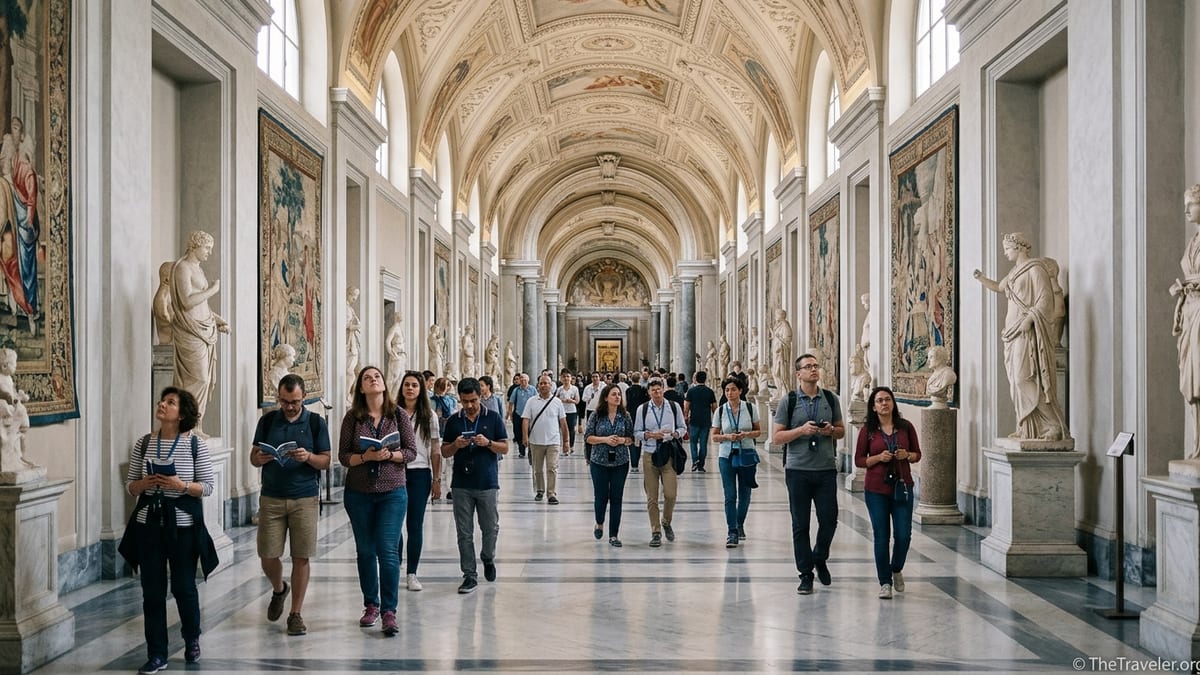
What Visiting the Sistine Chapel Really Looks Like in 2026
Most visitors experience the Sistine Chapel as the finale of a long walk through the Vatican Museums, not as a stand‑alone attraction. Museum attendance has rebounded strongly since the pandemic, with around 6.8 million visitors recorded in 2024 and daily numbers often in the 15,000 to 25,000 range on busy days. In practical terms, this means that at peak times you are rarely entering a serene chapel. You are joining a dense, slow‑moving flow of people through a series of galleries that all feed toward a single room.
On a typical mid‑morning in May or June, travelers report shuffling shoulder to shoulder through the Raphael Rooms, then being funneled down a corridor and into the Sistine Chapel in a solid wave. Inside, it can feel more like a crowded subway car than a church. Tall visitors might see little of the walls; shorter ones often see mostly the backs of heads and the occasional glimpse of the ceiling. You may spend ten to fifteen minutes inching across the floor before finding a place to stand along the side walls or sitting on the built‑in benches that ring part of the chapel.
The atmosphere shifts with the time of year and time of day. In January or on a rainy November afternoon, visitors describe more breathable conditions, with pockets of space and the chance to stand still and look up. But in high season, especially around Easter, May, June and early autumn, crowds are heavy from opening until late afternoon. The chapel is rarely empty; quiet moments are more about relative density than anything close to solitude.
This reality is important to accept before you go. The Sistine Chapel is no longer a hidden sanctuary that you might stumble upon in silence. It is one of the most famous rooms in the world, and visiting in 2026 means sharing that experience with thousands of other people who planned, booked and paid for the same privilege.
The Noise, Rules and Restrictions You Will Encounter
Three things surprise many first‑time visitors: how noisy it can be, how strictly rules are enforced, and how little you are allowed to do inside. Contrary to many guidebook photos, there is an absolute ban on photography and video in the Sistine Chapel. Guards positioned around the room constantly scan for phones; those who raise a camera are quickly approached and told to delete images. Some travelers describe this as embarrassing, especially when it happens in front of a tightly packed crowd.
Dress code is another practical issue. While the museums themselves are more relaxed, the Vatican expects modest clothing in spaces considered sacred, including the Sistine Chapel. In real terms, this means shoulders covered and hemlines roughly to the knee. Travelers in sleeveless tops or very short shorts sometimes report being stopped before entering Saint Peter’s Basilica later in the morning, even if they passed through the museums without comment. A light cotton scarf, thin cardigan or packable travel shawl can solve this problem without adding much weight to a day bag.
The third factor is noise. Officially, the Sistine Chapel is meant to be a place of prayer and contemplation. In practice, the acoustics are unforgiving. Even quiet whispers multiply into a low roar when several hundred people speak at once. Guards periodically call for silence, often repeating “Silenzio, please” over a loudspeaker or in raised voices, which paradoxically adds to the overall noise level. Visitors frequently mention this jarring contrast between spiritual expectation and real‑world behavior: some people stand with eyes closed, clearly moved; others check messages or chat as if on a city bus.
For travelers who dream of a hushed, reverent experience, this clash can be disappointing. Yet it also reflects what the chapel has become: not just a religious space but a global attraction, drawing group tours, school trips, independent travelers and pilgrims who bring their own expectations and manners with them.
What You Get for the Effort and Ticket Price
The basic question remains: with all these compromises, what makes the Sistine Chapel worth it? One answer is artistic significance. Michelangelo’s ceiling frescoes and his Last Judgment on the altar wall are among the most studied, reproduced and referenced artworks on the planet. Seeing them at full scale, in their original setting, offers a sense of proportion that no book or high‑resolution reproduction can match. The Creation of Adam, in particular, occupies only a small fraction of the ceiling, and many visitors are surprised to realize how much narrative painting surrounds that famous touch of the fingers.
Another part of the value is context. A standard Vatican Museums ticket, which in 2026 costs around 20 euros at the door or 25 euros with an official online reservation, includes not just the Sistine Chapel but kilometers of galleries. That price gives access to masterpieces such as the Laocoön Group in the Pio‑Clementino Museum, the Apollo Belvedere, the Gallery of Maps, and the Raphael Rooms with The School of Athens. Even travelers who find the Sistine Chapel itself claustrophobic often recall the overall morning as one of the most art‑rich experiences of their time in Italy.
The setting also carries weight. This is the official papal chapel where conclaves elect new popes, where major church ceremonies take place, and where centuries of Catholic history are layered into the walls and floor. Standing beneath Michelangelo’s ceiling while remembering the smoke rising from the Sistine chimney during recent papal elections gives the visit a sense of living continuity that purely secular sites cannot replicate.
For some travelers, the value is emotional and personal rather than purely artistic. A pilgrim from Latin America who has saved for years to come to Rome might not mind the crowds at all, focusing instead on the chance to pray in a place that symbolizes their faith. An art student might accept the jostling as the price of seeing specific details in person, like the muscular figures of the Ignudi framing the biblical scenes. Whether the visit is “worth it” therefore depends heavily on whether these elements resonate with you more than the inconvenience of a crowded museum.
How Bad Are the Crowds, Really? A Realistic Scale
To decide if the Sistine Chapel is worth it for you, it helps to compare it to other crowded attractions. Travelers often liken peak‑season conditions to the Mona Lisa room at the Louvre or the Trevi Fountain area on a hot June afternoon. If those situations left you irritated or exhausted, you should expect similar feelings here unless you take steps to avoid the busiest times.
In summer, standard time slots between roughly 9:00 a.m. and 2:00 p.m. are often the most intense. By then, dozens of large tour groups have entered, and independent visitors who chose early tickets are converging near the chapel at the same time. Online reports talk of needing to keep a hand on small children to avoid being separated in the flow from gallery to gallery. People with claustrophobia or anxiety in tight spaces sometimes describe the approach to the chapel as the most stressful part of their entire Italian trip.
On the other hand, winter visitors frequently share strikingly different stories. A traveler who went on a January weekday afternoon, for example, might recall walking into the chapel and easily finding a spot along the side wall, with enough space to tilt their head back and take in the ceiling without being bumped. Rome can be chilly and damp at that time of year, but the trade‑off is more manageable museum crowds and shorter security lines.
Shoulder seasons, such as late February, early March, and parts of November, sit somewhere in between. The chapel is still busy, but not to the point of immobility. On these days, crowd management strategies need not be as elaborate: booking a mid‑morning or mid‑afternoon slot, arriving on time and moving at your own pace can be enough. Your tolerance for crowds and your travel dates will therefore play a major role in whether a visit feels rewarding or punishing.
Strategies to Make a Crowded Visit Feel Worthwhile
Even if you cannot change your travel dates, smart planning can transform the experience. The most basic step is booking official tickets as soon as your Rome dates are fixed. The Vatican’s own reservation system sells standard timed‑entry tickets with a 5 euro booking fee added to the base 20 euro price. On popular days in late spring and early autumn, these time slots often disappear weeks in advance, leaving only more expensive third‑party offers that can run 70 to 100 euros per person for “skip‑the‑line” access.
Choosing your time of day matters as much as having a ticket. Although true early‑entry options directly from the Vatican are limited, the first hour after opening and the last 90 minutes before closing are usually less packed than late morning. For example, a 3:30 or 4:00 p.m. entry in November can mean reaching the Sistine Chapel when many tour groups have already left, trading a shorter overall visit for more breathable conditions at the end.
Route and pacing also shape the experience. Many independent visitors spend too long in the early galleries, then arrive at the chapel already exhausted and overheated. A more focused approach is to identify a few priority sections, such as the sculpture courtyard, the Gallery of Maps and the Raphael Rooms, and move briskly between them with the chapel as a clear goal. Using a basic audio guide or a well‑chosen podcast downloaded in advance can help you stay engaged with key works while avoiding the temptation to read every label in every room.
Finally, consider your physical comfort. The Vatican Museums route covers several kilometers on hard floors. Wearing supportive shoes, carrying a compact water bottle and having a small snack beforehand can make a real difference by the time you reach the chapel. Many travelers who emerge grumpy from the Sistine Chapel are not only overwhelmed by crowds but also simply hungry, dehydrated and footsore.
When a Guided Tour or Premium Access Makes Sense
Given the congestion, it is natural to wonder if paying for a guided tour or a premium “early access” product is worthwhile. Official Vatican Museums guided tours, booked directly, cost more than simple entry but less than most independent operators. They guarantee a time slot and provide a licensed guide to lead you through selected highlights before the chapel. For first‑time visitors with limited art history background, this structure can turn a tiring march through corridors into a coherent story, making the final approach to the chapel feel more meaningful.
Third‑party companies advertise a range of options in 2026, from two‑hour small‑group tours for roughly 50 to 70 euros per person to more elaborate VIP experiences that promise “closed‑door” or “before opening” access at much higher prices. Reviews suggest that early morning small‑group tours can indeed mean entering the chapel when it is less crowded, at least for the first ten to fifteen minutes. One couple described having space to move to the center of the room and slowly circle, looking up, before the next waves of groups arrived.
However, not every premium offer delivers a dramatically different experience. Some so‑called “skip‑the‑line” products focus mainly on bypassing the ticket counter and security queue, which the official timed entry already does reasonably well on most days. Others cost three or four times the standard ticket while still feeding groups into the chapel at roughly the same busy periods. It is crucial to read itineraries carefully, looking for concrete details such as maximum group size, starting time at the museums entrance rather than a distant meeting point, and clear mention of how much time is allocated inside the chapel itself.
A good rule of thumb is that premium access is most worthwhile if you are visiting in peak season, highly sensitive to crowds, and comfortable paying significantly more in exchange for a modest improvement. If your budget is tight or you enjoy planning independently, a carefully timed standard visit can still be rewarding without the extra expense.
Who Might Skip It, and What to Do Instead
Despite its fame, the Sistine Chapel is not essential for every traveler. If you have severe claustrophobia, mobility issues that make standing in dense crowds difficult, or a very limited time in Rome, it may be sensible to skip the Vatican Museums entirely. You could instead focus on spacious outdoor sites such as the Roman Forum and Palatine Hill, or on less congested churches that also house remarkable frescoes and sculptures without the same crush of visitors.
Some repeat visitors to Rome choose to admire Michelangelo’s work elsewhere. His Pietà in Saint Peter’s Basilica, accessible without entering the museums, can often be viewed from a calm spot along the basilica’s side. In Florence, visitors to the Accademia Gallery can spend as long as they like circling the statue of David, which many find equally impactful in person. While these works are different from the Sistine ceiling, they provide encounters with Michelangelo’s art that are intense without being as crowded.
Others seek out exhibitions and digital experiences that reconstruct the Sistine Chapel at full scale using high‑resolution prints and projections. These traveling shows, staged in various cities in Europe and North America, allow visitors to stand directly beneath reproductions of the frescoes, often with far fewer people in the room. While such experiences cannot replace the historical and spiritual weight of the real chapel in Vatican City, they can offer a more relaxed context for studying the composition and color of each panel in detail.
Ultimately, skipping the Sistine Chapel does not mean you are “doing Rome wrong.” It simply reflects a different set of priorities. If crowds sap your enjoyment to the point that you struggle to appreciate what you are seeing, your limited time and energy might be better spent in places where the balance between effort and reward tilts more clearly in your favor.
The Takeaway
So is the Sistine Chapel worth visiting despite the crowds? For many travelers, the answer is still yes, provided expectations are realistic and planning is thoughtful. You are unlikely to find silence, solitude or leisurely space. You are far more likely to find yourself among hundreds of others, tilting your head back in a noisy room while guards call for quiet. Yet in those moments when your eyes adjust and individual scenes on the ceiling come into focus, the noise can recede enough for the magnitude of Michelangelo’s work to land.
Your personal calculus comes down to three questions: how much the art and religious significance matter to you, how sensitive you are to crowds, and how much effort you are willing to invest in timing and logistics. If the chance to stand beneath one of history’s greatest fresco cycles feels central to your idea of Rome, then accepting the inconvenience is likely a fair trade. If not, you can take comfort in knowing that the Eternal City offers countless other ways to be moved by beauty, history and faith without enduring quite so many elbows along the way.
FAQ
Q1. How much does it cost to visit the Sistine Chapel in 2026?
The Sistine Chapel is included in the Vatican Museums ticket. In 2026 the official adult price is around 20 euros at the door or 25 euros with an online reservation fee on the Vatican’s own booking system. Third‑party guided tours or “skip‑the‑line” packages can range from about 50 to well over 100 euros per person depending on group size and extras.
Q2. Can I visit the Sistine Chapel without seeing the rest of the Vatican Museums?
In practice, no. Public access to the Sistine Chapel is through the museums, and the standard visitor route passes through several galleries before reaching it. Some guided tours shorten the path or move more directly toward the chapel, but you still enter via the museums complex and your ticket always covers both.
Q3. Are there any times when the Sistine Chapel is less crowded?
Relative lulls tend to occur in the low season months of January, February and parts of November, and at the very start or end of the day. A late‑afternoon entry in winter can mean a noticeably thinner crowd compared with a mid‑morning slot in June. However, even at the quietest times you should expect a steady flow of visitors rather than an empty chapel.
Q4. Is the no‑photo rule inside the Sistine Chapel really enforced?
Yes. Photography and video are strictly forbidden, and guards actively watch for raised phones and cameras. Visitors caught taking pictures are usually instructed to stop immediately and may be asked to delete images on the spot. Trying to sneak photos not only risks an uncomfortable encounter but also distracts from simply looking with your own eyes.
Q5. What should I wear to be sure I meet the dress code?
Plan on covered shoulders and clothing that reaches roughly to the knee, for both men and women. Short‑sleeve shirts or light blouses paired with trousers, capri pants or a knee‑length skirt work well. If you prefer sleeveless tops, bring a thin scarf or shawl to drape over your shoulders before entering the museums and Saint Peter’s Basilica. Comfortable walking shoes are essential for the long museum route.
Q6. Is the Sistine Chapel suitable for young children?
It depends on the child and time of year. The long walk, dense crowds and need for relative quiet can be challenging for small children, especially on hot days. Families who visit successfully often bring snacks for before the entrance, make sure everyone has used the restroom in the museums, and set clear expectations about staying close and being respectful inside the chapel.
Q7. How long will I actually spend inside the Sistine Chapel?
Most visitors spend between ten and thirty minutes in the chapel itself. In very crowded conditions you might feel ready to leave sooner simply because of the noise and density. In quieter periods you can sit or stand along the sides for longer without feeling pushed along by the crowd. The full museums visit, including the chapel, often takes two to four hours.
Q8. Do I really need a guided tour to appreciate the Sistine Chapel?
You do not need a tour, but it can help. A good guide or audio guide explains the layout of the ceiling, the sequence of scenes from Genesis and the symbolism of the figures, which can otherwise feel overwhelming at first glance. If you dislike group tours, preparing with a short documentary or article beforehand and bringing printed diagrams or notes can give you similar context at no extra cost.
Q9. What if Vatican Museums tickets are sold out on my travel dates?
If the official site shows no availability, first check again over several days in case of cancellations or schedule changes. If nothing opens up and visiting is a high priority, you can consider official Vatican guided tours, which sometimes remain available when basic tickets sell out, or reputable third‑party tours that include admission. Expect to pay a premium in this situation and read the details carefully before booking.
Q10. Is the Sistine Chapel visit worth it if I dislike crowds?
If you strongly dislike crowded indoor spaces, you may find the experience more stressful than inspiring, especially in peak season. You can improve your chances by choosing an off‑season date and a first or last entry time, or by investing in a small‑group early tour. If those options are not possible or still feel daunting, it can be entirely reasonable to skip the visit and focus on other Roman sites that offer more space and calm.