


More news on this day
The Islamic Emirate of Afghanistan is openly challenging a growing number of foreign travel warnings that urge citizens to avoid the country, insisting that security has improved nationwide even as Western and regional governments maintain strict “do not travel” advisories.
Get the latest news straight to your inbox!
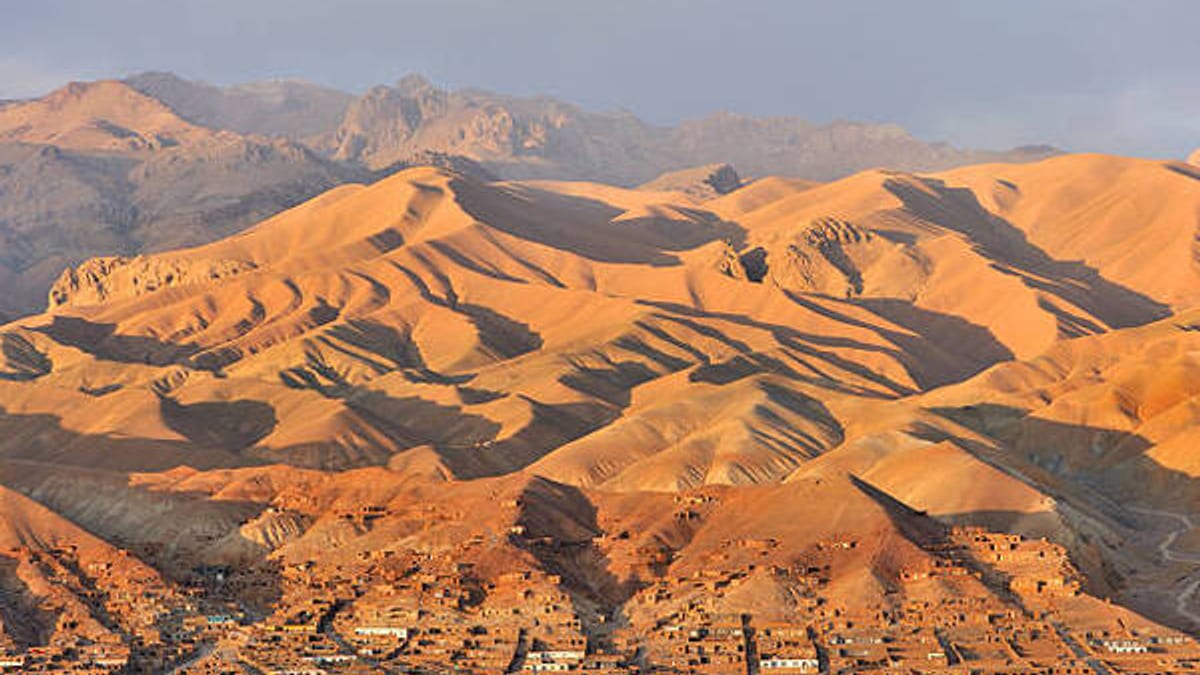
Islamic Emirate Asserts Nationwide Security
Recent Afghan media coverage indicates that the Islamic Emirate’s spokesperson has dismissed foreign travel warnings as unjustified, arguing that security has been restored across Afghanistan since the change of power in August 2021. In evening news bulletins carried on local broadcasters in early November 2026, the spokesperson maintained that current assessments by foreign governments no longer reflect conditions on the ground and emphasized that the country is open to visitors who respect local laws and customs.
Public statements compiled by regional and Afghan-focused outlets describe an official narrative in Kabul that highlights reduced front line fighting compared to the pre‑2021 period, a decline in roadside bombings on major highways, and the reopening of many provincial roads to civilian traffic. The de facto authorities regularly present these developments as evidence that foreign advisories, which continue to rank Afghanistan among the highest risk destinations, are out of date or politically motivated.
Government-run publications in Afghanistan have for several years promoted a similar message, stressing what they describe as “relative safety” for both locals and foreigners traveling within the country under Islamic Emirate rule. Commentaries in these outlets portray domestic security forces as capable of preventing large-scale attacks and argue that visitors can move between major cities if they coordinate with local authorities and follow guidance on appropriate conduct, especially in relation to dress codes and religious norms.
At the same time, the same domestic coverage occasionally acknowledges isolated clashes with Islamic State Khorasan Province and other armed groups, particularly in urban districts of Kabul. However, these reports are typically framed as contained incidents that do not, in the view of the Islamic Emirate, justify broad international calls to avoid all travel.
Foreign Governments Maintain Strict “Do Not Travel” Advisories
Despite the Islamic Emirate’s position, major foreign governments continue to advise against any travel to Afghanistan. The United States Department of State currently lists Afghanistan as a Level 4 destination, the highest warning category, with an advisory dated February 20, 2026 that urges people not to travel to the country for any reason. The advisory cites risks from terrorism, kidnapping and hostage taking, crime, civil unrest, wrongful detention, natural disasters, health concerns and the complete absence of a functioning U.S. embassy on Afghan soil.
Other Western governments have issued similar guidance. The United Kingdom’s Foreign, Commonwealth and Development Office advises against all travel to Afghanistan and reiterates this position in regular updates. Publicly available information from Canada’s travel advisory system, most recently updated in mid October 2026, also instructs nationals to avoid all travel, warning of a “volatile and unpredictable” security environment, a heightened risk of arbitrary detention and very limited consular capacity. Australia’s official system likewise continues to advise people not to travel to Afghanistan, warning that armed conflict could escalate further without warning and that foreigners, aid workers and journalists remain potential targets.
Beyond Western countries, individual governments in the region have tightened their own restrictions. Publicly accessible travel guidance for citizens of Gulf states indicates that some authorities bar most leisure travel to Afghanistan altogether, allowing entry only for diplomats, emergency medical cases or pre-authorized official and economic delegations. These measures effectively block routine tourism, regardless of the security assurances offered by the Islamic Emirate.
In addition, some consular services that existed before 2021 have been significantly reduced or restructured. Documentation from international organizations and reference sources shows that many Afghan embassies run by the former republic were forced to close or curtail operations, while others have gradually shifted to issuing visas and passports aligned with the current authorities. Several foreign ministries warn that documents issued by missions not recognized by Kabul may no longer be accepted at Afghan border points, adding a layer of uncertainty for potential travelers.
Travel Access, Visas and Limited Consular Support
Even for those who decide to travel despite official warnings, access to Afghanistan has become more complex. Public information from the Islamic Emirate’s Ministry of Foreign Affairs and international visa databases suggests that the authorities are promoting a centralized visa process through their own embassies and through an online e‑visa system launched in early 2026. The system is presented as a way to simplify applications and encourage business travel and niche tourism, particularly to major cities such as Kabul, Herat and Mazar‑e‑Sharif.
At the same time, foreign governments emphasize that consular assistance inside Afghanistan remains extremely limited. The United States, for example, suspended operations at its Kabul embassy in August 2021 and now manages Afghanistan-related consular issues from a unit based in Doha. Other countries have similar arrangements, advising their citizens that on-the-ground support in Afghanistan might not be available in emergencies. Advisories commonly note that evacuation options could be severely constrained in the event of a sudden deterioration in security or a natural disaster.
Questions over the validity of documents further complicate travel planning. Some countries caution that Afghan visas and passports issued by diplomatic missions that do not coordinate with the Islamic Emirate might be rejected at Kabul’s international airport or land borders. Public statements by the Afghan Ministry of Foreign Affairs, in contrast, assert that Afghan dual nationals traveling on foreign passports can still enter the country without a visa if they are able to present proof of Afghan identity, such as a tazkera or other recognized documents.
Transport links are also more limited than before 2021. International carriers serving Kabul and other Afghan airports have been reduced to a small number of regional airlines, and published travel advisories encourage travelers to verify flight options closely with operators before departure. Insurers in many countries exclude Afghanistan from standard travel policies, and several foreign ministries explicitly warn that traveling against official advice may invalidate coverage, leaving visitors personally responsible for evacuation and medical costs.
Security Threats Highlighted by International Assessments
While the Islamic Emirate points to the absence of large-scale front line combat as proof of stability, foreign advisories focus on a broader set of risks. International reporting on Afghanistan since 2021 documents repeated attacks claimed by Islamic State Khorasan Province, including bombings targeting religious minorities, crowded public spaces and, on several occasions, foreign-linked sites. Analysts at multilateral organizations and research bodies continue to describe ISKP as an active insurgent presence with the capability to stage lethal operations in urban centers.
Reports from human rights organizations and United Nations bodies also highlight widespread restrictions on civil liberties, especially for women and girls, and stringent enforcement of the Islamic Emirate’s interpretation of Islamic law. Foreign governments argue that such measures increase the risk of detention for visitors who inadvertently violate local rules on dress, association or speech. Travel advisories for Afghanistan typically underline that dual nationals or individuals with links to the former Afghan government may face particular scrutiny at checkpoints or when dealing with security agencies.
Infrastructure and emergency response capacity raise additional concerns. Publicly available assessments note that many hospitals outside major cities have limited equipment and staffing, while specialized care for serious injuries or illnesses often requires medical evacuation to a third country. Damage from decades of conflict, including unexploded ordnance in rural areas, remains an obstacle to overland travel. Several foreign ministries state that even in the absence of direct attacks, road conditions, the possibility of criminal activity and the lack of reliable rescue services make independent travel high risk.
Environmental and natural disaster hazards also factor into official guidance. International monitoring agencies continue to record episodes of severe flooding, drought and earthquakes across various Afghan provinces. Foreign advisories stress that such events can quickly cut off already fragile road networks, displace communities and strain local services, challenging the ability of authorities and humanitarian actors to provide timely assistance.
Competing Narratives Shape the Future of Afghan Travel
The dispute between the Islamic Emirate and foreign governments over Afghanistan travel warnings reflects a broader contest over how the country’s stability and governance are perceived abroad. Kabul’s current rulers seek international recognition, increased investment and a revival of inbound tourism, and they frequently cite small but notable numbers of foreign visitors, including adventure travelers and business delegations, as signs of confidence in their security record.
Foreign capitals, however, continue to measure risk through a wider lens that includes political uncertainty, counterterrorism concerns, human rights conditions and the lack of formal diplomatic ties. As long as embassies remain closed, sanctions regimes stay in place and multilateral organizations report serious abuses, many governments are likely to maintain their highest-level warnings regardless of claims made by the Islamic Emirate.
For would‑be visitors, the result is a fragmented and often contradictory picture. Public information from Afghan authorities emphasizes opportunity, religious and cultural tourism and what they describe as normalized daily life in cities now free from front line warfare. Foreign advisories, in contrast, concentrate on the potential for sudden violence, arbitrary enforcement of strict social codes and the difficulty of obtaining help if something goes wrong.
Until these two narratives move closer together, Afghanistan is expected to remain one of the world’s most heavily restricted destinations, with travel shaped less by traditional tourism dynamics and more by geopolitical calculations, consular limits and the ongoing debate over how secure the country truly is.