


More news on this day
Japan Airlines is set to reduce flights on its Tokyo Narita–Jakarta route from late March 2027, reflecting evolving demand patterns as travelers gravitate toward new schedules and connection options across the carrier’s Japan–Indonesia network.
Get the latest news straight to your inbox!
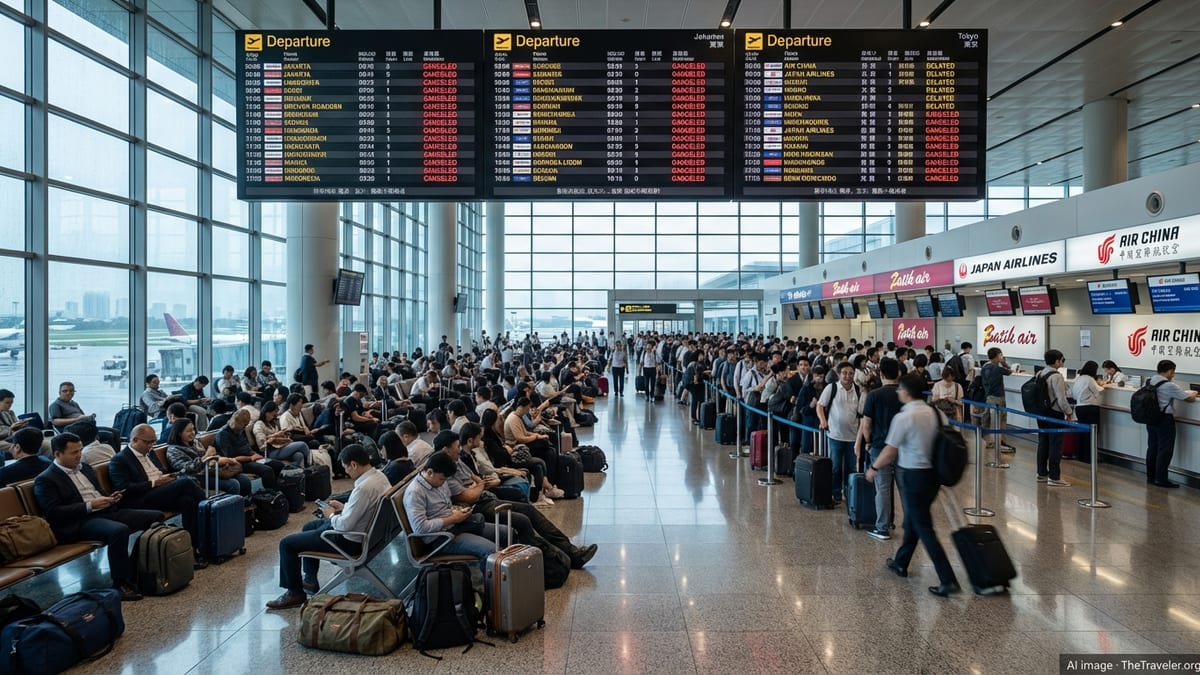
Details of the 2027 Narita–Jakarta Reduction
According to Japan Airlines’ latest route notice for its Tokyo–Jakarta services, operations on the Narita–Jakarta sector will be scaled back with the start of the northern summer schedule on March 28, 2027, affecting departures from Jakarta from March 29. Publicly available information indicates that flight JL725/726, which currently operates daily between Narita and Jakarta, will see a reduction in weekly frequencies, with the secondary Narita–Jakarta rotation removed from the timetable and capacity concentrated on a core daily service.
Prior to the change, JAL’s Tokyo–Jakarta offering includes multiple daily options via Narita and additional connectivity via Tokyo Haneda through codeshare services with Garuda Indonesia. A recent summary of the carrier’s current operation shows JL725 and JL726 running daily on the Narita–Jakarta–Narita pairing, while an additional JL729/JL720 rotation provides extra Narita capacity on selected days, bringing total weekly Narita–Jakarta flights to more than one daily round-trip in peak periods.
Under the revised plan for 2027, JAL will streamline Narita–Jakarta to a single daily round-trip, effectively cutting back the extra frequencies. Independent route-tracking coverage notes that this will reduce the number of Narita–Jakarta services while maintaining at least one daily option, keeping a continuous presence on the city pair but eliminating overlap that is increasingly being absorbed by other Tokyo–Jakarta schedules.
Japan Airlines has not publicly framed the change as a withdrawal from Jakarta, but rather as a recalibration of its Japan–Indonesia capacity. Jakarta remains on the airline’s destination map, and the Narita route continues to serve both point-to-point traffic and connecting passengers using Narita as a transit point for North American and other long-haul services.
Shift in Demand Toward Haneda and Partner Flights
The reduction from Narita comes against a backdrop of rising importance for Tokyo Haneda as the primary international gateway for the Tokyo metropolitan area. JAL’s corporate network materials highlight Haneda’s role in offering more convenient access to central Tokyo and stronger domestic connections for passengers arriving from overseas. The strategy places increasing emphasis on channeling long-haul and regional demand through Haneda where slot allocations permit.
On the Jakarta route specifically, travelers already have additional options beyond JAL’s own Narita service. Garuda Indonesia operates daily flights between Jakarta and Tokyo Haneda, with these services carrying JAL flight numbers under the joint business and codeshare framework between the two airlines. Press information about the joint business, which launched in April 2025, shows that the carriers coordinate schedules and capacity on Japan–Indonesia routes to better align with demand and connection patterns.
This cooperative structure gives travelers a choice between Narita and Haneda while still remaining within a single coordinated network. Reports on the new 2027 schedule suggest that JAL is leveraging this flexibility by focusing its own metal at Narita on a smaller number of flights, while relying more heavily on the joint operation with Garuda at Haneda to accommodate Tokyo-bound traffic that prefers the more centrally located airport.
In practice, passengers traveling between Jakarta and other destinations in Japan will increasingly be able to route via Haneda using domestic connections on JAL, while those connecting to or from North America and parts of Europe will continue to use Narita where long-haul departures are concentrated. This shift helps explain why Narita–Jakarta frequencies can be reduced without significantly curtailing overall Tokyo–Jakarta capacity in the Japan–Indonesia market.
Impact on Connections and Schedule Choices
The adjustment in 2027 will be felt most strongly by passengers who have relied on the wider spread of Narita departure and arrival times currently available. The removal of the secondary Narita rotation means fewer same-day connection combinations at Narita, particularly for travelers linking from Jakarta to certain North American destinations or secondary Japanese cities that were timed around the extra flights.
However, recent changes to JAL’s wider international plan show a growing range of alternatives. In its fiscal 2026 international schedule update, the airline highlighted additional long-haul capacity from both Tokyo airports, including new and resumed services at Narita that are being tailored for connections to Southeast Asia and India. Other documentation on JAL’s route network expansion points to a broader effort to fine-tune hub waves at both Haneda and Narita, balancing the two airports so that each can support effective transfer flows.
For travelers between Jakarta and North America, this evolution may translate into new one-stop combinations at both Tokyo airports. Passengers could, for example, connect via Haneda on a Garuda–JAL itinerary into JAL’s Haneda long-haul network, or continue to use Narita where North American flights remain an important part of the schedule. The narrower Narita–Jakarta timetable will encourage some customers to shift to Haneda-based itineraries if those prove more convenient.
Industry route trackers also note that rival carriers are continuing to operate daily services from both Narita and Haneda to Jakarta, maintaining competitive pressure on JAL and partner capacity. That backdrop provides an incentive for Japan Airlines to adjust frequencies thoughtfully while preserving a viable schedule for business and leisure travelers who still prefer the Narita gateway.
Strategic Context: Balancing Tokyo’s Dual Hubs
The Narita–Jakarta cut is part of a longer-running trend in which Tokyo’s dual airports are gradually being reshaped, with Haneda picking up a growing share of premium and origin–destination traffic. JAL’s sustainability and network planning disclosures emphasize that increasing international activity at Haneda is a strategic priority, both for local passengers and for connecting customers using the airline’s extensive domestic network.
At the same time, Narita continues to function as a key long-haul hub, particularly for routes where slot availability and aircraft rotation patterns make it the more suitable base. The airline’s recent announcements around new and resumed Narita services, including additional long-haul destinations, demonstrate that Narita is not being sidelined but rather refocused on routes and frequencies that fit a revised hub strategy.
In this context, the 2027 reduction in Narita–Jakarta flights appears less as an isolated cut and more as a rebalancing of the Japan–Indonesia portfolio. Capacity is shifting toward Haneda through partner-operated services and coordinated schedules, while Narita retains a daily JAL-operated link that supports connections across the broader network.
For Jakarta-bound passengers, the net effect is a set of evolving choices rather than a simple loss of service. The combination of a daily Narita flight, enhanced cooperation with Garuda Indonesia at Haneda, and ongoing network adjustments elsewhere in the system points to a strategy centered on flexibility, with Tokyo’s two airports used in complementary ways as travel demand continues to change.
Japan Airlines Tokyo–Jakarta schedule change notice (Japanese)
Traicy Global coverage of JAL Narita–Jakarta reduction