


More news on this day
Travel across Japan’s busiest air corridors is facing fresh disruption after more than 20 additional flights operated by United, All Nippon Airways, Japan Airlines, Lufthansa, Delta Air Lines and other carriers were cancelled, affecting key routes to Munich, Seoul, Tokyo, Osaka and several regional hubs.
Get the latest news straight to your inbox!
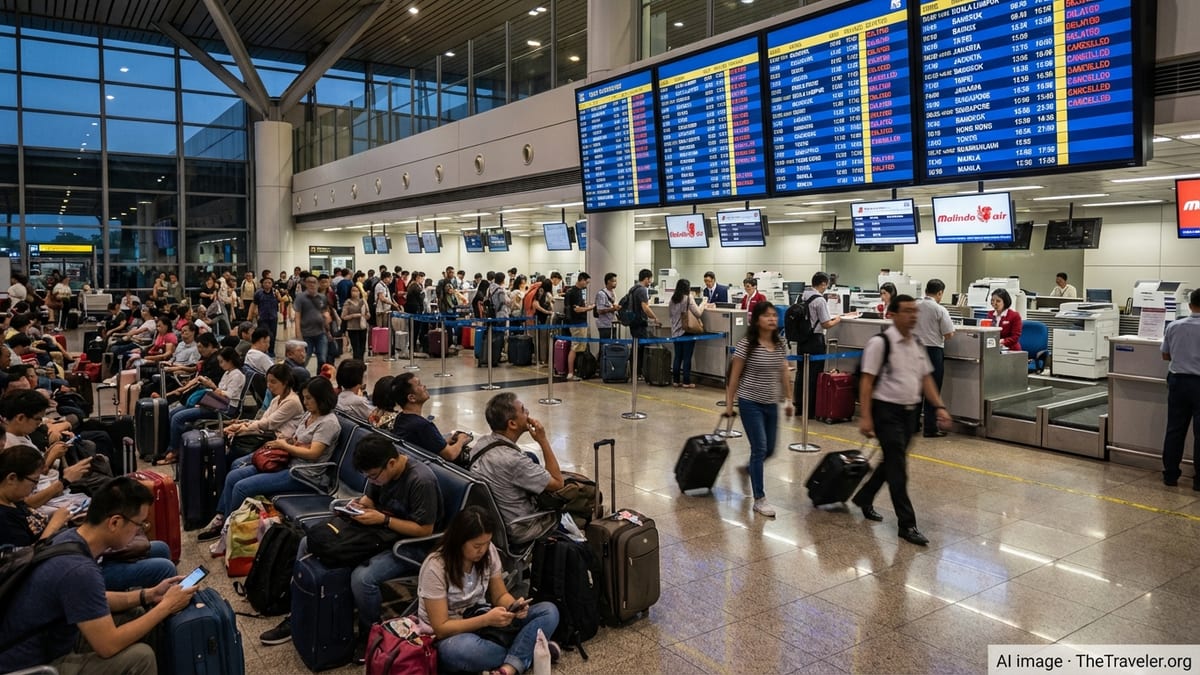
Wave of Cancellations Hits Major Japanese Gateways
Published coverage indicates that the latest round of cancellations was recorded on April 13, 2026, adding to a week of mounting disruption across Asia’s aviation network. Data cited in industry reports shows that more than 20 flights linked to Japan were newly cancelled in a single day, on top of hundreds of delays already logged at airports across the region.
The impact is concentrated at Japan’s primary international gateways, including Tokyo Narita, Tokyo Haneda and Osaka Kansai, with additional effects reported at secondary airports such as Sapporo New Chitose and Osaka Itami. These airports form the backbone of Japan’s domestic and international air system, so schedule changes ripple quickly through connecting itineraries.
Separate operational tallies from recent days describe a broader pattern of turbulence across Asia, with dozens of flights cancelled and well over a thousand delayed in markets including Japan, Thailand, Singapore, the United Arab Emirates, India and Indonesia. Within that wider disruption, Japan’s hubs have repeatedly appeared among the most affected, underscoring the scale of the latest cancellations involving United, ANA, JAL, Lufthansa and Delta.
Publicly available tracking data and media summaries suggest that the newly cancelled flights are part of a rolling sequence of adjustments rather than a single isolated incident. That dynamic is making it harder for passengers to predict whether planned trips to or through Japan will operate as scheduled.
Key Routes to Munich, Seoul, Tokyo and Osaka Affected
Among the most high profile routes affected are services linking Japan with Munich, a major European hub for Lufthansa. Flight listings for April show cancellations on the Munich to Tokyo and Munich to Osaka axis, including codeshare services operated jointly by Lufthansa and Japanese partners. One example highlighted in published flight lists is a Munich bound service from Tokyo Haneda that was marked cancelled on April 13, 2026.
Regional routes are also feeling strain, particularly those connecting Japan with South Korea. Industry coverage of recent days notes repeated disruptions on corridors between Tokyo and Seoul, already under pressure from competitive changes and shifting demand patterns. Low cost carriers have been scaling back some capacity between the two capitals, and the latest cancellations by full service airlines have added further uncertainty for travelers moving between the neighboring countries.
Within Japan, links between Tokyo and Osaka continue to be central to airline networks and are highly sensitive to schedule adjustments. Reports summarizing airport operations show cancellations and delays affecting both Haneda and Kansai, which in turn disrupt onward connections to Europe, North America and the rest of Asia. Even a small number of cancellations on these trunk routes can leave long gaps in the timetable during busy travel periods.
Additional cancellations have been logged on domestic sectors from New Chitose and Itami to other Japanese cities, illustrating how a disruption that begins on long haul or regional international flights can cascade into purely domestic operations. For travelers, that means that even journeys entirely within Japan may be indirectly affected by issues originating on overseas routes.
Multiple Carriers Adjust Schedules Simultaneously
The disruption stands out because it involves several of the world’s largest airline groups making changes over roughly the same timeframe. Travel industry reports on April 13 point to cancellations involving United Airlines, All Nippon Airways, Japan Airlines, Lufthansa, Delta Air Lines and additional operators serving Japanese airports.
These carriers occupy different segments of the market. United and Delta link Japan to major U.S. hubs, Lufthansa connects Japanese cities to continental Europe via Munich and other German airports, while ANA and JAL anchor Japan’s domestic and regional connectivity. When all of them adjust schedules at once, the available options for rebooking quickly narrow.
Recent summaries of wider Asian disruptions describe a mix of contributing factors, including operational bottlenecks at major hubs, aircraft and crew rotations falling out of sequence, and knock-on delays from earlier incidents. In Europe, for example, an operational breakdown at several German airports on April 12 caused significant cancellations and delays, putting additional pressure on long haul schedules that connect through Munich and Frankfurt.
In parallel, geopolitical tensions and airspace restrictions in other parts of the world have prompted airlines to reroute or suspend certain services, tightening fleet availability. Publicly accessible notices show that some carriers operating to and from Japan have already trimmed networks elsewhere, leaving fewer spare aircraft and crews available to absorb fresh disruptions.
Knock-On Effects for Passengers and Airports
The immediate result for passengers is a higher risk of last minute changes, missed connections and extended layovers. Reports from recent days describe crowded rebooking desks at affected airports and growing queues at customer service counters as travelers seek alternative routings to reach Europe, North America and other parts of Asia.
At Haneda and Narita, where domestic and international operations are tightly interwoven, a cancelled long haul departure or arrival can mean that aircraft and crews are not in place for subsequent domestic legs. That can trigger further cancellations on routes such as Tokyo to Osaka, Fukuoka or Sapporo, magnifying the effect of what began as a single long haul adjustment.
Airport operators in Japan are also managing the logistical challenges of irregular operations. When multiple airlines cancel or delay flights around the same time, gate assignments, baggage handling and ground transport flows need to be reshuffled, sometimes at short notice. Published operational summaries indicate that this has led to temporary congestion at some terminals in recent days, particularly during peak morning and evening waves.
Travel industry analysts note that repeated bouts of disruption can have a cumulative effect on traveler confidence, especially among visitors who are unfamiliar with Japan’s domestic transport alternatives. While Japan’s high speed rail network offers a robust fallback on some routes, such as Tokyo to Osaka, it cannot substitute for international flights, leaving long haul passengers reliant on airline-led rebooking.
What Travelers Should Watch in the Coming Days
With cancellations still being added on short notice, publicly available information suggests that conditions remain fluid for anyone flying into, out of, or within Japan. Airlines are continuing to adjust schedules as they work through aircraft positioning, crew availability and the ripple effects of earlier disruptions both in Asia and Europe.
Industry coverage emphasizes the importance of checking flight status frequently in the 24 hours before departure, particularly for routes involving Munich, Seoul, Tokyo, Osaka and other major Asian hubs that have appeared repeatedly in recent disruption tallies. Travelers with tight connections may face a higher risk of missed onward flights if upstream legs encounter delays or last minute cancellations.
Analysts also point out that further timetable changes are possible as airlines refine their plans for the northern summer season and respond to evolving demand patterns. In Japan, ongoing system upgrades at some carriers, broader regional capacity shifts and external geopolitical developments could all influence schedules over the next several weeks.
For now, the latest round of cancellations underscores how quickly conditions can change in one of the world’s most interconnected aviation markets. With major names such as United, ANA, JAL, Lufthansa and Delta all involved, passengers planning trips through Japan in the near term may need to build in extra flexibility as the situation continues to evolve.