


More news on this day
Passengers flying through Singapore Changi are confronting a new wave of cancellations as Gulf Air, Qatar Airways, and Jetstar pull four key services linking the city to Doha, Melbourne, and Bahrain amid ongoing regional airspace turbulence.
Get the latest news straight to your inbox!
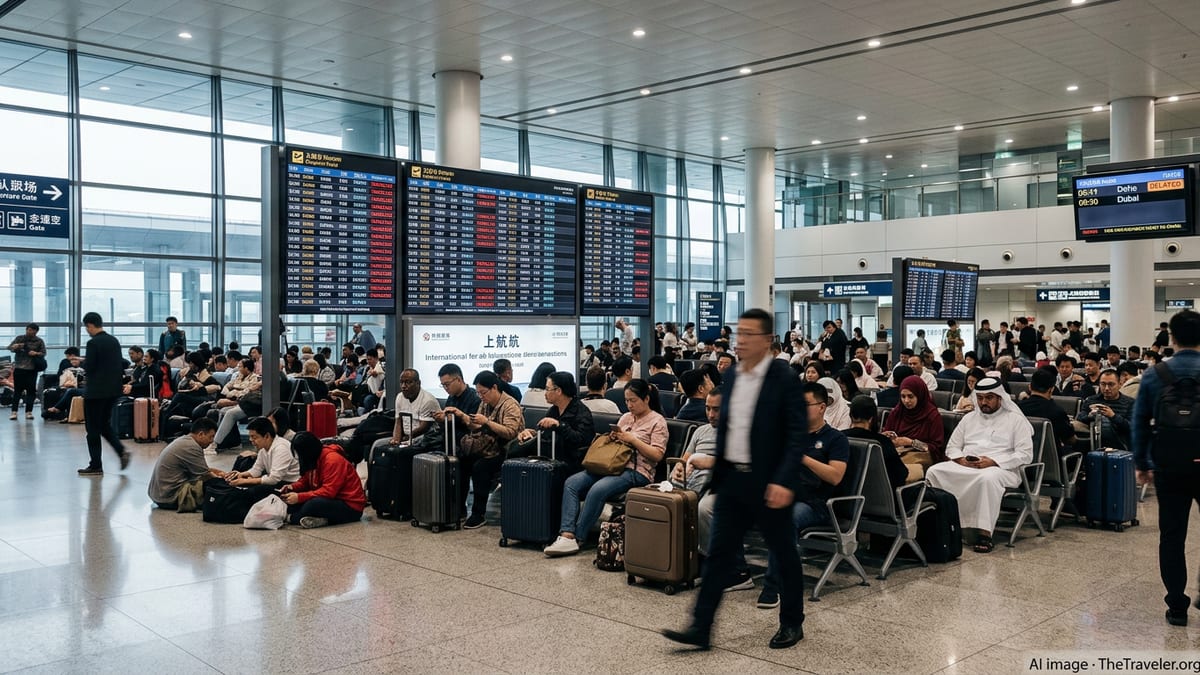
Four Strategic Flights Pulled as Regional Turmoil Ripples into Singapore
New disruption at Singapore Changi is emerging at the intersection of Middle East security tensions and Asia Pacific schedule reshuffles, with publicly available data showing fresh cancellations affecting routes to Doha, Melbourne, and Bahrain. The latest schedule changes come on top of already elevated disruption levels across Asian hubs, where reports indicate hundreds of delays and dozens of cancellations each day.
Travel and aviation tracking coverage for April 14 and 15 points to a spike in irregular operations at Changi, including services operated by international carriers such as Qatar Airways, Gulf Air, and Jetstar. Gulf Air’s ongoing suspension of flights to and from Bahrain, tied to a prolonged Bahrain airspace closure, has removed at least one Singapore–Bahrain rotation from schedules, narrowing options for travelers using Singapore as a stepping stone to the Gulf.
Qatar Airways, which has been rebuilding its Doha hub since widespread regional airspace closures in early March, has meanwhile trimmed a limited number of services as it fine tunes a revised timetable. Published flight status summaries list Singapore among the destinations where individual Doha rotations have been pulled, including at least one Singapore–Doha leg that had been scheduled during the current peak disruption window.
On the Australia side, Jetstar’s cancellation of a Singapore–Melbourne sector adds a further layer of complication for passengers transiting between Southeast Asia and Australia at a time when long haul capacity is already fragile. Industry coverage shows Jetstar and other low cost carriers adjusting routes and frequencies across the region in response to fuel prices, crew constraints, and knock on effects from Middle East rerouting.
Middle East Airspace Closures Continue to Distort Global Networks
The immediate trigger for many of the latest schedule cuts remains the unstable security situation across key Gulf airspace corridors, which has forced airlines to suspend or heavily modify operations since early March. Widespread airspace restrictions affecting Qatar, Bahrain, and neighboring states have produced cascading cancellations that reach far beyond the Middle East, including into Asia Pacific gateways such as Singapore.
Analyses by aviation data firms and travel rights organizations in recent weeks describe hundreds of canceled flights at Doha and Bahrain alone, with Gulf Air remaining effectively grounded from its Bahrain base and Qatar Airways only gradually restoring departures out of Doha. That gradual rebuild has prioritized high demand trunk routes, leaving some secondary links, including certain Asia connections, more vulnerable to tactical cancellations on short notice.
Singapore’s role as a major transfer point between Australia, Southeast Asia, and the Gulf means that even a handful of scrapped flights can disrupt complex itineraries. When a Singapore–Doha or Singapore–Bahrain leg is canceled, passengers may lose onward connections to Europe, Africa, or the Americas that depend on tight hub banks in Doha and Bahrain. Travel industry reporting notes that such missed connections have become increasingly common during the current wave of airspace related disruption.
The operational picture is further complicated by longer routings around restricted areas, which increase fuel burn and narrow schedule buffers. Carriers adjusting flight paths to avoid conflict zones are left with tighter crew duty windows, making it harder to recover from minor delays and increasing the risk that marginal flights, such as off peak Singapore rotations, are trimmed from the timetable to preserve overall network resilience.
Knock On Effects for Melbourne and Bahrain Connections
The loss of four key services involving Gulf Air, Qatar Airways, and Jetstar may appear modest on paper, but the knock on effects for passengers relying on one stop links between Singapore, Melbourne, Doha, and Bahrain are significant. Melbourne in particular has seen major schedule reshaping this season, with recent changes by Singapore Airlines and other carriers designed to offset lost Dubai capacity and maintain Australia to Europe connectivity.
Recent network announcements show airlines upgauging or adding services on certain Melbourne routes while cutting back elsewhere to juggle aircraft and crew availability. Against that backdrop, Jetstar’s cancellation of a Singapore to Melbourne flight removes a lower cost option for travelers and reduces flexibility for those seeking to rebook after a disrupted long haul sector. For passengers whose journeys hinge on precise timing to make work, study, or event commitments, the loss of even one daily or several weekly flights can sharply limit alternatives.
For Bahrain, the effective shutdown of Gulf Air’s scheduled services due to the continuing airspace closure has turned what was once a straightforward one stop routing between Singapore and Bahrain into a multi segment puzzle involving alternative hubs. Travelers heading to or from Bahrain via Singapore are increasingly being rebooked through other Gulf or Asian gateways, adding extra stops and hours to what were previously more direct itineraries.
These developments come on top of broader Asia wide disruption. Recent regional snapshots describe hundreds of delays and cancellations across airports from Shanghai and Hong Kong to Jakarta and Delhi, with Singapore Changi repeatedly listed among hubs experiencing above normal disruption levels. In that environment, the removal of four strategically important flights linking Singapore to Melbourne, Doha, and Bahrain compounds existing pressures on already stretched networks.
What the New Cancellations Mean for Travelers in Singapore
For passengers currently holding tickets on Gulf Air, Qatar Airways, or Jetstar itineraries touching Singapore, the latest cancellations reinforce the need for closer than usual monitoring of booking status and travel plans. Publicly available guidance from airlines and travel rights organizations indicates that travelers affected by a canceled flight are generally entitled to rebooking on the next available service or a refund, but the practical options depend heavily on seat availability and the broader disruption picture.
Given the intensity of airspace related issues in the Gulf, many carriers are recommending that travelers build additional time into itineraries that rely on connections through Doha or other Middle Eastern hubs. For some, this may mean opting for earlier departures out of Singapore or alternative routings through secondary hubs in East or Southeast Asia, even if those options involve longer total travel times.
Travel industry advisories are also highlighting the importance of tracking real time changes via airline apps and airport information boards. In the current environment, some cancellations and schedule shifts are being finalized only a day or two before departure, with further last minute adjustments possible if airspace restrictions tighten again. Passengers connecting in Singapore, especially those with separate tickets on different carriers, face heightened risk of missed onward flights if a Gulf or Australia segment is pulled or retimed.
Insurers and consumer advocates are urging travelers to check the fine print of travel insurance policies and credit card coverage to understand what is and is not covered in the event of airspace related cancellations. While some policies treat such events as extraordinary circumstances, others may offer compensation for additional accommodation and meal costs if travelers are stranded in transit points such as Singapore while waiting for replacement flights.
Outlook: Gradual Recovery but Persistent Uncertainty
There are some early signs that capacity through Doha and other Gulf hubs is recovering, with Qatar Airways steadily rebuilding its departure banks and adding back destinations on a phased basis. Aviation data platforms report that daily departures from Doha have climbed sharply from the lows seen immediately after early March airspace closures, and Singapore remains listed among the cities scheduled to retain service in the coming weeks.
However, the same reports stress that route timings and frequencies remain fluid, and that tactical cancellations are likely to continue as airlines respond to shifting security assessments and operational constraints. For Singapore based travelers, as well as those merely connecting through Changi, this means that planning journeys via Doha, Melbourne, or Bahrain will likely involve a period of continued uncertainty through at least late April and potentially beyond.
Network planners across the region are expected to keep adjusting schedules to balance demand with operational realities, which may result in further short notice changes to specific flights, including those operated by Gulf Air, Qatar Airways, and Jetstar. Travelers booking new trips that rely on these carriers or routes are being advised in public guidance to favor flexible tickets and itineraries that either allow free date changes or avoid the most affected hubs where possible.
For now, the four canceled flights linking Singapore with Doha, Melbourne, and Bahrain have become emblematic of how a regional security shock in the Gulf can quickly reshape travel patterns thousands of kilometers away. As airlines continue to rebuild and reroute, Singapore’s role as a resilient but pressured connector between Asia, Australia, and the Middle East is likely to remain at the center of the story.