


Planning a weekend in Jayuya almost forces you to pick a side. This small mountain town in Puerto Rico’s coffee country is now home to two very different craft experiences: a polished rum tasting at La Destilería and an in-depth coffee workshop at Hacienda Prosperidad. With only one spare day and a limited budget, I set out to see which experience actually felt worth paying for by booking both on the same trip, keeping close track of prices, logistics, what I learned and how each one felt from a traveler’s perspective.
Get the latest updates straight to your inbox!
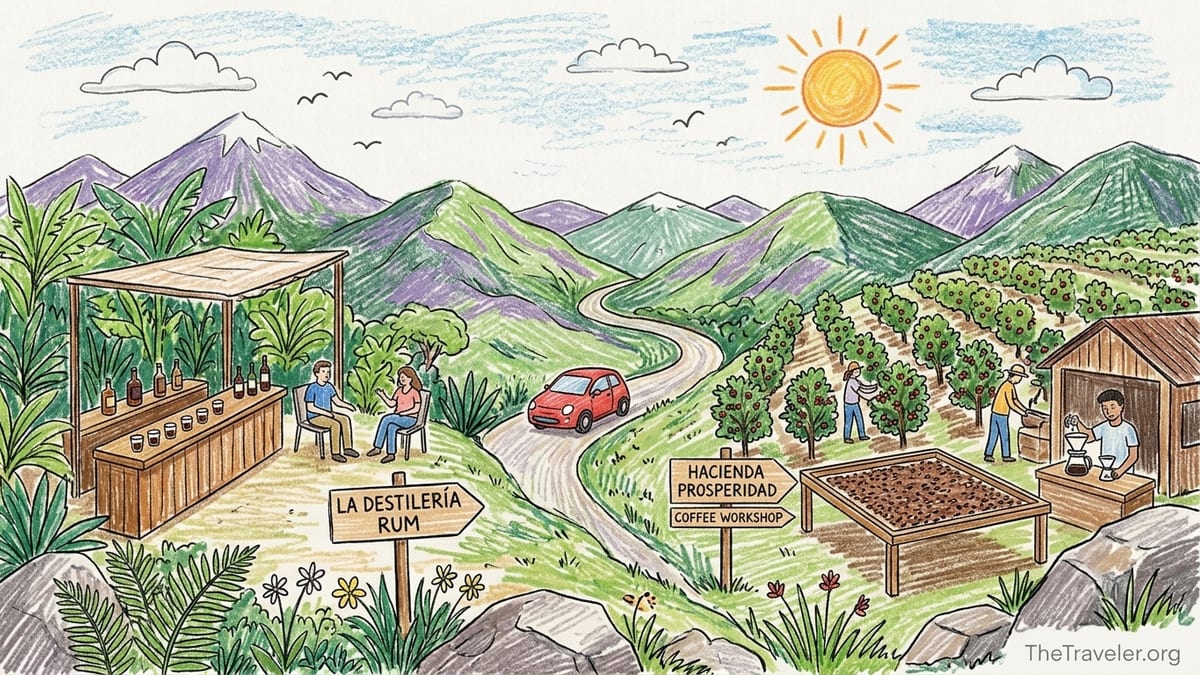
Reservations, Prices, and Getting to Jayuya
I planned the rum and coffee experiences as a full Jayuya weekend, arriving from San Juan. Driving yourself into the central mountains is the most practical option. Public transportation does not reach these farms, and ride-hailing apps are unreliable once you leave the metro area. For travelers who prefer not to drive, several private drivers and tour operators based in San Juan quote around 200 to 260 dollars for a long day in the mountains for two adults, depending on hours and waiting time, which lines up broadly with published long-distance taxi ranges on the island. Because I wanted flexibility to linger and buy bottles and beans, I rented a compact car in San Juan for about 65 dollars per day plus fuel and tolls and drove the winding but scenic two-and-a-half hours to Jayuya.
For La Destilería, I booked directly through their official experience page. At the time of writing, their Premium Tasting Journey is listed at 45 dollars per person for a 60 minute guided tasting, while the more in-depth Distillery Tour with tasting is 65 dollars per person for about 90 minutes. Both require advance reservations and prepayment with a credit card, and guest numbers are capped to keep groups small. Regular tasting-room hours are shown as Thursday to Saturday, 10 a.m. to 5 p.m., but the scheduled Premium Tasting I joined was set for 2 p.m. on a Saturday with a maximum of roughly a dozen participants.
Hacienda Prosperidad does not operate like a big theme-park style attraction. It is a working coffee farm in the mountains outside central Jayuya, and its coffee tour and workshop is usually offered as a “seed to cup” experience. Recent coffee-tour comparison guides that track pricing list a full-day excursion from San Juan, including transportation and the Prosperidad workshop, at about 210 dollars per person, with roughly four of those hours spent in the vehicle. When arranged directly at the farm, the core coffee tour and workshop component is considerably less per person, but still a premium, hands-on activity compared with a simple walk-around tour. I reserved my spot by contacting the farm in advance and paid a deposit electronically, settling the balance by card on-site.
To keep the day manageable, I booked La Destilería’s 2 p.m. rum tasting on Saturday and scheduled the coffee farm for the following morning, leaving time between them to rest and avoid driving immediately after alcohol. I was over Puerto Rico’s legal drinking age and able to participate fully in the tasting; any traveler planning a similar itinerary should confirm age rules before booking.
Inside La Destilería: Tasting Room, Production Story and Atmosphere
La Destilería markets itself as a craft micro-distillery nestled in the rainforest just outside Jayuya. The approach road climbs through lush greenery, and the distillery building itself feels more like a tucked-away mountain lodge than an industrial plant. For my visit, only the tasting room and an adjacent educational area were open to visitors. The production floor and fermentation tanks were not accessible to the group, and staff were transparent about that. There was no attempt to pretend we were in the middle of the stills when we were not.
The Premium Tasting Journey is structured as a seated, guided session. On the long wooden bar, each guest had a tasting mat with four pours representing the core range of La Destilería’s award-winning rums, generally including a white or silver expression, at least one barrel-aged rum, and a richer, longer-aged bottle that anchors the premium end of their lineup. The host walked us through the basics of sugarcane sourcing, molasses versus sugarcane juice, and how yeast, temperature and fermentation time affect the character of the wash before distillation. The emphasis was on process and flavor rather than technical jargon, which worked well for a mixed group of rum fans and casual tasters.
The atmosphere in the tasting room was relaxed but decidedly adult. Background music stayed low, which made it easy to hear the guide and ask questions. Lighting was warm and comfortable, and large windows opened onto the surrounding mountains. My group had ten adults, a full but not crowded session that allowed the host to check in with everyone individually. The guide fielded questions on cask types, aging conditions in Puerto Rico’s climate and how their rum differs from mass-market brands sold in island supermarkets, giving specific, grounded examples instead of marketing clichés.
Rum Production Story and What You Actually Taste
Because we did not walk the full production floor, the explanation of rum-making relied on visuals and storytelling. Our host used diagrams and photos of their fermenters, stills and barrel warehouse, pointing out how fermentation length, distillation cuts and barrel selection shape the final spirit. He highlighted how tropical aging in Puerto Rico’s humidity speeds interaction between rum and oak, which is why a 6 to 8 year old local rum can show the richness you might only see in older bottles from cooler climates.
The four samples themselves were poured at modest tasting-room quantities, enough for a couple of good sips of each. We began with an unaged or lightly rested white rum, tasted neat to appreciate the base spirit. Next came a golden rum aged a few years in ex-bourbon barrels, followed by a darker, more complex expression matured longer in oak. The final pour was their flagship premium rum, positioned as a sipping spirit rather than a cocktail mixer. At each step, the guide prompted us to nose the rum first, look for specific aromas and then taste with a few drops of water to see how the profile opened up.
There were no snacks beyond water available in the tasting room during my session, so it is wise to arrive having eaten lunch in Jayuya town or at a nearby roadside restaurant. The session clocked in at almost exactly one hour. At the end, guests could purchase bottles at prices comparable to well-stocked urban liquor shops, with a modest discount applied for tasting participants. I bought one mid-range bottle and one of the premium expressions, adding roughly 80 to 90 dollars to my bill.
Seed-to-Cup at Hacienda Prosperidad: From Plantation to V60
The next morning’s coffee workshop at Hacienda Prosperidad had a very different feel. Located at more than 2,000 feet of elevation in the mountains around Jayuya, the farm is a multi-generational, family-run operation, with coffee roasted in small batches to maintain freshness. Rather than funneling visitors directly into a cafe, the seed-to-cup workshop is designed as an immersive walk through the entire coffee cycle, and my reservation reflected that: a multi-hour block that combined a farm tour, processing explanation, roasting demonstration and hands-on brewing.
We began among the coffee trees. A guide walked us through the plantation, pointing out different stages of growth, how shade trees protect the fragile coffee plants and how harvest timing affects flavor. In harvest season, guests may see picking in progress; outside of peak season, the emphasis is on the long-term care of the farm and the realities of producing specialty coffee in Puerto Rico’s changing climate. The group size here was smaller than at the rum tasting; there were six of us, including one older teenager and a couple traveling with their adult daughter, which made the explanations feel more conversational and tailored.
From the fields, we moved to the processing area. The guide showed us where coffee cherries are depulped, washed and dried, explaining the difference between washed and natural processing in plain language. We handled dried parchment coffee and hulled beans, then stepped into the small roasting space. There, we watched a batch being roasted, with the guide calling out the “first crack” and describing how color, smell and sound help them decide when to end the roast. Guests do not operate the roasting machines themselves, for safety and consistency, but we were invited to inspect green and roasted beans and discuss how roast profiles affect brewing at home.
The final stage of the workshop brought us to a simple tasting lab setup. The farm team ground freshly roasted beans and demonstrated at least one manual brewing method; on my visit, it was a V60 pour-over. Each participant could grind a small amount of coffee by hand and take turns pouring water over the grounds in a slow spiral, under guidance. The resulting cups were shared and compared, with the guide encouraging us to notice sweetness, acidity and body. Compared with sampling four small glasses of rum, here we drank full cups of coffee and were offered refills of different roasts. There was no rush to finish, and the total on-farm time ran to several hours.
Comparing Duration, Depth and How Hands-On Each Experience Feels
La Destilería’s Premium Tasting Journey is a focused, one-hour event with a clear structure: sit, listen, nose and taste four rums, ask questions, then decide if you want to buy a bottle. It works well as part of a broader afternoon in the mountains or as one of several stops on a culinary road trip. The Distillery Tour option, which I did not take on this specific day but cross-checked while booking, promises closer to 90 minutes, including time in the production facility when it is open to visitors. In either case, it is still a relatively compact window of time for the cost.
The Hacienda Prosperidad workshop is a bigger commitment. Even if you arrange your own transportation and meet them at the farm, you are looking at roughly half a day between arriving, joining the tour, walking the plantation, learning about processing, watching roasting and then grinding and brewing. When sold as a full-day experience from San Juan with transportation included, it is listed at around 210 dollars per person and about eight hours door to door, with a large portion of that in the van. Even if you strip away the driving, the on-farm portion runs longer than the rum tasting, and it feels like it, in a good way.
In terms of hands-on involvement, the difference is stark. At La Destilería, participation means sipping and engaging your senses, not manipulating equipment. You smell the rums, you swirl them, you compare notes. The educational depth comes from hearing a skilled host condense years of practice into approachable stories. At Hacienda Prosperidad, you are physically moving through the landscape, touching beans at different stages and taking part in the final brewing. Grinding by hand and pouring your own V60 gives kinesthetic context to the information you hear.
Group size and accessibility also diverge. Both experiences keep groups relatively small, but the rum tasting is more predictable: inside, on level surfaces, with seating and climate control. The coffee workshop includes walking on uneven ground, inclines and farm paths that may be muddy after rain. For travelers with mobility challenges or very young children, the rum tasting will likely feel simpler and more comfortable, while the coffee farm is better suited to those ready for a light hike in addition to learning.
Costs, Purchases and Whether Either Felt Overpriced
Breaking down the numbers for two adults helps clarify value. For the rum side, two Premium Tasting Journey spots at 45 dollars each came to 90 dollars before tax and tip. Add one mid-range bottle and one premium bottle at La Destilería, which together ran just under 90 dollars at the time of my visit, and the distillery bill landed around 180 dollars for the two of us. Our rental car cost about 65 dollars for the day, plus roughly 25 dollars in fuel and tolls to reach Jayuya and explore locally. Allocating half of that transport cost to the rum outing, the effective total for two adults for the tasting and take-home bottles was about 220 dollars.
On the coffee side, joining the seed-to-cup workshop as part of a full-day tour from San Juan would have meant about 420 dollars for two adults at a publicly listed rate of 210 dollars per person, with transportation included. Because I was already in Jayuya with a rental car, my direct-on-farm cost for the workshop component alone was significantly lower, but still a clear step up from a basic farm tour elsewhere on the island. After the workshop, I bought two bags of whole-bean coffee to bring home, spending around 30 to 40 dollars. Adding my share of the day’s transport, the total outlay for two adults for the coffee experience and products came in under what the full packaged day from San Juan would cost, but above the raw class fee.
Did either feel too commercial or expensive for its duration. La Destilería’s pricing felt fair once I considered the limited group size, the quality of the rums poured and the expertise of the host. One hour passes quickly, and a traveler watching every dollar might wish the pours were larger or a fifth sample was included, but the setting, presentation and post-tasting discount on bottles helped the overall value feel aligned with other premium tastings I have done in the Caribbean.
The Hacienda Prosperidad experience occupies a different psychological space. On paper, the per-person cost for the full-day tour from San Juan looks high, especially since nearly half the total time is spent in transit. But on the farm itself, the workshop did not feel rushed or transactional. The family presence, the chance to ask detailed questions about farming challenges and the volume of coffee we actually drank created a sense of generosity. For travelers already staying in or near Jayuya, arranging the workshop directly at the farm and driving yourself can make the cost-to-experience ratio much more appealing.
Who Each Experience Suits: Adults, Enthusiasts and Families
La Destilería’s rum tasting is explicitly designed for adult culinary travelers. All participants must be of legal drinking age, and the content is centered on smelling and tasting alcoholic spirits. Couples who enjoy visiting wineries or craft-brewery taprooms will feel right at home here. The structured, seated format also makes it a good fit for small groups of friends who want a social but still educational hour before dinner.
Because alcohol is central, it is crucial to plan safe transportation. After four rum samples, even at tasting-room pours, you should not be getting behind the wheel immediately. On my visit, I built in several sober hours before driving again, hydrated and ate a proper meal in town first. Travelers could also designate a non-drinking driver or hire a local driver for the afternoon. The mountain roads around Jayuya are beautiful but demanding, with curves, changing weather and occasional fog, so treating the rum tasting as a reason to drive slowly or let someone else handle the car is both responsible and more relaxing.
The coffee workshop, by contrast, is far more flexible. Children and teenagers who can handle a multi-hour educational activity and some walking can join, and there is no legal age restriction for learning about coffee cultivation. Caffeine is still worth monitoring, especially for younger participants, but the farm team can pour smaller amounts or offer water between cups. For families interested in showing kids where daily staples come from, a seed-to-cup experience on a mountain hacienda delivers far more context than a quick stop at a roadside cafe.
Coffee enthusiasts and home brewers will find special satisfaction in the Prosperidad workshop. Seeing real trees at elevation, talking about varietals and processing, and then brewing with a V60 using beans grown a few hundred meters away closes the loop in a way that cafe tastings in San Juan cannot match. Likewise, rum collectors and cocktail lovers will appreciate La Destilería’s focus on neat tasting and narrative around each expression, especially if they are already familiar with big-name Puerto Rican rum brands and want to discover something smaller and more place-specific.
Expectations vs Reality: What I Learned and What Surprised Me
Going in, my expectation was that the rum experience would feel more glamorous and the coffee farm would feel more rustic, and that was true to a point. La Destilería’s architecture, branding and presentation all speak the language of premium spirits. The glassware, tasting mats and polished script of the guide gave the session the tang of an urban cocktail bar transported to the mountains. I expected a quick, somewhat rehearsed overview of rum-making, but the host’s willingness to discuss topics like angel’s share loss in tropical warehouses or how they evaluate barrels for blending added depth that I had not anticipated.
At Hacienda Prosperidad, I expected a long, slightly tiring walk and a couple of quick cups of coffee at the end. Instead, what stood out was the sense of continuity. Listening to the family talk about how hurricanes, disease pressure and fluctuating coffee prices have affected their planting decisions in recent years made every green sprout and drying patio feel more significant. The roasting demonstration and V60 brew session tied those big-picture realities to something tangible in the cup. I left with a clearer mental map of how climate, labor and small decisions at each stage show up in the flavors specialty-coffee drinkers in San Juan or abroad prize so highly.
The biggest surprise on the financial side was how quickly product purchases added up. In both places, the core experience price was only part of the story. At the distillery, two bottles nearly doubled our spend. At the coffee farm, stocking up on beans for gifts and home brewing spun a relatively modest class fee into a more serious bill. Travelers on a strict budget could skip the take-home products and still have a rich educational experience, but planning a realistic spending cap on bottles and bags of coffee before you arrive is wise.
Educationally, the two experiences complemented each other more than I expected. One afternoon unpacked how sugarcane becomes aged rum in a controlled, small-scale facility. The next morning showed how coffee cherries travel from steep mountain slopes to a pourover dripper. Together, they painted a fuller picture of Jayuya as a living center of Puerto Rico’s craft-production traditions, rather than just a pretty mountain town.
The Takeaway: Costs, Memories and What I Would Book Again
Framed against my expectations, the rum tasting delivered exactly what I hoped and slightly less than I secretly wanted in terms of time: a focused, well-run, one-hour immersion in local premium rum. The coffee workshop delivered more time, more walking and more context than the simple label “tour” suggests, at a higher theoretical price point once transportation from the coast is factored in. In raw dollars for two adults, the full-day coffee excursion from San Juan that includes Hacienda Prosperidad works out as the bigger ticket, especially compared with driving yourself up to La Destilería for a single paid tasting and a couple of bottles.
In terms of which felt more memorable, I would give the edge to the coffee workshop. There is something indelible about standing under shade trees at over 2,000 feet, watching clouds slide along the mountain ridges, then drinking a cup brewed from beans grown yards away that you helped grind and pour. The rum tasting created sharper, more polished memories, like the nose of the oldest expression or a particular story about barrel selection, but the farm day rewired how I think about every bag of Puerto Rican coffee I see on a shelf.
If I were planning another Jayuya weekend with a partner, I would book both again, but in different ways. For couples who enjoy food and drink and want a compact, social, distinctly adult outing, La Destilería’s rum tasting is an easy recommendation, provided you arrange safe transportation or a generous cushion of time before driving. For coffee enthusiasts and serious learners, prioritizing a workshop-style visit to Hacienda Prosperidad or a comparable coffee hacienda is worth the extra money and hours on the road, particularly if you are staying in the mountains or can share costs with another couple.
For families planning an educational Jayuya escape, especially with older children or teenagers, the coffee hacienda comes first. It offers more age-inclusive content, physical movement and direct contact with agriculture. The rum tasting can then become a special, adults-only moment while kids stay at a mountain inn or cabin with another caregiver. For adult culinary travelers who want to taste the island in as many forms as possible, the ideal answer is not “rum tasting or coffee workshop,” but “rum then coffee,” allowing Jayuya’s two craft traditions to complement rather than compete with each other.
FAQ
Q1. Do I need a car to visit La Destilería and Hacienda Prosperidad in Jayuya?
Most travelers will find renting a car the most practical option, as public transportation does not reliably reach these mountain locations and ride-hailing apps are inconsistent outside the metro area.
Q2. How much should two adults budget for a rum tasting at La Destilería, including purchases?
For two Premium Tasting Journey spots at around 45 dollars each plus one or two bottles to take home, a realistic total is roughly 180 to 220 dollars once taxes and a modest tip are considered.
Q3. How long does the rum tasting at La Destilería last?
The Premium Tasting Journey is scheduled for about 60 minutes, while the more extensive Distillery Tour with tasting runs closer to 90 minutes when production areas are open to visitors.
Q4. Is the coffee workshop at Hacienda Prosperidad suitable for children?
Yes, older children and teenagers who can handle a multi-hour farm visit and walking on uneven ground generally do well, but parents should monitor caffeine intake and energy levels.
Q5. How much coffee do guests actually drink during the Hacienda Prosperidad workshop?
Participants typically enjoy at least one full cup brewed during the V60 demonstration, with opportunities to sample additional roasts if interested, making it a substantial tasting rather than a single sip.
Q6. Which experience is more hands-on: the rum tasting or the coffee workshop?
The coffee workshop is more hands-on, involving walking the plantation, handling beans at different stages, observing roasting up close and participating in grinding and brewing, while the rum tasting focuses on guided smelling and sipping.
Q7. Are either of these experiences wheelchair accessible?
The rum tasting at La Destilería is largely indoors on level flooring and is generally more accessible, while Hacienda Prosperidad includes outdoor paths, slopes and potentially muddy terrain that can be challenging for some mobility needs.
Q8. Do I need to worry about driving after the rum tasting?
Yes, you should plan safe transportation by designating a non-drinking driver, hiring a local driver or allowing several hours to pass, with food and water, before navigating Jayuya’s winding mountain roads.
Q9. Which experience offers better value for serious food and drink enthusiasts?
Serious rum fans may find the concentrated, premium tasting at La Destilería an excellent value, while specialty-coffee enthusiasts often feel the longer, more detailed seed-to-cup workshop at Hacienda Prosperidad justifies its higher overall cost.
Q10. If I can only book one, should I choose the rum tasting or the coffee hacienda workshop?
Choose the rum tasting if you are an adult traveler seeking a compact, polished, spirits-focused experience; choose the coffee workshop if you want a longer, more educational and family-friendly immersion in Puerto Rican agriculture.