


More news on this day
Fresh flight disruptions across Gulf air corridors have spilled into the busy Saudi Arabia–Jordan market in recent days, with cancellations and schedule changes affecting connections between Jeddah and Amman and prompting airlines and airports to steer passengers toward real-time status checks and flexible rebooking options.
Get the latest news straight to your inbox!
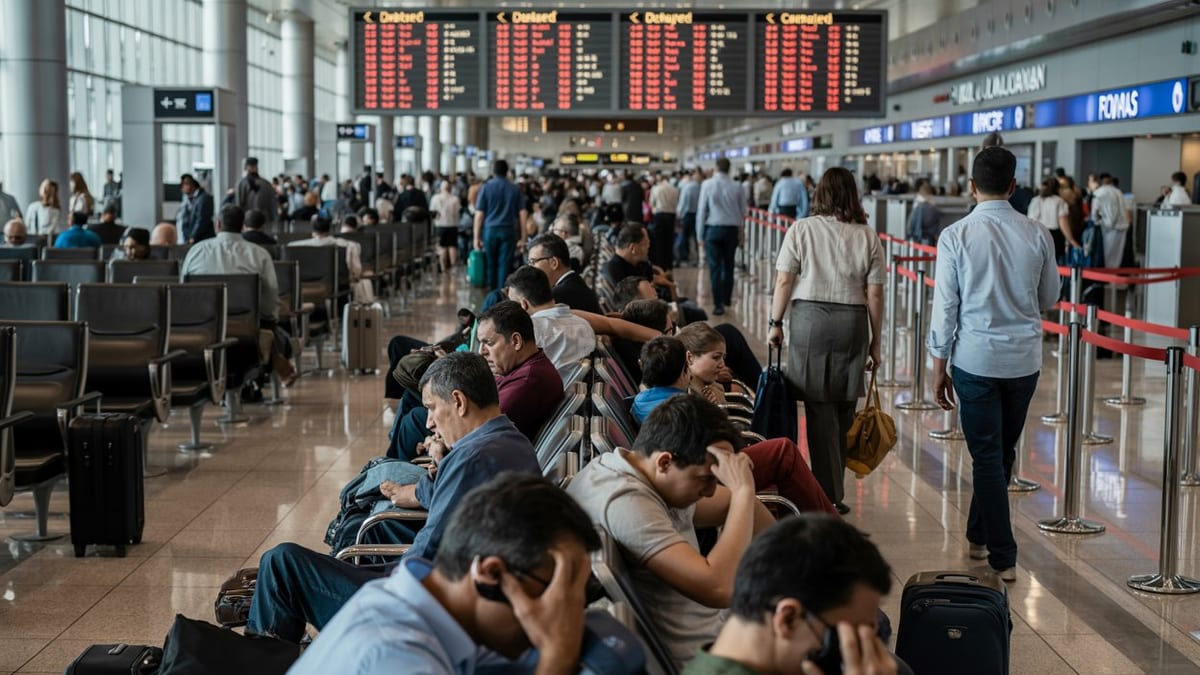
What travelers are seeing on Jeddah and Amman boards
Recent published flight-tracking and airport-board data shows cancellations and irregular operations on select services linking King Abdulaziz International Airport (JED) in Jeddah with Queen Alia International Airport (AMM) serving Amman. One example flagged by public flight-status trackers is Saudia flight SV627 on September 11, 2026 on the Jeddah–Amman route, which was shown as cancelled in real-time status monitoring.
At the same time, not all flights on the corridor have been halted. Publicly available flight histories show other Jeddah–Amman services operating around the same period, underscoring that disruptions may be flight-specific or linked to rolling operational constraints rather than a blanket airport shutdown.
On the Jordan side, Queen Alia’s official arrivals and departures board continues to display active operations across multiple airlines and destinations, suggesting the airport itself is functioning while individual airlines adjust schedules in response to aircraft availability, network knock-on delays, or regional conditions.
Why disruptions can sweep the region quickly
When irregular operations hit major Gulf hubs and Red Sea gateways, the impacts can cascade. A cancellation on one rotation can strand aircraft and crews out of position, which can then trigger further cancellations across a carrier’s network, especially on short-haul regional routes with tight turn times.
Weather is one recurring factor in the broader region. Published coverage in recent months has highlighted National Centre for Meteorology alerts in Saudi Arabia for dust-generating winds along the western coastal corridor that includes Jeddah, conditions that can reduce visibility and complicate arrival sequencing or ground operations depending on severity.
Separately, travelers have also been navigating an elevated level of attention to airspace and routing in the Eastern Mediterranean and Levant. Public updates from Jordan’s aviation regulators and state media in 2026 have described normal operations at Queen Alia alongside guidance for passengers to coordinate directly with airlines if disruptions occur, a reminder that schedules may shift even when airports remain open.
Jeddah–Amman remains a high-frequency market with multiple operators
Despite short-term cancellations, the Jeddah–Amman city pair is typically served by several carriers, which can create rebooking options when seats are available. Widely used schedule aggregators list multiple airlines operating nonstop flights between Jeddah (JED) and Amman (AMM), including Saudia, Royal Jordanian, and flynas, with frequent weekly departures.
For travelers shopping alternative departures at short notice, airline booking pages also indicate the market’s competitive pricing at times. flynas has advertised one-way fares on the Jeddah–Amman route starting from SAR 268 on certain dates shown in September 2026 search results, though availability can change rapidly once disruption-driven re-accommodation begins.
Travelers should also note that Amman has more than one airport code in circulation for scheduled services. In addition to Queen Alia (AMM), some published airline materials and schedule feeds reference Amman Civil Airport (ADJ) for certain operations, including flynas service announcements. For passengers rebooking during disruption periods, confirming the arrival airport code before accepting a new itinerary can prevent misconnects on ground transport and hotel plans.
What to do if your flight is cancelled or delayed
When a cancellation posts, the first priority is to confirm the status through the airline’s own tools and the departure airport’s live board. Third-party trackers can be useful for situational awareness, but rebooking and passenger notifications are ultimately tied to the airline reservation record and the carrier’s official status updates.
If you are traveling Jeddah–Amman during a disruption window, consider checking both the outbound aircraft’s inbound leg and your flight number several times, including on the day of travel, because earlier knock-on delays can later convert into a cancellation if the operating aircraft is reassigned.
For rebooking, travelers typically have three practical paths: accept the airline’s proposed alternative, request a different flight on the same airline that better fits your plans, or pursue a refund if you no longer want to travel. The exact menu of options depends on fare rules, how the ticket was purchased, and the nature of the disruption. If the ticket was booked through an online travel agency, changes may need to be initiated through that seller unless the airline permits direct takeover.
Planning tips for the days ahead
With Gulf-region disruptions often moving in waves, travelers flying into or out of Jeddah and connecting onward through regional hubs may want to build extra buffer time into onward plans. For example, if you have time-sensitive commitments in Amman, it can be safer to arrive the night before rather than rely on a same-day arrival, especially during periods when dust, strong winds, or network congestion are widely reported.
Passengers should also keep an eye on the operational difference between airports remaining open and airlines trimming schedules. Recent Jordan-focused travel updates have emphasized that Queen Alia can continue handling commercial flights even while individual carriers reduce frequencies or change timings, making flight-by-flight verification essential.
Finally, travelers who can be flexible may find that shifting departure time or using an alternate Amman airport on select services can help. But because seat inventory can tighten quickly after a cluster of cancellations, acting early, confirming the correct airport code, and securing written confirmation of any itinerary changes can reduce the risk of arriving at the terminal for a flight that has already been pulled from the schedule.