


More news on this day
Nigeria’s domestic airlines logged 4,765 delayed flights and 36 cancellations in August 2026, according to a monthly operations summary published by the Nigeria Civil Aviation Authority (NCAA), with Air Peace and United Nigeria Airlines leading the disruption count.
Get the latest news straight to your inbox!
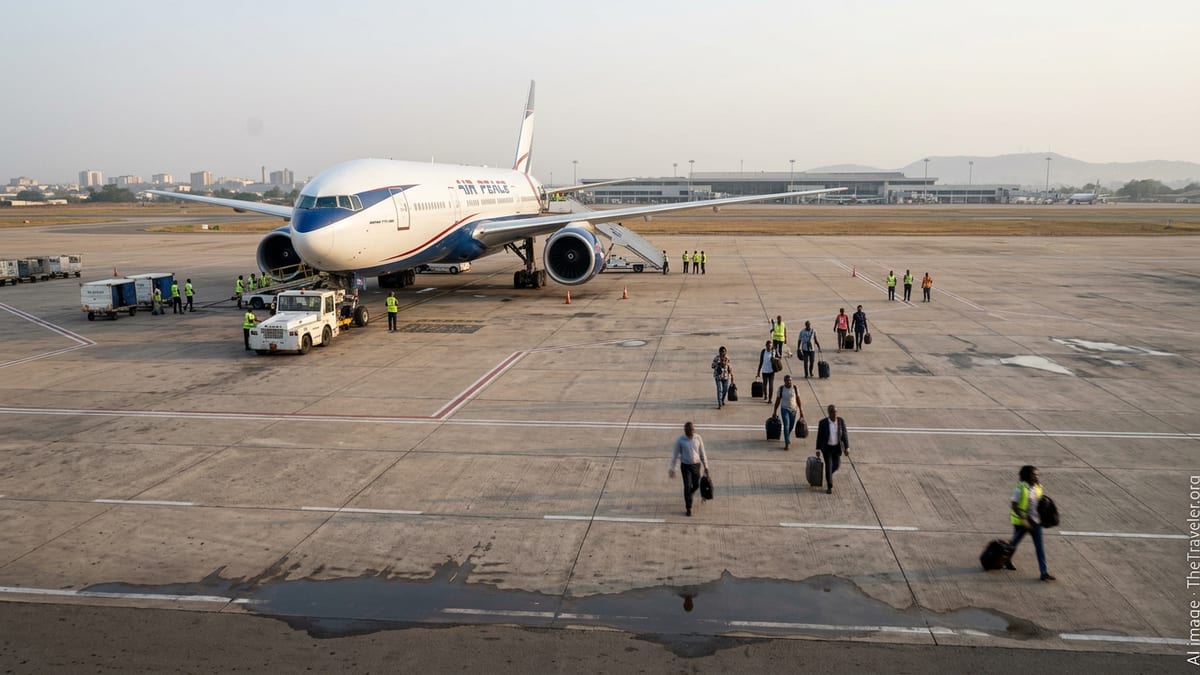
Regulator data shows nearly six in 10 domestic flights ran late
Published coverage of the NCAA’s August 2026 “Summary of Domestic Airline Flight Disruption Operations” indicates 15 carriers operated 7,961 domestic flights during the month, with 59.9% of those services delayed. The same dataset shows 3,196 flights operated without reported delays, while cancellations totaled 36.
The NCAA summary breaks delays into time bands, indicating that most disruptions were shorter than two hours. Reports based on the regulator’s release show 2,801 flights were delayed between 16 minutes and one hour, while 1,322 were delayed between one and two hours, underscoring how congestion, turnaround challenges, and schedule padding can shape reliability even when flights eventually depart.
Longer disruptions were also prominent. Published figures from the NCAA summary show 407 flights were delayed between two and three hours, and 235 flights were delayed for three hours or more, a category that tends to create the biggest knock-on effects for connecting passengers, hotel plans, and same-day business travel.
Air Peace had the highest number of delayed flights
Air Peace operated the most domestic flights in August and also recorded the highest raw number of delays, based on the NCAA’s monthly summary as reported by multiple Nigerian outlets. The airline operated 1,864 flights and recorded 1,330 delays, a delay rate reported at 71.4% for the month.
Coverage drawing from the NCAA dataset indicates Air Peace also recorded seven cancellations in August. While cancellations were far fewer than delays across the market, even a small number can strand travelers when load factors are high and rebooking options are limited on heavily traveled city pairs.
The regulator’s time-band detail has also been used to highlight how much of the system’s “long-delay” burden fell on the largest operator. Reports based on the NCAA summary show Air Peace accounted for 108 of the 235 delays that lasted three hours or more in August, the largest share of the longest disruptions among listed carriers.
United Nigeria posted the highest delay rate and most cancellations
While Air Peace led by volume of delayed flights, published reporting based on the NCAA summary indicates United Nigeria Airlines recorded the highest delay rate among carriers in August. The airline operated 1,231 flights and logged 943 delays, which coverage places at a 76.6% delay rate.
United Nigeria also recorded eight cancellations during the month, the highest number reported among carriers in the NCAA’s August summary. For travelers, this combination of high delay rates and cancellations can be particularly disruptive on routes with fewer daily frequencies, where missed meetings or overnight stays become more likely.
The NCAA has also placed operational performance in the spotlight beyond the monthly statistics. Publicly available information on the regulator’s website includes consumer-rights guidance on what passengers are entitled to during delays and cancellations, including refreshments after two hours for domestic delays and reimbursement beyond three hours, as well as compensation provisions tied to cancellations under certain notice conditions.
Other airlines: wide gaps in on-time performance
Beyond the two leading carriers, the NCAA summary as reported by Nigerian media indicates notable variation across the domestic market. Enugu Air recorded 582 delays out of 878 flights, while several other carriers recorded delay rates closer to half of operations, reflecting the uneven impact of fleet availability, route structures, and operational scale.
Published coverage of the NCAA data shows examples across the spectrum: Value Jet recorded 435 delays from 767 flights; Aero recorded 246 delays from 469 flights; Ibom Air recorded 254 delays from 560 flights; and Rano Air recorded 216 delays from 503 flights. Some smaller operators recorded fewer total disruptions, and reports indicate Umza Air had one of the best performances by delay rate in August, with 52 delays out of 403 flights and no cancellations.
The NCAA’s monthly breakdown also signals where passenger frustration tends to be most acute: the longest delays. Reports indicate Enugu Air accounted for 46 of the 235 delays of three hours or more, while United Nigeria accounted for 41, reinforcing that reliability issues were not limited to one operator even as Air Peace carried the largest overall share.
What travelers can do now: documentation and timing matter
For passengers planning domestic travel in Nigeria, the August statistics reinforce the value of building extra buffer time into itineraries, particularly for same-day connections, time-sensitive appointments, and airport transfers in major cities. Where possible, travelers may reduce risk by avoiding tight turnarounds and by considering earlier departures that leave more recovery time if schedules slip.
Publicly available consumer-rights information published by the NCAA emphasizes that passengers should receive timely information about delays and outlines service and reimbursement expectations depending on delay length and whether a flight is domestic or international. Travelers who experience disruptions can improve their chances of resolution by keeping records of boarding passes, booking confirmations, and any delay notifications, and by making requests at the airport as soon as delays cross the relevant time thresholds.