


More news on this day
Nigeria’s domestic airlines logged 4,765 flight delays in August 2026, according to a monthly disruption summary published by the Nigeria Civil Aviation Authority (NCAA), with Air Peace and United Nigeria Airlines accounting for the largest share of disrupted operations.
Get the latest news straight to your inbox!
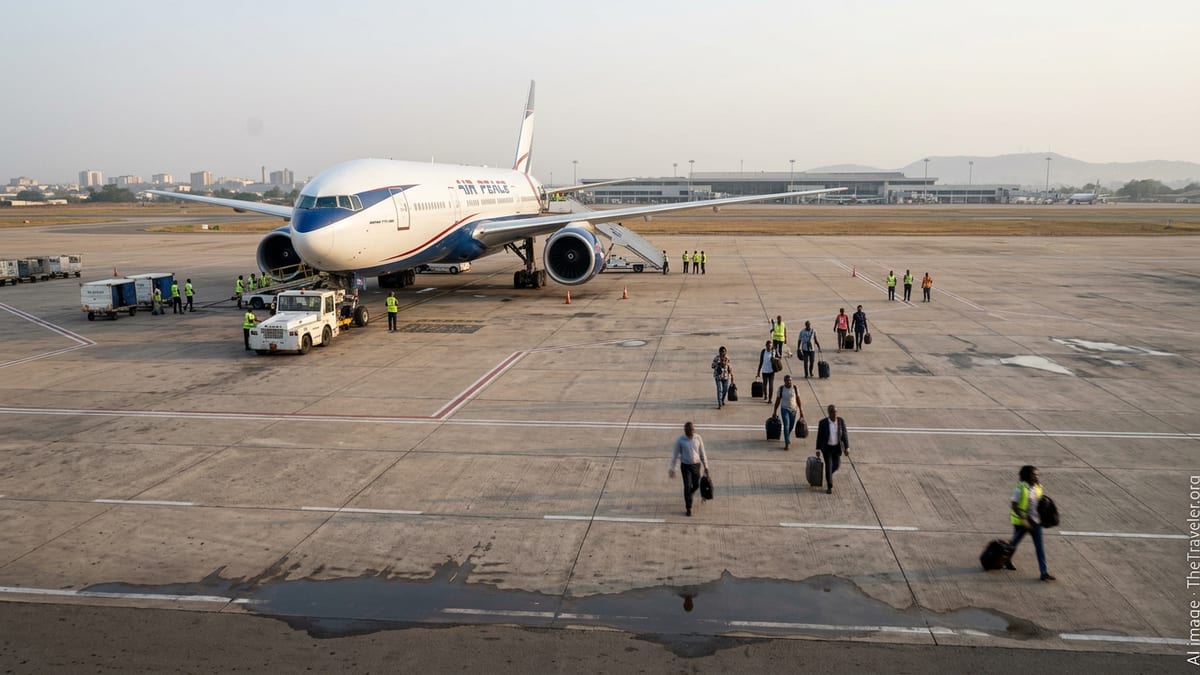
Regulator’s August snapshot shows delays nearing 60% of operations
Publicly available NCAA figures show 15 domestic carriers operated 7,961 flights in August, with delays affecting 59.9% of those services and 36 flights canceled outright. The regulator’s breakdown also separates delays by length, offering a clearer picture of how often passengers faced short schedule slips versus long waits.
Across all airlines captured in the NCAA summary, 2,801 flights were delayed by 16 minutes to one hour, 1,322 flights were delayed between one and two hours, 407 flights were delayed between two and three hours, and 235 flights were delayed for three hours or more. For travelers, the distribution matters because longer disruptions tend to cascade through the day, especially on high-frequency trunk routes where aircraft rotations are tight.
The NCAA dataset, published on September 13, 2026, adds detail beyond top-line delay counts by listing each carrier’s total flights, total delays, delay-duration buckets, and cancellations. That granularity is increasingly important for consumers trying to compare reliability across airlines and for businesses that depend on predictable same-day travel between Nigeria’s major cities.
Air Peace led in flight volume and total delays
Air Peace operated the highest number of domestic flights in August, with 1,864 services recorded in the NCAA summary. It also posted the highest number of delayed flights, with 1,330 delays, translating to a 71.4% delay rate for the month.
The regulator’s time-band breakdown indicates that Air Peace’s delays were not limited to minor schedule shifts. The NCAA figures attribute 666 Air Peace delays to the 16-minutes-to-one-hour category, 400 delays to the one-to-two-hour range, 156 delays to the two-to-three-hour band, and 108 delays to delays of three hours or more. The same summary lists seven cancellations for the airline in August.
Because Air Peace is Nigeria’s largest domestic operator by flight volume, its performance has an outsized effect on nationwide punctuality totals. When a carrier operates nearly two thousand flights in a month, even incremental improvements in dispatch reliability and turnaround times can significantly lower systemwide delay numbers.
United Nigeria recorded the highest delay rate and most cancellations
While Air Peace led by volume, the NCAA data show United Nigeria Airlines recorded the highest delay rate among the largest operators. The airline logged 1,231 total flights in August and 943 delays, meaning more than three-quarters of its flights were delayed.
The NCAA’s duration split shows 442 United Nigeria flights delayed by 16 minutes to one hour, 344 delayed between one and two hours, 116 delayed between two and three hours, and 41 delayed for three hours or more. The same NCAA summary lists eight cancellations for United Nigeria, the highest cancellation count shown in the August table.
In addition to publishing monthly statistics, the NCAA has also highlighted operational performance concerns in separate public communications, including a directive ordering United Nigeria to improve flight operations and adhere to passenger protection requirements. That context suggests the regulator is using a combination of performance transparency and enforcement tools as disruption levels remain elevated.
Other carriers: wide variation in reliability across the market
Beyond the two airlines topping the list, the NCAA summary shows a broad range of delay experiences across operators. For example, Enugu Air recorded 878 flights with 582 delays and four cancellations, while Value Jet recorded 767 flights with 435 delays and three cancellations. Aero Contractors logged 469 flights with 246 delays, and Ibom Air recorded 560 flights with 254 delays.
Some smaller operators posted lower raw delay totals but still meaningful disruption rates relative to their size. Green Africa recorded 226 flights with 114 delays and three cancellations. Overland recorded 239 flights with 139 delays, while Rano Air recorded 503 flights with 216 delays and three cancellations. Max Air recorded 336 flights with 204 delays and four cancellations.
For passengers, these differences can influence flight selection on routes where multiple airlines compete. The NCAA’s publication of a standardized monthly table makes comparisons easier, though travelers still need to weigh factors such as schedule availability, connection needs, and the practical impact of a short delay versus a multi-hour disruption.
What passengers are entitled to when flights are delayed or canceled
NCAA consumer protection provisions published on the regulator’s website outline remedies tied to delay length. For domestic flights, the rules provide for refreshments after two hours from the scheduled departure time, and reimbursement of the full value of the ticket beyond three hours, according to the NCAA’s passenger rights guidance.
The same NCAA guidance sets out compensation for cancellations on domestic flights, including 25% of the fare unless passengers are informed at least 24 hours before the scheduled time, alongside the right to reimbursement of the full ticket value. These provisions matter in a month like August 2026, when the regulator’s table lists 36 cancellations across domestic airlines.
For travelers, the practical takeaway is that documentation and timing are critical. Keeping booking confirmations, boarding passes, and written notifications of schedule changes can help passengers substantiate claims where applicable, while engaging airline customer service first and escalating through airport consumer protection desks or the NCAA’s complaint channels where resolution stalls.