


More news on this day
Long-running delays to the expansion of Nairobi’s Jomo Kenyatta International Airport are colliding with an aggressive round of airport building across East Africa, heightening concerns that Kenya’s main gateway could lose ground in the region’s contest to attract passengers and investment.
Get the latest news straight to your inbox!
Crowded terminals and stalled capacity plans
Publicly available traffic data show that Jomo Kenyatta International Airport (JKIA) handled close to 9 million passengers in 2025, well above its original design capacity of about 7.5 million a year. The strain is increasingly visible in congested check-in halls, crowded security lanes and peak-hour bottlenecks on the single runway system.
JKIA’s role as the primary hub for Kenya Airways and as a key connecting gateway between East Africa, Europe, Asia and the Middle East has magnified the impact of these constraints. Kenya’s broader tourism and trade sectors rely heavily on reliable connectivity through Nairobi, making any loss of efficiency or service quality at the airport a wider economic concern.
Plans to transform JKIA have a long and uneven history. A major greenfield terminal project conceived more than a decade ago was cancelled after contract disputes and questions over value for money, leaving Nairobi without the step-change in capacity that regional competitors pursued in the same period.
More recently, a proposal to modernise JKIA under a high-profile private concession arrangement generated political and legal controversy before being shelved. The reset that followed has added further time to an upgrade process that many in the aviation community already considered overdue.
New mega-project launched, but timelines stretch ahead
In mid-2026, Kenya’s government signed a design-and-build contract for what it describes as a 154.2 billion shilling modernisation of JKIA, including a new terminal building, improvements to runways and taxiways, and renovation of existing terminals. According to published coverage, officials have framed the programme as one of the largest infrastructure investments in the country, intended to ease congestion and restore the airport’s competitive edge.
Details released in feasibility studies and government tenders outline a phased approach. Initial works are expected to focus on airfield upgrades and the refurbishment of current terminals to raise capacity into the low double-digit millions of passengers annually, before a larger new terminal complex comes on stream toward the next decade.
However, the same public documents and project trackers point to land availability questions, complex financing structures and a multi-year construction window. Some elements, such as a full new terminal and reconfiguration of existing concourses, are linked to target dates around 2030, leaving several years in which JKIA must manage growing demand within an already stretched footprint.
Recent parliamentary probes into past spending on the cancelled greenfield terminal have also kept scrutiny high. The legacy of sunk costs and disputed payments has made subsequent procurement steps politically sensitive, with critics warning that further delays in implementation would extend the period in which Nairobi’s hub operates at or beyond capacity.
Regional rivals move faster on capacity
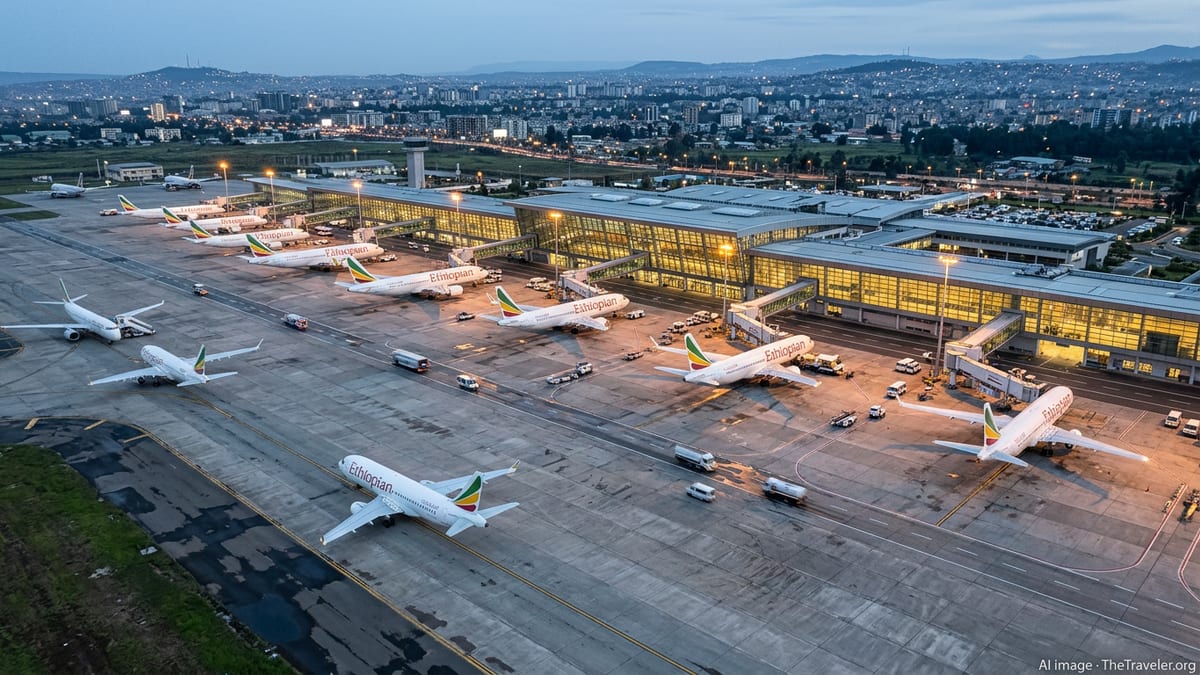
While JKIA’s upgrade journey has been marked by reversals and resets, neighbouring countries have advanced with new-build projects and major expansions. Bole International Airport in Addis Ababa has undergone significant terminal upgrades, and investment plans for a new airport city at Bishoftu envisage eventual capacity in the tens of millions of passengers a year, according to regional aviation investment presentations.
Rwanda is pressing ahead with the New Kigali International Airport at Bugesera, conceived as a modern hub designed to support the growth strategy of RwandAir and to attract transfer traffic currently routed through Nairobi and Addis Ababa. Construction timelines have shifted but the project remains a central plank of Kigali’s aviation ambitions.
In Tanzania, the new Msalato International Airport project near Dodoma, combined with the existing Julius Nyerere International Airport in Dar es Salaam, is expected to significantly increase the country’s overall handling capacity. Uganda has been upgrading Entebbe International Airport, where ongoing works are projected to lift annual passenger capacity from about 2 million to 3.5 million once current phases are complete.
According to recent disclosures by Kenya’s own aviation authorities, these parallel developments pose a direct competitive challenge. Analyses prepared for policymakers highlight the risk that, without timely modernisation at JKIA, airlines and passengers could increasingly opt for alternative hubs offering newer facilities, shorter connection times and more room for growth.
Market share pressures for Kenya Airways and Nairobi
JKIA’s fortunes are closely tied to those of Kenya Airways, which uses the airport as its primary hub for connecting regional and intercontinental routes. As rival hubs expand, the Kenyan carrier faces a tougher environment in which to attract transfer passengers who can increasingly choose through-connections via Addis Ababa, Kigali, Dar es Salaam or Entebbe.
Sector analyses show that Ethiopian Airlines has already built a dominant position at its Addis Ababa base and is leveraging its hub to capture long-haul traffic linking Africa with Europe, Asia and the Americas. New capacity at competing airports could reinforce these dynamics by offering airlines more attractive operating environments and additional slots.
For Nairobi, the implications extend beyond a single airline. A loss of hub traffic would weigh on hotel occupancy, conference tourism and ancillary services that benefit from high volumes of transit and stopover passengers. Cargo operations, which depend on efficient airside infrastructure and reliable scheduling, could also shift if other airports demonstrate consistently smoother handling and expansion-ready facilities.
Publicly available forecasts in JKIA’s master plan suggest that, even under optimistic growth scenarios, the airport will need both the planned new terminal and significant optimisation of existing assets to keep pace with projected demand through the 2030s and 2040s. Any slippage in delivery would increase the likelihood that regional competitors absorb part of the growth the Kenyan hub is targeting.
Window of opportunity narrowing despite new commitments
The recent contract signing and tender notices for operational readiness and terminal improvements signal that Kenya is attempting to move from planning to execution. The expansion roadmap, if delivered on schedule, would eventually reshape the airport with a multi-level terminal complex, upgraded airfield systems and reconfigured passenger flows designed for high volumes of connecting traffic.
Yet the long lead times built into the project mean that JKIA will continue operating under pressure for several more years. During this period, regional airports that began their upgrade cycles earlier may reach completion and start actively marketing their new capacity to airlines and global alliances.
Industry commentary captured in feasibility reports and regional studies consistently frames the next five to ten years as critical. If JKIA’s modernisation proceeds efficiently, Nairobi could reinforce its role as a preferred East African hub supported by a strong local market and established route network. If further delays occur, the balance of advantage could tilt more decisively toward emerging competitors whose terminals and runways come online sooner.
For travellers and airlines watching the region, the coming phase will reveal whether Kenya can translate its latest round of commitments into visible change on the ground at JKIA, or whether the story of missed opportunities at its main international gateway will continue even as neighbouring hubs open new doors.
The EastAfrican: JKIA upgrade delays leave Kenya exposed to regional airport challenge
Kenya Ministry of Roads and Transport: JKIA Modernization Project overview
JKIA official travel updates on ongoing upgrades