


More news on this day
Operational disruptions at Johannesburg’s OR Tambo International Airport and Nairobi’s Jomo Kenyatta International Airport have grounded fourteen flights and delayed more than 150 services, creating fresh pressure on two of Africa’s most important aviation gateways.
Get the latest news straight to your inbox!
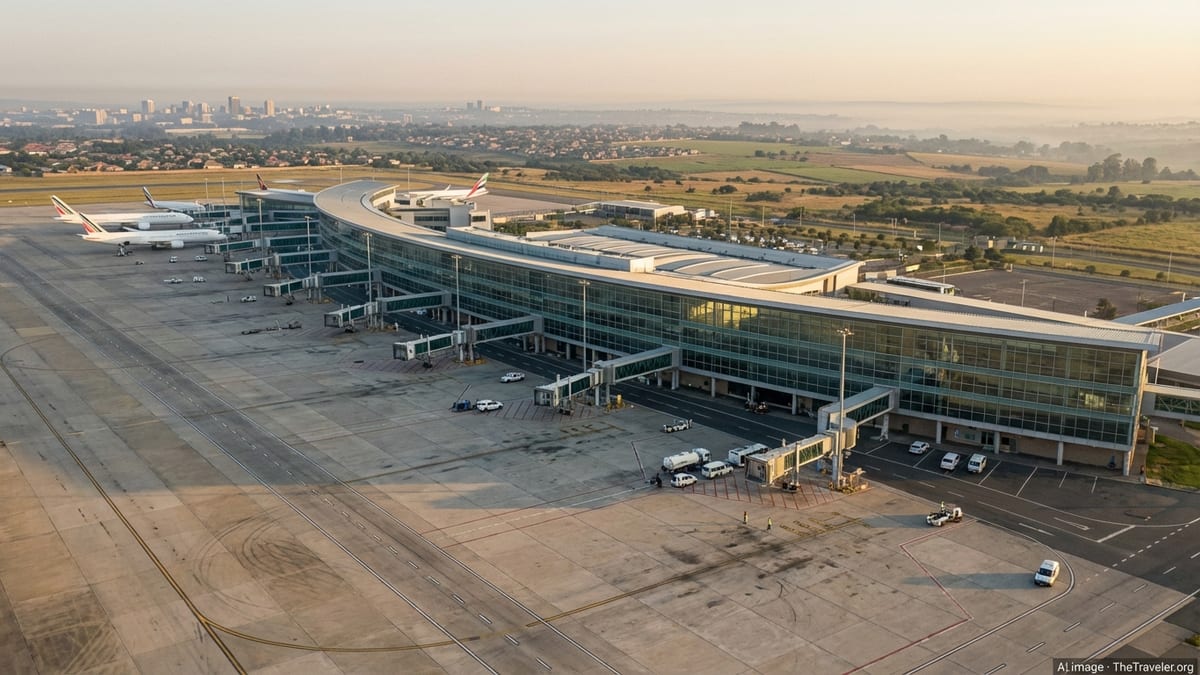
Parallel Disruptions Across Two Key African Hubs
Publicly available flight tracking data and regional news coverage indicate that both Johannesburg and Nairobi experienced significant schedule disruptions over the same 24-hour window, with ripple effects across Southern and East African route networks. Johannesburg’s OR Tambo, South Africa’s primary international gateway, and Nairobi’s Jomo Kenyatta, the main hub for Kenya and much of East Africa, each saw clusters of cancellations and extended delays affecting domestic, regional and long-haul operations.
In total, at least fourteen flights were grounded and more than 150 services recorded meaningful delays at the two airports combined, according to aggregated schedules and historical performance data reviewed by TheTraveler.org. While neither airport experienced a full shutdown, the cumulative impact on passengers included missed connections, extended tarmac waits and congested terminal areas.
The disruptions came against a backdrop of already elevated operational strain at both hubs. OR Tambo has contended with periodic air traffic management constraints and aging infrastructure, while Jomo Kenyatta has wrestled with industrial action, extreme weather and sustained growth in passenger volumes that continue to test capacity.
Passenger accounts shared on social platforms from both cities described crowded departure halls and last-minute gate changes, underscoring the vulnerability of regional aviation flows when even short-lived disturbances hit major nodes.
Johannesburg: System Strain and Stretched Capacity
Johannesburg’s OR Tambo has experienced recurring operational challenges in recent months, including air traffic control system issues and temporary changes to standard instrument departures and arrivals that have constrained capacity. Previous technical failures at the airport’s air traffic management systems have led to waves of delays and a reduction in departure throughput while safety procedures were maintained and workarounds implemented.
Recent travel advisories from carriers operating at OR Tambo have urged passengers to allow additional time for check-in and security, citing the possibility of protest-related disruption on surface access routes and knock-on effects for departure punctuality. These advisories reflect a broader pattern in which off-airport events, such as road closures and demonstrations, contribute to congestion at check-in and security screening, amplifying the impact of even modest schedule changes.
Operational data shows that when OR Tambo’s airside systems experience even partial degradation, departure queues can lengthen quickly, pushing subsequent flights into rolling delay patterns. This can trigger aircraft and crew rotation challenges that ultimately lead airlines to cancel or consolidate lower-priority services, contributing to the tally of grounded flights.
Johannesburg’s status as a primary hub for Southern Africa means that regional services to neighboring countries are particularly exposed. Late arrivals from secondary cities can cause missed onward connections to intercontinental flights, a scenario repeatedly documented in local coverage and traveler reports when irregular operations occur.
Nairobi: Industrial Action, Weather and Infrastructure Pressures
Nairobi’s Jomo Kenyatta International Airport has faced a series of shocks in 2026, starting with severe flooding in March that inundated parts of the capital. Published accounts of the floods describe diversions of flights to coastal airports such as Mombasa when weather conditions and water on the airfield significantly disrupted normal operations.
In February, strike action by aviation and airport workers in Nairobi led to a sharp reduction in available staffing, resulting in cancellations, diversions and multi-hour delays. Local news outlets reported stranded passengers and long queues as airlines adjusted schedules in real time, while flight tracking platforms registered a spike in irregular operations from the hub.
Beyond acute episodes, recent statistical snapshots of Jomo Kenyatta’s performance show a structurally elevated delay rate, with a substantial proportion of departures leaving more than 15 minutes behind schedule over the past month. This pattern suggests that the airport is operating close to or beyond its designed capacity at peak times, leaving little buffer when weather, staffing or technical factors intervene.
The Kenyan government has approved ambitious long-term plans to expand and modernize the airport to handle projected passenger growth, but current operations remain heavily reliant on infrastructure and processes that were designed for lower traffic volumes. This context has heightened the impact of the most recent disruptions on both domestic and regional connections.
Passenger Impacts and Regional Connectivity Risks
The combined effect of grounded flights and extensive delays at Johannesburg and Nairobi has underscored the interdependence of African aviation networks. Many intra-African itineraries route through one or both hubs, particularly for travelers connecting between Southern, East and West Africa or onward to Europe, the Middle East and Asia.
Travelers transiting through the two airports during the disruption period reported extended connection times, missed onward legs and rebooking onto later services. In some cases, long-haul departures remained on schedule while feeder flights from secondary cities were delayed, forcing airlines to decide between holding larger aircraft for late-arriving passengers or preserving departure slots to avoid wider network instability.
For business travelers and tour operators, even short-lived disruptions can have outsized consequences, particularly when itineraries rely on same-day connections to reach safari destinations, coastal resorts or regional business centers. Recent incidents in both Johannesburg and Nairobi have added to a perception of unpredictability that some travel planners now factor into routing decisions and buffer times.
Regional carriers have responded by issuing travel alerts encouraging passengers to check flight status frequently, use online check-in where available and arrive at airports well in advance of scheduled departure times. However, the concentration of air traffic at a handful of primary hubs means that options for rerouting entirely around Johannesburg or Nairobi remain limited for many itineraries.
Calls for Investment and Resilience Planning
The latest disruptions have renewed debate about the resilience of African aviation infrastructure and the need for accelerated investment at key hubs. Policy analyses and master plan documents for both OR Tambo and Jomo Kenyatta emphasize the importance of modernizing terminals, expanding runway and taxiway capacity, and upgrading air traffic management technology to handle projected growth in passenger and cargo volumes.
Experts cited in transport sector studies point to the value of redundant systems and contingency planning, including backup power, diversified ground handling capacity and robust staffing models that can accommodate sudden shocks such as strikes, weather events or technical failures. For airports that serve as regional gateways, the stakes are particularly high, as disruptions can ripple quickly across multiple national economies that depend on reliable air links.
There is also growing attention on climate-related risks to airport operations, particularly in East Africa, where heavy rainfall and flooding events have become more frequent. Nairobi’s recent flooding and the associated diversions from Jomo Kenyatta have been highlighted in environmental and infrastructure reports as a warning sign for other low-lying or drainage-constrained airports across the continent.
For travelers, the immediate focus remains on navigating the current disruption and securing alternative arrangements. For operators and policymakers, the Johannesburg and Nairobi events serve as another reminder that building resilient, well-resourced hubs is central to sustaining Africa’s aviation-driven economic growth in the years ahead.