

More news on this day
Super Typhoon Bavi is unleashing powerful winds, intense rain and high seas across parts of East and Southeast Asia, disrupting air, sea and land travel in China, Taiwan and the Philippines, with aviation data and regional media indicating more than five hundred flights canceled and the United States issuing an urgent alert for travelers bound for the storm zone.
Get the latest news straight to your inbox!
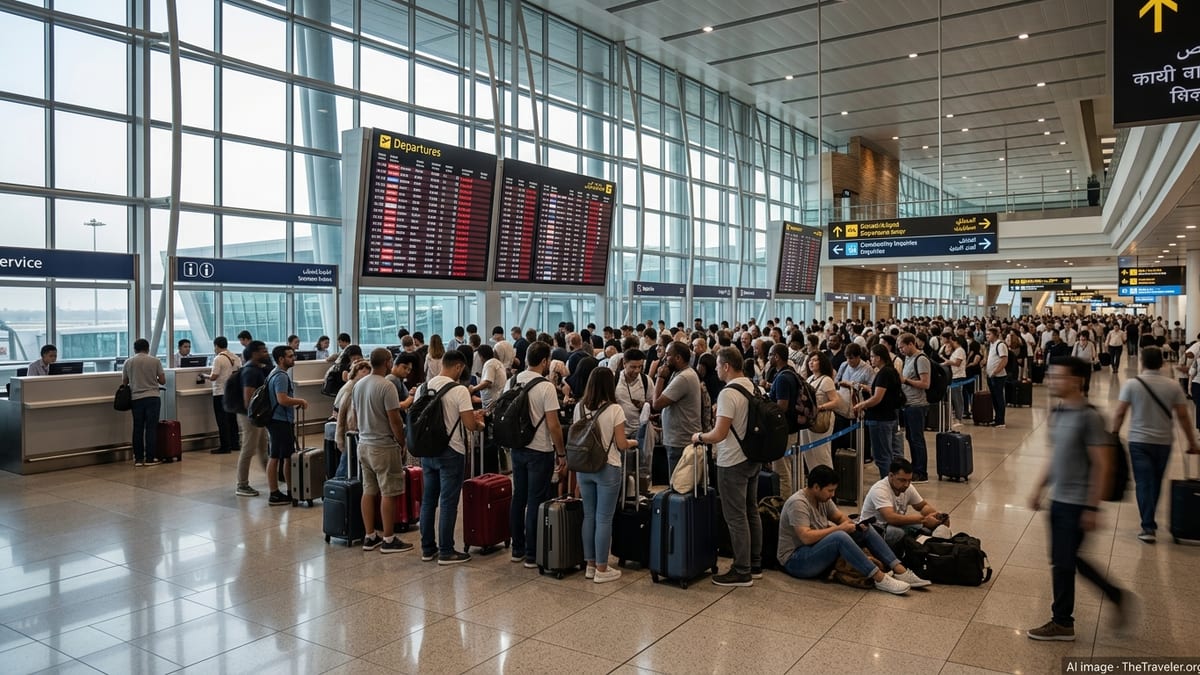
Major Flight Cancellations Hit Regional Hubs
Air travel in and around the Taiwan Strait and the northwestern Pacific has been thrown into disarray as Bavi churns toward the Chinese coast. Flight schedules published by major carriers in Taiwan and Hong Kong, along with airport status updates, show widespread cancellations on routes linking Taipei, Kaohsiung, Hong Kong and multiple mainland Chinese cities as airlines move aircraft out of the storm’s projected path.
In Taiwan, domestic and regional services are being hit particularly hard. Schedules compiled by Taiwanese broadcasters and airport operators indicate that many domestic flights to offshore islands have been canceled, while Taiwan Taoyuan International Airport has announced large-scale suspensions of departures and arrivals during the peak of the storm. Publicly available airline advisories show that some carriers have preemptively scrubbed all or nearly all flights during the worst-affected windows.
Hong Kong-based and regional airlines have also significantly reduced operations on routes into Taiwan and eastern China. Published coverage in regional outlets describes dozens of cancellations on services between Hong Kong, Taipei and Japanese destinations as Bavi’s outer rainbands approach key air corridors. Carriers are issuing flexible rebooking policies for affected passengers, waiving change fees and urging travelers to check their flight status frequently as the forecast track shifts.
Across the wider region, aviation trackers and airline alerts indicate that the cumulative number of canceled or severely delayed flights related to Bavi has climbed into the several hundreds, affecting itineraries that use Taipei, Hong Kong and coastal Chinese airports as international transit points. Travelers with onward connections through these hubs are facing extended layovers, last-minute rerouting and, in some cases, days-long waits for alternative seats.
China Braces for Coastal Impacts and Inland Disruptions
Along China’s eastern seaboard, Bavi’s projected path over or near major coastal provinces has prompted extensive preparations. Bulletins from meteorological agencies and regional news reports indicate that strong winds, heavy rain and storm surges are expected across parts of Zhejiang, Fujian, Guangdong, Jiangsu and Shandong, as well as in the Shanghai area, over the coming days. Authorities in these regions are coordinating port operations, flood defenses and transport adjustments as the system approaches.
Publicly available information from Chinese-language outlets points to precautionary reductions in air and sea traffic along vulnerable stretches of the coast. Some coastal and riverine ferry services have been suspended, with port operators in eastern China signaling possible halts to container loading and unloading during periods of peak wind. Rail operators are monitoring conditions closely, with the potential for temporary speed reductions or suspensions on segments at risk of flooding or landslides.
Travelers heading to popular tourism hubs such as Shanghai, Xiamen and coastal resort areas are being advised by regional media and tour operators to prepare for sudden itinerary changes. Hotel operators in low-lying areas have begun relocating guests from seafront rooms, while some outdoor attractions have indicated that they will close at short notice if wind thresholds are reached. River cruises, beach excursions and coastal sightseeing tours are particularly vulnerable to last-minute cancellations as Bavi’s rainbands move inland.
Logistics analysts note that major export hubs around Shanghai and Ningbo could see temporary slowdowns in cargo handling as the storm nears. Any sustained shutdown of terminals or access roads could ripple through regional supply chains, compounding the disruption for travelers who rely on just-in-time freight for cruise provisioning, tour equipment and other tourism-related services.
Taiwan’s Tourism and Transport Networks Under Strain
Taiwan, which lies close to Bavi’s forecast track, is experiencing some of the sharpest immediate impacts on tourism. Television and online news coverage in Taipei detail widespread cancellations of domestic flights between the main island and offshore destinations such as Penghu, Kinmen and Matsu, with airlines suspending many or all services during the height of the storm. Sea links between the main island and smaller islets have also been halted in several corridors because of dangerous waves.
Taipei and northern Taiwan are expecting periods of intense rain and gusty winds even if Bavi’s center remains offshore. Public information from the island’s weather agency forecasts torrential downpours, flash-flood risks and potential landslides in mountain areas, prompting transport operators to reassess services on exposed highways and rail lines. Tour groups headed for the island’s popular hiking areas and coastal viewing spots are being urged to delay departures until conditions stabilize.
The disruption is particularly acute for travelers using Taiwan as a regional transit hub. Regional carriers based in Taipei have announced large blocks of cancellations and schedule changes on routes to East Asia and Southeast Asia, while international airlines serving the island are updating travel waivers that allow passengers to rebook without penalties. Passengers connecting through Taoyuan are reporting, in public posts and travel forums, that late-night and early-morning flights are being consolidated or moved to later dates.
Tourism businesses that rely on weekend city-break visitors from around the region, including hot spring resorts, coastal guesthouses and urban hotels, are bracing for a sharp drop in occupancy. Industry commentary in local media suggests that many operators are extending flexible cancellation policies in an effort to encourage guests to postpone rather than abandon their trips.
Philippines Faces Flooding Risk and Island Travel Shutdowns
Although Bavi’s center is tracking north of the main Philippine islands, the system’s broad circulation is bringing periods of heavy rain and rough seas to parts of the archipelago. Government weather bulletins and local news reports indicate that outer rainbands are aggravating monsoon conditions in northern and eastern regions, with forecasters warning of possible flash floods and landslides in mountainous terrain.
Maritime safety notices and ferry company statements show that a number of inter-island routes have been suspended as wave heights increase along the country’s eastern seaboard and in channels used by passenger vessels. These suspensions are affecting both residents and tourists attempting to move between popular destinations, including some routes that feed into beaches and dive sites typically at peak occupancy in July.
Domestic airlines serving regional airports in the north of the country are adjusting schedules in response to deteriorating conditions on approach paths and at smaller airfields. Publicly available flight status boards indicate clusters of cancellations and delays on services that connect outlying islands with Manila and Cebu, disrupting itineraries for travelers on multi-stop island-hopping trips.
Tour operators across the Philippines are monitoring the storm’s track closely, with some promoting alternative inland activities where weather permits and others opting to suspend operations altogether until the current wave of heavy rain and winds subsides. Travel insurers active in the market are reminding policyholders through online advisories to document cancellations and delays linked to the typhoon in order to support future claims.
Urgent U.S. Travel Alert and Guidance for American Travelers
In response to Bavi’s rapid intensification and broad impact zone, the United States has issued an urgent alert for citizens planning to travel to or transit through affected parts of East and Southeast Asia. Publicly available consular advisories urge U.S. nationals to reconsider nonessential travel to areas under active typhoon warnings, including parts of coastal China, Taiwan and sections of the Philippines exposed to severe weather.
The alert recommends that travelers already in the region enroll in notification systems, keep mobile devices charged and maintain multiple means of receiving local emergency updates. It also emphasizes the importance of confirming flight status directly with airlines before departing for airports, as schedules can change repeatedly within hours as Bavi’s track and intensity evolve.
American travelers are being advised in official online guidance to review the terms of their travel insurance, particularly regarding coverage for trip interruption, additional accommodation costs and alternative transport arrangements triggered by severe weather. The alert also notes that local infrastructure disruptions, including power outages, flooded roads and temporary port closures, may continue for some time even after winds subside.
Travel industry analysts caution that Bavi’s disruption comes during a busy mid-year period for tourism in parts of Asia, amplifying the effect on hotels, tour operators and airlines. They suggest that travelers with flexible plans consider postponing nonessential trips to the most severely affected areas until local authorities lift weather warnings and transport networks clear mounting backlogs of stranded passengers.