


Landing at Keflavik International Airport after an overnight flight can feel disorienting. The landscape outside looks remote, the weather changes quickly and Reykjavik, your likely first stop in Iceland, is not right next door. Keflavik Airport (KEF) lies about 50 kilometers southwest of central Reykjavik, typically 45 to 55 minutes away by road depending on traffic and weather. Reykjavik also has a separate inner city airport used mainly for domestic flights and some Greenland services, so it is important not to confuse the two when planning your transfer. There is currently no rail link between Keflavik and Reykjavik, so every practical transfer option relies on road transport: dedicated airport coaches, the public Strætó bus, taxis or private transfers, and rental cars.
Get the latest updates straight to your inbox!
Understanding the route from Keflavik to Reykjavik
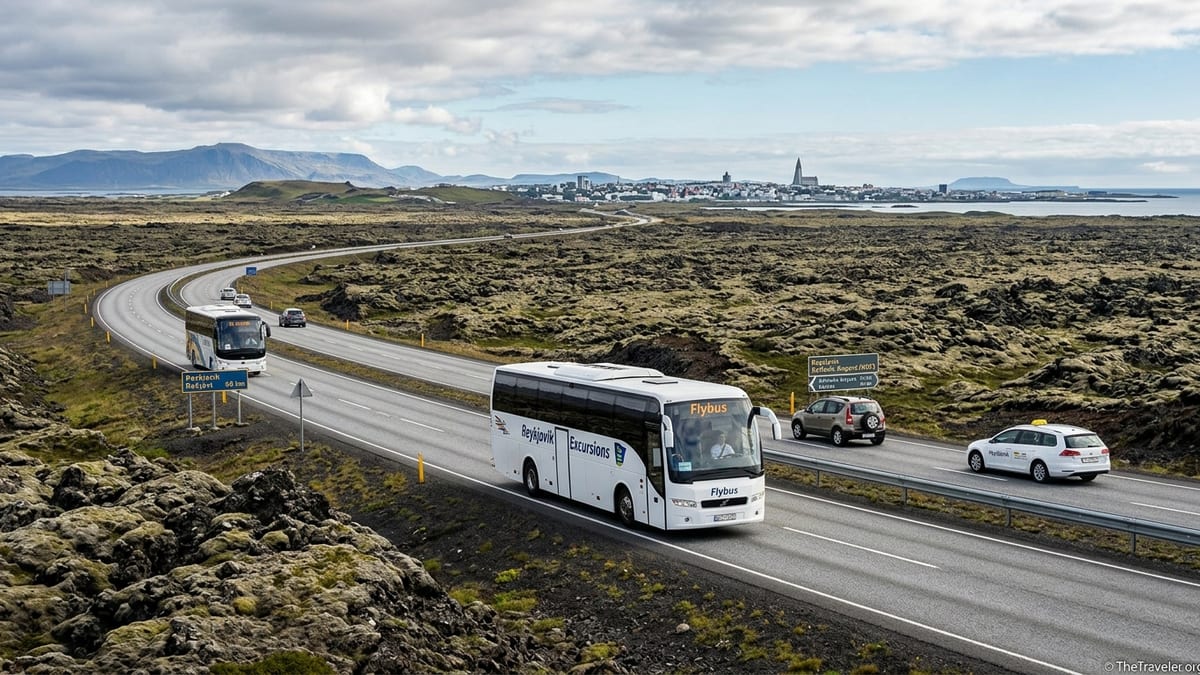
The road between Keflavik Airport and Reykjavik is straightforward, but the conditions can vary dramatically with the season. The main route follows a modern highway across the Reykjanes Peninsula, with lava fields on both sides and only a few built-up areas. In good summer weather, the journey by road usually takes about 45 minutes, but in winter or during strong winds and snow, journey times can easily stretch to 55 minutes or a little more.
First time visitors should note that Keflavik Airport is the country’s primary international gateway, while Reykjavik Airport is a smaller domestic hub close to the city center. Most international passengers will never use Reykjavik Airport, yet its name appears in some booking sites and can cause confusion when arranging transfers. When searching for transport, make sure that your ticket or reservation clearly states Keflavik International Airport or KEF as the starting point.
There is currently no train or metro service connecting Keflavik with Reykjavik. All realistic options involve traveling by bus, taxi, private car service or rental car. The good news is that the route is very well established. Airport coach operators coordinate services with flight arrivals, public buses have dedicated schedules, and taxis and rental cars are widely available in the arrivals area.
Because the airport sits on an exposed peninsula, weather plays a larger role in travel planning than in many other European hubs. Strong winds, heavy rain or winter snow can slow traffic, so you should always allow extra time, especially when you are heading back to the airport for an outbound flight. For arriving passengers, the key is to choose an option that fits both your budget and your comfort level in unfamiliar conditions.
Dedicated airport coaches: Flybus and similar services
Dedicated airport coaches are the most popular choice for many visitors. Flybus, operated by Reykjavik Excursions, has been running between Keflavik and Reykjavik for decades and is often described as the official airport transfer. According to the operator’s information in late 2026, Flybus runs in connection with all scheduled flight arrivals at Keflavik, so there is usually a bus waiting or departing shortly after you clear customs. That means you do not have to worry about missing the last coach if your transatlantic flight is slightly delayed.
As of November 2026, a typical one way adult fare on Flybus from Keflavik Airport to the main Reykjavik terminal is in the region of 4,499 to 4,999 Icelandic krónur, with children paying a reduced fare and small children often traveling for free or at a very low cost depending on age. Another major operator, often branded under names like Airport Direct, offers broadly similar services and pricing, with standard one way adult coach fares usually within a few hundred krónur of Flybus. Online booking can sometimes offer slightly better prices or packages, and it also helps guarantee a seat on a specific departure. Because prices can change with fuel and operational costs, travelers should treat these fares as approximate and reconfirm the exact amount when booking; the examples here were last checked in November 2026.
Airport coaches generally depart around 30 to 45 minutes after flight arrival, giving passengers time to collect luggage and clear passport control. In peak periods, there may be several coaches an hour. The ride to Reykjavik normally takes about 45 minutes, again with some variation in winter. Most Flybus services arrive at BSÍ, the central bus terminal just south of downtown. Some competitors use alternative terminals, such as a dedicated city bus hostel or another central hub, but all are within the urban area and have onward connections by local bus, taxi or foot.
Many visitors choose a door to door option offered by the main coach companies. In that model, you ride the large coach from Keflavik to a central terminal, then transfer to a smaller shuttle that drops passengers at designated bus stops near major hotels and guesthouses in Reykjavik. This adds convenience if you are jet lagged or carrying heavy luggage, but it can extend your overall travel time by 15 to 30 minutes, depending on how many stops the shuttle serves before yours. Hotel drop off or pickup usually costs extra on top of the basic coach fare, often adding roughly 1,000 to 2,000 krónur per person. Travelers should factor this into their budget and check whether their accommodation sits near an official shuttle stop or requires a short walk.
The public Strætó bus: Route 55
For budget conscious travelers comfortable with local public transport, the Strætó Route 55 bus is the cheapest conventional way to get from Keflavik Airport to Reykjavik. This is a regular regional bus service operated by Strætó, Iceland’s national public transport company. It is not tailored to flight arrivals and departures, so the timetable follows public transport patterns rather than an airline schedule. That makes it best suited to passengers whose flight times align naturally with the bus schedule and who do not mind a slower, less cushioned journey.
Strætó’s official information in late 2026 indicates that Route 55 runs daily between Keflavik Airport, towns on the Reykjanes Peninsula and the capital area, with some trips continuing to or from BSÍ in Reykjavik and others only going as far as Hafnarfjörður. The operating window typically covers daytime and early evening hours, roughly from around 7:30 in the morning until late evening, but exact departure times vary by day of the week and season. Some early morning and late night gaps can be significant, which is critical to know if you land very late or depart very early.
Unlike the large airport coaches that stop right outside the main arrivals hall, the public bus stop for Route 55 is located a short walk from the terminal, near the general bus and car rental area. Airport and Strætó guidance notes that arriving passengers follow signs to a bus pickup zone on the arrivals side, which can involve a few minutes outside in the weather. This is manageable in good conditions but may feel exposed in winter storms, so dressing warmly and having waterproof layers handy is sensible if you plan to use the public bus.
In terms of price, Strætó publishes route based fares rather than a simple city flat rate. As of late 2026, the single adult fare between Keflavik Airport and the Reykjavik area on Route 55 is around 2,400 krónur, with young people, seniors and some concession passengers paying roughly half that amount and children under 12 typically traveling free with an adult. Payment can usually be made on board by card or cash, and the operator promotes its own digital ticketing options for local passengers. Journey time on Route 55 is longer and less predictable than the dedicated coaches, often around 60 to 75 minutes depending on intermediate stops, traffic and whether the bus goes all the way to BSÍ. Because timetables and fares are subject to periodic change, travelers should check the latest schedule and price tables shortly before travel, paying particular attention to weekend and public holiday variations.
Taxis and private transfers from Keflavik to Reykjavik
For passengers arriving late at night, traveling in a group or prioritizing comfort and speed over cost, taxis and private transfers can be very attractive. Official airport guidance and local taxi information in 2026 suggest that a standard taxi journey from Keflavik Airport to central Reykjavik typically costs in the region of 20,000 to 23,000 krónur under normal conditions. That is a broad estimate, not a fixed fare, and actual costs may be higher at night, in poor weather or with heavy traffic. Some taxi companies publish fixed price tables or offer prebooked flat rates between the airport and the city, so it is always wise to ask the dispatcher or driver for a fare estimate before you set off.
The taxi rank is located directly outside the arrivals hall, meaning the least walking and easiest option if you are exhausted, managing children or carrying bulky luggage. Icelandic regulations and company policies may include airport surcharges, night or weekend supplements and extra fees for larger vehicles or trailers for oversize baggage. One major taxi company price list in mid 2026, for example, highlights an additional airport fee for trips starting at Keflavik. Because fares are influenced by fuel prices and wider cost levels in Iceland, they are likely to change over time, so the price range given here should be treated as indicative for late 2026.
Private transfer companies also operate on the Keflavik to Reykjavik route. These services are typically prebooked, with a driver meeting you in the arrivals hall, helping with luggage and taking you directly to your accommodation. Pricing often resembles or slightly exceeds metered taxi fares, though larger groups can sometimes obtain competitive per person rates by sharing a single van. Private transfers may be especially attractive for families with small children needing guaranteed car seats, travelers with limited mobility, or anyone arriving in the middle of the night during the dark winter months who prefers not to wait outside for buses.
Taxis and private cars make most sense if convenience outweighs cost. A solo traveler on a tight budget will usually find them expensive compared with the coaches or public bus, but a family of four with heavy luggage may view the door to door comfort and time savings as good value. Whichever option you choose, always confirm approximate costs with official channels or the provider itself close to your travel date, as Iceland’s currency and fuel prices can fluctuate significantly from season to season.
Renting a car directly at Keflavik Airport
Many visitors come to Iceland planning self drive itineraries, and Keflavik Airport has a dense cluster of rental car desks and pickup lots. Renting a car at the airport can be an excellent choice if you intend to leave Reykjavik soon after landing and explore the Reykjanes Peninsula, the Golden Circle, the South Coast or other regions. In that scenario, your airport transfer and your wider transport merge into one, and the roughly 50 kilometer drive to Reykjavik becomes your first taste of the Icelandic landscape.
If you plan to spend most of your time within Reykjavik itself, however, a rental car is often less convenient. Parking in central Reykjavik is regulated and mostly paid, with color coded zones and time limits. City information updated in 2026 indicates that parking fees apply in most central streets during daytime and early evening hours, with higher hourly rates in the innermost zones and enforcement that can include fines for overstaying or failing to pay. Hotels in the city center may have limited or no free parking, and you may end up paying both for the rental and daily parking that you do not fully use if you explore on foot or by local bus.
Rental costs themselves vary widely depending on season, vehicle type, insurance package and booking timing. A compact car in winter can cost less than a four wheel drive with premium insurance in peak summer, and many travelers opt for extended insurance coverage because of Iceland’s unique risks such as gravel roads, wind related door damage and sand or ash storms. Fuel costs in Iceland are relatively high by global standards, and long distance driving quickly adds to the daily budget. As with all other prices in this guide, specific figures change frequently, so the safest approach is to use airport linked rental search tools or company websites shortly before your trip.
Winter driving on the Keflavik to Reykjavik route is usually manageable for cautious drivers, but it does demand respect. Roads can be icy, visibility can drop quickly in snow or heavy rain, and strong crosswinds are common on the peninsula. If you are not used to winter driving, especially in darkness, or if you arrive jet lagged after a long flight, it may be wiser to take a coach or private transfer into the city and rent a car a day or two later once you are rested. Many agencies also maintain branches in Reykjavik where you can pick up a vehicle for later parts of your trip.
Comparing costs, comfort and complexity
Viewed side by side, each transfer option between Keflavik and Reykjavik has a distinct personality. Dedicated airport coaches like Flybus and comparable operators sit in the middle in terms of cost and offer a good balance of predictability and ease. A one way adult ticket in late 2026 typically costs around 4,500 to 5,000 krónur before any hotel shuttle supplements, and the buses are designed for travelers with luggage, running in step with flights and offering comfortable seats and onboard facilities. The main trade off is that you may make an intermediate stop at a terminal before transferring to a smaller shuttle for final hotel drop off.
The Strætó Route 55 bus is clearly the budget choice, with single adult fares around 2,400 krónur at the time of writing and free travel for younger children. However, it is slower, less frequent and less forgiving of flight delays, and it requires a short outdoor walk to the bus stop. Signs and announcements are functional but more focused on everyday commuters than first time tourists, and some departures only run to Hafnarfjörður rather than all the way to BSÍ, which may require a local transfer. For confident public transport users traveling in daytime and willing to build in extra time, Route 55 offers substantial savings. For tired or anxious travelers arriving late or in harsh weather, the hidden costs in stress and time can outweigh the financial benefits.
Taxis and private transfers are at the top of the cost scale but at the bottom of the complexity scale. Once you are in the car, you can expect a mostly non stop 45 to 55 minute ride straight to your door, with no transfers, luggage lifting or schedule watching. A realistic fare range of around 20,000 to 23,000 krónur in late 2026 can be reasonable value for a group of three or four, but less so for a solo traveler on a tight budget. Rental cars fall somewhere in between: the per kilometer cost of the airport to city leg itself can be modest, but only if you are already planning to use the car heavily in the following days. If you will leave the car parked for most of your stay, the combination of rental, insurance, fuel and parking makes it an expensive way to cover a single 50 kilometer transfer.
In terms of operating hours, the airport coaches and taxis provide the broadest coverage. Coach operators advertise departures for all or nearly all flight arrivals, including very late and very early flights, whereas Route 55 is primarily a daytime and evening service with limited overnight coverage. Comfort is generally highest in private vehicles and coaches, with more legroom and space for luggage than a public bus. Flexibility is highest with taxis, private transfers and rental cars, which can leave exactly when you are ready, while buses require working around fixed timetables and occasional waiting in outdoor conditions.
Timing, safety and planning your return
Whatever option you choose on arrival, it is essential to think ahead about your return journey to Keflavik Airport. Weather on the Reykjanes Peninsula can worsen quickly, especially between November and March, and even a small traffic delay or road restriction can eat into your margin for catching an outbound flight. Airlines and local authorities in Iceland often recommend arriving at the airport at least two hours before departure for European flights and three hours for North American flights, and it is prudent to add buffer time on top of the nominal 45 to 55 minute road journey.
If you are using an airport coach, that usually means choosing a departure one or even two time slots earlier than the last theoretically possible bus. Schedules can change seasonally, and some early morning flights may require a very early coach departure from Reykjavik. Most operators allow you to choose a return time in advance or flexibly, but it is always wise to confirm how easy it is to change your booking if your plans shift once you are in Iceland.
Public bus users should be especially cautious when planning the ride back to Keflavik. Because Route 55 does not exist primarily as an airport feeder service, cancellations, reduced weekend frequency or holiday timetables can have a direct impact on your ability to get to the airport on time. You should check the latest Strætó timetable a day or two before your flight, verifying that the specific departure you intend to take is still running and that it reaches the airport with ample time before check in closes. In winter, adding at least one additional timetable “safety cushion” bus, even if it means arriving early at the airport, is often the wiser choice.
Drivers in rental cars need to keep an eye on road and weather information services and allow extra time for deicing, refueling and returning the vehicle. Airport car rental returns may involve a short shuttle ride from the rental lot to the terminal, which should also be factored into your schedule. Taxi and private transfer users can mitigate risk by booking pickup slightly earlier than instinct might suggest, leaving room for traffic or weather related slowdowns. In all cases, erring on the side of caution provides peace of mind and helps you avoid starting or ending your Icelandic trip with a stressful race against the clock.
Which option is best for you?
Ultimately, the best way to get from Keflavik Airport to Reykjavik depends on your priorities and circumstances. For many first time visitors landing from North America or Europe in the middle of the day, a dedicated airport coach such as Flybus or a similar operator offers the best balance of price, convenience and predictability. You pay more than on the public bus but significantly less than a taxi, and you benefit from services timed to flights, assistance from staff familiar with tourists and simple onward connections or hotel shuttles in Reykjavik.
A solo traveler or backpacker arriving in daytime, on a tight budget and comfortable reading timetables could reasonably choose the Strætó Route 55 bus. With fares around 2,400 krónur for adults as of late 2026, the savings compared with an airport coach are meaningful. This option works best if your accommodation is either near BSÍ or easily reached by local bus, and if you have the right clothing to wait outside at the airport bus stop and at any transfer points. It is less suitable for travelers carrying multiple heavy suitcases or those who feel anxious about route variations and potential language barriers.
At the other end of the spectrum, consider a taxi or private transfer if you are a family of four landing at midnight in January, perhaps with tired children and several pieces of luggage. In that scenario, the additional cost spread across the group can be offset by the comfort of stepping directly into a warm vehicle and driving straight to your door, without needing to worry about timetables, bus stops or late night weather. Travelers with mobility issues, those staying far from standard hotel shuttle stops, or anyone needing guaranteed child seats will also often find taxis or private cars worth the premium.
Renting a car at Keflavik suits travelers who are planning an immediate road trip and feel confident driving in Icelandic conditions. If your itinerary focuses on Reykjavik itself for several days with only occasional day trips, you might do better to take a coach or taxi into town and rent a car later from a city location when you really need it. For every traveler, the most important step is to match the transfer mode to your budget, arrival time, luggage and confidence using public transport, while always respecting the realities of Iceland’s weather and giving yourself generous margins for both arrival and departure days.