


Landing at Kilimanjaro International Airport is the real beginning of your summit attempt. After long flights and baggage claim, you still have one crucial leg to go: the 40 to 45 kilometer journey to Moshi, the main base town for Kilimanjaro treks. Making smart choices about this transfer can set the tone for your entire climb, from how well you sleep on night one to whether your luggage arrives when you do.
Get the latest updates straight to your inbox!
Understanding the Route from JRO to Moshi
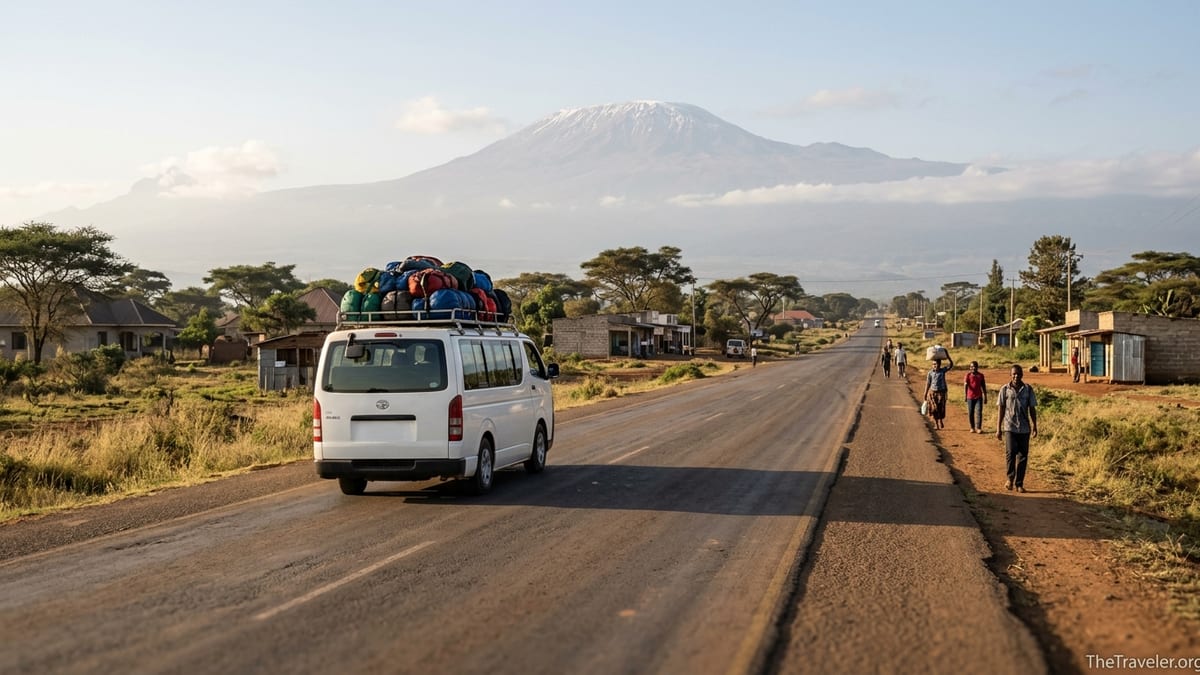
Kilimanjaro International Airport (often written as JRO or KIA) sits roughly between Arusha and Moshi, on the main A23 highway. The drive from the airport to central Moshi is about 40 to 45 kilometers, usually taking 40 to 50 minutes in normal traffic. You travel on a paved, two-lane highway that is generally in decent condition, passing a mix of villages, roadside shops and open countryside. On clear days, you may even catch your first glimpse of Mount Kilimanjaro on the way into town.
The route itself is straightforward. Once you leave the airport, you join the Moshi–Arusha highway and follow it east toward Moshi. There are no complex junctions, and most drivers do the trip several times a day. The main variables are time of day, weather and traffic. Late-night and early-morning runs tend to be faster, while late afternoon can see more local traffic near Moshi as people commute home or trucks move between towns.
Although the drive is not long, it is important to remember you have likely just stepped off an international flight. Fatigue, jet lag and the unfamiliar driving style in Tanzania make self-driving a poor choice for most trekkers. Local drivers are used to dealing with unmarked speed bumps, livestock on the roadside and mixed traffic. For a first-time visitor focused on a high-altitude climb, paying for a transfer is one of the easiest comfort and safety upgrades you can make.
Most climbers either head straight into Moshi for a pre-climb briefing at their trekking hotel or stop at an airport-area lodge for the first night if they arrive very late. Your decision on where to sleep will shape the type of transfer that makes sense for you, so it is worth thinking about your full arrival-day plan before you book flights and ground transport.
Private Taxis and Dedicated Airport Transfers
For most Kilimanjaro trekkers, a pre-booked private transfer is the smoothest way to get from JRO to Moshi. Many climbing operators and Moshi hotels offer their own pickup service. A driver waits for you in the arrivals hall with a sign, helps with bags and takes you directly to your lodge. In 2026, typical prices for a private car from JRO to Moshi fall around 30 to 50 US dollars per vehicle one way for standard arrangements, depending on your hotel, arrival time and group size. Some climbing packages bundle these transfers in the trek price, so you may not see a separate line item.
Dedicated airport transfer companies operate similarly. Services branded specifically around “Kilimanjaro airport transfers” quote the airport-to-Moshi run as a 40-minute drive of about 43 kilometers, with pricing that is usually in the same range or slightly higher, especially for larger vehicles. These operators tend to be set up for tourists, accept payment in US dollars or Tanzanian shillings, and are used to dealing with delayed flights and late arrivals. It is common to share your flight number so they can monitor your arrival time and adjust if schedules shift.
If your Kilimanjaro climb is booked through a specialist outfitter, using their transfer is often the safest bet. Companies such as Peak Planet and other established operators explicitly state that they provide airport transfers from JRO to your Moshi hotel and back at the end of the trip. In practice, this means the same team handling your climb also tracks your arrival and ensures you reach the correct pre-climb hotel where gear checks and briefings take place. For tired travelers, the convenience of walking out of the terminal and spotting your operator’s logo on a signboard is hard to beat.
Travelers who prefer to arrange things independently can still pre-book a private taxi online or by emailing their Moshi hotel. Many lodges list “airport transfer” among their services, including boutique options like Kilimanjaro Wonders Hotel or smaller guesthouses and lodges around town. In this case, confirm the price per vehicle, the accepted currency and whether you pay the driver directly in cash or settle the charge on your hotel bill. Having this agreed in advance helps you avoid awkward haggling at the curb when you are exhausted from travel.
On-the-Spot Taxis and Shared Shuttles
It is possible to arrange a taxi on arrival at Kilimanjaro International Airport, but it is less predictable than pre-booking. Official taxis do wait outside the terminal, and typical walk-up quotes for the airport-to-Moshi run often start higher than pre-arranged rates. Reports from recent visitors suggest that on-the-spot prices can easily approach 40 to 60 US dollars if you are negotiating alone after a long flight. Drivers may be open to bargaining, but rates are not fixed, and the experience depends heavily on your negotiation comfort level.
For trekkers on a tight budget or those arriving without a pre-booked service, an ad hoc taxi can still work, but there are some practical tips. First, have your hotel name and address printed or saved offline on your phone; many Moshi hotels have similar-sounding names. Second, agree the total price in writing or clearly on your phone before you get in the car, including whether payment is in US dollars or Tanzanian shillings. Third, if you feel pressured or uncomfortable with a quote, you can step back inside the terminal and ask airport information staff or security to point you toward an official taxi desk, if available.
Shared shuttles between JRO and Moshi are far less common than private transfers. Some safari and budget tour operators occasionally consolidate arrivals into small buses or vans, especially when they have multiple clients landing on the same flight. In that case, you might share a vehicle with other trekkers headed to different Moshi hotels. The savings compared with a private taxi are often modest once split across several people, so this option tends to be arranged directly by tour companies rather than found spontaneously at the airport.
Regular public buses do pass along the main highway between the airport junction and Moshi, but they are not set up to pick up passengers directly at the terminal. Reaching them requires a short ride out to the main road and then boarding a crowded local bus with luggage. Given jet lag, security concerns and the value of your climbing gear, this is rarely recommended for first-time visitors or anyone traveling with expensive equipment. The cost difference is small compared with the overall price of a Kilimanjaro trip, and most climbers prioritize safety and simplicity over shaving off a few dollars here.
Kilimanjaro Climb Hotels and Their Transfer Services
Moshi is full of hotels and lodges that effectively serve as Kilimanjaro base camps. Many of them design their services around trekkers, with early breakfast times, luggage storage and dedicated airport transfers. Well-known pre-climb bases such as Springlands Hotel, Panama Garden Resort, Ameg Lodge, Kilimanjaro Wonders Hotel and similar properties commonly offer to pick you up at JRO and bring you straight to their door. Tour operators often partner with one or two of these hotels and include two nights in Moshi plus transfers in their climb packages.
On the western approach to Moshi, near the road from the airport, places like Stella Maris Lodge in the village of Mailisita market themselves specifically to Kilimanjaro climbers. Stella Maris, for example, sits about 25 minutes from the airport and offers airport pickup along with views of the mountain on clear days. This can be a convenient choice if you want a short transfer after arriving and an easy drive to the Machame gate the next morning. Boutique properties such as Kilimanjaro Lodge in Moshi, and other climber-focused accommodations, typically note on their sites that they can arrange airport transfers on request.
Within Moshi itself, a range of mid-range and budget hotels also cater to trekkers with transfer options. Some, like Kilimanjaro Wonders Hotel or Primeland Hotel, highlight airport shuttle services among their amenities, while smaller guesthouses may simply coordinate a local driver for you. At the higher end, international-standard lodges and safari outfitters in or near Moshi almost always include transfers as part of a seamless itinerary that might also cover your gear rental and post-climb safari.
It is worth asking any potential hotel a few specific questions before you book. Confirm whether their airport transfers are run by their own staff or a contracted driver, whether the service operates 24 hours a day, and how they handle delayed flights. Also check if they provide free luggage storage during your time on the mountain and whether they know your trekking operator. Hotels that regularly handle Kilimanjaro climbers are usually used to early-morning pick-ups for park gates like Machame or Marangu and can coordinate smoothly with your guide team.
Managing Luggage, Gear and Security on Arrival
Kilimanjaro climbers frequently travel with a mix of checked duffel bags, daypacks and sometimes a suitcase for post-climb safari clothes. That makes the airport-to-Moshi transfer a moment where organization matters. Most outfitters expect you to arrive at the hotel with your climbing gear ready to be sorted into a summit duffel for porters and a smaller daypack. If you have items that will not go on the mountain, many Moshi hotels offer secure storage rooms where you can leave clean clothes, electronics or extra luggage during your climb at no extra charge or for a small fee.
When booking a transfer, check that the vehicle size matches your group and gear. A standard sedan can usually take two trekkers plus luggage comfortably, but groups of three or four with large duffels may need a van or larger SUV. Reputable transfer providers appreciate that climbing gear includes bulky sleeping bags and boots, and they are used to loading these. Let them know in advance if you are carrying unusual items, such as a bike box for a post-climb cycling trip or multiple camera cases.
Security is generally straightforward if you stay with your bags and use known operators. Keep your valuables and essential items like passports, medication and summit-critical gear in your cabin luggage or daypack that you carry into the car. Avoid placing laptops, cameras or irreplaceable items in the trunk if you are not fully comfortable with the driver or provider. At the hotel, ask where stored luggage is kept and how it is labeled so it can be quickly retrieved when you return from the mountain, often tired and dusty.
A small but practical point is to have some local currency available or be prepared to pay in US dollars. Many transfer drivers accept both, but smaller tips or incidental purchases, like bottled water en route, are easier with Tanzanian shillings. ATMs are available in Moshi, so most trekkers simply arrange the first transfer in US dollars and then withdraw local currency once in town. As with any travel destination, carrying large amounts of visible cash is unwise. Take out what you need for the first couple of days, then top up if necessary before heading to the park gates.
Late Flights, Delays and Overnight Near the Airport
International flights into Kilimanjaro often arrive late in the evening or in the small hours of the morning, especially connections from Europe or the Middle East. While it is entirely possible to transfer straight to Moshi at night, many travelers prefer to stay near the airport if they land very late, then move to Moshi the next day. Lodges close to JRO, such as those clustered along the airport access road, typically offer free or low-cost shuttles and are used to handling guests who check in after midnight and sleep past breakfast.
Choosing between a same-night transfer and an overnight near the airport often comes down to how you handle jet lag and what your climb schedule looks like. If your trek briefing in Moshi is not until the afternoon after arrival, you may feel comfortable taking a 40 to 50 minute drive into town even at 1 or 2 a.m., especially with a driver from your chosen operator. If your arrival is delayed significantly and you face a very short turnaround before hitting the trail, staying closer to the airport and pushing your full transfer to the next day can buy you some much-needed rest.
Reputable transfer companies and tour operators understand that flights into JRO are prone to schedule changes. Many ask for your flight details in advance so they can track the arrival time and adjust pickup accordingly. If your plane is diverted, delayed or arrives after midnight, staying in contact via messaging apps or email helps the driver adapt. In practice, most late-night arrivals still find their drivers waiting, even if the pick-up time has shifted by a couple of hours. Build some flexibility into your first-day plan and avoid scheduling anything time-sensitive like gear rental fittings or guided town tours for the evening you land.
For departures, the airport is small but can get busy when several international flights depart close together. Most hotels and operators recommend leaving Moshi two and a half to three hours before an international flight, which typically means a pick-up 3.5 to 4 hours before departure time. This allows for the 40 to 50 minute drive, potential traffic delays near Moshi and standard check-in and security procedures at JRO. If your trek finishes earlier the same day, resist the temptation to book an extremely tight departure window. A relaxed transfer and unhurried airport experience are a better way to end a demanding expedition.
Should You Pre-book or Arrange on Arrival?
For Kilimanjaro trekkers, pre-booking a transfer from Kilimanjaro International Airport to Moshi is almost always the better choice. Your climb dates are fixed, your gear is valuable and your energy on arrival will be low. Having someone meet you at the airport and take responsibility for getting you and your luggage safely to your hotel removes one more source of stress. The cost difference between a pre-booked transfer and a last-minute taxi is usually small compared with the overall trip cost.
Pre-booking also helps you coordinate the key pieces of your itinerary. If your trekking operator or Moshi hotel knows your exact arrival time, they can plan gear checks, briefings and any last-minute rental needs. For example, many climb programs include a detailed briefing at your hotel either on the afternoon of arrival or the following morning. When the same company organizes your airport pickup, they can adjust the briefing time if your flight is late, rather than leaving you to negotiate a taxi and then arrive flustered and behind schedule.
Arranging a taxi on arrival may make sense for experienced travelers who know the area or those whose plans are very flexible. It can work if you are deliberately leaving accommodation open, perhaps to decide on the spot whether to stay near the airport or continue to Moshi. Even then, having at least one backup contact or a list of two or three recommended Moshi taxi services is wise. Many recent visitors mention using named local taxi companies that specialize in transfers between JRO, Moshi and Arusha, often booked via messaging apps before they land.
If you do decide to rely on on-the-spot arrangements, consider building in generous time buffers and avoid scheduling important commitments immediately after arrival. Do not assume that ride-hailing apps will function as they do in major Western cities, and do not count on being able to pay by card directly to a random taxi driver. In the context of a high-cost expedition like Kilimanjaro, securing your ground transfer in advance is a straightforward risk reduction step that most climbers are glad they took.
The Takeaway
Your journey from Kilimanjaro International Airport to Moshi may be short, but it plays an outsized role in how you start and end your climb. The 40 to 45 kilometer road is simple, yet the decisions around who drives you, when you travel and where you first sleep can influence your rest, your gear security and your peace of mind. For most trekkers, a pre-booked transfer through their climbing operator or Moshi hotel is the most efficient, stress-free option.
Climber-focused hotels in and around Moshi are well set up to receive guests straight from the airport, store luggage during the climb and coordinate early-morning departures for trailheads like Machame and Marangu. Private taxis and dedicated transfer services are widely available, and while last-minute taxis at the airport can work, they introduce more uncertainty at a moment when you are least equipped to deal with it. Late flights and schedule changes are normal, and reputable providers are used to adapting, especially when they have your flight details in advance.
By treating the airport-to-Moshi transfer as an integral part of your Kilimanjaro planning, alongside choosing a route and organizing your gear, you stack the odds in favor of a calm arrival and a focused start to your trek. Decide whether you will stay near the airport or head directly into town, confirm your transfer and hotel arrangements in writing, and make a simple plan for luggage storage. With these basics in place, you can step out of the terminal knowing that the last lowland leg of your journey is taken care of, and your attention can shift to the mountain rising above the plains.
FAQ
Q1. How long does it take to get from Kilimanjaro International Airport to Moshi?
The drive usually takes around 40 to 50 minutes in normal traffic, as the distance is roughly 40 to 45 kilometers along the main highway between the airport and Moshi.
Q2. How much should I expect to pay for a taxi from JRO to Moshi?
Most pre-booked private transfers cost in the region of 30 to 50 US dollars per vehicle one way, while walk-up taxis at the airport may quote higher, especially late at night.
Q3. Is it safe to take a taxi from the airport at night?
Yes, using a reputable, pre-arranged driver from your tour operator or hotel is generally considered safe, even for late-night arrivals, as they are used to meeting international flights at all hours.
Q4. Can I use public transport between Kilimanjaro Airport and Moshi?
Local buses run along the main highway, but they do not serve the terminal directly and are crowded, so they are not recommended for tired trekkers carrying valuable climbing gear.
Q5. Should I stay near the airport or go straight to Moshi if my flight lands late?
If you arrive very late or are worried about jet lag, staying near the airport for one night and transferring to Moshi the next day can make sense, but many trekkers still choose to go straight into town.
Q6. Do Moshi hotels offer luggage storage while I am on the mountain?
Yes, most climber-focused hotels and lodges in Moshi provide secure luggage storage so you can leave clean clothes, extra gear and non-climbing items while you are on your Kilimanjaro trek.
Q7. Is it necessary to pre-book my transfer, or can I arrange it on arrival?
You can arrange a taxi on arrival, but pre-booking through your trek operator or hotel is strongly recommended for convenience, predictable pricing and easier coordination if your flight is delayed.
Q8. Will my tour operator usually include airport transfers in the climb price?
Many Kilimanjaro outfitters do include airport transfers in their packages, especially if they bundle pre- and post-climb hotel nights in Moshi, but it is important to confirm this in your trip quote.
Q9. What kind of vehicle is typically used for the JRO to Moshi transfer?
Most transfers use standard sedans, SUVs or small vans; groups with lots of luggage or more than two trekkers often ride in a van or larger 4x4 to accommodate bulky duffels and gear.
Q10. How early should I leave Moshi for my departure flight from JRO?
Allow about 2.5 to 3 hours before your flight for the drive and airport formalities, so most hotels and operators suggest leaving Moshi roughly 3.5 to 4 hours before your scheduled departure time.