


Landing at Kilimanjaro International Airport is an exciting moment. You step off the plane with Kilimanjaro somewhere in the clouds and Arusha waiting as the gateway to your safari or trek. The next practical question is simple: how do you get from the airport to your hotel in Arusha, especially if you are tired, carrying bulky luggage or arriving late at night? This guide walks you through every realistic transfer option from Kilimanjaro International Airport to Arusha so you can choose the one that matches your budget, schedule and comfort level.
Get the latest updates straight to your inbox!
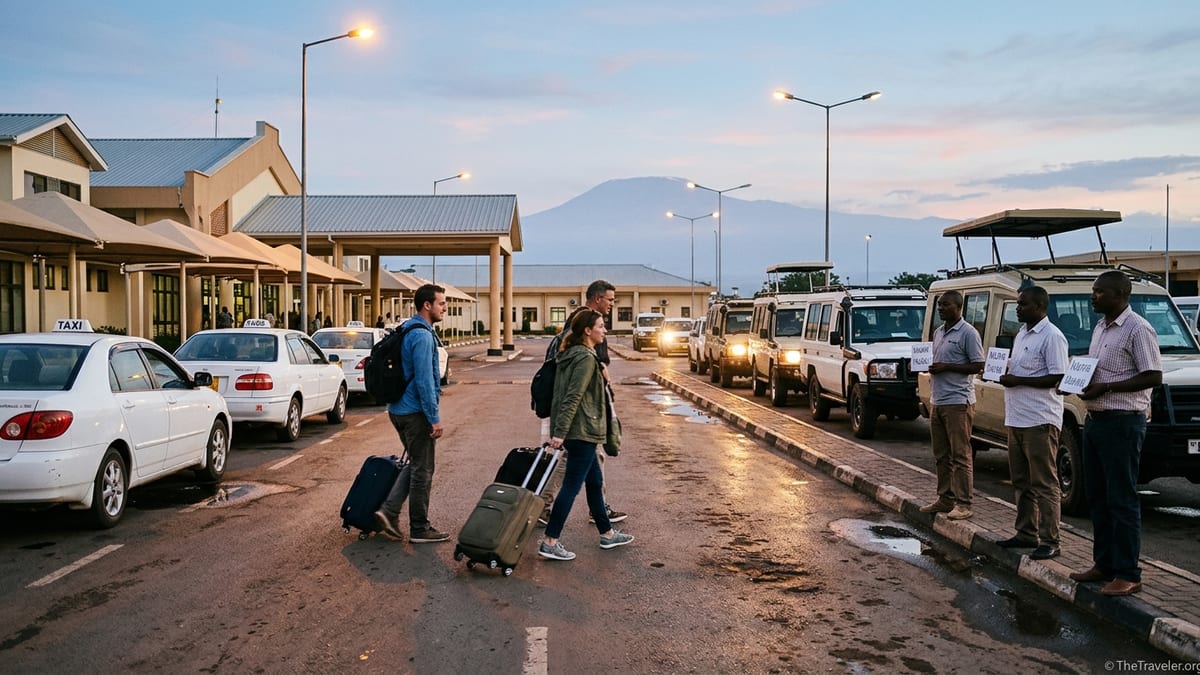
Understanding the Route from Kilimanjaro Airport to Arusha
Kilimanjaro International Airport, often shown as JRO on tickets, sits between Arusha and Moshi on the main highway that links the two towns. The distance from the airport to central Arusha is roughly 45 to 60 kilometers depending on where your hotel is located. Most travelers should expect a road journey of around 60 to 90 minutes, with the shorter end of that range during off-peak hours and the longer end if you hit traffic around Arusha in the early evening.
The road itself is a paved two-lane highway that passes small villages, roadside shops and stretches of open countryside. The route is straightforward: taxis, shuttles and private transfers follow the same general road from the airport’s exit gate toward Arusha town. There is no practical public bus or train connection that serves the airport terminal directly, so almost every traveler uses some form of pre-arranged transfer or on-the-spot taxi.
Costs vary widely by transport type. As of mid 2026, typical door-to-door prices from JRO to Arusha hotels range from roughly 10 to 20 US dollars per person for a shared shuttle to 35 to 75 US dollars per vehicle for a private taxi or arranged transfer, depending on the vehicle size, time of day and your bargaining power. These figures are approximate but reflect what most visitors actually pay on the ground today.
Because JRO handles many late-evening and night arrivals from Europe and the Middle East, another key factor is operating hours. While some daytime shared shuttles stop running after dark, private taxis and pre-booked transfers usually continue until the last scheduled flights land, which can be close to midnight. Planning ahead for your specific arrival time is therefore more important here than in big-city airports with 24-hour public transport.
Taking a Taxi from Kilimanjaro Airport to Arusha
The most visible option when you walk out of the arrivals hall is the line of licensed airport taxis on the forecourt. These are conventional sedans or minivans that wait for incoming flights. The airport authority notes that taxis are readily available to go to Arusha or Moshi, and in practice this is what many independent travelers choose if they have not pre-booked anything. You simply exit customs, ignore any overly insistent touts, and head to the marked taxi area where drivers or a dispatcher will quote you a fare.
For a standard taxi ride in 2026, many travelers report paying around 55 to 75 US dollars for the vehicle from JRO to a central Arusha hotel, with some negotiation possible if it is daytime or you are comfortable bargaining. In local currency, that often works out somewhere in the region of 130,000 to 180,000 Tanzanian shillings. Prices can be a bit lower for hotels in Usa River on the way to Arusha, and a bit higher for properties on the far side of town or in surrounding suburbs such as Njiro or Sakina.
Taxis are flexible with luggage. Most can handle two large suitcases and a couple of smaller bags without difficulty, and minivan-style taxis can take more. If you are traveling with bulky duffel bags for a Kilimanjaro climb or large camera cases for safari, it is worth confirming with the driver that everything will fit before you agree a final fare. Families or small groups of up to four often find that one taxi still works out cheaper per person than multiple shuttle tickets.
For late-night arrivals, taxis remain one of the most practical spontaneous choices. When an evening KLM or Qatar Airways flight lands after 21:00, taxis will normally be waiting until all passengers clear immigration and customs. The main drawback is that you are negotiating when tired in a new country. To reduce stress, decide on an upper price limit before you land, politely confirm the fare in either shillings or US dollars, and pay in cash at the end of the ride. There is no widely used meter system on airport taxis here, so agree the full price in advance.
Shared Shuttles and Minivans: Cheapest Door-to-Door Option
If you are watching your budget and do not mind sharing a vehicle, shared airport shuttles and minivans are often the cheapest way to get from Kilimanjaro International Airport to Arusha. These services typically run during the daytime and early evening, timing their departures to match the main clusters of arrivals. You will usually find a representative in the arrivals hall holding a signboard or you may need to pre-book online or through your hotel so the driver expects you.
Recent local guides and traveler reports suggest that a ride on a shared shuttle from JRO to Arusha costs in the rough range of 10,000 to 40,000 Tanzanian shillings, which is about 8 to 17 US dollars per person. This usually covers a seat in a minibus that makes several stops at central hotels or key drop-off points such as the clock tower area or popular budget guesthouses. Some operators advertise slightly lower prices around 10 US dollars per person when booked in advance, particularly if they focus on larger groups of climbers heading to the same staging hotel.
Travel time in a shuttle is similar to a taxi at 60 to 90 minutes, but it can be longer if your hotel is one of the last stops or if the vehicle waits to fill additional seats before departing the airport. With luggage, it is wise to keep your main bags close to you or in the rear storage area where you can see them when boarding and disembarking. Shuttles are used daily by solo travelers and backpackers, but as with any shared transit, it is sensible to keep passports, phones and small valuables on your lap or in a zipped daypack.
Shared shuttles are less reliable for very late-night arrivals. Many operators run only while there is a steady stream of passengers, and services may wind down after the bigger evening flights. If your ticket shows an arrival time after about 22:00, it is safer to plan on a private taxi or pre-booked transfer rather than assume a shared shuttle will still be waiting.
Pre-booked Private Transfers: Stress-free but Pricier
For travelers who want a smooth and predictable arrival, pre-booked private transfers arranged through hotels, safari companies or specialist transfer services are often the best compromise between comfort and cost. In this model, a driver waits for you in the arrivals area with a sign bearing your name or your tour company’s name, helps with luggage and escorts you directly to your waiting vehicle. After a long overnight flight, not having to haggle or search for the taxi rank is a real advantage.
Prices for private transfers from Kilimanjaro International Airport to Arusha generally start around 30 to 40 US dollars per vehicle when arranged by budget guesthouses or local transfer platforms, and more commonly fall between 50 and 90 US dollars per vehicle when booked through mid-range hotels or safari operators. A mid-level Arusha lodge might, for example, quote 60 US dollars for up to four passengers in one SUV for a nighttime pickup, while a basic hostel shuttle might charge 35 US dollars for a simpler vehicle in daytime.
These transfers usually use modern 4x4s, minibuses or larger safari vehicles, especially if you have booked a tour package. They are well suited to oversized luggage like duffels, tripods and soft-sided safari bags. Because the service is private, there are no extra stops beyond your own drop-off point. Travel time is therefore similar to or slightly faster than a taxi, often around one hour to central Arusha hotels like those near the clock tower or along the main Nairobi road.
Private transfers are particularly valuable if you are arriving late at night or very early in the morning, traveling solo, or concerned about safety. Having your driver’s name and contact details in advance makes it easier to coordinate if your flight is delayed. Many operators will track flights and adjust pickup times within reasonable limits, which is helpful if an evening arrival is pushed toward midnight. For peace of mind, especially on your first visit to Tanzania, building a pre-booked transfer into your budget is often worth the extra cost.
Safari Company Pickups and Lodge Transfers
If you are heading straight into a Kilimanjaro climb or a northern circuit safari, your tour operator may include airport transfers in your package. In these cases, the same company that will take you to the Machame Gate or to Tarangire the next day often collects you from JRO as part of a bundled itinerary. The driver typically wears a branded shirt and holds a sign with the company name, making it easy to spot them in the arrivals crowd.
Transfer costs in safari packages are less transparent because they are built into the overall tour price, but when they are broken out they often resemble standard private transfer rates. For example, some lodge groups list one-way transfers between Kilimanjaro International Airport and Arusha-area properties at around 100 to 150 US dollars per vehicle, especially if they use their own custom safari vehicles. These rates commonly cover up to four or five guests with full luggage, which makes them cost-effective for small groups traveling together.
The main advantage of a safari company pickup is continuity. The same company that meets you at the airport also manages your briefing, gear check and onward journey. For a Kilimanjaro climb, a typical pattern might be landing at JRO in the evening, meeting your trekking company representative, transferring directly to a climbing hotel in Moshi or Arusha, and starting the trek briefing the next morning. The operator handles the timing, so you simply follow their schedule.
The downside is reduced flexibility if your plans change. If a flight delay pushes you into the very late night and your operator cannot adjust, you may need to fall back on an airport taxi and then claim a refund or adjustment later. To avoid surprises, confirm by email in advance whether airport transfers are included, at what times they operate and whether there are surcharges for arrivals after, say, 22:00. Knowing these details ahead of time helps you avoid paying for both a package transfer and a taxi on the same night.
Travel Time, Traffic and Safety Considerations
Under normal conditions, most transfers from Kilimanjaro International Airport to central Arusha take about one hour. However, first-time visitors are often surprised at how much this can vary. Afternoon thunderstorms, evening rush-hour traffic as you approach town, or slow-moving trucks on the single carriageway can all add 20 to 30 minutes to your journey. When planning your first night hotel or calculating whether you can still catch a late dinner, assume a realistic window of 60 to 90 minutes from walking out of customs to arriving at your front desk.
Safety on this route is generally good when using licensed taxis, reputable shuttles or pre-booked transfers. Drivers are used to carrying tourists and know that visitors often arrive tired and jet-lagged. That said, it is sensible to apply standard travel common sense. Keep handbags and backpacks within reach inside the car, avoid showing large amounts of cash when you pay your driver, and use your hotel safe for passports and electronics once you arrive. Solo travelers arriving late at night often report feeling safer with a named driver meeting them in arrivals, especially if they are new to sub-Saharan Africa.
Night driving is common because so many international flights land after dark, but road lighting is limited outside the main towns. A cautious driving style is important, especially where pedestrians and animals can appear at the roadside. If a driver’s speed makes you uncomfortable, it is acceptable to ask them politely to slow down. Reputable operators understand that visitors value safety as much as speed.
If you have a connecting flight from Arusha Airport the same day, build in a generous buffer. Although the air distance between JRO and Arusha’s domestic airport is relatively short, the drive across town and check-in process can be slow. Many safari outfitters advise departing Arusha for JRO about four hours before an international flight and three hours before a domestic one, which gives you a sense of how conservatively locals think about timing. Apply that same conservative thinking when planning your inbound transfer if you need to connect onward on arrival day.
Luggage, Special Needs and Late Arrivals
Most visitors arriving at Kilimanjaro Airport carry more than just a small suitcase. Climbing gear, camera equipment, safari duffels and even boxed donations for local projects are common sights on the baggage carousel. Fortunately, both taxis and pre-booked transfers are accustomed to handling bulky luggage. If you know you will have extra-large bags, it can be worth requesting a minivan or larger 4x4 rather than a small sedan when you book a private transfer, particularly for groups of three or more.
For fragile items such as camera lenses or laptops, keep them in a carry-on bag that stays with you in the vehicle. Avoid putting anything irreplaceable on the roof rack if one is used. While drivers routinely tie down luggage securely, heavy rain showers are possible, and soft duffel bags are better suited to roof storage than electronics cases. If you are traveling with medical equipment or mobility aids, inform your transfer provider in advance so they can send a suitable vehicle.
Late arrivals are a reality at JRO. Many long-haul flights reach the airport in the evening, and delays at origin can push landings toward midnight. After about 23:00, spontaneous options shrink. Shared shuttles may have stopped running, and the number of independent taxis waiting can be smaller than earlier in the evening. This is where a pre-booked transfer with flight monitoring becomes especially valuable. Having a driver who knows your flight details and will wait through moderate delays removes a lot of uncertainty.
Hotel check-in is rarely a problem for late-night arrivals in Arusha’s main tourist hotels and lodges, many of which have 24-hour reception desks. However, some small guesthouses may not staff their front desk overnight. If you are arriving on a flight scheduled after 22:00, confirm with your accommodation that they can check you in late and know what time your transfer is likely to bring you. That simple email exchange before departure can prevent confusion when you finally arrive, tired, at your first-night stop.
Planning Hotel Drop-off and Choosing the Right Option
Deciding which transfer option is best from Kilimanjaro Airport to Arusha comes down to three main factors: budget, arrival time and how much you value convenience. A solo backpacker landing at midday on a clear schedule might happily choose a shared shuttle for around 10 to 15 US dollars and accept a few extra stops along the way. A family of four with two large suitcases each, arriving on an evening flight after 20 hours of travel, may consider a 60 to 80 US dollar private transfer to be money well spent.
When planning hotel drop-off, think about your exact location within Arusha. Properties right in the center or along the main Nairobi road are straightforward for any taxi or shuttle driver. Hotels in residential areas like Njiro, Sakina or Kimandolu may require clearer directions, especially at night. It helps to have the hotel’s full name, a nearby landmark and a local phone number handy. Many visitors simply hand their driver a printed booking confirmation, and the driver calls the hotel for precise directions as they approach town.
If your trip includes both Arusha and Moshi, consider where you will spend your first night in relation to your main activity. Climbers whose trek begins from the Moshi side of the mountain often go straight from the airport to Moshi instead of overnighting in Arusha, while safari travelers usually do the opposite. Some travelers deliberately choose hotels in Usa River or along the highway between Arusha and the airport to split travel time and have an easy run back to JRO at the end of their trip.
For most visitors in 2026, the sweet spot is either a pre-booked private transfer through their hotel or safari company, or a reliable taxi from the airport taxi rank if budget is tighter and arrival time is not too late. Both options give you door-to-door service, flexibility with luggage and control over departure time when you head back to the airport. Whichever you choose, confirm the price clearly, keep small cash notes ready, and allow yourself enough time so your first view of Arusha is relaxed rather than rushed.
The Takeaway
The journey from Kilimanjaro International Airport to Arusha is a relatively short but important part of any northern Tanzania itinerary. With no practical public transport from the terminal, visitors choose between taxis, shared shuttles, pre-booked private transfers and safari company pickups. All of these options can work well if matched to your budget, schedule and comfort level.
Approximate prices currently range from under 20 US dollars per person for a shared shuttle to around 35 to 90 US dollars per private vehicle for taxis or arranged transfers, with typical travel times of 60 to 90 minutes. Late-night arrivals narrow your choices and make a pre-arranged pickup more attractive, while daytime landings give you more freedom to shop around at the airport. Luggage, safety and hotel location all play a role, but with a bit of advance thought, your first overland journey in Tanzania can be straightforward.
If you prefer certainty, ask your hotel or safari operator to organize a transfer and send you the driver’s name and contact details in advance. If you are flexible and cost-conscious, research current shuttle options and be ready to use the taxi rank if shuttles are not running when you arrive. Either way, once you have navigated this first stretch from JRO to Arusha, the rest of Tanzania’s mountains, parks and plains are that much easier to reach.
FAQ
Q1. How long does it usually take to get from Kilimanjaro Airport to Arusha?
Most travelers take about 60 to 90 minutes by road, depending on traffic near Arusha, time of day and whether your transfer makes additional stops on the way.
Q2. How much should I expect to pay for a taxi from JRO to Arusha?
As of 2026, a typical airport taxi from Kilimanjaro International Airport to central Arusha costs roughly 55 to 75 US dollars per vehicle, with some variation by time and hotel location.
Q3. Are there shared shuttles from Kilimanjaro Airport to Arusha?
Yes, several operators run shared shuttles and minivans, mainly during daytime and early evening. Expect to pay in the region of 8 to 17 US dollars per person, with multiple hotel or central drop-off points.
Q4. Is it safe to arrive at JRO late at night and take a taxi to Arusha?
Licensed airport taxis and reputable pre-booked transfers are generally considered safe, even late at night. For peace of mind, many solo travelers and first-time visitors prefer to pre-arrange a private pickup for late arrivals.
Q5. Should I book my airport transfer in advance or decide on arrival?
If you arrive in the evening or are unfamiliar with the region, advance booking through your hotel or safari operator is usually worth it. For daytime arrivals, confident travelers sometimes choose to arrange a taxi or shuttle on the spot.
Q6. Will my safari company or Kilimanjaro outfitter pick me up from the airport?
Many safari operators and Kilimanjaro outfitters include airport transfers in their packages, especially for group trips. Always confirm in writing before you travel and ask where and how you will meet your driver at JRO.
Q7. What if my flight to Kilimanjaro Airport is delayed?
Good transfer companies track flights and adjust pickup times for reasonable delays. If you have pre-booked, keep your provider’s contact details handy. If a delay is extreme and your driver cannot wait, you can still use the airport taxi rank on arrival.
Q8. Can I pay for my transfer by card or should I carry cash?
Some hotels and tour operators can add transfers to your room or package bill, effectively letting you pay by card later. Independent taxis and many shuttles usually expect cash in US dollars or Tanzanian shillings, so it is sensible to carry some small denominations.
Q9. How much luggage can I bring in a taxi or shuttle to Arusha?
Most vehicles can comfortably handle one large bag and one smaller piece per person. If you have extra-large or numerous bags for climbing or photography, request a larger vehicle when booking or confirm space with the driver before departure.
Q10. Is there any public bus from Kilimanjaro Airport into Arusha?
There is no regular public bus or train service that runs from directly outside the terminal into Arusha. Practically speaking, visitors rely on taxis, shared shuttles, private transfers or safari company pickups for this journey.