


Kuala Lumpur International Airport (KUL) is designed for connections, and that shows in the number of places where you can actually sleep without leaving the airport zone. Whether you have a tight overnight connection, an awkward daytime layover or a 20-hour stop between long-haul flights, choosing the right transit hotel at KLIA can mean the difference between a bleary-eyed connection and arriving rested. This guide walks through the real options at both terminals, how to book them, what they cost in practice, and when you are better off heading into the city instead.
Get the latest updates straight to your inbox!
Understanding KLIA’s Layout and Why It Matters for Sleep
Before you choose a transit hotel at Kuala Lumpur International Airport, you need to understand how the airport is laid out. KUL has two separate terminals: KLIA Terminal 1, often called the Main Terminal, and KLIA Terminal 2, the low-cost carrier terminal. They are about 2 kilometers apart and linked by the airport rail service and shuttle buses, but moving between them is not instant. Many travelers underestimate this and book a hotel in the wrong terminal for their next flight.
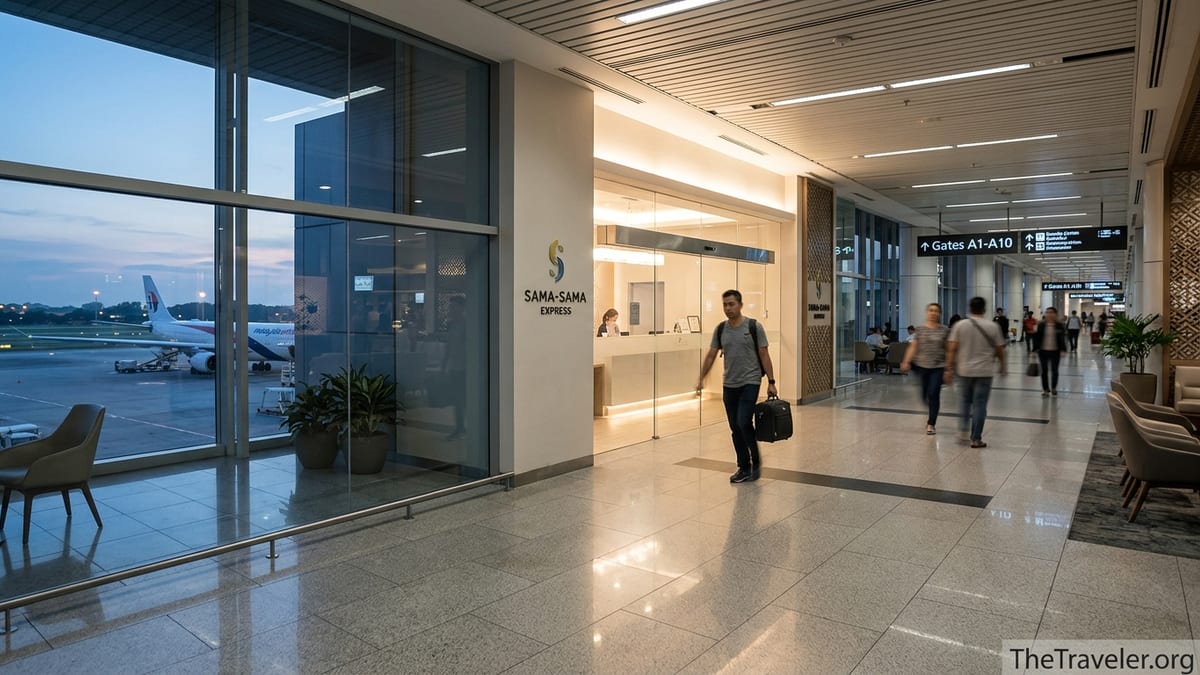
KLIA Terminal 1 handles most full-service carriers, including many national and international airlines. Its international gates are split between the main terminal building and Satellite A, which is accessed by the Aerotrain. Sama-Sama Express, the main airside transit hotel, sits in this satellite building near Gate C5, so it only works if your flights are operating through Terminal 1’s international area.
KLIA Terminal 2 serves low-cost airlines, most notably AirAsia and several regional budget carriers. Its layout is different, but it also has an airside transit hotel, Sama-Sama Express KLIA Terminal 2, on Level 3 of the international departure satellite. If you arrive and depart on separate AirAsia flights, for example, this is likely to be your closest airside sleep option. The two terminals each have their own immigration control, check-in halls and transport hubs, so staying in the correct terminal is critical.
The distinction between airside and landside is also important. Airside hotels like the Sama-Sama Express properties are inside the secure transit area, past immigration and security. You can use them only if you remain in transit and your bags are checked through. Landside hotels such as the five-star Sama-Sama Hotel KLIA, Aerotel Kuala Lumpur, Tune Hotel KLIA2 and various capsule-style properties require clearing immigration and, usually, collecting your luggage. Your choice depends on how your ticket is issued and how much time you have.
Airside Transit Hotels: Sleeping Without Clearing Immigration
For pure convenience on a through ticket, the airside Sama-Sama Express hotels at both terminals are the default choice. At KLIA Terminal 1, Sama-Sama Express is located in Satellite A on the mezzanine level near Gate C5. If your inbound flight parks at the G or H gates in the main terminal, you follow signs for the Aerotrain to Satellite A, then walk toward Gate C5 and up one level to the hotel. If you arrive directly at the C gates, you can walk there from your arrival gate without riding the train.
Rooms at Sama-Sama Express are sold in flexible time blocks rather than traditional overnight stays. A common pattern is 6-hour or 12-hour packages, with pricing that fluctuates seasonally. As of mid-2026, travelers typically report paying in the region of the equivalent of a mid-range city hotel for a 6-hour block in a standard room, with family rooms and suites priced higher. For many, that cost is justified by the ability to step off a long-haul flight, shower, sleep in real beds and walk back to the gate in minutes, without dealing with immigration queues.
At KLIA Terminal 2, Sama-Sama Express KLIA Terminal 2 offers a similar model. It is located in the international departure area on Level 3 of the satellite building, which means it is available only to passengers who are in international transit and have not cleared immigration. This works well for back-to-back international AirAsia flights or a regional hop that connects to a long-haul service operated from Terminal 2. Shorter stays, such as 3-hour or 6-hour room blocks, are attractive for daytime layovers where you want a nap and a shower without the cost of a full night’s accommodation.
One critical detail with airside hotels is baggage and boarding passes. These properties assume your checked luggage is tagged through to your final destination and that you already have a boarding pass for your onward flight. If you must collect bags or check in again at the counter, you will usually need to clear immigration, which means you cannot access the airside hotel on that segment. When in doubt, confirm with your airline that your luggage is checked through and that you can remain in the transit zone between flights.
Landside Options: Sama-Sama Hotel, Aerotel and Capsule-Style Stays
If your flights are on separate tickets or you need to collect luggage, landside hotels at KLIA become more practical. The flagship option at Terminal 1 is Sama-Sama Hotel KLIA, a full-service five-star property connected to the main terminal building by a covered skybridge. Guests can use a 24-hour electric buggy shuttle that runs between the hotel and the arrivals level, which keeps walking to a minimum, especially welcome if you are arriving late at night or with heavy bags.
Sama-Sama Hotel is closer in feel to a resort-style airport hotel than a basic layover stop. Facilities include multiple dining outlets, a landscaped outdoor pool, 24-hour fitness center, sauna, Jacuzzi and even tennis courts. This makes it a strong choice if you have a long overnight layover, are traveling with family, or simply want a comfortable recovery stop after an ultra-long-haul flight. Rates vary with demand, but in practice can range from business-hotel level upwards, sometimes competitively priced compared with downtown Kuala Lumpur when factoring in transfer costs and time.
Over at Terminal 2, the main landside option is Aerotel Kuala Lumpur, located within the Gateway@klia2 complex. Travel industry materials describe it as offering 78 guestrooms on Level 2M of the mall, which is attached directly to the terminal. Rooms range from compact “Solo” or “Double” categories up to family-sized layouts, and are again sold in blocks of hours or as full-night stays. This flexibility allows, for example, a traveler with a 7-hour early morning layover to book just a day-use block from around 8 am to 3 pm, rather than paying for a traditional overnight rate.
For ultra-budget or very short stays, capsule-style hotels such as Capsule Transit in the KLIA2 Gateway mall and other pod concepts in the broader KLIA area appeal to solo travelers. These usually provide small individual sleeping pods, shared showers and communal lounges at significantly lower prices than standard rooms. While they cannot match the privacy and quiet of a full room, they are often sufficient for a 4–6 hour sleep during an overnight layover when cost is a primary concern.
How Long Is Your Layover, and Should You Leave the Airport?
The decision to book a transit hotel versus heading into Kuala Lumpur itself depends mostly on layover length and time of day. The KLIA Ekspres and KLIA Transit rail services link the airport to KL Sentral in central Kuala Lumpur in around 30 minutes of travel time, and road transfers by taxi or ride-hailing services take roughly an hour in normal traffic. You need to factor in immigration, luggage collection, security on the way back and a safety buffer for delays.
As a rule of thumb, if you have a layover of less than 6 hours between international flights, staying airside is usually the safest and least stressful option. In that case, an airside transit hotel block or even a quiet airport lounge may be better than rushing into the city. A 4-hour layover, for instance, might translate into less than an hour in town after accounting for all formalities, which rarely justifies the effort or risk of missing your connection.
For layovers between 6 and 10 hours, it becomes a closer call. A daytime 8-hour break might give you enough time to clear immigration, take the rail service into the city, have a meal in the Bukit Bintang or KLCC area, and return. However, if the layover is overnight, much of the city will be winding down, public transport options thin out, and the appeal of a comfortable bed at Sama-Sama Hotel or Aerotel grows stronger. Families with children or travelers recovering from jet lag often choose an airport hotel even for 8–10 hour layovers, prioritizing sleep over sightseeing.
Once you pass the 10–12 hour mark, especially if your layover falls during daylight hours, heading into Kuala Lumpur can make sense. For example, a traveler arriving from Europe at 7 am and departing to Australia at 9 pm could check into a downtown hotel for the day, enjoy lunch near Jalan Alor, visit the Petronas Twin Towers area, then return to the airport in the early evening. In that scenario, an inexpensive city hotel plus train fare may cost only slightly more than a long block at a premium airport property, with the benefit of a mini city break.
Real-World Booking Tips, Prices and Common Pitfalls
When booking KLIA transit hotels, the most common mistake is choosing a property in the wrong terminal or on the wrong side of immigration. For instance, someone flying in on a full-service airline to Terminal 1 and out on AirAsia from Terminal 2 might accidentally book Sama-Sama Express KLIA Terminal 2, not realizing it is accessible only from the Terminal 2 international departures area. Because the two terminals are separate secure zones, they would not be able to walk there airside and would effectively lose the booking.
To avoid this, always confirm: which terminal your flights use, whether your luggage is checked through, and whether you plan to clear immigration between flights. If you are arriving on one ticket and departing on another with baggage collection in between, assume you will need a landside hotel such as Sama-Sama Hotel KLIA at Terminal 1 or Aerotel or Tune Hotel at KLIA2. Travelers on strict budgets may opt for capsule hotels like Capsule Transit at KLIA2 malls rather than full-service properties.
Pricing shifts with season and events, but practical examples help set expectations. A mid-range estimate for a 6-hour daytime block at an airside Sama-Sama Express room can be comparable to a mid-tier city hotel nightly rate, with overnight blocks or larger rooms costing more. Sama-Sama Hotel KLIA and Aerotel Kuala Lumpur generally price themselves as full-service airport hotels; in low season, advance-booked rates can be surprisingly competitive, while same-day bookings during peak travel periods may be steep. Capsule hotels and some budget options often undercut these by a noticeable margin, making them attractive to backpackers and solo travelers.
Another pitfall is assuming you can “just turn up.” While walk-in bookings are sometimes possible, KLIA’s transit hotels can sell out, particularly during major regional holidays or when flight disruptions strand large numbers of passengers overnight. Booking at least a few days ahead is sensible if you know you will want a bed. That said, flexibility matters: if your inbound flight is badly delayed and you miss much of your booked block, many transit hotels will still charge in full. Travel insurance that covers missed connections and layover accommodations can be worth considering for complex itineraries.
Day Rooms, Showers and Alternatives to a Full Hotel Stay
Not every long layover requires a bed. At KLIA, many travelers with shorter waits or tighter budgets opt for day rooms, shower-only packages or lounge access. Both Sama-Sama Express properties are known for offering shower-only options where, for a lower fee than a room, you can use a private bathroom for a set period, ideal if you only need to freshen up between flights. These packages are particularly useful on daytime layovers of 3–5 hours, where a full block of room time might feel excessive.
Some landside properties near KLIA and KLIA2 sell day-use rates allowing check-in during morning or midday hours with departure in the late afternoon or early evening. This suits passengers who land at dawn after a red-eye and fly out again that night. For example, a traveler arriving at 6 am could book a day room at Sama-Sama Hotel KLIA, sleep through the morning, use the pool in the afternoon and then re-enter the terminal around 6 pm for an evening connection.
Airport lounges in both terminals can also serve as a halfway option between a hotel and sleeping on a bench. Paid-access lounges or those available via credit card programs and lounge passes typically provide reclining chairs, showers, light meals and quiet spaces. While not designed for full overnight stays, they can be comfortable enough for a few hours of rest. However, unlike a private hotel room, you will not have full privacy or guaranteed darkness and silence, which are important for real sleep.
For travelers arriving extremely late or departing very early, even a few hours in a capsule hotel pod can be transformative. A solo traveler on a midnight arrival at KLIA2, for instance, might check into a pod-style property in the Gateway mall, sleep for four hours and then head back through security for a 6 am flight. The experience is more like an upgraded nap room than a traditional hotel, but it is substantially better than trying to sleep upright in a waiting area.
When a Transit Hotel Is Not the Right Answer
There are situations where a transit hotel at KLIA is not actually the best choice. If your layover is very short and occurs entirely during business hours, you might be better off going directly to an airline lounge, grabbing a meal and stretching your legs in the terminal. With a 2.5-hour connection, for example, checking in, finding your room and then leaving again can consume a good portion of your available time, leaving only a brief nap.
Transit hotels also make less sense if you are on a strict budget and comfortable sleeping in public spaces. KLIA and KLIA2 have many relatively quiet corners where resourceful travelers spread out on benches or floors, often near less-trafficked gates overnight. Airport staff are generally accustomed to this, although lights and announcements make deep sleep difficult. In such cases, an inexpensive eye mask, travel pillow and earplugs can go a long way.
Finally, if your primary goal during a long daytime layover is exploring Malaysia rather than resting, investing in an airport hotel can be counterproductive. A traveler who has never visited Kuala Lumpur and faces a 12-hour daytime layover might glean more satisfaction from taking the KLIA Ekspres into the city, visiting a hawker center, sampling local coffee and seeing a few landmarks. In that context, a shower-only package on return to the airport may be enough comfort before the onward flight.
Ultimately, the decision comes down to your own priorities: rest versus exploration, budget versus convenience, and your tolerance for moving through immigration procedures multiple times in a single journey. KLIA’s strength is that it offers a broad spectrum of realistic choices, from full-service five-star stays to minimalist pods and everything in between.
The Takeaway
Kuala Lumpur International Airport is unusually well equipped for passengers who want to sleep during a layover. Between the airside Sama-Sama Express hotels in both terminals, the landside Sama-Sama Hotel KLIA, Aerotel Kuala Lumpur at KLIA2 and a cluster of capsule-style and budget options, most travelers can find a bed that suits their schedule and budget without venturing far from the gate.
For short connections on through tickets, airside transit hotels are hard to beat. For overnight stops with baggage collection or separate tickets, the landside properties linked directly to each terminal provide the right balance of comfort and convenience. Longer daytime breaks open up the option of taking the train into central Kuala Lumpur and dropping your bags at a city hotel instead.
The key is to match your choice to your actual flights, including terminals and whether you clear immigration, and to book the right product: the right terminal, the correct side of the border and an appropriate length of stay. With a bit of planning, even a long overnight at KLIA can feel like a short, efficient hotel stay rather than a test of endurance on plastic chairs.
FAQ
Q1. What is the difference between Sama-Sama Express and Sama-Sama Hotel at KLIA?
Sama-Sama Express hotels are airside transit properties inside the secure zone at KLIA Terminal 1 and Terminal 2, sold in hourly blocks for through passengers who do not clear immigration. Sama-Sama Hotel KLIA is a full-service, five-star landside hotel connected to Terminal 1 by a skybridge and buggy service, suitable for travelers who have cleared immigration or need to collect luggage.
Q2. Can I use the airside transit hotel if I need to collect my checked baggage?
In most cases, no. Airside transit hotels assume your checked baggage is tagged through to your final destination and that you remain within the secure transit area. If you must pick up your luggage at baggage claim, you will need to clear immigration and therefore cannot access the airside hotel on that leg.
Q3. How do I know whether to book at KLIA Terminal 1 or Terminal 2?
Check your flight booking and boarding passes to see which terminal each airline uses. Full-service carriers generally use Terminal 1, while low-cost carriers such as AirAsia mostly operate from Terminal 2. You should book a transit hotel in the same terminal as your arriving or departing flights, and be especially careful when your journey involves both terminals.
Q4. Is it possible to walk between KLIA Terminal 1 and Terminal 2 to reach my hotel?
No, the two terminals are separate buildings about 2 kilometers apart, connected by rail services and buses rather than a simple internal walkway. Moving between them takes time and normally requires leaving the secure area. If your hotel is in the wrong terminal’s airside area, you will not be able to walk there without rechecking in and passing through security again.
Q5. Are transit hotel stays charged per night or by the hour?
At the airside Sama-Sama Express hotels and some airport-linked properties like Aerotel, stays are usually sold in blocks of hours, such as 3, 6 or 12 hours. This lets you pay only for the time you need during a layover. Traditional overnight rates also exist at landside hotels, which operate more like conventional city properties.
Q6. Is it worth heading into Kuala Lumpur city instead of booking an airport hotel?
It can be, depending on your layover length and energy level. For layovers under about 6 hours, staying at the airport is usually safer. From around 8 hours and up, especially in daylight, taking the airport rail link into the city to explore and rest at a downtown hotel can be rewarding. You must allow time for immigration, transfers and re-clearing security on your return.
Q7. Do KLIA transit hotels offer shower-only packages?
Many KLIA transit hotels, particularly the Sama-Sama Express properties, offer shower-only or short refresh packages that give access to a private bathroom for a limited time. These are popular with travelers who want to freshen up between flights but do not need a bed, keeping costs lower than booking a full room block.
Q8. What are good budget options for an overnight stop near KLIA?
Budget-conscious travelers often choose capsule-style hotels such as pod accommodations in the KLIA2 Gateway mall or nearby budget hotels linked by short transfers. These offer small sleeping pods or basic rooms with shared or simple facilities at lower prices than full-service airport hotels, and can be sufficient for a brief overnight rest.
Q9. Should I book a KLIA transit hotel in advance or wait until I arrive?
Booking ahead is usually wise, especially if you are traveling in peak season or know you will be exhausted and want to head straight to your room. Transit hotels at KLIA can sell out when flights are disrupted or during holiday peaks. While walk-in bookings are sometimes available, advance reservations provide more certainty and can secure better rates.
Q10. Is it safe to sleep in public areas of KLIA instead of a hotel?
Many travelers do sleep in public areas of KLIA and KLIA2 during overnight layovers, and the terminals are generally considered orderly. However, you will have less privacy, more ambient noise and constant lighting. Using an eye mask, earplugs and keeping valuables close can improve comfort, but a transit hotel or capsule stay offers a significantly better rest if your budget allows.