


More news on this day
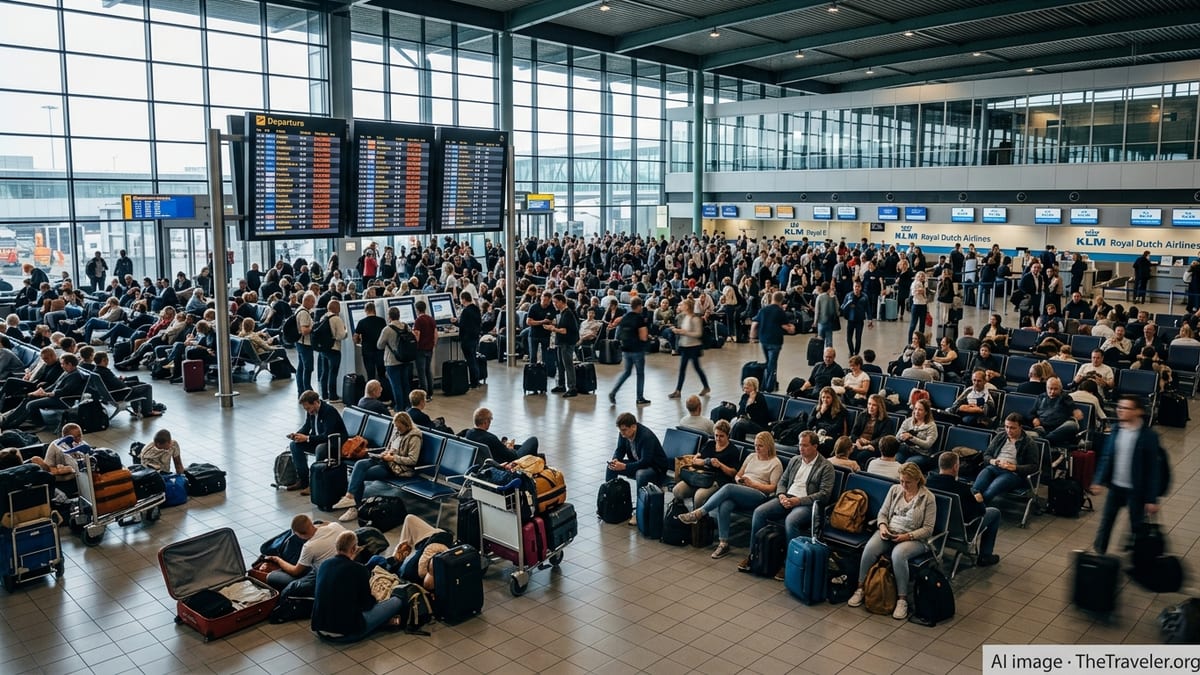
Travelers across Europe and North America are facing fresh disruption after a cluster of cancellations and rolling delays at Amsterdam Schiphol led KLM and BA CityFlyer to ground 18 flights, affecting key routes to Sweden, Greece, Norway, Portugal, the United States and several other destinations.
Get the latest news straight to your inbox!
Wave of Cancellations Hits Amsterdam Hub
Published coverage of recent operations at Amsterdam Schiphol indicates that KLM and BA CityFlyer have grounded a combined 18 flights over a short window, adding to a wider pattern of disruption at one of Europe’s busiest transfer hubs. The cancellations come on top of hundreds of delayed services reported at the airport in recent days, as schedules buckle under a mix of operational bottlenecks and knock on routing issues.
Data from flight tracking and passenger rights platforms shows Schiphol logged more than 250 delayed flights and around 20 cancellations on some recent peak days, with KLM among the most heavily affected carriers. These disturbances have coincided with network wide challenges for several European airlines, which together recorded dozens of cancellations and hundreds of delays across Amsterdam and other major airports.
The decision by KLM and BA CityFlyer to ground a targeted number of services at Schiphol appears to be aimed at stabilizing the schedule and preventing further last minute disruptions. However, the move has left many travelers stranded in the terminal or forced to reroute via other hubs when onward connections disappeared from departure boards.
Schiphol’s role as the primary hub for KLM, and as a key transfer point for British Airways’ regional partner BA CityFlyer, means even a relatively limited set of cancellations can cascade across a much larger network. Travelers booked on unaffected flights are nevertheless encountering longer queues, gate changes and tight connections as the operation is rebalanced.
Scandinavian and Mediterranean Routes Among the Worst Affected
Publicly available timetables and disruption reports indicate that services linking Amsterdam with Sweden, Norway and Greece have been particularly exposed to the latest wave of cancellations and delays. Routes to Stockholm Arlanda and Oslo, both of which rank among Schiphol’s busiest Scandinavian links, have seen selected flights grounded or retimed, complicating travel plans during a busy early summer period.
In southern Europe, flights from Amsterdam to popular Greek destinations, including Athens, as well as to Portuguese gateways such as Lisbon, have also featured in recent cancellation lists and extended delay tables. The impact has been felt both by point to point passengers and by those using Amsterdam as a transfer point from North America and other regions to holiday destinations around the Mediterranean.
Observers note that these routes are especially vulnerable when airlines trim operations, because they combine strong seasonal demand with tight aircraft and crew rotations. A single cancellation can disrupt multiple later legs, while delays at Schiphol risk causing missed onward connections at the other end of the route, particularly on evening services with fewer backup options.
Some travelers heading to or from secondary Scandinavian and Mediterranean cities are reporting that they have been rebooked via alternative hubs or onto next day departures when same day options ran out. This has added pressure to accommodation and rebooking desks at Amsterdam and at outstations along the affected network.
Transatlantic Links to the United States Face Knock On Delays
The disruption at Schiphol is also affecting long haul links between Amsterdam and major cities in the United States. Recent operational summaries highlight ripple effects on flights connecting the Dutch hub with large transatlantic gateways, where even modest departure delays from Europe can translate into missed domestic connections on arrival.
According to published coverage tracking KLM’s schedule, cancellations and delays on feeder routes into Amsterdam have left some passengers unable to make their originally booked transatlantic departures. In those cases, travelers have been rebooked onto later services, often arriving in the US many hours behind schedule and needing to adjust separate onward travel plans.
Industry analysts point out that transatlantic flights depend heavily on timely arrivals from European and regional spokes feeding into Schiphol. When short haul segments from Sweden, Norway, Greece or Portugal experience extended delays, airlines face difficult choices between holding long haul aircraft for connecting passengers or departing on time and reaccommodating those who miss the connection.
For some travelers, the disruption has been compounded by luggage handling challenges associated with irregular operations. Reports circulating on passenger forums describe bags that failed to make tight connections at Schiphol and arrived days later, or remain listed as delayed while ground handling teams work through backlogs.
Passenger Rights and Rebooking Options Under EU Rules
Consumer advocacy sites and passenger rights specialists stress that travelers affected by cancellations or long delays at Schiphol may be entitled to support and, in certain circumstances, financial compensation under European Union rules. These protections can apply when flights are cancelled at short notice or delayed by several hours, depending on distance, timing and the cause of the disruption.
Guidance compiled by passenger compensation services notes that airlines typically remain responsible for providing care such as meals, refreshments and, when necessary, hotel accommodation and ground transport when travelers are stranded overnight. Refunds or rerouting on the next available flight may also be available when a flight is cancelled or heavily rescheduled.
Observers emphasize that the exact entitlements vary case by case, particularly where weather or air traffic control restrictions are involved alongside airline operational issues. Travelers are urged in public guidance to keep boarding passes, booking confirmations, written notifications and receipts for out of pocket expenses, as documentation can be important when seeking reimbursement after the trip.
KLM and BA branded channels continue to direct passengers toward digital self service tools for rebooking and status updates, with additional support provided at airport service desks during periods of significant disruption. Travel industry commentators suggest that those with time sensitive connections or separate tickets should monitor their itineraries closely and consider building in longer connection windows while Schiphol remains under operational strain.
Schiphol’s Ongoing Operational Strain Raises Questions for Summer Travel
The latest disruption involving KLM and BA CityFlyer comes after a series of challenging periods for Amsterdam Schiphol over the past year, including episodes of severe winter weather, de icing fluid shortages and staffing bottlenecks. Published analyses of those events highlight how quickly conditions at the airport can deteriorate when demand is high and operating margins are thin.
While the current set of 18 grounded flights is smaller than the mass cancellations seen during previous cold snaps, travel industry watchers argue that the pattern underlines the fragility of hub schedules as airlines rebuild capacity. Relatively contained issues on a single day can have a disproportionate impact on passengers if they strike during peak travel waves or on key trunk routes.
Looking ahead to the core summer season, analysts say the situation at Schiphol will be closely watched by both airlines and travelers. Continued pressure on infrastructure, tight turnaround times for aircraft, and high demand for popular leisure destinations in Scandinavia, southern Europe and North America all heighten the risk that even localized disruptions could spill over across the wider network.
For now, publicly available information suggests that operations at Schiphol are gradually stabilizing after the latest round of cancellations, although residual delays and missed connections persist. Travel experts advise passengers booked to fly via Amsterdam in the coming days to check their flight status frequently, allow generous connection times where possible, and have contingency plans in mind if schedules shift at short notice.