


Landing at Honolulu’s Daniel K. Inouye International Airport is exciting, but figuring out rental cars, Waikiki parking and Oahu’s traffic can feel intimidating. This guide walks you through how the Honolulu airport car rental center works, where to catch the shuttle, what to expect when driving around Oahu, realistic parking costs in Waikiki, and how to decide if a rental car is really worth it for your trip.
Get the latest updates straight to your inbox!
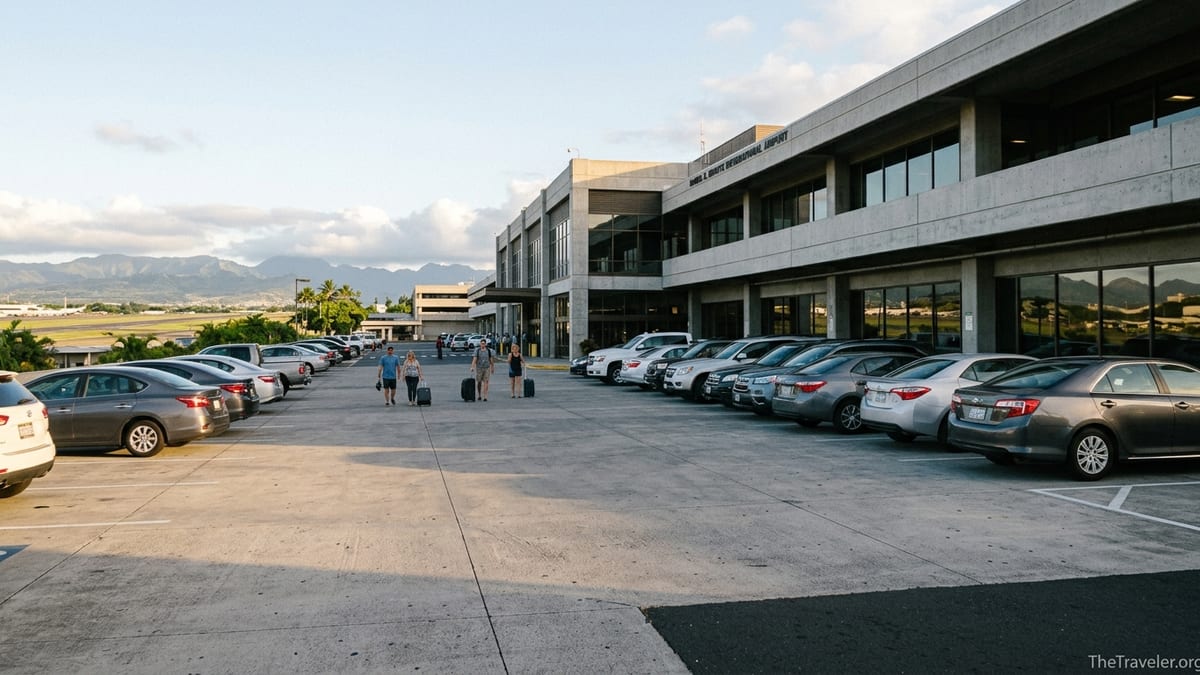
How the Honolulu Airport Rental Car Center Works
Daniel K. Inouye International Airport (HNL) uses a modern consolidated rental car facility, often called the CONRAC, that brings most major companies into one five-story building near Terminal 2. On-airport agencies typically include Alamo, Avis, Budget, Dollar, Enterprise, Hertz, National, Payless, Sixt and Thrifty, so if you booked with a big mainland brand there is a good chance you will pick up in this facility. The building sits just across the roadway from Terminal 2 baggage claim areas in the low 20s, so many arrivals can simply walk.
If you arrive into Terminal 2 and collect your bags around carousels 22 to 31, you can walk directly to the rental car center. Exit baggage claim to the curb, cross the first lane of traffic toward the parking structures, and follow overhead signs labeled “Rental Car Center.” The walk is typically five to ten minutes depending on your gate and mobility. Elevators and ramps make it manageable with luggage and strollers.
Inside the facility, rental counters are usually concentrated on level 2 while the cars themselves are parked on decks above. After you sign your contract, you ride an escalator or elevator up to your company’s row. The setup feels similar to newer rental centers at airports like San Diego or Phoenix, where you can walk between brands in one building instead of chasing separate shuttles around the airport.
A handful of smaller or discount agencies still operate off-airport lots and will send their own branded shuttles to prearranged pickup zones. If your confirmation mentions an address on Lagoon Drive or Ualena Street rather than “on-airport,” assume you will need a shuttle instead of walking to the CONRAC. Build an extra 20 to 30 minutes into your pickup schedule if you are using one of these off-airport locations, especially during busy midday arrival banks.
Shuttle Pickup Points and Late-Night Arrivals
Not everyone lands near the easy walking route. If you arrive into Terminal 1 (many Hawaiian Airlines flights) or the international arrivals area at Terminal 2, you will usually take a short rental car shuttle instead of walking. Look for curbside signs that read “Rental Car Center Shuttle” near the central pickup zones outside baggage claim. Shuttles are generally frequent during daytime and early evening, often every five to ten minutes when multiple flights arrive.
The shuttles are large, branded airport buses that loop between terminals and the rental car facility. They have luggage racks and low steps, but they can still be crowded when several widebody flights arrive at once from the mainland or Asia. If you are traveling with small children or lots of gear, it is worth regrouping just outside baggage claim and waiting for the next bus rather than squeezing onto the first one that appears.
For late-night arrivals, such as mainland flights landing after 10 p.m., shuttle frequency can drop and waits of 15 to 20 minutes are possible. Most on-airport rental desks remain open to meet scheduled flights, but closing hours vary by company and season. If your flight is scheduled to arrive after midnight, it is smart to check your confirmation email for office hours and to call the location a day or two before departure to confirm that staff will remain on site for delayed flights.
On departure day, allow extra time for the return shuttle. During morning rush hours and midday weekends, lines can form at the elevator banks and at the shuttle stops as renters leave at roughly the same time. Dropping the car at least two hours before a domestic departure and three hours before international flights usually gives a comfortable cushion for the short ride to the terminal and security screening.
Is a Rental Car on Oahu Worth It?
Whether a rental car is worth it in Honolulu depends mostly on where you are staying and what you want to do. Travelers planning to stay almost entirely in Waikiki, visiting the beach, restaurants, and perhaps doing one or two guided tours, can often skip a car. The airport is about nine miles from Waikiki, and taxis or rideshare typically cost in the range of 35 to 55 dollars each way depending on traffic and time of day. The new Skyline rail line connects the western suburbs to the airport and is gradually expanding, but as of mid-2026 most visitors still rely on shuttles or rideshare rather than rail into Waikiki.
On the other hand, if your plans include exploring beyond Honolulu, a rental car quickly becomes attractive. A classic loop from Waikiki to the North Shore via the windward coast might include stops at Kailua or Lanikai Beach, the Byodo-In Temple in Kaneohe, the shrimp trucks in Kahuku, and sunset at Haleiwa or Shark’s Cove. Trying to connect these with public buses would require multiple transfers and several hours of travel time each way, while a rental car lets you cover the same loop in a relaxed full day.
Families staying at resorts outside Waikiki, such as Ko Olina on the leeward coast or Turtle Bay Resort on the North Shore, will almost always find a car worthwhile. A single round-trip taxi ride from Ko Olina to Waikiki can run similar to a one-day economy car rental, and parking at these resort areas is generally easier than in central Waikiki. For example, Ko Olina has resort garages and some public lots near the lagoons where parking, while not cheap, is far less stressful than circling small Waikiki streets at night.
Many visitors compromise by renting a car only for the days they plan longer excursions. They might rely on airport shuttles or taxis to reach their Waikiki hotel, enjoy the city car-free for a couple of days, then pick up a rental from an in-town agency for two or three days to explore Oahu’s beaches and scenic drives. This approach can save both on daily rental cost and on the 40 to 70 dollars per night many Waikiki hotels now charge for parking.
Driving Basics and Oahu Traffic Patterns
Driving on Oahu is generally straightforward for mainland visitors. Speeds are modest, with urban limits often 25 to 35 miles per hour and freeway limits generally around 55. There are three main freeway designations: H-1 running east–west through Honolulu toward Kapolei, H-2 heading north toward Wahiawa and the central plateau, and the scenic H-3 connecting the airport area to Kaneohe through the Koʻolau mountains. Rental cars use standard American-style controls and automatic transmissions are the norm.
Honolulu does have rush hours. Morning traffic heading into town on H-1 from the west (Kapolei, Ewa Beach) and afternoon traffic leaving town can be heavy. If you are staying in Waikiki and planning to drive to the North Shore, leaving before 8 a.m. can help you avoid congestion as you navigate out of town. Many locals recommend taking H-3 toward Kaneohe in the morning, both for lighter traffic and for the dramatic mountain and valley views as you cross the island.
Within Waikiki itself, streets are dense and often one-way, and pedestrians have the right of way at crosswalks. Kalakaua Avenue, which runs along the beachfront, can be slow in the evenings when people are strolling and tour buses are loading. If you are heading out of Waikiki by car around dinner time, it is sometimes faster to use inland streets such as Ala Wai Boulevard and then connect to the freeway ramps rather than attempting to exit via the beachfront strip.
Navigation apps work well on Oahu, but be cautious when apps recommend minor residential cut-throughs to save a minute. Some neighborhoods near scenic lookouts or beaches have limited street parking and local signs that restrict non-resident parking during certain hours. Obey posted signs carefully; a ticket or tow away in Honolulu can cost far more than an extra few minutes in traffic on the main route.
Parking in Waikiki and Around Oahu
Parking is one of the biggest hidden costs of renting a car in Honolulu, especially if you are staying in Waikiki. Many mid-range and upscale hotels now charge overnight parking fees commonly in the range of 45 to 65 dollars per night for self-park or valet. For example, a large beachfront resort might quote around 60 dollars per night plus tax for valet parking, while a mid-block hotel a few streets from the ocean could charge around 45 to 50 dollars for self-parking in its attached garage.
Some travelers look for independent garages or lots that undercut hotel rates. A few structures within a short walk of Kuhio Avenue or Ala Wai Boulevard sometimes offer daily maximums in the 30 to 40 dollar range, and condominium buildings such as the Waikiki Banyan have historically offered paid parking to non-residents when space allows, often for a flat overnight fee. Availability and pricing change frequently, and many garages adjust rates during peak holiday periods, so it is prudent to check current pricing with your hotel or garage a week or two before arrival.
Street parking in Waikiki is limited and heavily regulated. Metered spaces near the main strip can charge around 3 dollars per hour, often with time limits and enforcement into the evening. Some stretches along the Ala Wai Canal or side streets away from the beach offer unmetered or cheaper parking but may have weekday tow-away hours or resident-only restrictions. Travelers occasionally risk parking overnight on the street to avoid garage fees, but towing in Waikiki is active and a single tow and impound bill can easily exceed several nights of garage parking.
Outside Waikiki, parking becomes easier but not always free. Popular beach parks, such as Kailua Beach Park or Hanauma Bay, have their own lots that can fill early in the day. Private attractions like Kualoa Ranch provide on-site parking for tour guests, usually included in the activity cost. At shopping centers such as Ala Moana Center, parking is generally free for several hours, which can be a convenient place to leave the car if you plan to shop or dine there before heading elsewhere.
Insurance, Deposits and Credit Card Holds
At Honolulu airport, rental car companies follow similar insurance and deposit practices to the mainland United States, but costs can feel higher because base rental rates in Hawaii are often elevated. When you reach the counter, the agent will ask for proof of coverage or offer you protection products. Collision damage waivers and liability supplements are optional, but decline them only if you are confident that your personal auto policy or a credit card benefit covers rental vehicles in Hawaii at the level you are comfortable with.
Economy and midsize rentals at HNL might quote base rates in the range of 40 to 90 dollars per day depending on season, but adding a full protection package can easily add 25 to 40 dollars per day or more. For example, an international visitor without U.S. auto insurance might choose a package that includes loss damage waiver with zero deductible and additional liability coverage to meet or exceed Hawaii’s minimums. That can push a weeklong rental hundreds of dollars higher than the base quote, so it is worth reviewing your existing coverage before arriving.
Most rental agencies in Honolulu place a security hold on your credit card at pickup. This might be the estimated rental charges plus an additional 200 to 500 dollars, depending on company policy and whether you pay with a credit or debit card. For example, one major brand at HNL commonly preauthorizes around 200 dollars above the expected total on a traditional credit card, but may require a larger hold or extra documentation if you use a debit card. The hold is usually released within several business days after you return the car without damage.
Inspect your car carefully at pickup, including the roof and under-bumper areas, and make sure any scrapes or dings are noted on the contract or photographed with a timestamp. Oahu’s tight parking spaces and occasional volcanic gravel on road shoulders mean minor dings and windshield chips are not unusual. Taking a few minutes to document the car’s condition can prevent disputes later if the damage was preexisting.
Smart Strategies to Keep Rental Costs Manageable
There are a few practical ways to keep your overall car expense in check when visiting Honolulu. First, compare prices between on-airport rentals and in-town locations. Sometimes, agencies in Waikiki or near Ala Moana quote slightly lower daily rates, especially midweek, although you will need to factor in the cost and time of getting from the airport to the in-town branch. A common strategy is to spend the first couple of days without a car in Waikiki, then pick one up from a nearby office for a shorter, focused stretch of island exploring.
Second, check whether your hotel offers “in and out” privileges on parking. If you are paying 50 to 60 dollars per night to park but plan to move the car several times a day, unrestricted access helps you get more value from the space. If, by contrast, you only plan to drive once or twice during a three-night stay, you might be better off using rideshare for those specific outings rather than paying hundreds of dollars for a car that mostly sits in the garage.
Third, choose the smallest vehicle that comfortably fits your group and luggage. Compact and midsize cars are easier to thread through Waikiki’s tight ramps and to squeeze into narrow beach parking spaces on the windward coast. Large SUVs or minivans are useful for bigger families, but they can be more stressful to park and may consume more fuel on longer drives to the North Shore or around the island.
Finally, refuel before returning the car at the airport. Gas stations closest to HNL, such as those along Nimitz Highway or near the airport industrial area, often charge somewhat higher prices than stations further into town. Filling up near Ala Moana, Kapahulu, or along the main arterials out of Waikiki can shave a noticeable amount off a full tank over the course of a weeklong rental, especially on larger vehicles.
The Takeaway
Renting a car at Honolulu’s airport opens up Oahu’s beaches, mountain lookouts and small towns far beyond the reach of most shuttle tours. The consolidated rental car center at HNL makes pickup and return fairly simple, whether you walk from Terminal 2 baggage claim or use the frequent shuttle buses from other terminals. Once on the road, speeds are moderate, locals are generally patient, and modern navigation apps make it straightforward to reach everything from Pearl Harbor to the North Shore.
The financial side requires more planning. Nightly hotel parking in Waikiki can rival or exceed the daily rental rate, and insurance add-ons and deposits can inflate the total cost if you do not arrive prepared. Think carefully about how many days you truly need a car, consider mixing car-free days in Waikiki with a shorter rental for island exploring, and look into your existing insurance and credit card coverage before reaching the counter.
If you build those realities into your budget, a Honolulu airport rental car can be a powerful tool rather than a stressor. With realistic expectations about parking, traffic and costs, you can turn that set of keys at HNL into freedom to chase sunrise at Lanikai, shrimp trucks on the North Shore, or sunset over Ko Olina, all on your own schedule.
FAQ
Q1. Do I need a rental car if I am staying only in Waikiki?
If you plan to stay mostly in Waikiki and join a couple of tours, you can often skip a car and rely on airport shuttles, rideshare and walking.
Q2. How long does it take to pick up a rental car at Honolulu airport?
From deplaning to driving out, allow 45 to 60 minutes in normal conditions, longer if you need a shuttle, arrive late at night, or land during a busy midday period.
Q3. What are typical overnight parking prices in Waikiki?
Many hotels now charge around 45 to 65 dollars per night for parking, with some luxury properties edging higher and a few off-site garages offering slightly lower rates.
Q4. Is it hard to drive from Honolulu to the North Shore?
The drive is straightforward on well-marked highways, usually 60 to 90 minutes each way depending on route and traffic, though weekend and holiday congestion can add extra time.
Q5. Are there toll roads on Oahu?
No, there are no toll roads on Oahu, so you do not need to worry about electronic passes or cash toll booths when driving a rental car.
Q6. What kind of deposit will the rental car company hold on my card?
Most agencies place a hold for the estimated rental charges plus roughly 200 to 500 dollars, released a few business days after you return the vehicle undamaged.
Q7. Can I rent a car at the airport and return it in Waikiki?
Some companies allow different pickup and drop-off locations on Oahu, but availability and fees vary, so you should check this option specifically when booking.
Q8. How bad is rush hour traffic in Honolulu?
Rush hour can be slow on H-1 into and out of town on weekdays, but compared with many large mainland cities it is manageable if you avoid peak times or travel against the flow.
Q9. Is street parking a realistic option in Waikiki?
Limited metered and unmetered street parking exists, but restrictions are strict and towing is active, so garages or hotel lots are usually safer for overnight parking.
Q10. Do I need special insurance to drive a rental car on Oahu?
You do not need a special policy, but you should make sure your personal auto insurance or credit card benefits cover rentals in Hawaii, or consider purchasing coverage at the counter.