


More news on this day
Deir ez-Zor International Airport in eastern Syria is welcoming scheduled civilian traffic again after years of conflict-related closure, with Kuwait-based Jazeera Airways launching direct services from Kuwait City as part of a broader normalization of air links with Damascus-controlled territory.
Get the latest news straight to your inbox!
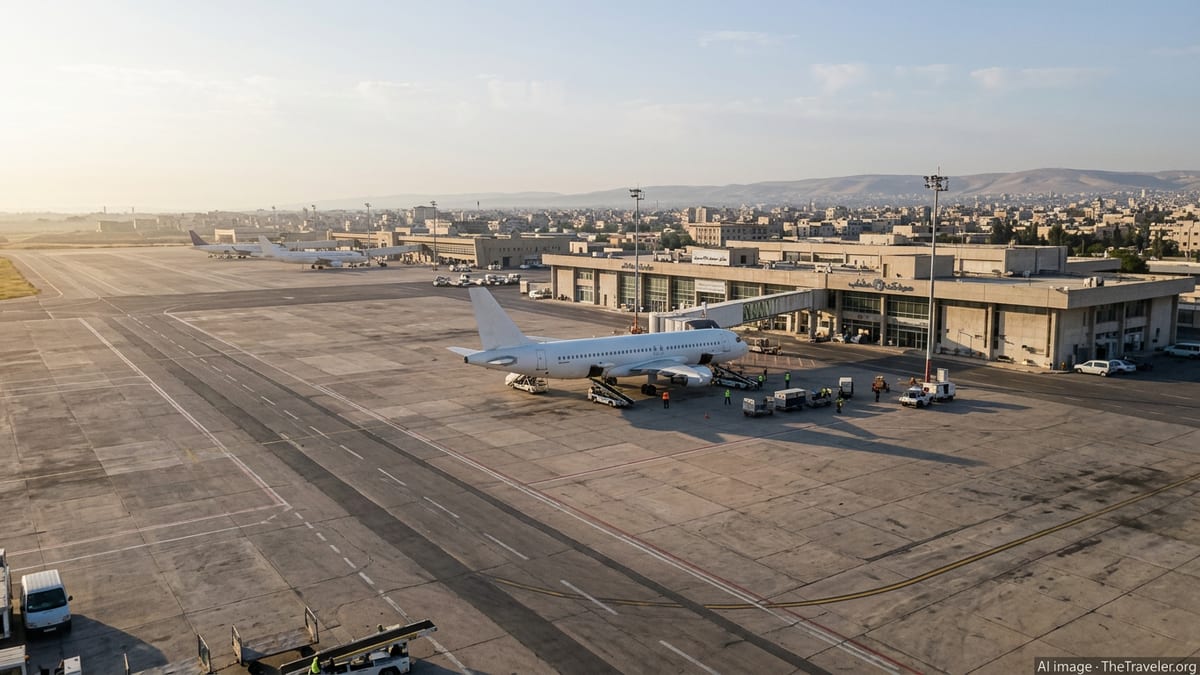
A long-grounded airport returns to the route map
The reopening of Deir ez-Zor International Airport marks a symbolic shift for a region that spent more than a decade largely cut off from commercial aviation. Rehabilitation works at the airfield, including runway repairs, terminal refurbishment and upgraded navigation systems, have been under way in phases as Damascus sought to re-establish regular air services across the country.
Publicly available information from Syria’s civil aviation authorities indicates that Deir ez-Zor is once again listed as an operational civil aerodrome, serving the provincial capital on the Euphrates and surrounding areas in the country’s east. The return to service follows a wider reopening of Syrian airspace to civil traffic and the progressive restoration of airports in Damascus and Aleppo.
Local and regional coverage describes the Deir ez-Zor project as part of a national program to reconnect previously isolated areas, revive trade corridors and encourage the return of residents and investors. The airport had been heavily damaged and largely idle during some of the most intense years of the Syrian conflict, with only intermittent military and humanitarian use.
By reintroducing scheduled flights, the authorities managing Syria’s aviation sector aim to place Deir ez-Zor back on domestic and regional route networks that once linked the city with other Middle Eastern hubs.
Kuwait-linked Jazeera Airways launches Kuwait–Deir ez-Zor link
The clearest sign of changing travel dynamics is the decision by Kuwait-based Jazeera Airways to add Deir ez-Zor to its Syrian network. According to the airline’s published announcements, Jazeera is rolling out twice-weekly flights between Kuwait City and Deir ez-Zor, positioning itself as the first carrier to operate direct commercial services on this route.
The low-cost airline already serves Damascus and Aleppo, and has presented Deir ez-Zor as its third Syrian destination. Company statements emphasize that the new flights are designed to facilitate family visits, religious travel and small-scale business links between Syria and Kuwait, home to a sizable Syrian expatriate community.
The move effectively aligns Kuwait’s private aviation sector with Damascus’s push to normalise air connectivity from reclaimed territories. While no new bilateral air services agreement has been publicised in recent months, the resumption of a direct Kuwait–Deir ez-Zor link builds on longstanding transport ties between the two countries dating back to the pre-war era.
For Kuwait, the new route also fits into a gradual reopening of regional flight options after periods of disruption affecting Gulf aviation networks. With Kuwait International Airport now handling an expanded roster of regional carriers, the addition of Deir ez-Zor offers a niche link that differentiates Jazeera Airways in a crowded Levant and Gulf market.
Normalisation of travel with Damascus-controlled Syria
The restoration of flights to Deir ez-Zor forms part of a broader normalisation of travel to Syrian airports under central government control. Damascus International Airport has been progressively reinstating international connections since domestic flights resumed, while Aleppo has re-emerged as a northern gateway for carriers serving the country.
Regional reporting portrays these steps as both practical and political. On a practical level, reopening airports reduces journey times for Syrians who previously relied on lengthy overland routes through neighboring states to reach the Gulf. Politically, each new route signals a measure of reintegration for Syrian infrastructure into wider Middle Eastern transport networks after years of isolation.
Several airlines from the region have either resumed or announced services to Damascus in recent seasons, focusing on markets such as the United Arab Emirates, Jordan and Türkiye. The decision by a Kuwait-based carrier to extend operations beyond the capital to Deir ez-Zor underscores a calculated willingness in parts of the Gulf aviation sector to engage with Syria’s recovering provincial hubs.
Industry observers note that these developments are unfolding in parallel with evolving regional diplomacy on Syria’s future, including discussions around reconstruction, humanitarian access and the return of refugees. Air connectivity is seen as one of the more visible indicators of how far normalisation has progressed on the ground.
Economic and mobility impacts for eastern Syria
For residents of Deir ez-Zor and surrounding districts, the practical impact of the airport’s reopening could be significant. Direct access to Kuwaiti and connecting Gulf markets is expected to shorten travel times for workers, students and families, who have often resorted to multi-leg journeys via Damascus, Aleppo or neighboring countries.
Local business communities are also watching for signs that regular flights might stimulate new investment in logistics, light industry and services. Eased passenger movements can encourage trade in agricultural products, small-scale manufacturing goods and construction materials, adding a modest but meaningful boost to an economy still recovering from conflict.
Tourism operators with an interest in Syria’s archaeological and religious sites point to the long-term potential of an air-linked Deir ez-Zor as part of broader itineraries that include desert landscapes, Euphrates river towns and historic locations in the east. For now, most attention remains on essential travel, but the presence of a functioning international airport is a foundational requirement for any future visitor economy.
At the same time, humanitarian agencies and non-governmental organisations monitoring the region highlight that improved air connectivity must be matched with security, infrastructure and basic services on the ground if it is to translate into sustainable returns for displaced residents.
Caution, safety perceptions and regulatory context
Despite the notable progress, many international carriers continue to avoid Syrian airspace or restrict operations to select routes, reflecting ongoing security and regulatory considerations. Travel advisories from Western governments generally remain cautious regarding non-essential travel to Syria, including Deir ez-Zor, due to the legacy of conflict, sanctions frameworks and infrastructure challenges.
Aviation regulators and industry groups regularly review risk assessments for flying over or into Syria, taking into account factors such as airspace management, ground-based threats and the reliability of local air traffic control systems. The full reopening of Syrian airspace to civil aviation has been presented by local authorities as a sign of improved conditions, but foreign airlines often apply more conservative thresholds.
For passengers considering the new Kuwait–Deir ez-Zor route, these dynamics translate into a patchwork of options. While regional carriers may see an opportunity to serve diaspora and labour markets, major global airlines are likely to continue funnelling Syria-bound travellers through third-country hubs rather than operating their own direct services.
Analysts tracking Middle Eastern aviation trends suggest that the Deir ez-Zor reopening, and Kuwait’s alignment through Jazeera Airways, will serve as a test case for whether provincial Syrian airports can sustain regular international traffic in the current environment. Performance on load factors, reliability and perceived safety over the coming seasons will help determine whether other carriers and destinations follow.