


On the southern tip of Dugi Otok, just off the coast of Zadar, Telašćica Nature Park brings together three striking landscapes in one compact area: a deep, sheltered bay dotted with islets, a line of sheer cliffs facing the open Adriatic, and the warm, saltwater Lake Mir tucked behind them. Whether you arrive by boat from Zadar or by car from Sali, this is one of Northern Dalmatia’s most rewarding day trips for walkers, swimmers and sea‑lovers.
Get the latest updates straight to your inbox!
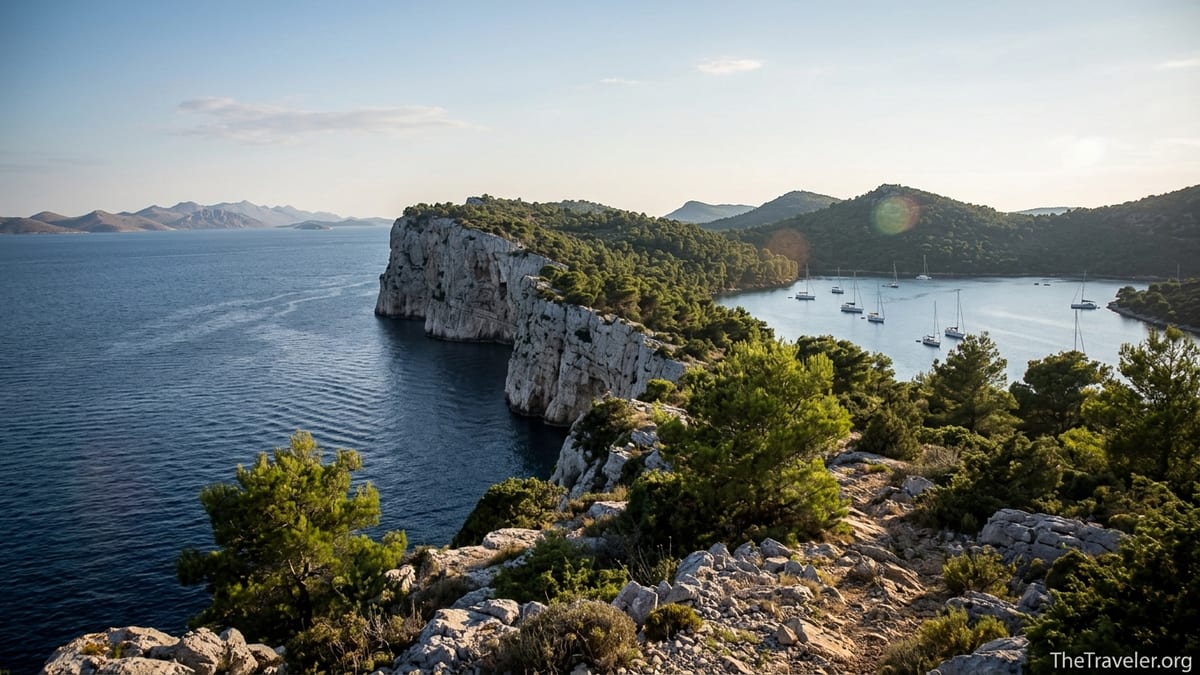
Getting Oriented: Bay, Cliffs and Lake Mir
Telašćica Nature Park covers the entire southeastern end of Dugi Otok, including a 10 kilometre long bay, surrounding islets and a narrow strip of land exposed to the open sea. The three main attractions sit surprisingly close together. Telašćica Bay itself is a calm, fjord-like inlet used as a safe anchorage by yachts and excursion boats. A short walk uphill from the inner bay brings you to the cliff edge, where the land drops as much as roughly 160 to 200 metres into the open Adriatic. On the protected side, Lake Mir fills a depression behind the cliffs, its slightly saltier and usually warmer water making it an unconventional but popular swimming spot.
Most first-time visitors experience all three in a single loop: arrive by boat or car to Mir Bay, walk to Lake Mir for a swim, continue uphill to the cliff viewpoints, then descend back toward the bay or your boat. The park is relatively compact, so you can see the highlights in half a day without rushing, though photographers and hikers often spend the better part of a day exploring side paths and quieter viewpoints.
The landscape has a wild, elemental feel, especially along the exposed cliff line. By contrast, the bay side feels sheltered and human, with moored sailboats, a few small restaurants open in season, and low stone walls from old olive terraces. It is this contrast that makes Telašćica feel more varied than many single-focus coastal parks.
Practicalities: Entrance Fees, Tickets and Parking
Telašćica is a protected nature park with a structured ticketing system. Entrance fees change between low and high season, and there are different prices for visitors arriving by land and by sea. As a rough guide, in recent seasons adult land tickets in high season have been in the low to mid‑teens in euros per person, with discounted child and student tickets slightly lower, while boats pay per metre of vessel length rather than per passenger. Prices are reviewed regularly, so check the current tariff shortly before your trip or confirm with your tour operator if you are coming on an organized excursion.
If you arrive by organized day trip from Zadar or another port, tickets for the park are often included or sold on board. For example, full‑day Kornati and Telašćica cruises from Zadar typically cost somewhere in the 60 to 90 euro range per adult in peak summer, including boat transport, simple meals and the park ticket collected by the crew. Always read the tour description carefully: some cheaper tours quote a lower base price but then add the park fee as a mandatory extra on the day.
Arriving by car or scooter from elsewhere on Dugi Otok, you pay the entrance fee at the land gate, which sits a few minutes’ drive before Sali when coming from the northern part of the island. From the ticket booth it is a short drive down into the protected area toward Mir Bay, where private vehicles park in a marked parking area above the bay. Parking is included in the land entry fee. Space can be tight in July and August between late morning and mid‑afternoon, so arriving before 10:00 or after 16:00 usually makes for a calmer experience and easier parking.
For visitors staying inside the park area in holiday houses or on moored boats, ticket rules are slightly different, often involving a one‑time ticket valid for several days linked to the person and vehicle or vessel. If you are booking accommodation in a cove within the park boundaries, ask the owner how they handle guest registration with the park so you do not end up paying twice.
Exploring the Cliffs and Viewpoints
The open‑sea cliffs, known locally as "stene" or "strmac", are Telašćica’s most dramatic feature. Rising to around 160 metres at Grpašćak and in places close to 200 metres, they drop almost vertically into deep blue water. From Mir Bay and Lake Mir, several marked footpaths lead uphill through low pine and maquis vegetation to the cliff edge. The climb is short but can feel steep in the midday heat, so good sandals or trainers and water are strongly recommended.
The main developed viewpoint is at Grpašćak, a former military lookout that now serves as a panoramic terrace and small interpretation centre in high season. From here you get a wide view along the cliff line, across to the Kornati Islands scattered on the southern horizon, and down to the open sea where dolphins are occasionally spotted. The old concrete platform and railings give a slightly austere feel, but the view is among the finest in Northern Dalmatia.
Beyond Grpašćak, informal paths trace the cliff rim in both directions. Some stretches bring you within a few metres of the unfenced edge, so extra care is needed, especially with children or in windy conditions. Walkers who prefer more security can stick to the sections where wooden fencing or stone walls keep a comfortable distance from the drop. Because the cliffs face south and west, the light is particularly striking in late afternoon and toward sunset, with long shadows accentuating the textures of the limestone walls.
In practical terms, allow at least 45 to 60 minutes for a leisurely walk from Mir Bay up to the main viewpoints and back, more if you like to wander along the rim or stop for photos. There is very little shade at the top, so a hat and sunscreen matter more here than down by the lake. In strong bora or jugo winds, park staff may advise against lingering right at the most exposed points.
Lake Mir: Warm Saltwater Swimming and Short Walks
Lake Mir lies just behind the cliffs, separated from the open sea by a narrow ridge of rock. It is filled with seawater that reaches it through underground cracks and channels rather than a visible inlet. Because it is shallow and sheltered, it typically warms faster than the surrounding sea in summer, often feeling noticeably warmer on the skin when you step in. Its salinity is slightly higher than the open Adriatic, which gives swimmers a touch more buoyancy.
A broad, stony path leads from the Mir Bay parking and boat landing area to the lake in about 10 to 15 minutes on foot. As you approach, the landscape opens into a wide basin with low scrub and rock formations, the lake surface often glassy in the morning before the breeze picks up. Simple stone and concrete access points line parts of the shore, and visitors spread towels on the flat rocks. There is no sandy beach, so water shoes can be useful, especially for those with sensitive feet.
Walking routes circle the lake’s irregular shoreline, with a full loop taking around 45 minutes at a relaxed pace. Small detours climb low hills for elevated views across Lake Mir to the cliff line and out to the Kornati archipelago. In high summer the open, treeless terrain can feel very hot in the middle of the day; many visitors swim, then combine the loop walk with an early or late visit when the light is softer and temperatures lower.
The lake is often promoted locally for its supposed therapeutic properties, echoing traditional beliefs in the benefits of warm, slightly saltier water for joints and skin. Whether or not you are persuaded by the claims, it is a pleasant and unusual place to float. As with the rest of the park, facilities are minimal: expect basic toilets near the bay area in season and simple food options rather than full resort infrastructure. Bring water, snacks and a bag to carry your rubbish out with you.
Walking Routes and How Long to Stay
Within the park, the classic walking route for most visitors links Mir Bay, Lake Mir and the cliff viewpoints in a loop. Starting from the parking area or boat jetty at Mir Bay, you follow the broad track to the lake, walk part of the shoreline, then pick up a signposted path uphill to the cliffs and Grpašćak viewpoint, before descending again toward the bay. This circuit can be done comfortably in two to three hours with photo stops and a swim, which fits well into the schedule of common day trips from Zadar or a relaxed half‑day for those based on Dugi Otok.
Shorter options suit families with small children or visitors in the hottest months. One simple choice is to walk only from Mir Bay to Lake Mir and back, planning more time for swimming and picnicking at the lake. Another is to use the park’s internal shuttle that connects the pedestrian entrance near Dolac and Mir Bay in high season, shortening walking times for those who prefer to focus on a particular area.
More active walkers can extend the day by incorporating trails that continue beyond Grpašćak toward Gmajno Polje, following old paths through low scrub and karst fields. While these routes are not high mountain hikes, the combination of exposed sun, rock underfoot and limited water sources means they feel more serious than their modest distances suggest. Trail descriptions from regional tourism boards usually grade the core loops around Grpašćak as easy to moderate, but sensible footwear, sun protection and at least one litre of water per person are still important in summer.
In practice, most travellers find that a full day is the ideal length for Telašćica if you want to swim in both the lake and the sea, walk to several viewpoints and have an unhurried lunch. Those on multi‑day stays on Dugi Otok sometimes return a second time, choosing a quieter shoulder season month such as late May, June or September for more peaceful paths and milder temperatures.
Arriving by Boat, Kayak or Car
Because more than half of Telašćica’s protected area is sea, arrival by boat is both common and practical. Numerous excursion boats depart Zadar and nearby mainland ports in high season, often combining a cruise through Kornati National Park with a lengthy stop in Telašćica. These trips typically moor in Mir Bay or one of the neighbouring coves, allowing passengers a few hours to walk to Lake Mir and the cliffs. Group sizes range from small speedboats carrying eight to twelve passengers to larger excursion vessels with dozens of people and buffet lunches.
Independent travellers with boating experience can rent small motorboats from Sali or other island harbours. Local rental outfits commonly offer 5 to 7 metre boats with modest engines on a daily basis, with prices in recent summers often somewhere in the 120 to 200 euro range per day plus fuel, depending on size and season. A valid boat licence is usually required. This option offers maximum flexibility to move between bays inside Telašćica and quieter swimming spots along Dugi Otok’s coast, but you are responsible for following park navigation rules and purchasing a vessel ticket for the park, which is typically arranged through the rental company.
Sea kayaking is another way to experience the cliffs from below. Several Zadar and Dugi Otok based operators run guided day tours that launch near the outer coast and paddle beneath sections of the limestone walls before entering the calmer waters of the park. These trips tend to target reasonably fit participants comfortable being on the water for several hours, though the pace is usually relaxed. Expect to pay on roughly the order of 70 to 100 euros per person for a full‑day guided kayak trip including equipment, guide and park fees, with exact prices depending on the operator and inclusions.
Arriving by land, you can drive or take a taxi or transfer service from Sali or other villages along Dugi Otok’s main road. There is limited public bus service on the island, usually linking villages such as Brbinj, Sali and Veli Rat, but schedules do not always align well with a day in the park. Many visitors without their own car therefore either rent a scooter or car on Dugi Otok for a day, or arrange a private transfer from Sali that waits while they explore. Local guesthouses in Sali are used to coordinating this and can point you toward reliable drivers.
Combining Telašćica with Sali and Wider Dugi Otok
For most land‑based visitors, Sali is the obvious gateway to Telašćica. The village is Dugi Otok’s main settlement and sits just a short drive from the park entrance. With a small waterfront, a handful of cafes and konoba‑style restaurants, and practical services like a supermarket and bakery, Sali makes a convenient base for one or more nights. Many travellers choose to spend the morning or late afternoon in the park and the rest of the day enjoying Sali’s harbourfront or nearby swimming spots.
A practical way to combine the two in summer is to take an early ferry or catamaran from Zadar to Sali, check into your accommodation, then either rent a scooter for the short ride to the park or join a local boat or van excursion from Sali harbour. After walking the cliff and lake loop, return to Sali for an evening meal overlooking the fishing boats. During the village’s traditional festival in August, when there are concerts and local events, this pairing is particularly atmospheric, though also busier and with higher accommodation prices.
From Sali, you can also explore other parts of Dugi Otok over one or two extra days. Popular options include heading north to the sandy Sakarun Beach near Veli Rat, visiting the Veli Rat lighthouse, or exploring smaller bays like Brbinšćica, which is a common starting point for short kayak or swimming trips to sea caves. Linking Telašćica with these sights makes for a well‑rounded picture of the island’s contrasts: wild cliffs and sheltered bays in the south, long beaches and open seascapes in the north.
Travellers on tighter itineraries sometimes opt for an organized trip from Zadar that includes both Kornati National Park and Telašćica in a single long day, with a quick stop in Sali for a short walk along the harbour. While this is a convenient snapshot, it leaves little time for extended walking in Telašćica itself. If hiking or quiet contemplation of the cliffs and lake are priorities, basing yourself in Sali and dedicating at least one full day to the park will feel more satisfying.
When to Visit and How to Experience the Park Responsibly
Weather shapes the character of Telašćica more than many coastal destinations. From late June through August, days are typically hot and dry, with daytime highs frequently above 30 degrees Celsius. In these months, early morning and late afternoon visits are the most comfortable for walking the exposed paths above the cliffs and around Lake Mir. The sea and lake are at their warmest, which suits swimmers, but the sun is intense and shaded areas are limited.
Shoulder seasons such as May, June and September offer a gentler combination of warm but not extreme temperatures and fewer visitors. Water can still be pleasant for swimming, especially in Lake Mir, which tends to hold warmth well into autumn. Winter visits are possible in fine weather but services such as restaurants, shuttles and some boat excursions reduce or pause, so you will need to be more self‑sufficient.
Because Telašćica is a protected area, there are rules designed to limit impact. Walking is restricted to marked trails in sensitive sections, open fires and camping are not allowed, and boats must respect designated anchorages and speed limits. Rubbish bins are limited, so the expectation is that visitors carry out what they bring in. The landscape is fragile; even small actions like staying on established paths rather than cutting corners help protect thin soils and vegetation around Lake Mir and along the cliff tops.
In practice, visiting responsibly here looks like wearing proper footwear on rocky paths, bringing a refillable water bottle rather than disposable plastic, using reef‑safe sunscreen before swimming, and keeping a respectful distance from wildlife, including the donkeys that sometimes graze near Lake Mir. Many visitors also find it worthwhile to spend money with local operators based in Sali and other Dugi Otok communities, whether by joining a small‑group boat tour, renting bikes or boats from island‑run businesses, or choosing local restaurants that feature fish and olive oil from the region.
The Takeaway
Telašćica Nature Park is not a single viewpoint or beach but a compact landscape of contrasts: the vertical drama of its cliffs, the calm of its sheltered bay, and the unusual salt lake tucked in between. Its proximity to Sali and relatively small scale make it accessible even for a short visit, yet there is enough here to fill an unhurried day of walking, swimming and quiet observation.
Whether you come as part of a full‑day cruise from Zadar or base yourself locally on Dugi Otok, a little planning around entrance fees, transport and timing will help you experience the park at its best. Arrive early or late to avoid the hottest hours on the exposed paths, bring sturdy footwear and water, and give yourself time to follow a few side paths beyond the main viewpoints.
Above all, Telašćica rewards those who slow down. Watch the changing colours on the cliffs as the sun moves, float for a while in the warm, slightly salty water of Lake Mir, and look out over the mosaic of islands in the distance. It is an easy place to understand why this corner of Dugi Otok was set aside as a nature park and why many travellers consider it a highlight of Northern Dalmatia.
FAQ
Q1. How do I get to Telašćica Nature Park from Zadar?
From Zadar you can either join an organized boat excursion that includes Telašćica, or take a ferry or catamaran to Dugi Otok, usually to Sali or Brbinj, then continue by car, scooter, taxi or local transfer to the park entrance near Sali.
Q2. How much time do I need to visit Telašćica?
Plan at least half a day to see Lake Mir and one or two cliff viewpoints. A full day allows time for the loop walk linking Mir Bay, the lake and Grpašćak, plus swimming and a relaxed meal.
Q3. Can I swim in Lake Mir and the sea on the same visit?
Yes. Many visitors swim first in Lake Mir’s warmer, slightly saltier water and later in the sea at one of the rocky access points in Mir Bay or other coves within the park.
Q4. Is Telašćica suitable for children and less experienced walkers?
The main paths to Lake Mir and the standard viewpoints are short and not technically difficult, but they are rocky and often exposed to the sun. Families with young children should bring sun protection, plenty of water and take extra care near the unfenced cliff edges.
Q5. Do I need a car to visit the park if I stay in Sali?
A car or scooter is convenient but not essential. You can arrange a taxi or local transfer from Sali to the park entrance, join a small boat tour from the harbour that stops in Mir Bay, or in some seasons use limited shuttle services coordinated with ferries.
Q6. Are there restaurants or shops inside Telašćica?
Inside the park you will find only basic seasonal services, such as simple restaurants or konobas near Mir Bay and limited kiosks. For supermarkets, pharmacies and most other shops, you should use Sali or other island villages before entering the park.
Q7. Can I visit Telašćica and Kornati National Park in one day?
Yes, many full‑day boat excursions from Zadar combine sailing through part of Kornati with a several‑hour stop in Telašćica. This gives a good overview, though time for walking in Telašćica is more limited than on a dedicated day trip.
Q8. What should I wear and bring for walking in Telašćica?
Wear sturdy sandals or trainers suitable for rocky paths, a hat, sunglasses and light clothing that covers your shoulders. Bring at least one litre of water per person in summer, sunscreen, swimwear, a towel and a small backpack for carrying rubbish out.
Q9. Is camping allowed in Telašćica Nature Park?
No, camping and open fires are not permitted inside the park. Accommodation options include apartments, guesthouses and small hotels in Sali and other villages on Dugi Otok, as well as boats moored in designated anchorage zones.
Q10. When is the best time of year to visit Telašćica?
The most popular months are June to September, when boat services and restaurants are fully operating and the water is warm. For fewer crowds and more comfortable walking temperatures, late May, June and September are particularly appealing.