


Just beyond Stockholm’s elegant waterfront, the city unravels into one of Europe’s most extraordinary seascapes. The Stockholm Archipelago, a scatter of some 30,000 islands and skerries stretching deep into the Baltic, offers an escape that feels worlds away yet remains astonishingly easy to reach. Ferries, hiking trails, kayak routes, saunas by the water, and classic red boathouses create a slow, sea-bound rhythm that many visitors say becomes the highlight of their trip to Sweden. Here is why this vast island world has earned its reputation as one of the country’s most incredible escapes.
Get the latest updates straight to your inbox!
A Wild Seascape Just Beyond the City
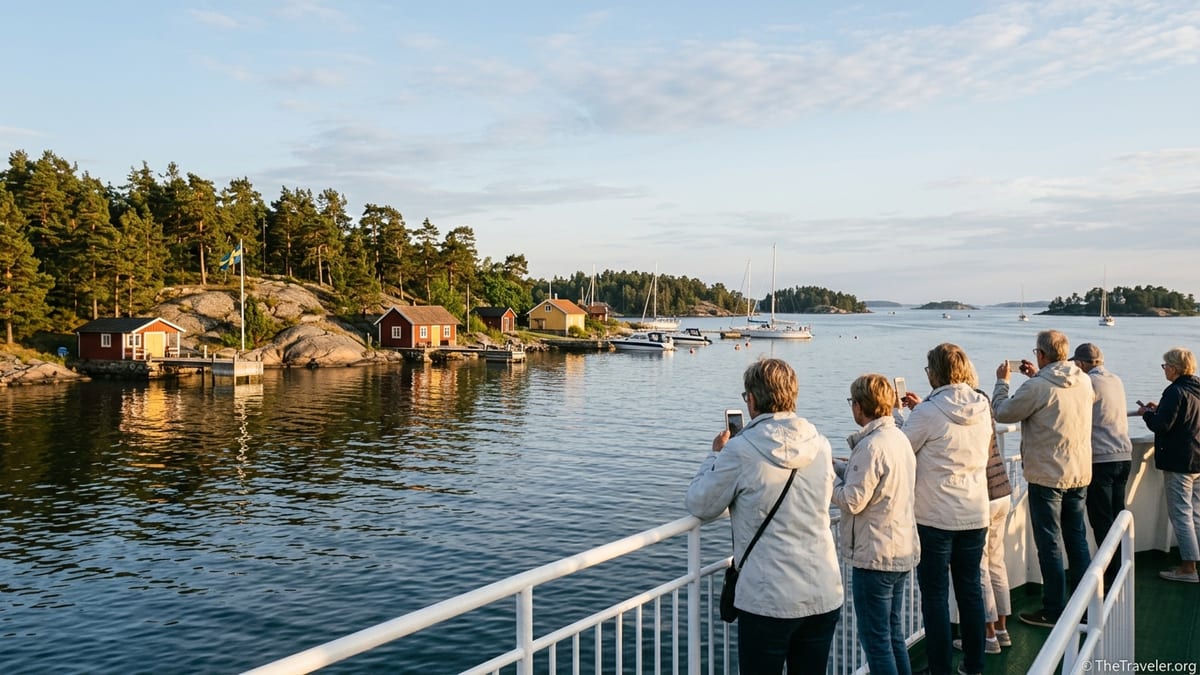
Part of the Stockholm Archipelago’s magic is how quickly you can swap urban streets for pine forest and bare rock. Passenger ferries run from central quays like Strömkajen and Nybroviken out into a maze of islands with names that locals know by heart: Vaxholm, Grinda, Sandhamn, Utö, Möja, Nåttarö and dozens more. In as little as an hour, the skyline gives way to red and yellow wooden cottages, polished granite slabs warmed by the sun, and seabirds wheeling over narrow channels where sailing yachts and working boats share the same waters.
Despite its size, this is not an inaccessible wilderness. Waxholmsbolaget, the county-run ferry company responsible for public transport in the archipelago, operates a network of boats that function much like rural buses, with timetables, seasonal routes and regular commuters. In summer, extra departures make it easy for visitors to treat the islands as an extension of the city. On busy July weekends, you might board a morning ferry at Strömkajen alongside Stockholm families carrying picnic baskets, commuters returning to their summer houses, and hikers with backpacks bound for a night of camping on smooth rock ledges.
The landscape itself feels distinct from Sweden’s inland forests. Salty air (though the brackish Baltic is far less salty than an ocean), twisted pines clinging to rock, and sheltered bays dotted with small boats give it a West Coast flavor with a quieter, more understated Baltic light. Step ashore on an island like Grinda, and within minutes you can be walking alone on a pine-needle path, the only sounds the crunch underfoot and the slap of waves against the shoreline below.
Because the islands sit on Stockholm’s doorstep, the archipelago works for all kinds of trips. Locals might head out only for a swimming-and-lunch day trip, while international visitors increasingly plan two or three nights on an island such as Sandhamn or Utö as a built-in pause between museum days in the capital. It is this flexibility that helps make the archipelago such a compelling escape.
Surprisingly Easy to Reach on a Normal Budget
For many travelers, the word “archipelago” conjures images of expensive private boats and exclusive resorts. The Stockholm Archipelago tells a different story. Much of it can be explored using regular ferries at prices comparable to local transport rather than luxury cruises. A one-way ferry trip with Waxholmsbolaget from central Stockholm to a mid-archipelago island such as Grinda or Vaxholm typically costs in the range of a casual lunch in the city, depending on distance and ticket type. Prepaid travelcards sold by the company allow unlimited travel for several days, which can be good value if you plan multiple island hops in a short time.
Some routes are even integrated with Stockholm’s wider public transport system. Recent arrangements have allowed certain Waxholmsbolaget ferries between Stockholm and Vaxholm to accept the same SL tickets that you use for the metro and buses, creating a seamless experience where a commuter card can double as your archipelago ticket on select stretches. Exact rules and validity change from season to season, so visitors need to confirm details closer to travel, but the trend is clear: the islands are treated as an extension of the city’s public network rather than a separate luxury product.
For those whose budget allows more flexibility, private boat charters open up the outer islands and smaller harbors on your own schedule. A small boat taxi from Vaxholm to Grinda might cost around 1,500 Swedish kronor one way, while a longer trip to Sandhamn can be closer to 4,500 kronor, with capacity for a small group to split the cost. These charters are often used by wedding parties, corporate groups or families wanting door-to-pier convenience, but they can also be a splurge option for travelers who prefer avoiding crowded summer ferries.
Once you reach the islands, costs can be kept reasonable with a mix of self-catering and simple stays. Grinda, for example, offers cabins, a hostel, campsites and hotel rooms with packages starting from the mid-hundreds of kronor per person per night including breakfast, depending on season and room type. Travelers who pack picnic lunches from Stockholm supermarkets and save restaurant dinners for a single special evening at an inn or seaside terrace often find that an archipelago break compares favorably, price-wise, to staying the same nights in central city hotels.
Islands With Their Own Personalities
What makes the Stockholm Archipelago feel endlessly explorable is that each island has its own mood. Vaxholm, sometimes called the capital of the archipelago, lies close enough to Stockholm to work as an afternoon outing. It has a small-town feel, with wooden houses, ice cream stalls, and a fortress guarding the channel. Visitors stroll the waterfront, drop into waterfront cafes for cinnamon buns, or take a short hop on the local Kastellet ferry across to the fortress island.
Grinda, further out, is often recommended as a first “real” archipelago island. Here, dense forest, open fields with grazing animals, and rocky swimming coves coexist with a classic waterfront inn serving traditional dishes and a marina where yachts bob in the evening light. You can walk from one side of the island to the other in under an hour, stopping for a dip from smooth rock slabs or a cold drink at the jetty kiosk when the afternoon sun gets strong.
Sandhamn, roughly 2.5 to 3 hours by regular ferry from Stockholm depending on the route, is where the archipelago stretches its legs fully into the Baltic. Often described as a sailing hub and a kind of Swedish Saint-Tropez in high summer, it mixes wooden captain’s houses, a yacht club, sandy beaches and a lively harbor filled with racing boats during regattas. On a July evening, the soundscape is all clinking halyards, live music drifting from terraces, and the low murmur of conversations in Swedish, English and German as visitors mingle with crew from racing teams.
Farther south, islands like Utö, Nåttarö and Rånö offer long sandy beaches and quieter paths, reachable by ferries from Nynäshamn or Årsta brygga. Utö combines a small year-round community with summer guesthouses and bike rentals, while Nåttarö is known for its broad sand and more rustic, nature-focused vibe. Even lesser-known names on the map often hide a distinctive character: some are known for birdlife, others for small artist communities, others simply for their perfect sunset-facing rocks where Stockholm locals return year after year.
New Trails, Classic Kayaks and Time on the Water
Water is the archipelago’s stitching, and many of the region’s best experiences involve being close to it or out on it. In 2024, the Stockholm Archipelago Trail opened as a 270-kilometer network of marked hiking routes spread across about 20 islands. The trail quickly drew international attention, including a mention by National Geographic as one of the world’s notable destinations for 2025. Sections are graded from easy to more challenging; Grinda has a moderate segment, while Sandhamn’s part of the trail is classified as easier, making it accessible even to casual walkers.
Practically, this means you can board a ferry in the morning, hike a signed loop across an island, and be back at the pier in time for an afternoon swim and the last boat home. The trail weaves together existing paths, quays and local services, so hikers pass jetties, small cafes and viewpoints rather than disappearing into untouched forest. It is a way to see the archipelago on human terms: the distance between one fishing bay and the next, the climb from sheltered cove to a wind-exposed hilltop, the difference between quiet weekday mornings and busy Saturday afternoons.
For those who would rather glide than walk, kayaking is one of the defining activities of the archipelago. Outfitters based in and around Stockholm run guided trips that range from a half-day paddle with lunch included to multiday expeditions with wild camping on uninhabited islands. A typical full-day guided tour with a local operator, including equipment and a lunch cooked on an island, often runs in the low thousands of kronor per person, with higher prices for multi-day adventures that include camping gear and meals.
Independent paddlers can rent kayaks by the day or week from rental bases south and north of the city, with prices that, for a single sea kayak, might be in the ballpark of a few dozen euros per day and around a couple of hundred euros for a full week, often including paddles, spray deck, buoyancy aid and a map. Some companies specialize in self-guided “kayak trails” where you receive pre-planned routes and campsite suggestions but travel on your own schedule. As you slip between low islands, seals occasionally surface nearby, and on still evenings the only ripple may come from your own paddle strokes.
Slow Life: Saunas, Seafood and Summer Light
What many people remember most about their archipelago escape is not a particular view but a feeling: the sense of life slowing to match the tides and the long northern light. Even a simple day trip can contain this shift. You might step onto the morning ferry from central Stockholm with a coffee in a take-away cup, still tuned to city tempo. By the time you disembark on an island like Grinda or Utö, your priorities may have narrowed to finding a swim cove, reading on a warm rock, and deciding between smoked shrimp or grilled fish for dinner.
Saunas are part of that unhurried rhythm. Some guesthouses and harbors offer bookable waterfront saunas where you sit in the dry heat before plunging into the Baltic below. On islands without formal facilities, locals improvise with portable saunas or simple swim ladders from their own jetties. Travelers who stay overnight often talk about the pleasure of a late-evening sauna followed by a cool dip under the pastel sky of a Scandinavian summer, when it hardly grows fully dark.
Food is another quiet highlight. Many island restaurants lean into classic archipelago flavors: pickled herring assortments, shrimp sandwiches piled high, grilled fish served with new potatoes and dill, and simple desserts of berries and cream. Grinda’s historic inn, for example, serves a menu that pairs local produce with Baltic fish, while Sandhamn’s harborfront terraces offer everything from seafood platters to burgers aimed at the sailing crowd. Prices are similar to mid-range Stockholm restaurants, but the setting, with boats rocking just beyond the table, is what sets the meal apart.
Evenings linger late in high summer. On a clear July night in Sandhamn or Möja, people often gather along the waterfront just to watch the sky slowly fade from bright blue to deep orange and finally to a pearly twilight. Children fish from the jetty, teenagers nurse sodas or beers on the rocks, and older couples walk arm in arm along the pier. It feels both intensely local and easy for a visitor to slip into, a shared ritual of watching the season pass.
Accommodation for Every Kind of Traveler
Because the islands span everything from near-city suburbs to remote skerries, the accommodation mix is unusually broad. Close-in hubs like Vaxholm offer small hotels and bed and breakfasts that feel almost like staying in a coastal town rather than on a remote island. Here, you can step off a ferry, roll your suitcase a few hundred meters, and check into a room overlooking the harbor, then wander down for coffee and a cinnamon bun at a waterside bakery.
Islands farther out tend to combine a handful of formal properties with more rustic choices. Grinda is a good example. In addition to its classic inn, the island has a small hotel, hostel-style lodging, simple cottages and a campground. Package deals sometimes include a three-course dinner and breakfast buffet along with the room, encouraging guests to spend most of their time outdoors rather than worrying about where to eat. For families, a couple of nights in a cabin with basic kitchen facilities can make it easy to mix restaurant meals with home-cooked breakfasts eaten on the porch.
Sandhamn, being a major sailing destination, offers a more resort-like set of options, from historic hotels that host regatta crews to self-catering apartments and guesthouses tucked into side streets behind the harbor. In peak summer, these can book out weeks or months in advance, especially around major sailing events, so travelers planning a July or early August stay do well to reserve early. Outside that high season, prices moderate and the island takes on a quieter, more local feel, with walks on the outer sand dunes and long lunches as the main activities.
For those who want maximum immersion in nature, camping and simple huts on smaller islands provide some of the archipelago’s most memorable nights. Swedish outdoor culture and the right-to-roam traditions encourage responsible wild camping in many areas, although in the heavily visited Stockholm region it is important to follow local rules, use designated tent sites where they exist, and leave no trace. Some kayak outfitters and hiking tour companies bundle tent or hut accommodation into multi-day itineraries, which can be reassuring for visitors who are new to Scandinavian outdoor norms but want to wake up to the sound of waves on rock.
When to Go and How to Experience it Responsibly
Summer is the classic archipelago season, with July and early August bringing the warmest water temperatures, the most frequent ferry departures and the liveliest harbor atmospheres. This is when Sandhamn’s sailing scene is in full swing, Grinda’s marina is filled with visiting boats, and island restaurants operate full hours. The trade-off is crowds: on sunny weekends, popular ferries can feel busy, and quiet coves may already have several families spread out on the rocks by late morning.
June and early September offer a gentler balance. Ferries still run regularly, many services remain open, and the water is often warm enough for short swims, but there are fewer visitors. Locals often tip late August weekdays as an ideal time for those who want a genuine summer feel without peak-season intensity. Spring and autumn can also be atmospheric, with crisp air, migrating birds and more space to yourself, though travelers should expect more limited restaurant hours and check ferry timetables carefully.
Visiting responsibly means working with the grain of this fragile environment. Simple steps make a difference: carrying out all rubbish, sticking to marked trails to protect fragile vegetation, and choosing established fire pits or skipping campfires altogether in dry periods. Many guided kayak and hiking operators emphasize low-impact practices, such as rotating campsites to reduce wear on any one island and keeping group sizes moderate.
Supporting local communities is another part of responsible travel here. Buying coffee and snacks at island cafes, booking rooms in small inns, and using local guides all help sustain year-round residents who keep the ferries, docks and essential services running long after summer visitors have gone home. The archipelago may feel like a timeless landscape, but its future depends partly on how thoughtfully today’s travelers choose to experience it.
The Takeaway
The Stockholm Archipelago is not just a pretty backdrop for boat trips. It is a living, breathing seascape that extends the Swedish capital into a world of pine forests, sailing harbors, quiet coves and weathered red cottages. The combination of easy access, public ferries, and a wide spectrum of experiences, from hostel bunks to historic inns and from half-day kayak trips to weeklong hiking routes, means almost any traveler can find a version of the islands that fits their time and budget.
Whether you spend a single afternoon wandering Vaxholm’s waterfront, a full day hiking and swimming around Grinda, or several nights soaking up Sandhamn’s mix of sand dunes and sailing culture, the effect is usually the same. The city feels further away with every passing hour, replaced by the slower cadence of boat engines, wind in the pines and late northern light on the water. That is why, for many visitors and locals alike, the Stockholm Archipelago is not an optional extra but one of Sweden’s most unforgettable escapes.
FAQ
Q1: How long does it take to reach the Stockholm Archipelago from central Stockholm?
Travel time varies by island and boat type. Vaxholm can be reached in about 45–60 minutes by regular ferry, Grinda in roughly 1–1.5 hours, and Sandhamn in around 2.5–3 hours on standard ferries, with faster seasonal boats cutting those times somewhat.
Q2: Do I need to book ferries in advance?
For public Waxholmsbolaget ferries, advance reservations are generally not required and tickets are often bought before boarding or on board, although policies can change and some commercial fast boats or sightseeing cruises do use advance booking systems, especially in peak summer.
Q3: What is the best island for a first-time visitor?
Many locals suggest Grinda as an ideal first archipelago island because it combines forests, swimming coves, walking paths, a traditional inn and varied accommodation, while still being close enough to Stockholm for an easy day trip or single overnight.
Q4: Can I visit several islands in one day?
It is possible but works best on routes with frequent ferries and shorter distances, such as combining Vaxholm with a nearby island. For more distant islands like Sandhamn or Utö, most travelers prefer to focus on a single destination per day to avoid spending most of their time on boats.
Q5: Is the Stockholm Archipelago suitable for families with children?
Yes. Many islands have child-friendly swimming areas, gentle forest paths and cafes serving simple food, and ferries are used daily by families; parents just need to keep a close eye on children near piers and rocks, and consider bringing life jackets for younger kids.
Q6: Do I need prior experience to join a kayak tour?
Not for beginner-friendly guided tours. Several operators offer half-day or full-day trips designed for newcomers, including basic instruction, equipment and a guide, while more demanding multi-day expeditions are better suited to those with some paddling and outdoor camping experience.
Q7: What should I pack for a summer day trip to the islands?
Layered clothing, a light waterproof jacket, swimwear, a towel, sunscreen, sturdy shoes for walking, drinking water, snacks and a small power bank for your phone are all practical; temperatures can shift quickly on the water, even on sunny days.
Q8: Is swimming in the Baltic around the islands safe?
In summer, many locals and visitors swim from rocks and small beaches, and the brackish Baltic is generally calm and less salty than ocean water, but swimmers should be cautious of currents near narrow channels, choose designated spots when available, and be prepared for temperatures that can feel brisk even in July.
Q9: Can I visit the archipelago outside of summer?
Yes, though the experience is different. Spring and autumn bring fewer visitors, cooler weather and limited restaurant hours, while winter offers a stark, quiet beauty but significantly reduced ferry services and requires more planning, warm clothing and flexibility.
Q10: How can I reduce my environmental impact when visiting?
Traveling on public ferries instead of private boats when possible, packing out all rubbish, sticking to marked trails, respecting fire regulations, choosing local guides and businesses, and keeping noise low on and off the water all help protect the archipelago’s fragile environment and support its small communities.