


Parking at Las Vegas Harry Reid International Airport can be straightforward if you know your options before you arrive. With more than 17,000 spaces spread across Terminal 1, Terminal 3, economy and remote lots, valet, reservation parking, and a free cell phone lot, the key is matching your budget and timing to the right facility. This guide walks through every major choice, how the 2026 rate updates affect what you pay, and concrete examples of when each option makes sense in real life.
Get the latest updates straight to your inbox!
How Parking Works at Harry Reid Airport in 2026
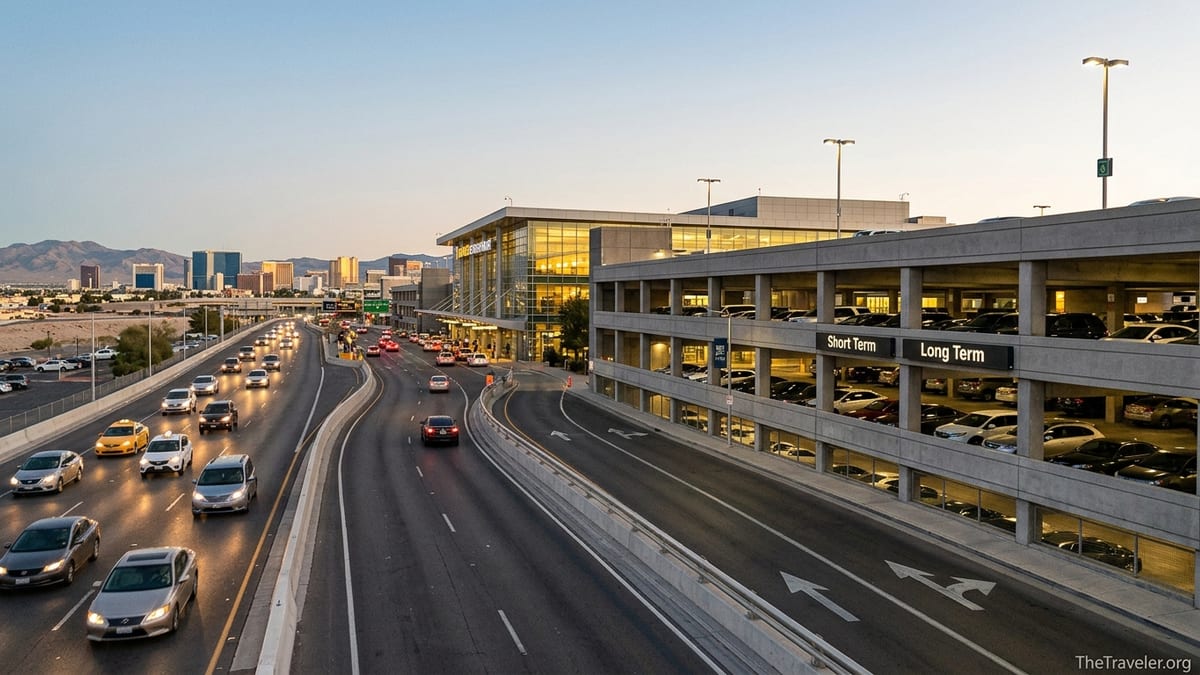
Harry Reid International Airport serves both domestic and international flights from two main terminals: Terminal 1, which handles airlines at the A, B, C and D gates, and Terminal 3, which handles all international carriers plus several domestic airlines. Each terminal has its own attached parking garage with short term and long term sections, and both are open 24 hours a day, seven days a week. For many travelers, this attached garage parking is the simplest option because it keeps walking distances short and eliminates the need for shuttles.
As of July 1, 2026, the airport has updated parking prices across all options, including short term, long term, economy, remote, valet, and reservation parking. Short term parking in the garages is priced higher for convenience, while long term, economy, and the remote lot are designed for people who are leaving their car for several days. A free cell phone lot near the airport serves drivers waiting to pick up passengers, and ride share pickups are located inside the garages rather than at the main curbs.
In practice, that means a quick one-hour pickup might cost you a few dollars in short term parking, a three-day weekend trip will usually be cheapest in long term or economy parking, and longer vacations often make the remote lot or discounted Terminal 3 reservations the best value. The airport also allows pre-booked reserved parking in certain areas, which locks in a flat rate and guarantees a space during busy periods such as major conventions, long holiday weekends, and large events on the Strip.
For first-time visitors, it helps to think of Harry Reid’s parking in three tiers: premium and closest to the terminal doors are valet and short term; a middle tier is the attached long term garages at each terminal; and the most budget-friendly options are economy and the remote lot, which require a short walk or shuttle ride but can save meaningful money on multi-day stays.
Terminal 1 Parking: Short Term and Long Term Garages
Terminal 1 is the busier side of Harry Reid for many domestic travelers, and its multi-level garage is directly across from the terminal building. Short term parking here is best for dropping off or picking up passengers when you plan to go inside the terminal, or for very short business trips. After the 2026 rate changes, short term generally charges a base amount for the first hour, a higher amount for the second hour, and then an incremental fee for each additional hour, with a daily maximum that is significantly higher than the long term rate. For example, someone parking for three hours to meet an arriving family member could easily reach a total close to the lower end of the daily maximum if they stay longer than planned.
The long term section of the Terminal 1 garage offers better value for anything more than a couple of hours. Rates here step up more slowly: the first two hours are bundled, then an additional charge kicks in for each extra hour, capped at a mid-range daily maximum that is substantially lower than short term but higher than the economy or remote options. For a concrete example, a Las Vegas local taking a four-day trip to Denver might leave their sedan in Terminal 1 long term, paying roughly the daily cap each day. The higher rate might still feel worth it if they value being one escalator ride away from check-in and want to avoid shuttles with heavy ski bags or golf clubs.
When entering the Terminal 1 garage, drivers should pay close attention to overhead signs, which separate traffic for short term and long term spaces. Short term is usually found on lower levels closer to the pedestrian bridges into the terminal, while long term occupies larger portions of the upper levels. Height restrictions apply in the garage, so oversized vehicles such as lifted trucks, large vans, or vehicles with rooftop cargo boxes need to check clearance details before committing to this option. If you are driving a tall rental or an RV-style vehicle, it is usually safer to plan on economy or remote parking instead.
For pickups, remember that passenger pickup for Terminal 1 is on Level 1 of the garage, across from baggage claim, rather than directly curbside outside the terminal doors. This design reduces traffic at the terminal curb but can surprise drivers on their first visit. In busy periods, using the free cell phone lot until your passenger is outside and ready at the garage pickup area can save both time and stress.
Terminal 3 Parking and Discounted Reservation Options
Terminal 3 serves all international arrivals and departures at Harry Reid, along with some domestic carriers that use its D and E gates. Its parking garage mirrors Terminal 1’s with short term and long term areas, but Terminal 3 has become especially important for value seekers thanks to discounted long term reservation offers. The airport promotes a “Reserve & Save” program in Terminal 3’s long term section, with special daily rates available Saturday through Wednesday when booked in advance.
As of mid-2026, typical reserved Terminal 3 long term pricing for those qualifying days is noticeably below the drive-up long term rate. For instance, a traveler flying midweek to Mexico for five nights might reserve a space at the discounted Terminal 3 long term rate, saving several dollars per day compared with simply showing up and taking a ticket. On Thursdays and Fridays, reservation rates are higher, reflecting peak demand as weekend leisure travelers and convention attendees arrive and depart, but they can still undercut the posted drive-up price.
Terminal 3 also offers reservation-only parking at a flat pre-booked rate that is distinct from the general long term inventory. This reserved area is meant for travelers who want certainty during very busy periods. Imagine you are flying to Europe over New Year’s, a peak time when Las Vegas hotels and the Strip are packed. Booking a Terminal 3 reserved space in advance lets you drive to the airport knowing a spot is held for you, rather than circling the garage or diverting to the remote lot at the last minute.
Short term parking at Terminal 3 follows the same logic as Terminal 1: it is designed and priced for quick drop-offs, pickups, or very short visits to the terminal, not for multi-day trips. Travelers picking up international arrivals often underestimate how long customs and baggage claim can take. A practical strategy is to wait in the cell phone lot until your passenger texts that they have cleared customs and retrieved their bags, then drive to the Terminal 3 parking garage for a brief stay, which may cost only the base hourly charge if you keep it under an hour.
Economy and Remote Lots: Best for Budget-Conscious Trips
For travelers who care more about price than absolute convenience, Harry Reid’s economy and remote lots provide the lowest daily parking costs on airport property. The main economy facilities are uncovered surface lots, typically located a longer walk from the terminals or connected via a shuttle. Daily maximums in economy tend to sit a few dollars below long term garage rates, while the remote lot usually matches or slightly undercuts economy pricing, making both attractive for week-long vacations.
As an example, consider a Las Vegas family driving their own car for a nine-day summer trip to Hawaii. At the updated 2026 rates, leaving the car in a terminal long term garage for nine days would quickly add up to a sizable bill. By choosing the economy or remote lot instead, they might save well over the cost of a nice Strip dinner for two. They park once, take the free shuttle to the correct terminal, and on return simply catch the same shuttle back to their car, accepting the extra 10 to 15 minutes of travel time as the trade-off for lower cost.
The remote lot is especially useful during heavy travel periods when the terminal garages approach capacity. Airport staff sometimes direct overflow traffic to the remote lot, where a continuous shuttle service runs between both terminals and the lot’s central stop. Travelers with large checked luggage, strollers, or mobility concerns should allow extra time when using the remote lot, as boarding and unloading can take longer than walking from a garage space.
Because these lots are uncovered, desert weather is a practical consideration. In summer, parked cars can get extremely hot, and in rare winter storms or high winds, dust and sand can accumulate. If you are leaving a vehicle for two weeks or more, it is wise to remove valuables from view, use a windshield sun shade, and consider parking slightly farther from bright lights to reduce sun exposure, balancing this with your comfort about walking distances at night.
Valet, Reserved Parking and Premium Convenience Options
At the top end of the convenience spectrum is valet parking, operated on airport property at a flat daily rate that is higher than any self-park option. This service is attractive to business travelers and high-roller visitors arriving on tight schedules who prefer to drop their vehicle at the entrance, hand over the keys, and walk straight into the terminal. The daily valet price is structured to reflect that premium; once you cross into two or more days, the total can easily exceed the cost of a rideshare round trip from many Strip resorts.
For example, a business traveler flying from Las Vegas to Los Angeles for two nights might choose valet because their employer covers the cost and they want to minimize time spent in parking structures. They pull into the designated valet area, complete a quick handoff, and are inside the terminal in minutes. On their return, they text or call the valet number once they land, and the car is waiting near the entrance by the time they exit baggage claim. For a week-long personal trip, however, that same traveler might switch to long term or economy to avoid a large parking bill.
Reserved parking, which is separate from general valet, offers another type of premium convenience. By pre-booking a reserved space in the terminal garages, travelers pay a fixed flat rate that is typically higher than standard long term but lower than valet, essentially purchasing certainty rather than proximity alone. During significant conventions like CES or large fight weekends, Las Vegas sees surges of visitors that can fill garages faster than usual. A local resident flying out on one of those weekends might decide that paying for a guaranteed reserved space is worth it compared with the risk of being pushed to the remote lot.
Both valet and reserved parking options work best when you have a clear idea of your itinerary. If there is a decent chance your trip may be extended or cut short, a flexible self-park option might be safer to avoid overpaying or having to modify reservations. When booking reserved parking online, it is important to double-check your arrival and departure times and note which terminal and level you are assigned, as that will dictate where you enter the airport roadway system on travel day.
Cell Phone Lots, Pickups, Drop-offs and Rideshare Tips
Harry Reid operates a free cell phone lot located only a few minutes’ drive from both terminals, near Kitty Hawk Way. This paved, well-lit lot is open daily from early morning until late at night and is under video surveillance with regular patrols. It is designed as a waiting area where drivers can remain in their vehicles while friends or family land, collect their baggage, and walk to the designated pickup area. Vehicles cannot be left unattended, and commercial and ride share vehicles are not allowed to stage there.
The most efficient pickup routine for many locals is to check the flight status before leaving home, drive to the cell phone lot, and stay parked until the arriving traveler calls or texts from the curb or parking garage pickup area. For example, if you are picking up someone on a busy Friday night, you might sit in the cell phone lot for 20 extra minutes while their aircraft waits for a gate or they clear customs. Once they confirm they are outside at Terminal 1’s garage Level 1 or Terminal 3’s pickup level, you can drive over, often slipping in and out in under 10 minutes.
For departures, private vehicles and taxis can drop passengers directly at the departures curbs in front of both terminals without paying a fee. However, curb space is actively managed, and vehicles cannot wait or park there. If you want to accompany someone to the check-in counter or see them off at security, the proper approach is to use short term parking in the terminal garage, where even a brief 30 to 45 minute visit is allowed. Airport police regularly move drivers along at the curbs, so trying to idle there while waiting for an arriving passenger is likely to result in being waved on, sometimes repeatedly around the loop road.
Rideshare services such as Uber and Lyft are authorized at Harry Reid and have specific pickup areas inside the parking garages. At Terminal 1, rideshare pickup is accessed from the parking structure rather than the terminal curb, with signage directing passengers to the correct level and zone. At Terminal 3, rideshare pickup uses the valet level of the parking garage, again clearly marked once you exit baggage claim. There is no special rideshare dropoff area; drivers simply drop passengers at the main departure curbs. When ordering a ride to the airport, build in a few extra minutes for your driver to navigate the loop roads and reach the proper garage pickup zone if they are unfamiliar with the airport.
Real-World Cost Comparisons and Money-Saving Strategies
Because parking charges at Harry Reid accrue daily and can vary by product, it is worth doing a quick back-of-the-envelope comparison before each trip. For very short stays of three hours or less, short term parking is usually the simplest, and the total cost stays contained. For instance, spending two hours helping an elderly parent check in at Terminal 3 might cost you only a moderate fee in short term, which is easier than juggling luggage from a more distant lot. Where costs climb quickly is when a stay stretches past several hours and into the overnight range.
Take a five-night domestic vacation as an example. If you leave your car in a terminal long term garage, you will likely hit the daily maximum rate each of the six calendar days your car is inside, because bills often count by calendar day, not strictly by 24-hour blocks. Shifting to economy or the remote lot can shave several dollars off each day, adding up to a meaningful savings over the length of the trip. In contrast, using valet for that same five-night stay would likely cost more than many round-trip rideshare fares from mid-Strip hotels, making valet sensible only when time and convenience far outweigh budget concerns.
Another strategy involves using the airport’s Terminal 3 reservation discounts when your travel pattern matches the midweek windows they target. A Las Vegas resident flying Monday to Thursday to a conference in Chicago might intentionally book a Terminal 3 airline purely to take advantage of the lower reserved parking rate in that terminal’s long term section. By reserving ahead, they secure a spot, pay a fixed daily rate that is lower than the drive-up long term rate, and avoid the uncertainty of full garages during busy convention weeks.
If you live in the Las Vegas area, also compare airport parking against off-airport private lots and hotel packages, especially for long trips. Some Strip and off-Strip hotels periodically offer “park and fly” promotions that include up to a week of parking with a one-night stay, plus shuttle service to the airport. While not operated by the airport itself, these packages can sometimes undercut economy and remote lot prices, particularly if you were already planning to spend a night on the Strip before an early morning flight.
The Takeaway
Harry Reid International Airport gives travelers a full spectrum of parking options, from valet and reserved spaces just steps from the terminal doors to budget-friendly economy and remote lots. The 2026 rate adjustments make it even more important to match the length and purpose of your trip to the right product. Short term works best for quick visits inside the terminal, long term garages balance convenience with reasonable daily maximums, and economy and remote lots provide the lowest on-airport cost for longer getaways.
Drivers picking up or dropping off passengers should build the free cell phone lot and garage-based pickup areas into their routine, rather than relying on circling the curbs. Rideshare users should be ready to walk to clearly signed pickup zones inside the garages, and anyone traveling during high-demand periods should consider reserved parking to avoid last-minute stress. With a few minutes of planning and an understanding of how each option is priced and located, parking at Las Vegas Harry Reid Airport can become one of the easiest parts of your trip.
FAQ
Q1. What is the cheapest on-airport parking option at Harry Reid?
The lowest daily rates are usually found in the economy and remote lots, which are uncovered and may require a shuttle ride to the terminals.
Q2. Is the cell phone lot at Las Vegas Harry Reid Airport free?
Yes. The cell phone lot is free to use, but drivers must remain with their vehicles and cannot park there for extended periods or leave cars unattended.
Q3. Where do I pick up arriving passengers at Terminal 1?
Passenger pickup for Terminal 1 is located on Level 1 of the Terminal 1 parking garage, across from baggage claim, rather than directly at the terminal curb.
Q4. How early should I arrive if I am parking in the remote or economy lots?
Plan to arrive at least 30 minutes earlier than you would for garage parking to allow time to find a space, wait for the shuttle, and ride to the correct terminal.
Q5. Does Harry Reid Airport offer discounted parking if I reserve in advance?
Yes. Terminal 3 long term parking often has discounted midweek rates for reservations, and there are separate reserved parking products with fixed flat rates.
Q6. Is valet parking worth it at Las Vegas Harry Reid?
Valet is worth considering for very short, high-priority trips when you value time and convenience over cost, but it becomes expensive for longer stays.
Q7. Can rideshare drivers pick up at the terminal curbs?
No. Authorized rideshare pickups for services such as Uber and Lyft occur in designated zones inside the parking garages at both terminals, not at the main curbs.
Q8. Are there height restrictions in the terminal parking garages?
Yes. The Terminal 1 and Terminal 3 garages have maximum vehicle height clearances, so oversized vehicles may need to use economy or remote surface lots instead.
Q9. Do parking rates change around holidays and big events?
Base posted drive-up rates stay consistent, but special reservation pricing, capacity, and availability can shift during peak periods like major conventions or holiday weekends.
Q10. How can I check current parking availability before driving to the airport?
Travelers can call the airport’s parking information line or use official airport resources to verify which lots and garages have space before they leave home.