


More news on this day
MSC Poesia’s much‑anticipated inaugural Alaska season from Seattle in 2026 will no longer include Tracy Arm Fjord, with the line shifting scenic cruising to nearby Endicott Arm and Dawes Glacier amid ongoing safety concerns in the region.
Get the latest news straight to your inbox!
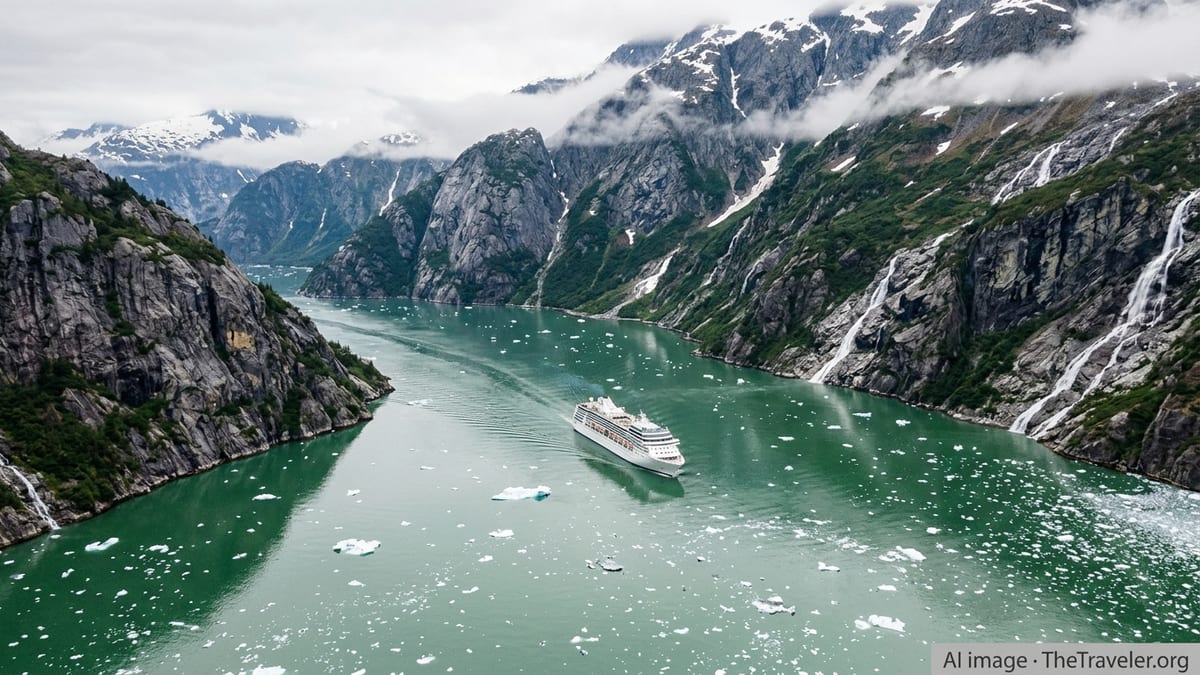
From Signature Fjord to Safer Waters
The change follows a wider industry move away from Tracy Arm after a major landslide in August 2025 generated a tsunami within the fjord, prompting fresh scrutiny of slope stability and ice conditions. Publicly available information on the event describes a large section of mountainside collapsing near South Sawyer Glacier, sending debris into the water and producing a powerful wave inside the narrow waterway.
In recent weeks, multiple cruise brands have revised 2026 itineraries to avoid Tracy Arm, citing unstable ice and geological conditions in planning materials and passenger communications. Coverage across cruise trade outlets and Alaska-focused travel media indicates that large ships are effectively treating Tracy Arm as off-limits for the 2026 season while scientists continue to assess hazards in the area.
MSC Cruises initially promoted Tracy Arm as a highlight of its new Alaska program, with early marketing materials describing scenic viewing of Sawyer Glacier from MSC Poesia. Updated schedules now show Endicott Arm listed in place of Tracy Arm, aligning the newcomer’s plans with changes already announced by lines such as Carnival, Holland America and Royal Caribbean.
MSC Poesia, fresh from enhancement work in Europe, is scheduled to arrive in Seattle in May 2026 to begin a series of seven-night sailings calling at Ketchikan, Icy Strait Point, Juneau and Victoria, alongside a day of scenic cruising in Endicott Arm and around Dawes Glacier.
What the Shift Means for Passengers
For travelers who booked MSC Poesia expecting Tracy Arm, the headline difference is the loss of a marquee fjord that has long been marketed as one of Alaska’s classic glacier experiences. Tracy Arm’s twin tidewater glaciers and sheer-walled passageway have been a staple of brochures and social media feeds for years, with many guests choosing specific itineraries based on that scenic day alone.
At the same time, Endicott Arm is far from a consolation prize. The neighboring fjord is also a protected wilderness corridor carved by ice, framed by steep cliffs, waterfalls and dense forest. Dawes Glacier, the tidewater glacier at the head of Endicott Arm, is known for frequent calving events that send chunks of ice tumbling into the water, creating the dramatic views many travelers associate with an Alaska cruise.
Reports from recent seasons describe Endicott Arm as slightly wider and, in typical conditions, more navigable for large ships than Tracy Arm, which can be choked with floating ice in summer. Cruise-focused publications note that Dawes Glacier often provides reliable scenic viewing opportunities, though access can still be affected by weather and ice and is never guaranteed.
For guests already holding bookings, the core structure of MSC Poesia’s Alaska itineraries remains intact: the same ports, similar cruising times and a dedicated glacier day. The principal change is the specific fjord and glacier visited, with Endicott Arm and Dawes Glacier replacing Tracy Arm and its Sawyer glaciers on published schedules.
Impacts on Southeast Alaska Tourism
The redirection of large ships away from Tracy Arm is expected to ripple through Southeast Alaska’s tourism economy, though the effects are nuanced. Tracy Arm itself is a remote fjord without dockside communities, but it has supported a network of small-boat tour operators, pilots and excursion providers based in places such as Juneau and Petersburg.
Industry coverage indicates that many of those operators are pivoting to Endicott Arm, which shares the same gateway region and can often be combined with similar wildlife and glacier viewing experiences. Some businesses had already been using Endicott as a backup when ice or weather prevented safe entry into Tracy Arm, making this year’s shift more of an expansion than a complete reinvention.
Local travel specialists quoted in recent reporting express concern about the loss of Tracy Arm as a marquee name that helped sell Alaska cruises globally. At the same time, they point to continued demand for any itinerary that delivers close-up glacier views, wildlife sightings and authentic coastal communities, all of which remain firmly on the menu for MSC Poesia’s 2026 program.
For communities along the Inside Passage, the essential economic driver is the arrival of ships and passengers in port. With MSC Poesia still calling at key hubs such as Juneau, Ketchikan and Icy Strait Point, visitor numbers and associated spending in those destinations are expected to track more with overall Alaska capacity than with the specific fjord used for scenic cruising.
Safety, Science and Future Access to Tracy Arm
The 2025 landslide and tsunami within Tracy Arm have drawn increased scientific attention to the region’s steep, glacier-carved slopes. Publicly available briefings from geologists and hazard specialists describe how warming temperatures, retreating glaciers and saturated soils can combine to destabilize mountain faces, creating the potential for sudden collapses into confined fjords.
Analyses referenced in Alaska-based reporting note that landslide scars can continue to evolve for years, with smaller rockfalls and shifting material capable of generating localized waves if they reach the water. For large cruise ships operating on tight schedules and carrying thousands of passengers, even a small increase in uncertainty can be enough to trigger route changes until risks are better understood.
Regulators have not announced a permanent closure of Tracy Arm to cruise traffic, and there is no formal timeline for a full reopening. Instead, cruise lines appear to be making their own risk assessments in consultation with pilots, local experts and available scientific data, resulting in a de facto pause on big-ship visits for the 2026 season.
Several industry analysts suggest that access could be revisited in future years if monitoring shows that slopes have stabilized and navigation can resume within acceptable safety margins. For now, however, passengers booking MSC Poesia and other major lines for 2026 should plan on Endicott Arm and Dawes Glacier as the primary fjord-and-glacier experience.
How Travelers Can Adjust Their Plans
For anyone already booked on MSC Poesia’s Alaska cruises, the most practical step is to review updated itineraries and excursion descriptions carefully. The scenic day is now typically labeled as Endicott Arm or Endicott Arm and Dawes Glacier, sometimes accompanied by optional small-boat tours that leave directly from the ship to get closer to the glacier face.
Experienced Alaska travelers posting in cruise forums often note that glacier viewing can be rewarding both from the ship and from specialized excursion vessels. Smaller boats can maneuver among ice floes and linger near the glacier when conditions allow, while staying onboard provides a broader, more relaxed panorama of the fjord’s cliffs, waterfalls and wildlife from decks and balconies.
Travelers who had chosen their sailing specifically for Tracy Arm may wish to weigh whether Endicott Arm delivers the experience they are seeking. Recent passenger accounts describe Dawes Glacier as a dramatic substitute, with towering ice walls and regular calving, even if the fjord lacks some of Tracy Arm’s marketing cachet.
With Alaska demand remaining strong and multiple lines, including MSC Cruises, increasing capacity from ports like Seattle and Vancouver, the broader appeal of the region does not appear to be dimming. Instead, the 2026 season is shaping up as a test of how quickly cruise tourism can adapt when nature reshapes one of its most iconic routes, and how travelers respond when an alternative fjord steps into the spotlight.