


More news on this day
Holidaymakers flying from London to major destinations including Calgary, Amsterdam, Paris and Malaga have faced a difficult start to their journeys after a fresh wave of flight disruption led to hundreds of delays and dozens of cancellations across multiple airlines.
Get the latest news straight to your inbox!
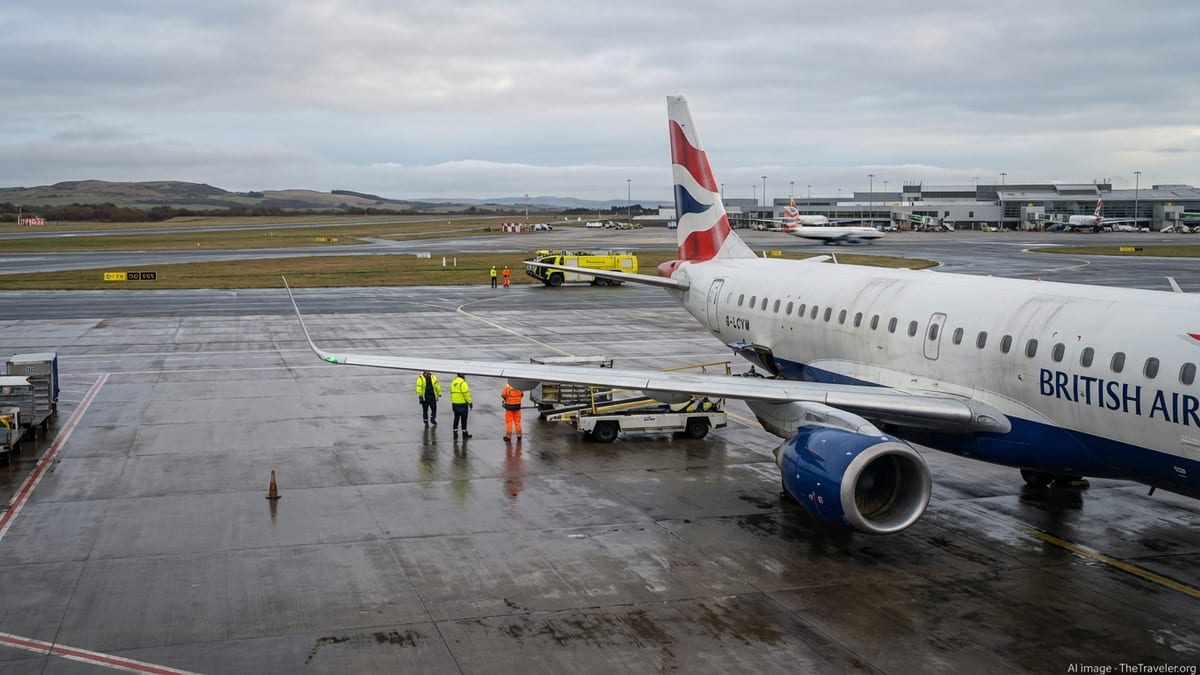
Wave of Disruptions Across London’s Major Airports
Publicly available flight-tracking and aviation data for Friday 26 June 2026 indicate that London’s main airports experienced a sharp spike in schedule disruption, with 421 flights reported delayed and at least 23 services cancelled. The impact has been felt most keenly at Heathrow, the UK’s largest hub, but Gatwick and London City have also recorded knock-on delays across their networks.
Services operated by Virgin Atlantic, British Airways, Delta Air Lines, Air France and BA CityFlyer are among those most affected, alongside flights by other European and North American carriers that rely on London for long-haul connections. Routes linking London with Calgary, Amsterdam, Paris and Malaga feature prominently among the disrupted services, reflecting the heavy demand for transatlantic and short-haul European travel at the height of the summer season.
While the overall number of cancellations remains modest compared with the thousands of daily movements across London’s airports, the scale of delays has proved highly disruptive for travellers with onward connections, tour departures and cruise embarkations dependent on precise timings. Even a short delay to a transatlantic service can cascade into missed evening departures from European hubs, leaving passengers searching for overnight accommodation and alternative flights.
Operational data show that several of the affected flights are part of joint ventures and codeshare partnerships, meaning a disruption recorded against one airline can affect passengers booked under the flight numbers of another carrier. For example, services marketed by Delta Air Lines or Air France may in practice be operated by Virgin Atlantic or British Airways, complicating rebooking and customer communication when schedules unravel.
Key Routes Hit: Calgary, Amsterdam, Paris and Malaga
Among long-haul services, transatlantic flights between London and Canada have faced particular strain, with routes to Calgary experiencing delays that run into several hours for some departures. These services are an important link for both leisure travellers heading to the Canadian Rockies and business passengers connecting through Calgary to other parts of western Canada and the United States.
Short-haul European hubs have also been caught up in the disruption. Flights between London and Amsterdam and between London and Paris continue to operate at high frequency, but a sizeable share have departed behind schedule, affecting connections onto wider European and intercontinental networks. Disruption at one end of these shuttle-style routes can rapidly ripple through multiple rotations in a single day.
Popular leisure destinations have not been spared. Services to Malaga and other Spanish holiday spots have seen late departures and extended ground times as airlines attempt to recover their rotations. Even when flights operate, reduced turnaround margins can mean departures later in the day start to creep behind schedule, stranding passengers in terminals and compressing already tight transfer windows on return journeys.
Data from Europe’s wider airport network in recent days point to similar strains at major hubs such as Paris Charles de Gaulle and Amsterdam Schiphol, where delays and a cluster of cancellations have been recorded. For London-bound and London-originating flights, those overseas bottlenecks can feed directly into the punctuality of services arriving into the UK capital and turning around for onward legs.
Airlines Under Pressure to Manage Capacity and Crewing
The disruption has placed fresh pressure on airlines including Virgin Atlantic, British Airways, Delta Air Lines, Air France and BA CityFlyer, all of which operate dense schedules into and out of London. Publicly available operational analysis suggests that a combination of tight summer capacity, crewing constraints, and congested airspace is leaving carriers with limited flexibility when early-morning or mid-day delays occur.
At Heathrow, the dominant position of British Airways means that even a modest uptick in delays on the airline’s network can be felt across the airport’s daily operation. Aircraft arriving late from long-haul destinations compress ground-handling windows and can push back subsequent short-haul departures, particularly to European capitals such as Amsterdam and Paris that rely on high aircraft utilisation.
Virgin Atlantic and Delta Air Lines, operating as closely integrated transatlantic partners, face similar challenges on key North American routes. When aircraft and crew are held up on inbound sectors, the knock-on effect can be a late departure from London that jeopardises connections in Canada and the United States. In some cases, airlines have opted for tactical cancellations on lower-demand rotations in order to protect the rest of the schedule.
Regional operator BA CityFlyer, which runs services primarily from London City Airport, has also reported delays on several short-haul flights. Because London City’s operating day is tightly constrained by local regulations and noise contours, extended ground holds or late arrivals can leave airlines with fewer opportunities to recover lost time, prompting schedule adjustments and, on occasion, cancellations.
Passenger Impact and Rights Under UK and EU Rules
The immediate effect for many travellers has been missed connections, extended queues at customer service desks and the challenge of securing last-minute hotel rooms near major hubs. With London acting as a key gateway for both transatlantic and intra-European travel, a single cancellation on a Calgary or Amsterdam service can displace hundreds of passengers and put further pressure on already busy alternative flights.
Consumer-rights organisations are reminding passengers that flights departing from UK and EU airports, or operated by UK and EU carriers, generally fall under UK and EU air passenger protection rules. These frameworks may entitle travellers to care such as meals and accommodation during long delays, and in certain circumstances to financial compensation, depending on the cause and duration of the disruption and the distance of the flight.
However, the application of those rules can be complex. Weather, air traffic control restrictions and extraordinary operational constraints are often treated differently from airline-controlled issues such as crew rostering or technical faults. Travellers are being encouraged by travel advisers to retain boarding passes, booking confirmations and any written notifications of changes, in case they need to submit claims later.
Passengers connecting through multiple carriers on a single ticket can face additional complexity, particularly on itineraries combining airlines in transatlantic joint ventures. When a disruption originates in London but leads to a missed connection in another hub, responsibility for rebooking and potential compensation may depend on which airline issued the ticket and which segment first went off schedule.
What Travellers Can Do as Disruptions Continue
With airlines and airports still working to stabilise operations, travel planners are advising passengers departing London in the coming days to allow extra time and to monitor their flights closely through airline apps and airport departure boards. Same-day schedule changes remain possible, particularly on busy routes to European hubs and popular holiday destinations where aircraft are flying multiple sectors per day.
Experts in aviation punctuality recommend that those with critical onward connections consider building in longer layovers where possible, especially when travelling through Heathrow, Gatwick or major continental hubs. Choosing earlier departures in the day can also reduce the risk of being affected by cumulative delays that mount as schedules slip.
Travel insurers are meanwhile highlighting the importance of checking policy wording around missed connections, hotel costs and alternative transport. Some policies provide limited or no cover for schedule changes that are not outright cancellations, while others offer more generous protection if documentation is retained and claims are submitted promptly.
Although the current tally of 421 delays and 23 cancellations represents only a fraction of London’s overall flight programme, the concentration of disruption on heavily used corridors to Calgary, Amsterdam, Paris, Malaga and other key cities underlines how finely balanced summer aviation operations remain. With high passenger volumes forecast to continue, even small operational shocks can quickly evolve into a challenging travel day for thousands of people moving through the UK capital’s skies.