


Los Cabos International Airport (SJD) is the main gateway to Cabo San Lucas and San José del Cabo, but its two-terminal layout can be confusing if you are arriving for the first time. Knowing in advance whether you need Terminal 1 or Terminal 2, where your airline checks in, and how arrivals, baggage claim, and pickups work can save you stress and time in the Baja sun.
Get the latest updates straight to your inbox!
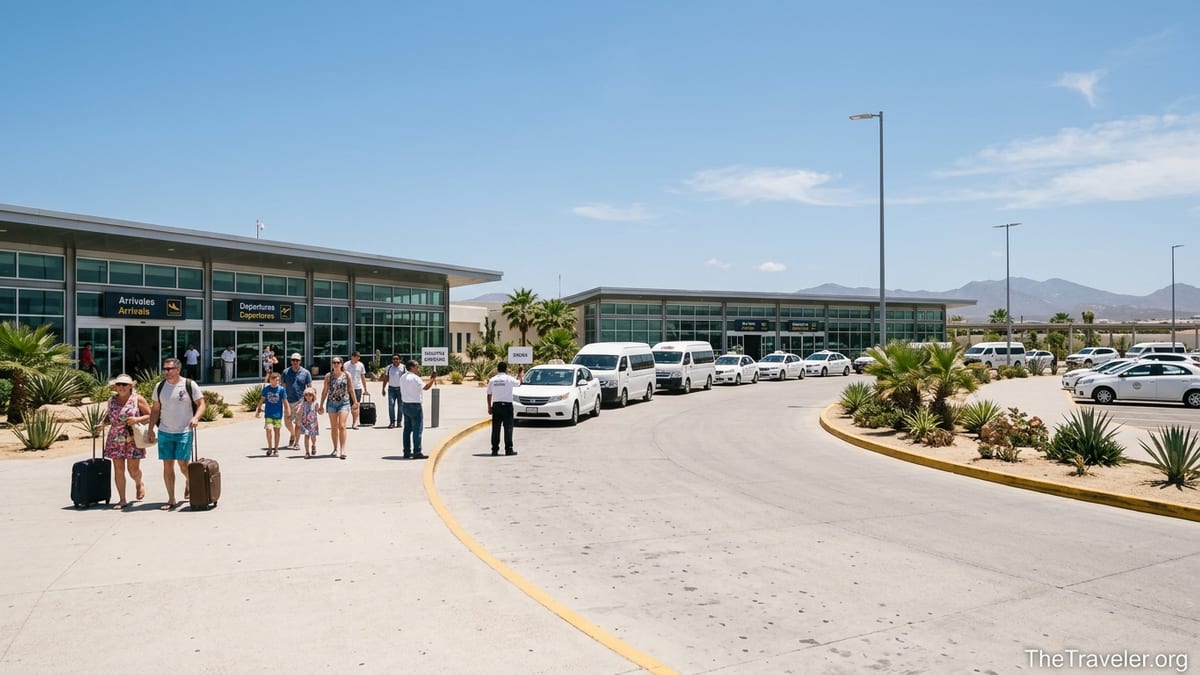
Terminal 1 vs Terminal 2: The Big Picture
Los Cabos International Airport has two separate passenger terminals that sit a short distance apart on the same airport road. In broad terms, Terminal 1 is used primarily for domestic and some regional flights within Mexico, while Terminal 2 handles most international flights from the United States, Canada, and Europe, along with some domestic services. In practice, the split is based on airline rather than destination, so it is essential to check your booking or boarding pass for the correct terminal name or number.
As of mid-2026, many Mexican carriers and low-cost airlines operate from Terminal 1. Travelers flying in from cities like Mexico City, Tijuana, Guadalajara, Monterrey, or Culiacán on domestic tickets will almost always find themselves at Terminal 1. This building has a simpler, slightly more utilitarian feel and a strong focus on point-to-point leisure traffic within Mexico.
Terminal 2 is the larger and more modern of the two and is the primary gateway for international visitors heading to Cabo resorts. Flights from major hubs such as Los Angeles, Dallas–Fort Worth, Phoenix, Seattle, Vancouver, Toronto, and several seasonal cities in the United States and Canada typically arrive and depart from Terminal 2. If you are flying nonstop from a US or Canadian city, there is a good chance you will use this terminal even if your airline also operates domestic routes within Mexico.
Although each terminal has its own check-in, security, and arrivals hall, there is no need to worry if you are only flying one segment. You will stay entirely within the terminal your airline uses. The differences matter most if you are connecting between airlines, arranging ground transportation, or planning to meet arriving friends or family.
Which Airlines Use Which Terminal?
At Los Cabos, terminal assignment is tied closely to the airline rather than whether your ticket is domestic or international. For example, many Mexican low-cost and regional airlines are clustered in Terminal 1, while large North American and some flag carriers are based in Terminal 2. Airline allocations can change over time, but the broad pattern has remained stable in recent years.
Typical examples of carriers using Terminal 1 include domestic-focused Mexican airlines and charter operators serving routes from cities like Mexico City, Guadalajara, Monterrey, and Tijuana. It is common for visitors who connect in Mexico City on a Mexican carrier to arrive at Los Cabos in Terminal 1 even if they originated in another country. Travelers coming from within Baja California Sur or other Mexican beach destinations may also arrive here on smaller airlines or seasonal charters.
Terminal 2 usually hosts the bulk of international traffic from the United States and Canada, along with some long-haul and regional international flights. Large carriers that operate multiple daily services from hubs such as Dallas–Fort Worth, Houston, Los Angeles, Phoenix, or Vancouver are most often assigned to this modern terminal with more international-style facilities. Many all-inclusive package flights from major North American tour operators also land here, funneling passengers directly into immigration and customs in Terminal 2.
Because allocations do change occasionally, a traveler flying from Los Angeles might find that one airline uses Terminal 2 while another could theoretically be moved to Terminal 1 on certain routes or schedules. Always verify your terminal on your airline confirmation, mobile app, or boarding pass before departure. If you are being picked up, pass this terminal information to your driver or friends in advance so they wait at the right building.
Domestic vs International: How Arrivals Work
The biggest operational difference between Terminal 1 and Terminal 2 at SJD is what happens after you land. In Terminal 2, most arriving passengers are international, so the first step after disembarking is immigration. Travelers typically walk from the aircraft to the terminal entrance and queue to have passports inspected and entry forms reviewed. Once cleared, you proceed to baggage claim, then customs, and finally exit into a bustling arrivals hall lined with transport desks and sales representatives.
Domestic arrivals in Terminal 1 follow a simpler flow. If you are flying in from another Mexican city, there is no immigration or customs step on arrival in Los Cabos. You walk directly from the aircraft into the terminal and down to the baggage claim area. After collecting checked luggage, you pass through an exit checkpoint and step into the public arrivals zone where friends, family, and transfer companies can meet you. This process is generally faster than the international arrivals flow, especially at busy times of year.
A useful real-world comparison is a traveler connecting from Toronto via Mexico City to Los Cabos. After clearing immigration in Mexico City, they board a domestic flight onward. On arrival in Los Cabos, they land at Terminal 1 as a domestic passenger and walk straight to baggage claim without seeing immigration at all. Meanwhile, a friend flying nonstop from Toronto may land in Terminal 2 and spend more time in the immigration and customs lines before reaching the arrivals hall.
Because of these differences, meeting arriving travelers requires paying close attention to which terminal and whether their last flight into SJD is domestic or international. Someone exiting Terminal 2 may take an extra 20 to 40 minutes to reach the curb at busy times, while a domestic passenger in Terminal 1 can sometimes be outside in as little as 10 to 20 minutes after landing if bags arrive quickly.
Departures, Check-in, and Security in Each Terminal
For departures, both terminals follow broadly similar patterns: you arrive at the terminal roadway, step into the check-in area, drop bags, and proceed through security to the departure gates. The biggest differences are in size, layout, and the mix of services available airside. Terminal 2, built to handle higher volumes of international travelers, feels more modern and typically offers a wider selection of cafes, bars, and duty-free shopping beyond security.
In Terminal 2 departures, international travelers should allow generous time for check-in and security, particularly on Saturdays and during peak holiday periods when flights from US and Canadian cities tend to bunch together in the late morning and early afternoon. For instance, a wave of departures to Los Angeles, Dallas–Fort Worth, Houston, Phoenix, and Seattle around midday can create serpentine lines at airline counters and security screening. Arriving two to three hours before departure is advisable for international flights, with extra margin if traveling in a group or checking multiple bags.
Terminal 1 departures can be somewhat calmer, especially midweek, but queues can still form during peak Mexican holiday periods when domestic leisure travel surges. The check-in hall here feels more compact, and food and beverage options airside are generally simpler. If you depart from Terminal 1 on a domestic route, you may find a small coffee stand, a convenience-style shop, and one or two quick-service eateries beyond security rather than a full set of restaurants.
Both terminals have clearly signed security checkpoints with separate lines for the general public and, where applicable, priority travelers or premium cabin passengers. Unlike some larger international hubs, SJD does not currently have a complex network of connected concourses, so once you clear security you are generally a short walk from your gate. Families and groups often appreciate this smaller scale, as it reduces the risk of long hikes to boarding.
Baggage Claim and Customs: What to Expect
In Terminal 2, baggage claim and customs are integrated into the same secure area for international arrivals. After passport control, passengers proceed down a corridor to a carousel hall where checked luggage appears. Overhead screens list flight numbers and carousel assignments. Once you have collected your bags, you move toward customs, where you may encounter the familiar red or green light system common in Mexican airports, or a standard inspection line. Officers may briefly ask about your stay or open bags for inspection, especially if items appear unusual on the scanner.
The atmosphere in Terminal 2 baggage claim can feel intense during busy periods, especially when several large aircraft arrive close together from North American hubs. It is common to see families with multiple suitcases and golf bags, couples hauling coolers with fishing equipment, and groups traveling for weddings or corporate retreats. Patience is helpful here, as carousels may be crowded and trolleys limited right at the belt.
After customs in Terminal 2, you pass into the arrivals area, where a “gauntlet” of time-share and activity salespeople, as well as transport representatives, often stand near the exit doors. To avoid confusion, it is wise to walk purposefully through this area if you already have a prebooked transfer. Many hotel and shuttle representatives wait outside under numbered signs or canopies; for example, a private transfer company may instruct you to “exit customs, walk straight past the timeshare desks, and meet our staff near post number 7 with our company logo.”
In Terminal 1, baggage claim is usually more straightforward and less crowded. Domestic passengers enter a single hall with carousels serving recent arrivals. Since there is no customs checkpoint for domestic-only journeys, you simply pick up your luggage and exit through sliding doors into the public arrivals area. Friends and family can sometimes watch the baggage-claim screens from behind a railing, making it easier to time curbside pickups or parking-lot rendezvous.
Getting Between Terminal 1 and Terminal 2
Although most trips through SJD only involve one terminal, some travelers do need to move between Terminal 1 and Terminal 2. This is most common when connecting between a domestic Mexican flight and an international service operated by a different airline, or when meeting friends whose flight arrives at the opposite terminal. The two buildings are located along the same airport circulation road, separated by a short drive or a modest walk in theory, though the desert heat can make walking uncomfortable at midday.
Official information and local operators often recommend using the airport’s shuttle service between terminals rather than attempting to walk with luggage along the roadway. The distance can feel longer than it appears on a map, and there is often limited shade. Shuttle stops are usually signed near the arrivals or parking areas of each terminal, and shuttles circulate periodically throughout the day. For example, a traveler connecting from a domestic flight in Terminal 1 to an international departure in Terminal 2 might collect their bags, exit the building, follow signs for the inter-terminal shuttle stop, and make the short ride to the second terminal before re-checking bags and clearing security again.
In practice, some travelers choose to walk between the terminals if they are traveling light and temperatures are moderate, especially in the early morning or evening. This typically involves following the sidewalk along the airport access road and crossing designated pedestrian areas near the parking lots. However, in the peak midday heat, especially between late spring and early autumn, temperatures can climb enough that a 10 to 15 minute walk with suitcases becomes unpleasant. For most visitors with checked bags, the shuttle or a short taxi ride is the more comfortable choice.
If you are arranging a pickup that may involve both terminals, such as a group arriving on separate flights, consider designating one terminal as the meeting point. For instance, a family might agree to meet in Terminal 2’s arrivals area and have their private shuttle scheduled from there, asking the person arriving in Terminal 1 to take the shuttle bus over after collecting luggage. Coordinating this plan in advance by sharing flight details, terminal assignments, and messaging app contact information helps avoid missed connections on arrival day.
Pickups, Taxis, Shuttles, and Rideshares
Ground transportation at Los Cabos Airport is shaped by a mix of licensed taxis, prebooked private transfers, shared shuttles, and local buses, with app-based rideshares playing a more complicated role. At both Terminal 1 and Terminal 2, the most straightforward options on arrival are the official airport taxis and prearranged transfer companies, which have designated desks and meeting points just outside the terminal exits. These services are regulated and often priced higher than in-town taxis, reflecting airport concession fees.
For many visitors staying in Cabo San Lucas or the Corridor, private transfers arranged in advance are popular despite their higher cost. As of 2026, a typical private SUV or van from the airport to a mid-range or upscale resort along the Cabo San Lucas Corridor can cost in the range of roughly 90 to 120 US dollars per vehicle each way for up to 6 to 8 passengers, depending on the provider and vehicle type. Shared shuttles can be more economical, with per-person rates often around 20 to 30 US dollars, grouped by destination area. These services usually instruct clients to exit the terminal, ignore timeshare pitches, and look for a staff member holding a sign with the company or hotel name.
Standard airport taxis are available at both terminals and operate on fixed-zone pricing. A ride from Terminal 2 to a hotel in downtown Cabo San Lucas, roughly a 40 to 45 minute drive in normal traffic, can cost significantly more than a comparable distance in many US cities. Travelers on a budget sometimes accept this premium for convenience after a long flight, while others prefer prebooked shuttles where prices and pickup details are locked in before arrival.
Rideshare apps such as Uber do operate in the Los Cabos region but face ongoing tension with local taxi unions and changing enforcement around airport pickups. As a result, travelers cannot depend on being able to request an Uber directly at the arrivals curb of either terminal at all times. Some visitors report success arranging rides by walking to nearby parking areas or up to the departures level and meeting a driver away from the main taxi lanes, while others describe drivers being fined or turned away. Policies and enforcement can shift, so it is safest to view rideshare as a backup rather than your primary arrival plan at SJD.
Meeting Points and Curbside Zones at Each Terminal
Meeting an arriving traveler at Los Cabos Airport requires understanding how curbside access works. In Terminal 1, domestic passengers exit baggage claim onto the ground transportation level, where there is a short curb for immediate pickups and a nearby parking lot for those who prefer to park and walk in. If you are picking up family arriving from Mexico City or another domestic city, you can often pull up curbside once they text that they are outside, load luggage quickly, and depart. If they are not ready, security may ask you to circle the airport road or use the short-term parking lot instead.
Terminal 2’s arrivals area is more tightly controlled due to heavier traffic. Here, passengers step out of customs into an indoor arrivals hall, then pass through sliding doors to the outdoor pickup zones. Official airport taxis and shuttles occupy much of the immediate curb, while private vehicles and hotel vans often use nearby lanes or designated parking areas. If you are a friend or relative driving to collect someone, it is usually easiest to park in the paid lot, walk to the arrivals area, and meet them on foot before returning together to the car. This approach avoids the stress of circling the terminal road in heavy traffic.
Many private transfer companies and hotels designate specific meeting points within sight of numbered posts, canopies, or signage. For example, a shared shuttle provider might instruct guests arriving in Terminal 2 to “exit customs, pass the rope line of salespeople, and look for our staff near the group transportation canopy just outside.” In Terminal 1, smaller operators may ask guests to walk to a particular pillar or gate in the parking lot, where vans wait away from the main taxi queue.
If your party is split between terminals, choose a single, clear meeting location and stick to it. A practical strategy is for the first person to land to buy a bottle of water or coffee in the terminal, then wait near a prominent indoor landmark just before the doors to the curb. When the second traveler arrives from the other terminal, they can follow signs to that landmark and then walk out together to the chosen pickup point. This reduces the chance of miscommunication in the sometimes hectic outdoor curbside lanes.
The Takeaway
For most travelers, the key to navigating Los Cabos Airport is understanding that Terminal 1 is primarily for domestic Mexican flights and some regional services, while Terminal 2 is the main hub for international arrivals and departures. Airline assignment, not just whether your journey is domestic or international, determines which building you will use, so always verify your terminal on your ticket or airline app before you go.
Once you know your terminal, planning becomes far simpler. International passengers arriving at Terminal 2 should be ready for immigration, baggage claim, customs, and an often busy arrivals hall full of transport and timeshare representatives. Domestic passengers in Terminal 1 generally enjoy a quicker arrival process, with a straightforward path from the aircraft to baggage claim and the curb. Departures from both terminals are manageable, with Terminal 2 offering more dining and shopping options airside.
If you need to move between terminals, the airport’s shuttle and clearly signed outdoor routes make it possible, though the heat often makes a short ride more comfortable than walking with luggage. For ground transportation, official taxis, prebooked private transfers, and shared shuttles are the most reliable choices at both terminals, while rideshares can be a helpful but unpredictable backup. Arranging your transfer in advance and sharing precise terminal information with your driver or hotel avoids confusion on arrival day.
With a bit of preparation about which terminal you need, how arrivals and departures flow, and where to meet rides or friends, Los Cabos International Airport becomes a straightforward gateway to the beaches, resorts, and landscapes that draw millions of visitors to the tip of the Baja California Peninsula every year.
FAQ
Q1. How do I know if I’m flying into Terminal 1 or Terminal 2 at Los Cabos? The easiest way is to check your airline booking, boarding pass, or mobile app, which should list “Terminal 1” or “Terminal 2” next to the airport code SJD. If it is not shown, look up your airline’s current terminal at SJD shortly before travel, since terminal assignments depend on the carrier more than whether your ticket is domestic or international.
Q2. Is Terminal 1 only for domestic flights and Terminal 2 only for international? Not strictly. Terminal 1 is used mainly by domestic and some regional airlines, while Terminal 2 handles most international flights. However, a few airlines operate both domestic and international routes from the same terminal, so always confirm with your specific flight details rather than relying on a simple domestic versus international rule.
Q3. Can I walk between Terminal 1 and Terminal 2 at Los Cabos Airport? It is physically possible to walk between the terminals along the airport road and sidewalks, but the distance, lack of shade, and heat can make it uncomfortable, especially with luggage. Most travelers are better off using the inter-terminal shuttle or a short taxi ride if they need to transfer between Terminal 1 and Terminal 2.
Q4. How long does it take to get through arrivals at Terminal 2 for international flights? Timing varies by day and season, but many travelers spend roughly 30 to 60 minutes from landing to exiting customs, depending on immigration queues, baggage delivery, and inspections. During peak holiday periods when several US and Canadian flights arrive close together, the process can take longer, so it is wise not to schedule tight onward plans.
Q5. Where is the best place to meet my driver or shuttle in Terminal 2? Most private drivers and shuttle companies arrange to meet guests just outside the customs exit in the designated transportation area. A typical instruction is to walk straight past the timeshare and activity sales desks, exit the building, and look for a representative holding a sign with the company or hotel name near a numbered post or canopy.
Q6. Are there good food and shopping options in both terminals? Terminal 2, as the main international terminal, has a wider variety of cafes, bars, and duty-free or travel-retail shops after security. Terminal 1 offers more limited but adequate options, such as coffee stands and quick-service eateries. If you value choice, especially for longer waits, you will generally find more in Terminal 2.
Q7. Can I rely on Uber or other rideshare services to pick me up at SJD? Rideshare availability at the airport is variable due to local regulations and enforcement. While the apps work in the Los Cabos area, pickups directly at the arrivals curb of either terminal are not consistently allowed, and drivers can face fines. Consider Uber or similar apps as a backup rather than your primary arrival plan, and prioritize official taxis or prebooked transfers for reliability.
Q8. How much should I expect to pay for a transfer from the airport to Cabo San Lucas? Prices vary by provider and vehicle, but a private transfer for a small group from either terminal to a hotel in Cabo San Lucas often falls in the rough range of 90 to 120 US dollars one way. Shared shuttles can be more budget-friendly, with many charging around 20 to 30 US dollars per person, grouped by resort area.
Q9. What time should I arrive at the airport for departure? For international flights departing from Terminal 2, arriving two to three hours before scheduled departure is generally recommended, especially during peak travel days. For domestic flights from Terminal 1, 90 minutes to two hours is usually sufficient, though giving yourself extra time during major holidays or busy weekends is prudent.
Q10. Is it easy to connect between a domestic and an international flight at Los Cabos? Same-airline, same-terminal connections are relatively straightforward, but many domestic and international flights at SJD are not designed for tight interline connections. If you must change terminals or airlines, plan a long layover, expect to collect and recheck luggage, and allow time to move between Terminal 1 and Terminal 2 before passing through security again.