


More news on this day
Recent waves of flight cancellations by Lufthansa and Argentine low cost carrier Flybondi are stranding passengers across Argentina, disrupting key domestic and international routes linking Buenos Aires, Córdoba and several provincial capitals.
Get the latest news straight to your inbox!
Fresh Disruptions Hit Buenos Aires and Córdoba Hubs
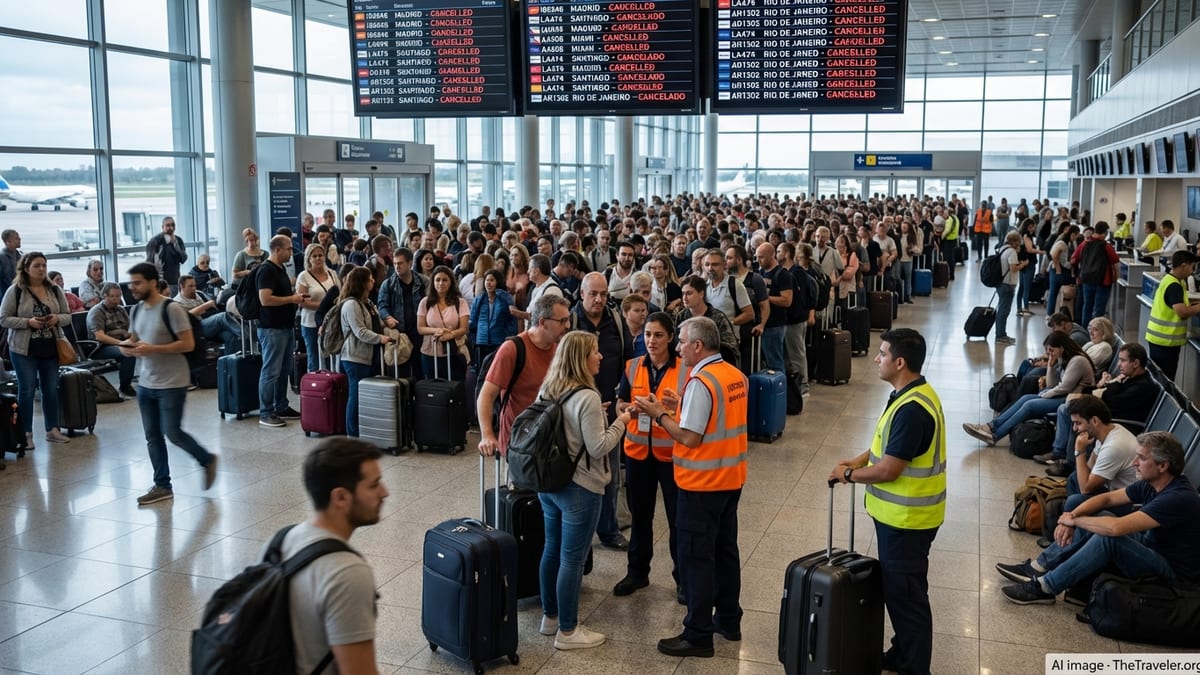
Published coverage in Argentina and traveler reports indicate that at least eight additional Flybondi services were recently cancelled on short notice, compounding weeks of irregular operations for the airline. The latest disruptions are centered on Aeroparque Jorge Newbery and Ezeiza International Airport in Buenos Aires, as well as Córdoba, where passengers describe being left without clear rebooking options or timely information.
The cancellations are affecting some of Flybondi’s busiest domestic corridors, including links between Buenos Aires and Mendoza, Jujuy, Salta and Santiago del Estero. These routes are key for both tourism and business travel, especially during peak holiday periods and major events that draw travelers into the capital and out to the wine and mountain regions.
Social media accounts and online forums used by travelers show images and testimonies of crowded departure halls, long queues at service counters and passengers trying to rearrange itineraries involving multiple airlines. Many of those affected had onward connections by bus or air within Argentina, turning a single cancellation into a chain of missed services.
In Córdoba, which serves as a growing secondary hub for both domestic and regional links, cancellations and rolling delays have forced travelers to seek last minute tickets on alternative carriers or to reroute via Buenos Aires, adding both cost and uncertainty to their journeys.
Flybondi’s Pattern of Cancellations Under Renewed Scrutiny
Flybondi has been under sustained scrutiny since late 2024, when Argentine aviation regulators issued an ultimatum after a weekend in which about 70 of the airline’s flights were cancelled, leaving more than 12,000 passengers unable to travel. Publicly available records describe that episode as the culmination of several years marked by frequent cancellations and operational instability.
Local aviation outlets report that the carrier has repeatedly grounded parts of its Boeing 737 fleet, at times operating with aircraft on short term leases while facing maintenance and staffing constraints. In previous waves of disruption, cancellations have been concentrated on provincial destinations such as Mendoza, Salta, Jujuy and Santiago del Estero, where travelers often have limited alternative options and must purchase last minute tickets on other carriers or reroute via distant airports.
Recent consumer complaints circulating on travel forums portray a similar picture during the latest round of eight or more additional cancellations. Passengers describe flights between Buenos Aires and Mendoza or northern cities being cancelled within days or even hours of departure, with rebookings offered several days later or not at all, forcing travelers to consider long distance buses or costly same day purchases on other airlines.
Published information from the airline highlights its rapid growth strategy, with an expanding domestic network and new international services from Buenos Aires. However, critics argue that this expansion has outpaced its operational resilience, leaving the carrier vulnerable when one or two aircraft are unavailable and translating quickly into large numbers of stranded passengers when schedules are tight.
Lufthansa Long Haul Cancellations Ripple Through Argentina Itineraries
While Flybondi dominates headlines inside Argentina, long haul disruptions involving Lufthansa are also reverberating through passenger plans. Publicly accessible travel advisories and informational pages for the German airline outline ongoing risks of cancellations and delays linked to weather events, air traffic control bottlenecks and periodic labor actions in Europe.
On routes connecting Frankfurt with Buenos Aires and onward domestic destinations, a cancellation or major delay on the transatlantic leg can leave travelers arriving in Argentina long after their separate domestic tickets have departed. Online trip reports describe passengers missing same day connections to cities such as Córdoba and Mendoza and being forced to spend unexpected nights in Buenos Aires while they search for replacement seats during already busy travel periods.
Lufthansa’s customer information pages explain general rebooking options when flights are cancelled and refer passengers to local regulations on compensation and assistance. However, when journeys involve separate tickets on Argentine domestic carriers, travelers often report bearing the cost of missed onward segments themselves, particularly when low cost tickets are nonrefundable and cannot be changed at short notice.
For visitors planning multi stop itineraries that combine Frankfurt Buenos Aires long haul segments with separate domestic flights, these disruptions highlight the importance of scheduling generous connection times and understanding the limits of protection between different tickets and different airlines.
Impact on Key Routes: Frankfurt, Mendoza, Jujuy, Salta and Santiago del Estero
The latest cancellations underscore the vulnerability of several high demand corridors. Frankfurt to Buenos Aires, operated by Lufthansa, is a primary gateway for European travelers heading into Argentina, with many continuing onward to wine regions, Andean gateways and northern provinces by domestic flight. Any cancellation on this intercontinental link can cascade into missed departures on separate itineraries to Mendoza, Córdoba or Patagonia.
Within Argentina, routes from Buenos Aires and Córdoba to Mendoza, Jujuy, Salta and Santiago del Estero are central to both domestic tourism and regional commerce. These flights connect travelers to vineyards, mountain trekking circuits and historic provincial capitals where rail options are limited and long distance buses can mean journeys of more than 15 hours.
Reports from provincial media and traveler testimonies indicate that cancellations on these routes have led to missed hotel nights, lost tour bookings and unexpected expenses for last minute surface transport. In some cases, travelers describe arriving at airports to learn that outbound and return flights linking Buenos Aires with Mendoza or Santiago del Estero have both been cancelled, eliminating the possibility of a short weekend or event based trip.
Industry analysts note that when cancellations cluster on thinner provincial routes, spare capacity from other carriers is quickly exhausted. As a result, affected passengers may face a wait of several days before a suitable alternative is available, effectively cutting them off from the capital or from their planned access to international departures.
What Passengers Can Do When Stranded
Consumer organizations and travel advisors responding to the latest disruptions in Argentina generally recommend that passengers document each cancellation carefully, including messages from airlines and photos of airport information boards, in case they later pursue refunds or compensation. This documentation can be particularly important when journeys involve multiple airlines or separate tickets, as responsibilities can be contested.
Publicly available guidance suggests that travelers should attempt to contact airlines through multiple channels at once, including mobile applications and customer service centers, rather than relying solely on crowded desks at the airport. When flying long haul into Buenos Aires with separate onward domestic flights, some advisors recommend purchasing flexible fares for at least one of the segments or allowing a long layover that can absorb delays.
As Flybondi and Lufthansa passengers across Argentina face another round of cancellations, travel planners emphasize the value of contingency planning. For domestic segments, that may include identifying alternative departure airports or even overland options in advance, particularly on routes to northern provinces where air services are concentrated among just a few carriers.
For now, the combination of local operational challenges and global aviation pressures is leaving many travelers caught in the middle, with Buenos Aires and Córdoba once again at the center of a web of disrupted journeys that reach from Frankfurt to Mendoza, Jujuy, Salta, Santiago del Estero and beyond.