


Riding Maid of the Mist is one of those classic North American travel experiences that feels both timeless and absolutely worth the hype. The short but unforgettable boat ride puts you right into the spray at the base of Niagara Falls, so close that your poncho flaps in the wind and conversation is reduced to hand gestures and big grins. For first-time visitors, though, questions about where to board, when to go, and what the ride is really like can make planning a little intimidating. This guide breaks down everything you need to know so you can step onto the deck feeling prepared and ready to enjoy every roaring second.
What Exactly Is Maid of the Mist?
Maid of the Mist is a sightseeing boat tour that operates from Niagara Falls State Park on the American side of the border in Niagara Falls, New York. Boats depart from the base of the Prospect Point Observation Tower, glide past the American and Bridal Veil Falls, and then nose directly into the mist in front of Horseshoe Falls before looping back to the dock. The route itself takes only around 20 minutes, but the full experience, including queuing, elevator rides and time on the observation deck, usually fills about 45 to 60 minutes for most visitors.
The attraction is among the oldest continuously operating tourist experiences at Niagara Falls, with boats carrying visitors into the gorge since the mid-1800s. Today’s vessels are a far cry from those early steam-powered craft. Since 2020, the company has operated modern, all-electric catamarans, which quietly cruise the river using lithium-ion battery power instead of diesel engines. You will see and hear the difference as soon as you step on board: there is less engine noise, no diesel smell, and a surprisingly smooth feel as the boat swings under the falls.
One important point for first-timers is geography. Maid of the Mist boards only from the United States side and both departure and return are to Niagara Falls, New York. There is no Canadian boarding dock for Maid of the Mist itself; the similar Canadian-side experience is run by Niagara City Cruises (often still called Hornblower) and uses separate red ponchos and docks. If your hotel is in Ontario and you specifically want Maid of the Mist, you will need to cross the border to the U.S. side, which means planning around customs and potential lines at the Rainbow Bridge.
The experience is designed to work for a wide range of visitors. Boats are standing-room only, but there are railings and some bench-style seating around the interior. There is no narration over loudspeakers once you get close to the falls because the roar of the water makes talking almost pointless. Instead, the emphasis is on the raw power of the river and the views between bursts of spray. It is less a sightseeing cruise in the traditional sense and more an immersive, elemental encounter with Niagara Falls.
Tickets, Prices and When to Ride
Maid of the Mist operates seasonally, typically from spring through late fall, with exact opening and closing dates depending on ice conditions and river levels in any given year. In recent seasons, boats have usually started running in April and wrapped up by early November, but first and last sailings can shift slightly. Within that window, daily operating hours expand and contract with daylight, often starting in the late morning in early spring and stretching into the evening at the height of summer.
Ticket prices are straightforward, with one main fare that covers the boat ride and access via the observation tower. Recent seasons have seen adult prices in the ballpark of a little over 30 U.S. dollars, with discounted tickets for children and free admission for toddlers under a certain age. Exact pricing can change from year to year and may be adjusted partway through a long season, so it is wise to confirm current rates shortly before your trip rather than relying on older printed brochures or blog posts.
You can buy tickets on-site at the ticket booths located near the entrance to the Prospect Point Observation Tower, or purchase them online for a specific season. Many recent visitors report that same-day tickets are usually available except at peak holiday periods such as Memorial Day weekend, the July 4 period and major summer Saturdays, when mid-day cruises can sell out or involve significant waits. If your schedule is tight, aim for the first few departures of the morning or the last hour of the day, when crowds thin and lines move faster.
Timing your ride is about more than lines, though. Early morning departures often offer softer light and thinner crowds, which can be ideal if you are taking photos or visiting with young children who tire easily. Late afternoon or early evening rides can be especially dramatic on sunny days when the low angle of the sun and heavy mist create rainbows in front of Horseshoe Falls. On warm midsummer days, many travelers deliberately time their ride for the hottest part of the afternoon, treating the drenching mist as a welcome cool-down after exploring the park.
Getting There, Parking and How the Boarding Process Works
Maid of the Mist departs from within Niagara Falls State Park on the U.S. side, at Prospect Point. If you are driving, the most convenient option is usually State Park Parking Lot 1, located just a short walk from the observation tower and ticket booths. This lot often fills first on busy weekends and holiday periods, so arriving before mid-morning provides the best chance of finding a spot. When Lot 1 is full, drivers are typically directed to Goat Island’s Lots 2 or 3, from which you can either walk back across the pedestrian bridge to the tower or hop on the Niagara Scenic Trolley for a quick ride.
Parking fees in the state park are charged per vehicle for the day, so it often makes sense to park once and plan to explore multiple attractions on foot. For example, a family might arrive around 9 a.m., park in Lot 1, walk to Maid of the Mist for a mid-morning sailing, then later in the day stroll or trolley over to Cave of the Winds on Goat Island without moving the car. Visitors who prefer private lots will find several commercial parking facilities along nearby streets outside the park boundary, but prices can vary widely and may be higher than the official park lots, especially on summer weekends.
If you are staying on the Canadian side, reaching Maid of the Mist involves crossing the border at Rainbow Bridge, either by car, on foot, or in some cases by shuttle or rideshare. Walking across the bridge is popular: travelers pay a small pedestrian toll and enjoy excellent views of the gorge as they cross. Once through U.S. customs, it is about a 10 to 15 minute walk along well-marked routes to Niagara Falls State Park and the observation tower. For both pedestrians and drivers, it is wise to budget extra time for border formalities, particularly on summer weekends or holiday periods when queues can be unpredictable.
The boarding process itself is straightforward but involves several stages. After purchasing or presenting your ticket at the entrance, you are directed through a controlled access point to the Prospect Point Observation Tower. An elevator whiskes you down to the base of the gorge, where crew members distribute signature blue plastic ponchos. You then follow a short gangway to the waiting boat, where staff help regulate the flow of passengers onto the deck. Even when lines look long at the top, boats have significant capacity and departures are frequent in high season, so the queue usually moves steadily.
What the Ride Is Really Like: A Step-by-Step Walkthrough
Once you step onto the boat, your main decision is how close you want to be to the action. The lower deck has partial overhead coverage and can be a better choice if you prefer a bit more shelter or are traveling with younger children who might get overwhelmed. The upper deck is completely open and offers the most dramatic views, along with the greatest exposure to wind and spray. Many first-time riders head straight up the stairs and then fan out toward the railings on the bow and along the sides, where you get unobstructed views and the strongest sense of motion.
As the crew casts off, the boat pulls away from the dock and glides past the base of the American and Bridal Veil Falls. This section of the ride is a good time to take photographs, as you can still handle your phone or camera with relative ease. You will see the rock talus at the base of the falls, the Rainbow Bridge spanning the gorge behind you, and the sheer walls of the canyon rising on either side. On clear days you may spot people on the Cave of the Winds walkways across the river, their yellow ponchos bright against the dark rock.
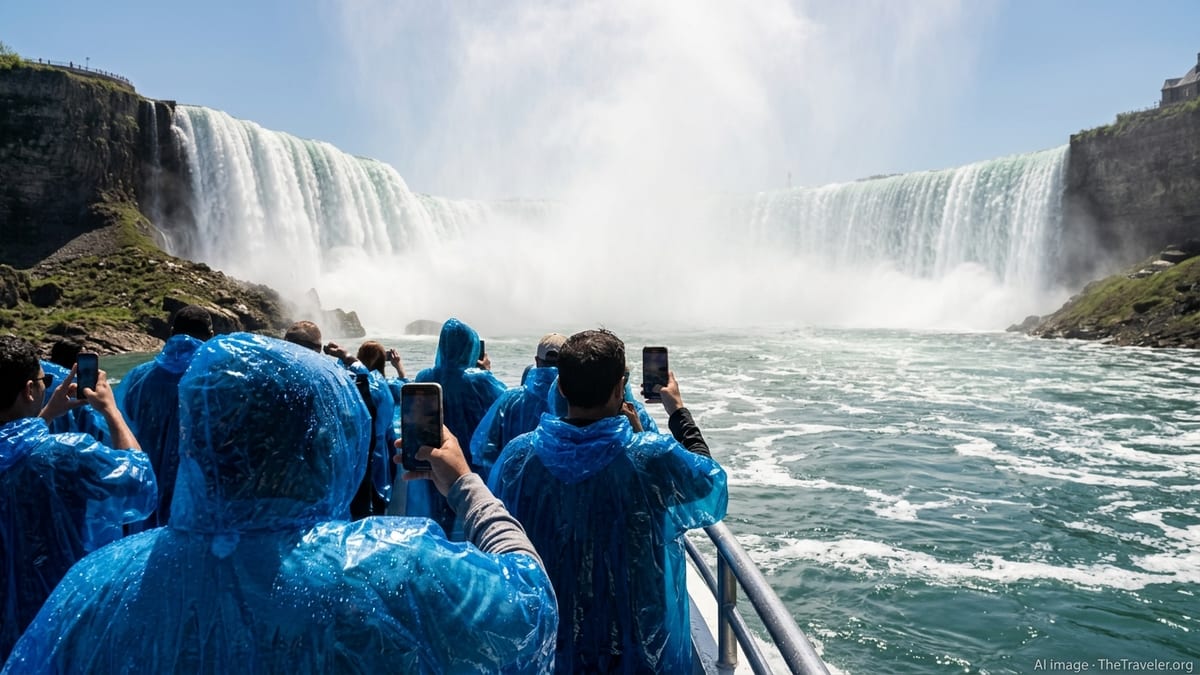
As the boat approaches Horseshoe Falls, the character of the ride changes. The air cools noticeably; the roar of the water builds into a deep, continuous thunder; and the mist thickens from light spray into full sheets of water blowing horizontally with the wind. At certain angles, you may not be able to see the top of the falls at all, only the churning white water at their base and the swirling clouds of vapor around you. The captain typically holds the boat in this zone for several minutes, pivoting slowly so both sides of the deck get direct views toward the wall of water.
This is the moment when staying dry becomes mostly a lost cause. The hood of the poncho helps, but shoes, lower legs, and anything not fully covered will likely be soaked by the time the boat starts to turn back. Glasses and camera lenses fog and bead with water almost instantly. Most visitors lean into it, yelling to be heard, laughing as the wind whips the ponchos around, and taking a few quick photos between waves of spray. It can be intensely sensory: the vibration underfoot, the way conversation disappears under the sound of the falls, and the taste of fresh water hanging in the air.
On the return trip, conditions calm again as the boat moves out of the mist and back past the American Falls. Many riders use this period to absorb what they have just experienced, squeeze out sleeves and hems, and grab final photos with the falls behind them. Once back at the dock, you return up the gangway and can choose to linger at the lower observation platforms or head directly back to the elevator. The poncho is yours to keep, and many travelers roll it up and tuck it into a daypack for use at other wet attractions or as a fun souvenir.
What to Wear, What to Bring and How Wet You Really Get
Dressing for Maid of the Mist is part practicality and part comfort. The complimentary blue poncho does a surprisingly good job of keeping your torso and head mostly dry, but it is not a full rain suit. Expect your shoes, the lower part of your pants or shorts, and sometimes your sleeves to get wet. For that reason, many repeat visitors recommend quick-drying clothing such as synthetic shorts or lightweight hiking pants, along with moisture-wicking shirts that will not stay clammy for hours afterward.
Footwear is especially important. On warm summer days, water-friendly sandals with secure straps are ideal, as they dry quickly and provide good traction on potentially slick decks. Closed-toe walking shoes or light hiking shoes are also fine as long as you are comfortable with them getting damp. Smooth-soled dress shoes and flip-flops are less ideal because of both traction and comfort. In cooler spring and fall weather, waterproof or water-resistant shoes paired with wool or synthetic socks can make the difference between a thrilling ride and an uncomfortably chilly afternoon.
For valuables and electronics, a bit of planning goes a long way. The poncho has an opening at the neck but is otherwise fairly loose, so many visitors wear a small crossbody bag or waist pack underneath, keeping phones, passports and wallets relatively protected. Simple accessories like a small resealable plastic bag or a compact waterproof phone pouch can be invaluable if you plan to take pictures in the heart of the mist. Some travelers also bring a light microfiber towel or spare T-shirt in a daypack to change into afterward, especially if they are heading straight to dinner or another dry activity.
Temperature can also surprise first-timers. Even on hot July afternoons, the combination of wind, shade, and cold river water cooling the air can make it feel significantly cooler on the boat than on the sidewalks above. If your visit is in May, early June or October, consider bringing a thin fleece or long-sleeve top you can wear under the poncho. Children and anyone sensitive to cooler temperatures usually appreciate the extra layer once the boat reaches the base of Horseshoe Falls.
Maid of the Mist vs Niagara City Cruises: Which Should You Choose?
Visitors often hear two names tossed around when planning a Niagara Falls boat tour: Maid of the Mist on the American side and Niagara City Cruises (sometimes still called Hornblower) on the Canadian side. Both offer a very similar core experience: a roughly 20-minute ride into the gorge, passing the American and Bridal Veil Falls and approaching the base of Horseshoe Falls until the boat is enveloped in mist. The main differences come down to departure point, logistics, and a few on-board details.
If you are staying in Niagara Falls, New York or elsewhere in upstate New York, Maid of the Mist is usually the more convenient option. It boards from within Niagara Falls State Park, which also features viewpoints like Prospect Point and attractions such as Cave of the Winds. You park once, explore on foot, and slot the boat ride into your day. If you are based on the Canadian side, particularly near Clifton Hill or the hotels along Fallsview Boulevard, Niagara City Cruises may be easier, as its docks sit below the main Canadian promenade, accessible by funicular or elevators without crossing an international border.
From a first-timer’s perspective, the on-water experience is more alike than different. The most visible distinction is the color of the ponchos: blue for Maid of the Mist, red for Niagara City Cruises. Canadian-side boats may feature slightly more commentary and different viewing angles on the approach, while Maid of the Mist offers the unique vantage from within the U.S. park and its observation tower. Some travelers prefer the American side’s slightly quieter, more park-like atmosphere, while others enjoy pairing the Canadian boat ride with the busier entertainment options and skyline views across the river.
If your schedule allows, a balanced approach is to let logistics guide you. For example, a family driving from Ohio for a long weekend might spend their first day exploring the U.S. side, including Maid of the Mist and Cave of the Winds, then cross to Canada the next day for the Niagara City Cruises boat ride plus attractions like Journey Behind the Falls. Travelers with limited time or those who prefer to avoid border crossings can simply choose the operator on the same side as their hotel and expect an equally memorable encounter with the falls.
Planning Your Day: Pairing Maid of the Mist With Other Attractions
Because the boat ride itself is relatively short, most travelers combine Maid of the Mist with other Niagara Falls experiences in a single half-day or full day. On the American side, the most natural pairing is Cave of the Winds on Goat Island, where you descend to wooden walkways that bring you within arm’s length of the Bridal Veil Falls. Many visitors start their day with Maid of the Mist to get an overview from the water, then head to Cave of the Winds for a more tactile, under-the-falls experience, drying out between the two as they stroll through the park.
Another common combination is to ride Maid of the Mist, then spend time exploring the viewpoints and trails of Niagara Falls State Park itself. Prospect Point offers head-on views of the American Falls and a sweeping look down the gorge. A walk across to Goat Island opens up vistas over Horseshoe Falls, particularly from Terrapin Point. Families sometimes break up the day with a picnic in one of the grassy areas or a ride on the Niagara Scenic Trolley, which loops through the park and helps conserve energy for those with young children or older relatives.
Some visitors opt for guided packages that bundle Maid of the Mist with transportation, timed entries, and stops at multiple viewpoints. These can be useful if you are short on time, unfamiliar with the area, or simply prefer to let someone else handle logistics. A typical half-day tour might include hotel pickup from both the U.S. and Canadian sides, priority access to Maid of the Mist, a visit to Cave of the Winds, and a loop of scenic overlooks, often at a price competitive with arranging each element independently.
Evening experiences are another way to extend your day. While Maid of the Mist typically operates in daylight hours, the falls are illuminated in color after dark, and seasonal fireworks displays are common on many nights during the peak summer period. Planning your boat ride in the late afternoon, then having dinner nearby before strolling back to see the illuminated falls can turn a single attraction into a full, memorable evening.
Accessibility, Kids, Safety and Other Practical Details
Maid of the Mist is designed to accommodate a wide range of visitors, including families with small children and many travelers with mobility challenges. Elevators connect the top of the observation tower to the boarding area at river level, and staff are accustomed to assisting guests who use mobility devices. However, decks can become wet and slippery, and the motion of the boat combined with gusty winds may present challenges for anyone with balance issues. For those reasons, it is important to be realistic about individual comfort levels and, when in doubt, to choose less crowded deck areas with railings and easier access to exits.
For families, the ride usually feels more exhilarating than frightening, though each child is different. Younger kids often either squeal with delight at the spray or cling tightly to a parent while gradually relaxing as they realize everyone around them is laughing and enjoying the experience. Bringing a small towel, a change of clothes or at least a dry shirt for children can be helpful, especially in cooler weather. Ear-sensitive kids may appreciate simple earplugs or noise-dampening headphones, as the sustained roar at the base of Horseshoe Falls can be intense.
Safety measures on board are robust and follow standard passenger vessel regulations. Life jackets are stored in clearly marked locations, crew members are posted around the decks, and announcements cover basic safety procedures before departure. The most common minor issues tend to involve wet surfaces, so non-slip footwear and attentive movement go a long way toward preventing slips. There are railings all around the decks and barriers to keep passengers from leaning too far out, but it is still wise to keep both eyes and at least one hand on younger children near the railings.
Other practical touches can make your visit smoother. There is complimentary Wi-Fi in parts of Niagara Falls State Park, but signal strength can vary in the gorge, so downloading tickets and maps in advance is a good idea. Restrooms are available near the ticketing and tower areas, and it is worth making a quick stop before you descend to the dock, especially with kids. Food options within the park range from snack stands to casual restaurants, so you can easily pair your ride with a quick lunch or ice cream stop without leaving the area.
The Takeaway
For first-time visitors to Niagara Falls, Maid of the Mist delivers exactly what it promises: an up-close, visceral encounter with one of the world’s great waterfalls. It is brief, it can be crowded, and you will almost certainly get wet, but those trade-offs fade quickly against the sensation of looking up into a moving wall of water, feeling the deck vibrate under your feet and watching everyone around you break into smiles as the mist envelops the boat.
With a bit of planning around timing, parking, and clothing, the logistics become manageable and the focus shifts where it belongs: to the experience itself. Whether you pair the ride with Cave of the Winds, a stroll through Niagara Falls State Park, or a cross-border visit to the Canadian side, Maid of the Mist fits naturally into a broader day of exploring the gorge. For many travelers, it becomes the defining memory of their time at Niagara, the moment when distant postcard views give way to the sound, spray and sheer power of the falls up close.
FAQ
Q1. How long does the Maid of the Mist boat ride take from start to finish?
The on-water portion of the tour is usually about 20 minutes, but including the line, elevator ride, and access via the observation tower, most visitors should plan on 45 to 60 minutes total.
Q2. Do I need to buy Maid of the Mist tickets in advance?
Advance purchase is not strictly required, and many visitors buy tickets on the day of their visit. However, during busy summer weekends and holiday periods, buying early or riding early in the day helps avoid long waits and potential sold-out mid-day departures.
Q3. How wet will I get on Maid of the Mist?
You should expect to get at least partially soaked, especially on your shoes, lower legs and any uncovered clothing. The provided poncho covers much of your upper body, but the wind and spray near Horseshoe Falls are strong enough that staying completely dry is unlikely.
Q4. Is Maid of the Mist suitable for young children and older adults?
Yes, many families and multi-generational groups ride together. The attraction is generally considered family-friendly, though the noise and spray can be intense. Choosing less crowded areas of the deck, staying near railings, and dressing appropriately make the experience more comfortable for both kids and seniors.
Q5. Which parking lot is best for Maid of the Mist?
The most convenient option is typically State Park Parking Lot 1 near Prospect Point, which is a short walk from the ticket booths and observation tower. When that fills, visitors are directed to other park lots, with easy walking routes or trolley access back to the boarding area.
Q6. Do I need a passport to ride Maid of the Mist?
No, you do not need a passport or any specific identification to board the boat, because the tour departs from and returns to the U.S. side. However, if you are crossing the border to reach Niagara Falls State Park, you will need appropriate documents for that border crossing.
Q7. Is Maid of the Mist accessible for people with mobility challenges?
Elevators connect the observation tower to the dock, and staff can assist many visitors with mobility needs. Decks can be wet and sometimes crowded, so it is important to consider balance and comfort levels, but many travelers using mobility aids are able to enjoy the ride.
Q8. Can I bring a camera or phone on board, and how do I protect it?
You can bring cameras and phones, and most visitors do. To protect them from the spray, it helps to keep devices under your poncho when not in use and consider using a small waterproof pouch or resealable plastic bag, especially when the boat is closest to Horseshoe Falls.
Q9. When is the best time of day to ride Maid of the Mist?
Early morning rides usually mean shorter lines and softer light, while late afternoon can offer dramatic views and rainbows when the sun angle is right. Mid-day trips are convenient but tend to be the most crowded, especially in peak summer.
Q10. How does Maid of the Mist compare to the Canadian boat tour?
Maid of the Mist and the Canadian operator, Niagara City Cruises, offer very similar routes and experiences from opposite sides of the river. The biggest differences are where you board, the surrounding attractions on each side, and practical factors like border crossings and parking, rather than anything dramatic about the time on the water.