


More news on this day
Regional air travel in Saskatchewan faced fresh disruption today, as a series of delays and cancellations at Saskatoon John G. Diefenbaker International Airport affected at least eight flights operated by Air Canada, Jazz and WestJet on key routes linking Saskatoon, Regina and Calgary.
Get the latest news straight to your inbox!
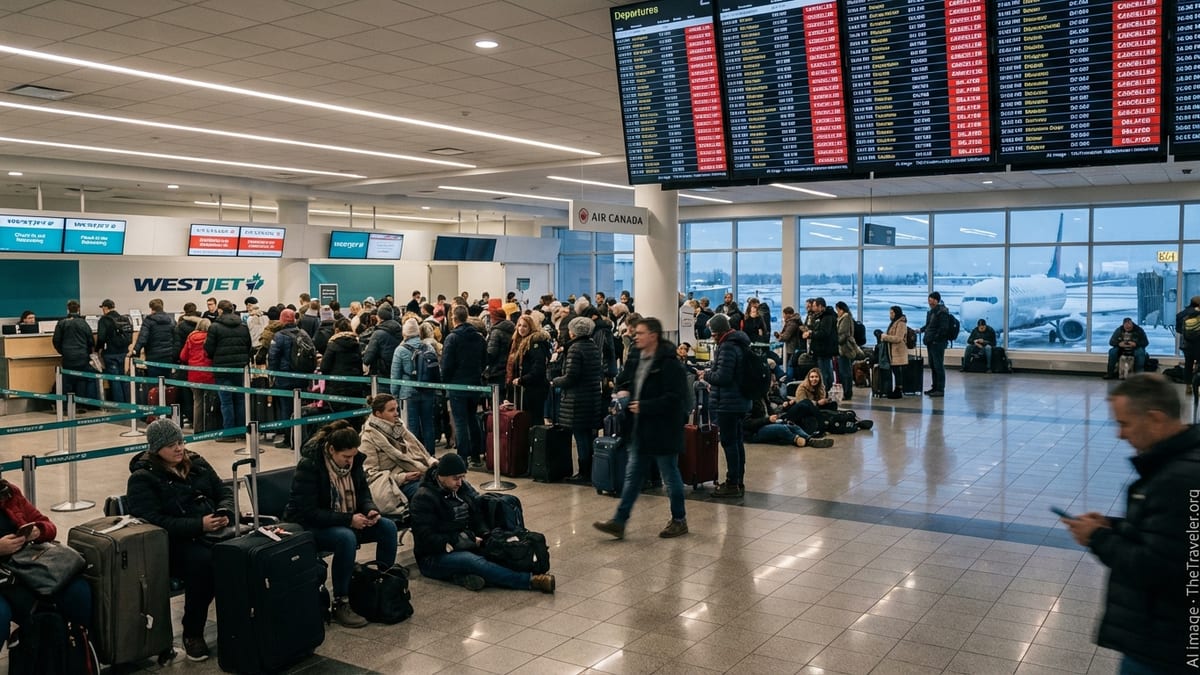
Cluster of Delays and Cancellations Hits Key Prairie Routes
Operational data and published flight-tracking information show that Saskatoon recorded five delayed departures and three outright cancellations on its busy corridor of services to Regina and Calgary. The affected flights involved a mix of mainline and regional operations under the Air Canada, Jazz and WestJet brands, affecting passengers traveling both within Saskatchewan and onward through Calgary’s major hub.
The disruptions were concentrated on short-haul connections that typically serve business travelers, medical trips and family visits. Even modest schedule changes on these routes can have outsized consequences for passengers with tight connections in Calgary or limited same-day alternatives into Regina. With Saskatoon and Regina already operating with leaner schedules than Canada’s largest airports, the loss of several flights in a single day significantly reduces flexibility for travelers.
While precise numbers of impacted passengers are not yet published, typical load factors on these routes suggest that hundreds of travelers may have seen itineraries pushed back by several hours or rebooked onto later or indirect services. In several cases, cancellations forced passengers to connect through other western Canadian airports instead of flying directly between Saskatoon, Regina and Calgary.
Publicly visible tracking feeds for the day showed rolling knock-on effects, with early delays propagating into later rotations on the same aircraft. Short stage lengths between the Prairie cities mean aircraft often cycle through multiple legs per day, so a late inbound arrival can quickly compromise the reliability of following departures.
Air Canada and Jazz Services Face Schedule Pressure
Air Canada and its regional affiliate Jazz, which together maintain a web of feeders into larger hubs, were among the operators affected by Saskatoon’s disruptions. According to flight-status boards and independent tracking platforms, at least several departures marketed by Air Canada and operated by Jazz experienced significant delays, in some cases exceeding an hour beyond scheduled departure times.
These short-haul services play a critical role in connecting Saskatoon and Regina travelers to the national network through Calgary and other larger hubs. When delays or cancellations occur on these regional links, passengers can miss interprovincial and transcontinental connections, leading to involuntary stopovers or substantial schedule changes. Travel industry observers note that this vulnerability is especially acute for smaller markets that rely heavily on a handful of daily departures to reach the national grid.
In recent seasons, publicly available coverage has highlighted broader pressure on Canada’s regional aviation system, including constrained pilot availability at regional carriers and tight aircraft utilization that leaves limited slack to recover from operational disruptions. Jazz, which operates many flights under the Air Canada Express banner, is frequently cited as a critical connector for communities like Saskatoon and Regina, where alternative ground transport options often involve long highway drives.
Reports indicate that some passengers affected by today’s delays were rebooked onto later Jazz-operated flights or rerouted through other hubs, extending overall travel times. With many regional itineraries involving multiple legs, even a single delayed departure from Saskatoon can trigger missed connections and further adjustments downline.
WestJet Routes Between Saskatoon, Regina and Calgary Also Affected
WestJet, a key competitor on western Canadian routes, also faced schedule disruption on its Saskatoon operations to Regina and Calgary. Flight tracking services for the day showed a combination of delayed departures and at least one cancellation on WestJet-operated or WestJet Encore-operated services linking these cities.
Because WestJet positions Calgary as a central hub for both domestic and international travel, interruptions on the short-haul corridor from Saskatoon can be particularly disruptive. Travelers relying on early morning or mid-day feeder flights into Calgary risk missing onward services to destinations across Canada, the United States and sun markets. When cancellations occur, same-day alternatives are limited on the Saskatoon to Calgary route, leading to longer layovers or overnight stays for some passengers.
Published analysis of recent seasons in western Canada shows that WestJet has focused heavily on strengthening Calgary as its primary hub, with high utilization of narrowbody aircraft and regional turboprops on spokes like Saskatoon and Regina. While this structure supports frequent service under normal conditions, it can also mean that irregular operations quickly ripple through the schedule when weather, crew availability or technical issues arise.
Travellers posting on public forums in recent months have described a patchwork of experiences with WestJet on regional routes, ranging from on-time flights to extended delays and last-minute cancellations tied to operational constraints. Today’s Saskatoon disruptions appear to fit into that broader pattern of tight schedules that can be vulnerable to even short-lived operational shocks.
Knock-On Effects Felt in Regina and Calgary
The impact of Saskatoon’s disruptions extended beyond its own terminal, with downstream effects visible in Regina and Calgary. Several flights operating between the three cities run as part of multi-leg rotations, so delays and cancellations at Saskatoon can displace aircraft and crews that are needed for later segments originating in Regina or Calgary.
Regina International Airport, which already operates a relatively limited set of nonstop destinations compared with larger centers, is particularly sensitive to such ripples. When flights into or out of Regina from Saskatoon or Calgary are delayed or canceled, passengers often have no choice but to accept lengthy reroutes through other hubs or shift travel to different days. Publicly available passenger statistics for the region have previously shown that even modest capacity reductions can translate into higher fares and reduced travel flexibility.
Calgary International Airport, by contrast, is a major national hub with a dense network of flights. In this case, the primary effect of the Saskatoon disruptions is on feeder traffic rather than on the broader Calgary schedule itself. Nonetheless, a cascade of delayed arrivals from Saskatchewan complicates gate management and connection flows, particularly at peak times when aircraft turnarounds are closely spaced.
For travelers starting or ending their journeys in Calgary, the visible impact came through sudden gate changes, revised departure times for flights involving Saskatoon-bound aircraft, and occasional rebookings when connection windows evaporated. Airlines sought to absorb some of the disruption by shifting affected passengers onto later services or alternative routings where seats were available.
Passengers Weigh Options and Rights Amid Ongoing Volatility
With five delays and three cancellations concentrated on a small group of regional flights, many travelers at Saskatoon, Regina and Calgary faced a familiar question: whether to wait out revised departure times or push for rebooking onto other itineraries. Consumer advocates regularly advise passengers to monitor airline apps and airport boards closely, as information can change rapidly when carriers attempt to rebuild disrupted schedules.
Publicly accessible guidance on air passenger rights in Canada outlines differing levels of assistance and compensation depending on the cause of a disruption and the size of the carrier. If a delay or cancellation is within an airline’s control, affected passengers on larger carriers may be entitled to rebooking, meals, or in some cases financial compensation. When the cause is outside the airline’s control, such as severe weather or air traffic restrictions, obligations may be more limited, although carriers typically still provide rebooking on the next available flight.
Travel planners note that for smaller markets like Saskatoon and Regina, advance preparation can help reduce the stress of unexpected changes. Booking longer connection times in Calgary, keeping critical items in carry-on baggage and considering flight times with multiple later alternatives can all provide buffers when the schedule deteriorates. Passengers with time-sensitive commitments, such as medical appointments or same-day international connections, are often encouraged to build in additional margin where possible.
Despite the day’s disruptions, schedules for subsequent days indicated that airlines intended to operate a broadly normal pattern of services between Saskatoon, Regina and Calgary. However, with regional aviation in western Canada continuing to operate with tight resources and high aircraft utilization, travelers on these routes are likely to remain attentive to potential schedule changes as peak summer travel continues.