


More news on this day
In the Swiss village of Broc, in the heart of the Gruyère region, plans for a vast Maison Cailler chocolate-themed park are reshaping expectations of what industrial tourism and culinary travel can look like in Switzerland.
Get the latest news straight to your inbox!
A Historic Factory Poised for a New Chapter
The planned Cailler chocolate park builds on more than a century of production at the Broc factory, where the Cailler brand has been making milk chocolate since the late nineteenth century. Publicly available information indicates that the existing Maison Cailler visitor center, already one of western Switzerland’s most popular attractions, will form the heart of an expanded experience that puts the historic site at center stage.
According to project details released by the Gruyère-Chocolat Association, the park is designed to grow from the current 2,000 square meters of visitor space to close to 30,000 square meters in and around the working factory. Reports indicate that this expansion will preserve the industrial and architectural heritage of the complex while opening more of the production world to visitors.
Plans outline a 4 to 6 hour visit that turns what is today a relatively compact tour into a full half-day immersion in chocolate culture. Early descriptions highlight that the working factory will remain in operation, offering travelers a rare opportunity to witness real industrial-scale chocolate production from the inside while also engaging with new interpretive spaces.
Project documents further suggest that the current Maison Cailler museum building is slated for redevelopment to accommodate the new concept. Coverage in European travel media notes that demolishing the existing structure and restoring elements of its Neo-Renaissance façade are part of a broader effort to “modernise and develop” the site without losing its distinctive identity.
From Tasting Tour to Full Immersive World
The future park concept is built around immersion and edutainment, extending current offerings that already combine storytelling, sensory experiences and tastings. The Gruyère-Chocolat Association describes a visitor journey that follows cocoa from its tropical origins through transport and processing to its encounter with local milk from the surrounding pastures, a key feature of Cailler’s milk chocolate identity.
Specialist design firms cited in project information, including BRC Imagination Arts and Jora Vision, are being tasked with translating that narrative into a themed environment. The chocolate-focused scenography is expected to be complemented by an attraction dedicated to the Gruyère region itself, weaving together landscape, agriculture and gastronomy in an integrated storyline.
Current Maison Cailler experiences already include multi-sensory exhibits, hands-on workshops and outdoor games, positioning Broc as a family-friendly stop on many Swiss itineraries. The new park seeks to expand that model into a multi-hour universe of chocolate, where education and entertainment blend through interactive installations, demonstration zones and curated tasting moments.
Reports in travel media emphasize that the ambition is to move beyond a classic factory tour toward a destination-scale attraction. The target is not only to deepen the experience for existing visitors but also to attract new audiences who might plan a dedicated trip to Broc as part of a broader culinary or rail-based journey across Switzerland.
Investment, Timeline and Regional Impact
Publicly available figures suggest that the chocolate park represents one of the most substantial tourism investments in the Gruyère region in recent years. The Association Gruyère-Chocolat reports a budget of around 400 million Swiss francs for the broader project, which includes the themed park, landscape redesign and integration with the operating factory.
Local planning documents and recent coverage in European newspapers indicate that the municipality of Broc has submitted the Cailler Chocolate Park project for public consultation. The development requires amendments to local planning frameworks and multiple building permits, and the first phase is currently projected to open around 2030, subject to approvals and construction timelines.
Nestlé Switzerland, which owns the Cailler brand, has also announced investment in modernising and rearranging production lines at the Broc factory. Information published by the Gruyère-Chocolat Association notes that these works, which began in 2023, are intended both to update manufacturing infrastructure and to free space and circulation routes needed for the expanded visitor experience.
Forecasts shared by project backers suggest that the initial phase of the park aims to draw between 700,000 and 800,000 visitors per year, with some media reports citing a longer-term ambition of reaching up to one million annual guests. For the wider canton of Fribourg and the Gruyère district, that level of traffic would reinforce the area’s position as a leading destination for food-focused tourism in Switzerland.
Designing a Sustainable Chocolate Landscape
The transformation of the factory surroundings into a tourism zone is being framed as both an economic and environmental project. According to information released by the Gruyère-Chocolat Association, the site plan includes a dedicated landscape concept that highlights native vegetation and aims to enhance biodiversity along the nearby Jogne river.
Project documents indicate that existing business-zoned land near the factory has been reclassified for tourism use under the regional master plan, approved by the canton of Fribourg in 2023. Planners describe an approach that integrates the park’s architecture with green corridors, water features and cocoa-bean-inspired structures, presenting the park as a stylised “garden of chocolate” rather than a purely urban development.
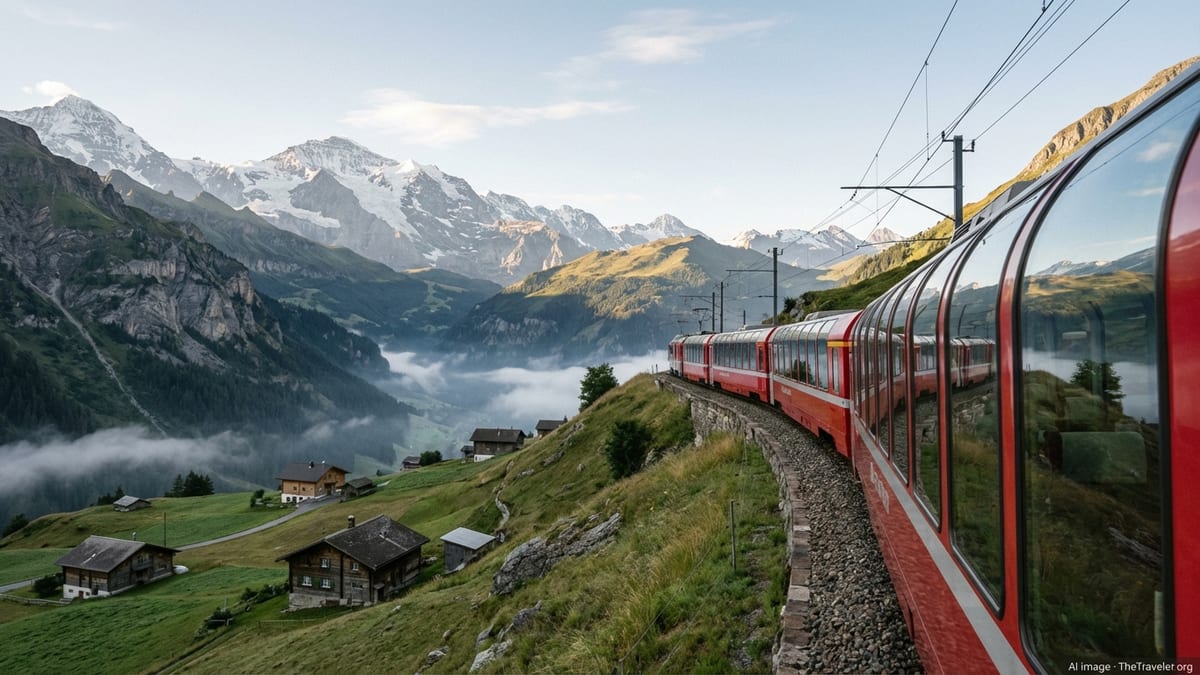
Transport management is also a key consideration. Reports on the project note that a direct rail link from Bern to the Broc-Chocolaterie station is expected to play a central role in bringing visitors to the site. A proposed cable lift connecting the park with an off-site underground parking facility is designed to keep most vehicle traffic away from the immediate factory surroundings.
At the same time, Nestlé has outlined separate efforts to optimise truck logistics around the plant, including load consolidation, adjusted schedules and exploration of lower-emission vehicles. For travelers, these measures support a narrative in which the journey to Broc, often by train through pastoral landscapes, is part of the overall experience.
A New Anchor for Chocolate and Cheese Tourism
Broc’s chocolate ambitions are closely tied to its neighbors in the Gruyère region. For many visitors today, Maison Cailler already forms part of a popular pairing with the nearby Gruyère cheese factory and the medieval hilltop village of Gruyères, a combination often promoted in regional tourism materials and international travel features.
The planned chocolate park is expected to deepen that synergy, contributing to what some observers describe as an emerging culinary corridor where milk from local farms supports iconic regional products featured in visitor experiences. Public information on the project specifies that all milk used in Cailler chocolate production comes from farms within roughly 30 kilometers of the Broc factory, reinforcing the local story behind the brand.
For international travelers, the expanded park could reposition Broc as a stand-alone destination rather than just a stop on a wider Swiss itinerary. With a projected visit length of several hours, integrated rail connections and an immersive narrative tying together cocoa, Alpine pastures and industrial heritage, the development is being watched as a potential model for next-generation food tourism.
As planning advances and construction phases are defined, Broc’s historic factory complex appears set to evolve from a beloved visitor center into a flagship attraction at the intersection of storytelling, education and indulgence. For travel lovers, it signals that the world of Swiss chocolate is preparing to welcome guests into an even richer and more enveloping universe of taste.