


More news on this day
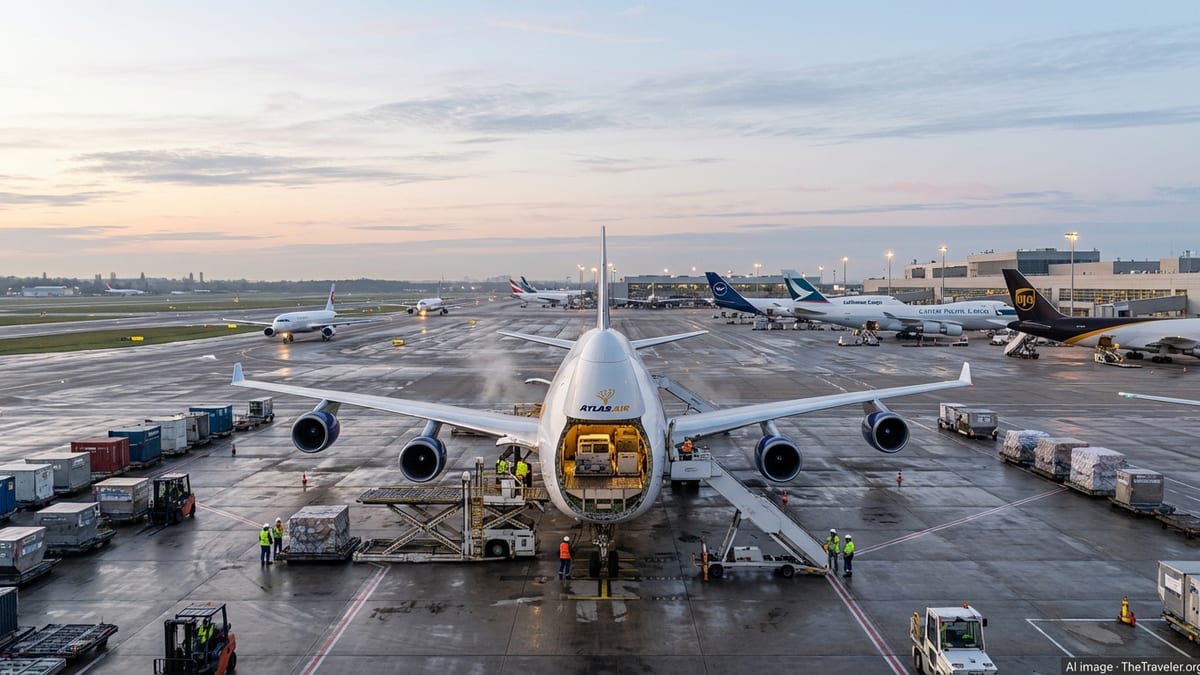
Major international airlines are increasingly positioning freighter aircraft and expanding cargo operations at Norman Manley International Airport (NMIA) in Kingston, Jamaica, signaling a strategic shift that is turning the capital’s gateway into one of the Caribbean’s most closely watched emerging air freight hubs.
Get the latest news straight to your inbox!
NMIA Emerges as a Regional Cargo Focal Point
Publicly available airport and customs data identify Norman Manley International Airport as Jamaica’s primary cargo gateway, handling the majority of air freight moving through the country. Industry reports describe NMIA’s cargo and logistics complex as a purpose built facility with dedicated warehousing, customs operations and secure truck access, positioning the airport to attract larger, more frequent freighter movements from global carriers.
Recent coverage in Jamaican business media highlights a sharp divergence between passenger and cargo trends at NMIA. While passenger numbers have softened in 2026, cargo volumes for the first four months of the year have been reported well above pre pandemic levels, with growth far outpacing the recovery in traveler traffic. Observers view this pattern as evidence that airlines are increasingly treating Kingston as a freight focused station within their Caribbean networks.
Historically, NMIA has already handled more cargo than its tourist heavy counterpart in Montego Bay, reflecting Kingston’s role as Jamaica’s commercial and manufacturing hub. Current developments suggest that this long standing cargo orientation is now being reinforced as airlines re evaluate fleet deployment, routing and belly hold capacity in response to changing trade flows and e commerce demand across the Americas.
Freighters Line Up as Airlines Chase E Commerce and Trade
According to information from airport operators and cargo business materials, NMIA hosts a roster of established freight and combination carriers that includes major North American and European brands alongside regional operators. These carriers use a mix of dedicated freighters and passenger aircraft bellies to move goods ranging from express parcels and perishable foods to manufacturing inputs and high value consumer products.
Market analysts note that the acceleration in volumes at NMIA in early 2026 coincides with broader regional trends. Cross Caribbean trade, nearshoring activity and the rapid expansion of e commerce into smaller island markets are driving demand for faster, more reliable logistics chains. As a result, airlines are deploying additional freighter capacity to airports that can guarantee slot availability, 24 hour cargo handling and efficient customs clearance.
Industry commentary indicates that NMIA’s cargo ramps have seen more frequent freighter rotations from global express integrators as well as scheduled main deck capacity from passenger airlines adapting older aircraft for all cargo operations. The visible buildup of wide body and narrow body freighters on the apron is being interpreted locally as a sign that Kingston is gaining importance as a consolidation and redistribution point for north south and east west flows through the Caribbean basin.
Infrastructure Investments Support Logistics Ambitions
Planning documents and historical project descriptions show that NMIA’s cargo transformation has been years in the making. The airport’s modern cargo and logistics centre was developed in phases, with initial construction delivering warehousing, customs offices and courier facilities, and a subsequent phase earmarked to add significant warehouse space and additional commercial cargo units.
These investments are part of a broader strategy by Jamaica’s airport authorities and private concessionaires to enhance the value of Kingston as both a passenger and freight node. Upgrades to runways, taxiways and aircraft stands have been complemented by terminal improvements and, more recently, a push to grow non aeronautical revenues through expanded retail and duty free areas. Together, these projects are aimed at raising the airport’s profile among airlines seeking reliable regional partners for long term cargo growth.
Logistics planners emphasize that NMIA also benefits from its proximity to Jamaica’s seaport infrastructure and industrial zones. The ability to connect sea freight, air cargo and inland distribution within short transfer distances supports ambitions to develop the Kingston area as a multimodal distribution hub, serving not only domestic demand but also transshipment flows to Central America and the wider Caribbean.
Balancing Cargo Expansion with Passenger Market Realities
While cargo volumes are surging, the passenger side of the business at NMIA has faced headwinds in 2026, with local reporting pointing to reductions in service from at least one low cost carrier and a more cautious approach to seat capacity deployment. Airport stakeholders have publicly framed this shift as an opportunity to recalibrate the mix of aeronautical revenues, leaning more heavily on freight as a stabilizing factor during periods of passenger volatility.
Analysts observe that the trend at NMIA mirrors developments at other mid sized airports worldwide where cargo has taken on a more prominent role since the pandemic. As airlines adjust networks, some gateways are seeing fewer tourist oriented flights but greater interest from logistics operators, which value predictable handling conditions and competitive tariffs over sheer passenger volume.
For travelers, these dynamics could translate into a more measured pace of passenger growth at Kingston even as the airport’s overall activity level rises on the back of freighter movements. Industry watchers suggest that future passenger expansion may hinge on broader tourism initiatives and airline partnership strategies, while cargo appears set to remain a central pillar of the airport’s business model.
Implications for Jamaica’s Role in Caribbean Air Freight
With major airlines lining up freighters on the NMIA runway and cargo volumes climbing, Jamaica’s position within the Caribbean logistics landscape is evolving. The strengthening of Kingston as a cargo hub adds a new dimension to a network historically dominated by larger gateways in North America and Central America, offering shippers additional routing options and redundancy.
Trade specialists note that if current growth rates persist, NMIA could become more influential in how goods move between Latin America, the United States and smaller island economies. Increased main deck capacity can support time sensitive exports such as pharmaceuticals, fresh produce and high value manufactured goods, while also improving inbound flows of consumer products that underpin retail and online commerce.
For Jamaica, the rise of NMIA as a freighter friendly airport supports national objectives related to investment attraction, job creation and supply chain resilience. As airlines continue to queue their cargo aircraft on the Kingston runway, the country’s capital is emerging not only as a political and cultural center, but as a key node in the air freight networks that underpin modern regional trade.