


More news on this day
Rail passengers across Yorkshire are facing severe disruption after an incident on the line between Huddersfield, Brighouse and Leeds prompted the deployment of emergency services and the suspension of several key commuter services.
Get the latest news straight to your inbox!
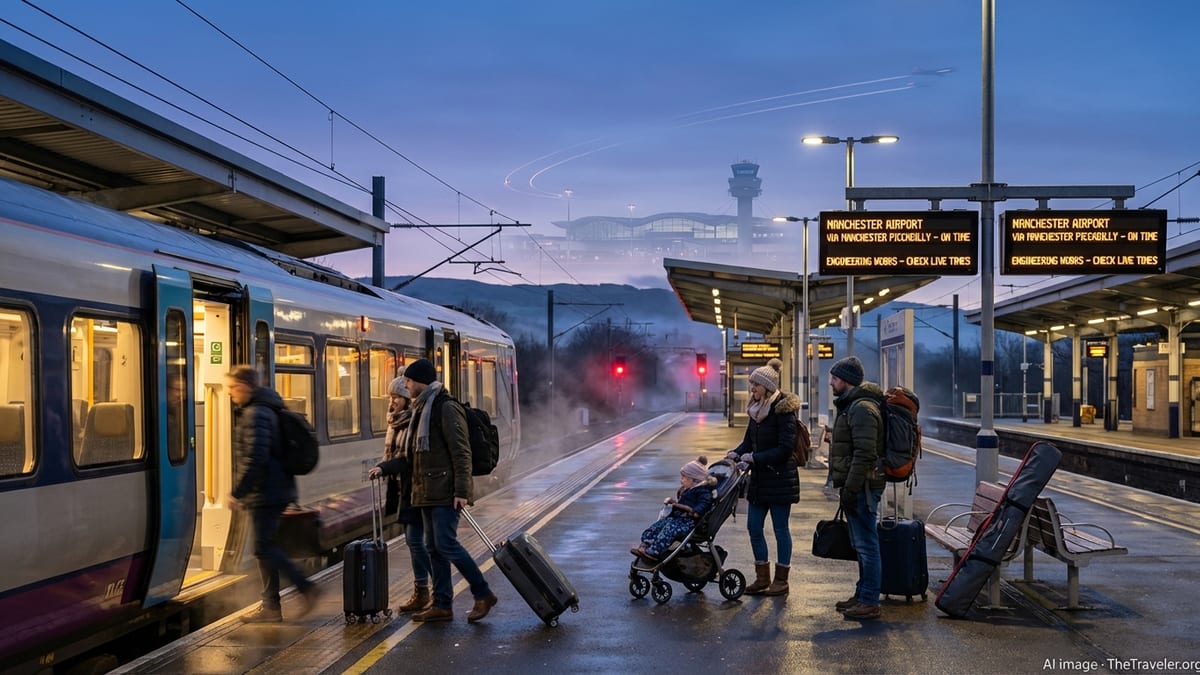
Lines blocked and services suspended across key West Yorkshire routes
Rail operators are reporting major disruption on Tuesday 28 July after emergency services were called to an incident on the corridor linking Huddersfield and Brighouse with Leeds and Wakefield Kirkgate. Information published by National Rail indicates that all lines in the affected area have been blocked for several hours, with disruption expected to continue through the morning peak period.
Service update pages show that trains running between Huddersfield or Brighouse and Leeds are among the worst affected, with cancellations, significant delays and diversions in place. Passengers are being advised that journey times may be extended and that some services may start or terminate short of their usual destinations while the incident is managed.
Publicly available operational summaries state that normal running is not expected to resume until late morning at the earliest. Rail users are being urged to check live journey planners before travelling and to allow extra time if journeys cannot be postponed.
Northern, TransPennine Express and others adjust timetables
Operator information highlights that Northern services are bearing the brunt of the disruption, as the blocked section forms part of several of the company’s core stopping and semi-fast routes into Leeds. Service update bulletins show that some trains are being altered to run via alternative routes where paths are available, while others are cancelled outright because no diversionary paths exist.
According to live travel updates issued on Tuesday morning, ticket restrictions on Northern have been relaxed across the affected area, including on Advance and peak tickets, to give passengers more flexibility. Passengers holding tickets for cancelled trains are being permitted to travel on alternative Northern services as well as on certain TransPennine Express and East Midlands Railway services running through West Yorkshire.
TransPennine Express services using the Huddersfield to Leeds axis are also seeing extended journey times and occasional short-notice alterations. Where trains remain able to operate, they are reported to be busier than usual as they carry passengers displaced from cancelled local stopping services.
Replacement road transport and ticket acceptance arrangements
Travel bulletins and station announcements indicate that rail replacement road transport is being organised on key flows where trains cannot operate. Buses are expected to link Huddersfield, Brighouse and Leeds, although journey times are significantly longer than by rail, particularly during the busy morning period on the M62 and local approach roads into Leeds.
Public information from National Rail and individual operators indicates that passengers may use tickets on alternative rail routes across Yorkshire where reasonable, subject to capacity. This can include using longer, cross-country routes into Leeds or travelling via other hubs such as Wakefield or Bradford Interchange when services are running.
Passengers with mobility needs are being encouraged, through published guidance, to check in advance whether planned replacement buses can accommodate wheelchairs or other accessibility requirements. Rail advice pages note that customers who rely on step-free access or assistance at stations may wish to delay non-essential journeys until regular rail services resume.
Recent pattern of incidents adds pressure to Yorkshire network
The latest disruption comes after a succession of short-notice incidents across Yorkshire in recent weeks that have placed additional strain on the region’s rail users. National Rail incident logs for the wider area show recent problems near Driffield affecting services between Hull and Bridlington, as well as earlier issues around Leeds linked to trespass incidents and infrastructure damage.
Although each event is separate, the cumulative effect for commuters and leisure travellers is a perception of fragile reliability on some of the region’s most heavily used routes. Passenger groups in Yorkshire have previously highlighted how sudden line blockages, even when safety-related and unavoidable, can quickly cascade into missed connections and lengthy delays far from the original incident site.
Rail industry information explaining how emergency incidents are handled notes that any time emergency services need safe access to the railway, train movements in the vicinity are heavily restricted or stopped altogether. This safety protocol, while necessary, often results in significant and sometimes prolonged disruption until the line can be fully inspected and declared safe for the resumption of traffic.
Advice for affected passengers planning to travel today
Journey planners on operator and National Rail platforms are being updated frequently as the situation develops, and passengers are being urged to check close to departure time rather than relying on timetables printed in advance. Travellers who can shift their journey to later in the day are being advised through public information channels that doing so may reduce the risk of cancellation or severe delay.
Holders of Advance tickets on affected services are being given additional flexibility, with rail operators stating in their disruption notices that customers may use their tickets on earlier or later trains operated by the same or specified partner companies. Passengers who decide that they no longer wish to travel because of the disruption are being directed to standard refund and compensation processes set out in the National Rail Conditions of Travel.
For many regular commuters into Leeds, Huddersfield and Wakefield, Tuesday’s incident will mean another morning of uncertainty, longer journeys and crowded alternative services. Travel information suggests that services should gradually stabilise once emergency teams have completed their work and the line has been inspected, but the timing of that return to normality remains dependent on the outcome of the ongoing response at the scene.