


More news on this day
Train services on a key route through Karnataka were disrupted on Tuesday after a technical fault near Alnavar station brought several services to a halt, leaving passengers stranded on platforms and inside halted coaches for hours.
Get the latest news straight to your inbox!
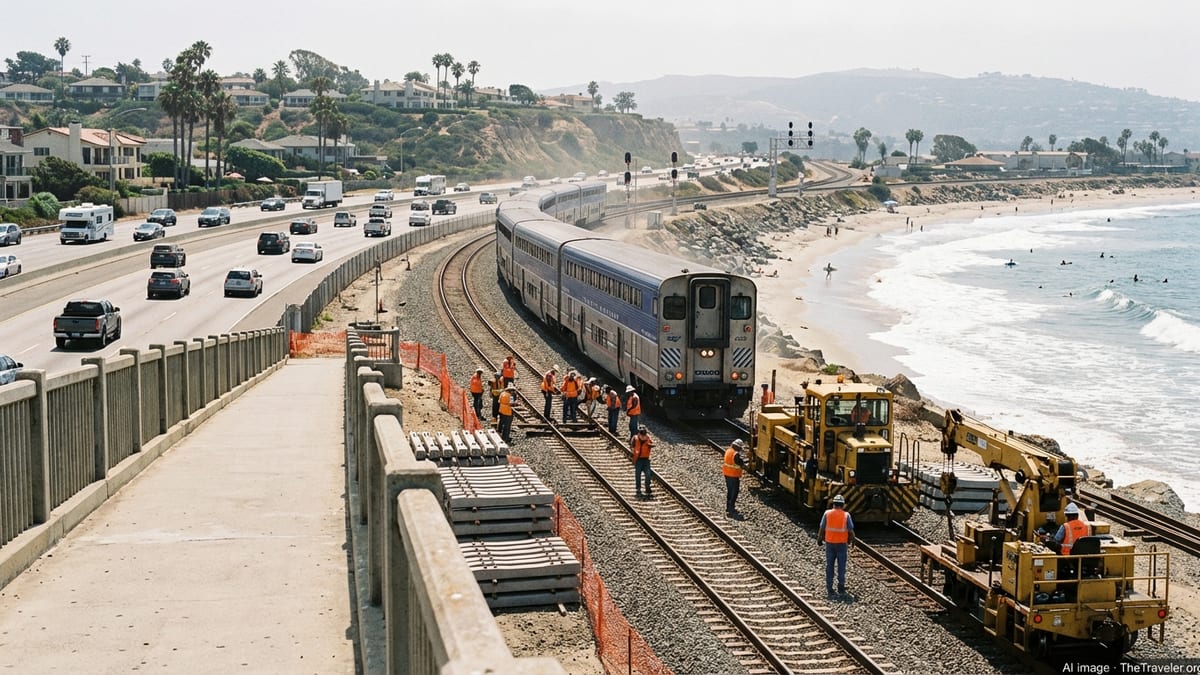
Fault near Alnavar halts multiple services
Initial reports indicate that the disruption occurred on a busy section of track near Alnavar, a junction on the Hubballi region network that connects routes toward Belagavi, Goa and southern Maharashtra. The fault, described in local coverage as a technical problem affecting train operations in the area, prompted an immediate stoppage of movements through the affected stretch.
Publicly available information shows that trains approaching Alnavar were either held outside the station limits or terminated short of their destinations, leading to significant crowding on platforms. Some services were reported to be running at restricted speeds, while others were diverted or delayed as controllers attempted to keep at least limited traffic flowing on parallel routes.
The incident added pressure on an already busy corridor, as Alnavar handles long-distance express services along with regional and passenger trains. With no clear early estimate of restoration, the disruption quickly cascaded into a backlog of delayed rakes and missed connections further along the network.
Passengers stranded on platforms and in halted coaches
Accounts shared on regional news outlets and social media describe passengers waiting for extended periods at Alnavar station without precise information on departure times. Families with children and older travelers were seen sitting on platforms with luggage, while others remained inside stationary coaches in the station area and on the line leading into the junction.
Some travelers attempting to reach Hubballi, Belagavi and coastal destinations reported missed onward connections as trains arrived far behind schedule. According to published coverage of similar disruptions elsewhere on the Indian network, such cascading delays often stretch from a few hours into the rest of the operating day when faults occur on single-line or constrained sections.
Limited station amenities added to discomfort for those stranded for longer durations. Passengers typically depend on small food stalls and basic waiting areas at intermediate junctions such as Alnavar, and extended delays can quickly strain available seating, shade and refreshment options.
Technical faults a recurring challenge on busy Indian routes
The episode near Alnavar comes against a broader backdrop of recurring technical issues on India’s vast rail network. Recent coverage of disruptions in metropolitan systems and intercity corridors across the country highlights how signal failures, overhead equipment problems and rolling stock glitches can trigger widespread knock-on delays, even when they are resolved within a relatively short window.
Studies drawing on Indian train running data have noted that unexpected faults on key junctions and single-line stretches often result in disproportionately large impacts on punctuality, as there is limited redundancy in routing. Once a section is temporarily blocked or restricted, trains quickly begin queuing, and recovery can take several hours as controllers work through the backlog and reposition rakes for their next scheduled runs.
Rail operations research also underlines the importance of robust maintenance regimes and real-time monitoring systems to detect emerging issues before they lead to line closures. While Indian Railways has been introducing newer technology on high-density routes, many regional sections, including parts of Karnataka’s network, still rely on legacy infrastructure that is more susceptible to faults and slower to reset after an incident.
Information and contingency arrangements under scrutiny
Passenger experiences during the Alnavar disruption have drawn attention to how information and contingency arrangements are managed during technical failures. Publicly available reports from disruption case studies in India and abroad show that travelers are often more critical of gaps in communication and lack of clarity on options than of the delay itself.
On busy days, announcements about revised timings, cancellations and alternative travel options can be difficult to hear or may not reach all parts of a station. When trains are held outside station limits, passengers inside coaches may also struggle to obtain timely updates on when services are likely to move, adding to frustration and uncertainty.
Industry reviews of similar incidents globally recommend clearer passenger information protocols, including frequent status updates, visual display use where available, and guidance on refunds or rebooking when delays exceed threshold durations. For junctions like Alnavar, where many travelers are in transit between longer-distance services, clarity on missed-connection handling and overnight arrangements can be particularly important.
Gradual restoration and lingering knock-on delays
By late in the day, reports indicated that technical teams had isolated and addressed the fault near Alnavar, allowing train movements to resume through the affected stretch under controlled conditions. Services, however, were expected to remain disrupted for some time as delayed trains were cleared and rakes were brought back into alignment with their planned schedules.
Operational patterns following comparable incidents suggest that some trains may be short-terminated or run with altered stopping patterns to absorb lost time, which can create further inconvenience for passengers booked to smaller intermediate stations. Recovery can also carry over into the following day if key rakes arrive late to their originating terminals.
For Alnavar and similar junctions, the episode highlights the vulnerability of passengers when technical faults occur on sections with limited alternative routing. It also underscores the continuing importance of investment in both infrastructure reliability and passenger-facing communication, so that travelers stranded by sudden disruptions are better informed and, where possible, provided with practical options while services are brought back on track.