


Stepping into Oslo Central Station for the first time can feel overwhelming. Trains to the airport, Bergen, Trondheim, Gothenburg and the suburbs all leave from here, often within minutes of each other. With a bit of preparation though, you can move through Oslo S smoothly, avoid queues and last minute panic, and even save yourself half an hour on the clock. These practical tips focus on the things that actually matter at the station: where to stand, when to buy, which train to choose and how to make connections less stressful.
Get the latest updates straight to your inbox!
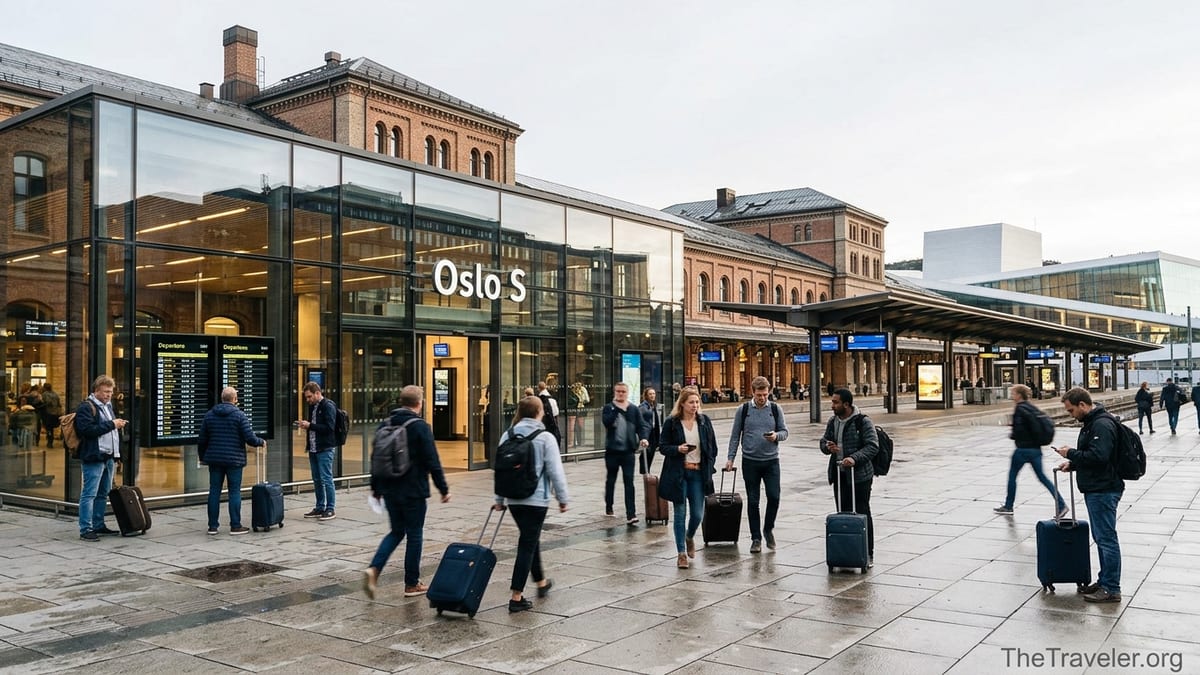
Know Your Oslo S Layout Before You Arrive
Oslo Central Station, usually written as Oslo S on timetables, is the main hub for almost every train line in Eastern Norway. Long distance services to Bergen and Trondheim, regional trains towards Lillehammer and Skien, commuter lines through the Oslo suburbs and the airport trains all share this station. The platforms are split roughly into two groups: the lower numbered tracks closest to the main hall, and higher numbers towards the bus terminal side. For a first time visitor arriving from the airport or a cruise ship, simply knowing that “Oslo S” and “Oslo Central” are the same place removes a lot of confusion when reading signs.
Inside the station, there are two main concourses: the older east side with Entur’s ticket office and luggage storage, and the modern west hall that opens towards the Oslo City shopping centre. Most long distance and airport trains use the platforms directly below or just beyond the west hall. If you already know your departure time and train number, you can walk straight to the row of departure boards along the concourse and check which track has been assigned, instead of wandering from sign to sign when the announcement is made.
In practice, this means that if you are changing from a bus or tram at Jernbanetorget (the square outside the station), you should head straight into the main hall, look for the large blue monitors with “Avganger / Departures” at the top, and ignore smaller screens for trams and local buses. Many delayed departures from Oslo S happen not because trains are late, but because passengers have misread the station displays and waited near the wrong gate until it was too late to reach their train.
A useful time saver on arrival is to decide in advance which exit you need. For example, if you are staying near Karl Johans gate or the Opera House, follow signs for “Oslo S / Jernbanetorget / Operagata.” If you are catching a regional bus or airport coach, the “Bussterminalen” exit puts you a short walk from the platforms. Knowing your exit beforehand can easily save 10 minutes of backtracking through crowds, especially at rush hour.
Airport Trains: Flytoget vs Vy and How to Avoid Time Traps
From Oslo S to Oslo Airport Gardermoen, you have two main train choices: the high speed Flytoget Airport Express and the regular Vy services. Flytoget takes around 19 minutes between Oslo S and the airport, runs up to six times per hour in peak periods and often has more dedicated luggage space. The regular Vy regional and commuter trains typically take about 23 minutes and usually run at least once every 30 minutes. In real terms, you are trading roughly 4 minutes of journey time and slightly fewer departures for a significantly cheaper ticket on Vy compared with Flytoget.
This is where many visitors lose both time and money. Ticket machines and prominent signs at Oslo S heavily advertise Flytoget, and some travelers assume that is the only option. They queue at Flytoget machines or download the Flytoget app, then only discover later that a Vy train to the airport left from a nearby track a few minutes earlier. If you are not in a particular hurry, walking directly to a Vy ticket machine or using the Vy app to buy a ticket straight to “Oslo Lufthavn” can save you time at the station and give you a better price without any meaningful delay to your arrival at the terminal.
There are situations where Flytoget does save crucial time. Early morning departures around 05:30 and late night flights close to midnight are often better covered by Flytoget than by Vy, and Flytoget has its own guarantee that if their delay causes you to miss your flight they will cover additional costs for the next available flight. Vy has its own travel guarantee for serious delays, but if you are extremely tight on time and value a bit of extra protection, Flytoget can be worth the premium.
To keep things simple and fast, make a rule before you reach Oslo S: if you have more than 45 minutes before airport check in closes and you do not mind a short wait, use Vy. If your departure is closer than that, or if you are traveling during very early or late hours, pay for Flytoget. Deciding this before you stand in front of the ticket machines removes the stressful last minute comparison that often leads to missed trains.
Buying Tickets: Apps, Machines and When to Book Ahead
One of the biggest time savers at Oslo S is avoiding the ticket office queue entirely. For most journeys, from airport trips to long distance routes like Oslo to Bergen, you can buy tickets through the Vy app or website in a few minutes. The app allows you to search from “Oslo S” to destinations across Norway, choose specific departures, and store your tickets on your phone. This means you can walk straight to your platform when you enter the station instead of waiting in line at Entur’s counter or vying for one of the busier ticket machines during rush hour.
However, there are exceptions where planning ahead really matters. Many of Norway’s long distance trains, such as the Oslo to Bergen or Oslo to Trondheim lines, use compulsory seat reservations or sell out of their cheapest “Lowfare” tickets days or weeks before departure, especially during summer or holiday periods. If you know you want a window seat for the scenic part of the Oslo to Bergen journey, for example, booking several weeks in advance almost guarantees a better seat choice and avoids the scenario where only middle seats or separate seats for your group remain on the day.
By contrast, local and regional trains around the Oslo area do not usually require reservations, and seats are generally available even at busy times. For these, you can safely buy your ticket in the app an hour before departure or even shortly before boarding. Just bear in mind that in Norway there can be a small surcharge if you choose to buy a ticket onboard when there were clearly ticket machines available at the station. It may only be around the cost of a coffee, but if you are traveling as a family it adds up quickly, and you will spend extra time explaining your situation to the conductor.
If you prefer physical tickets, allow at least 15 extra minutes at Oslo S during weekday afternoons or Friday evenings. Queues at the Entur ticket office can build up when multiple long distance departures leave within the same hour. In that case, machines are usually faster, but they still require you to enter names and itinerary. For a family of four heading to Bergen, doing all of this the night before on the Vy app means you can arrive at Oslo S just 20 to 25 minutes before departure instead of 45 minutes earlier.
Platform Strategy: Where to Stand and How to Read the Boards
Oslo S uses a mixture of track numbers and “spors,” the Norwegian word for tracks, on its departure boards. A typical listing might show your train as “RE10 Oslo Lufthavn Gardermoen – Eidsvoll” from “Spor 10.” The key to saving time is to start watching for your departure on the big boards in the main hall at least 15 minutes before departure, especially if you are catching a long distance or airport train. Tracks are sometimes assigned only shortly before the train rolls in, and last minute platform changes, while not constant, do happen.
Once your track is announced, avoid standing at the very top of the platform stairs where most people naturally stop. Norway’s trains are usually quite long, and the quietest carriages are often found further along the platform. Walking an extra 50 to 100 meters down the platform not only increases your chance of finding space for luggage and seating together, it also makes boarding calmer and faster, especially if you are traveling with children or bulky bags. On many Vy long distance services, the carriage number is shown on small screens inside the train by each door, so check these as you walk rather than boarding the first door you see and fighting through narrow aisles.
For travelers catching a tight connection, knowing which end of the platform you want to exit can shave a few minutes off your transit. If you are arriving on a regional train from the airport and changing to a long distance train towards Bergen, check in advance which track your second train usually uses. While this can change, patterns are common. For example, airport trains and several regional lines tend to use the same group of middle tracks. Positioning yourself at the carriage closest to the underpass or stairs for that next platform turns a stressful five minute dash into an easy two minute walk.
Another small but practical trick is to use the display screens mounted under the platform canopies, which show not only the destination but the intermediate stops and the train type. In Norway, multiple trains can depart towards similar destinations within minutes of each other. A Flytoget to Gardermoen can leave from one track almost at the same time as a Vy regional train to Gardermoen from another. Double checking the operator name and stopping pattern on the platform screen avoids boarding the wrong train and having to backtrack, which can easily cost you half an hour.
Luggage, Lockers and Using Oslo S as a Base
Oslo Central Station is a very practical base if you arrive early in the day and only catch your long distance train in the afternoon or evening. The station offers staffed luggage storage near the Entur ticket office and a large bank of self service lockers in various sizes. Prices depend on locker size and rental time, but expect to pay a moderate fee that is usually much cheaper than paying for an extra hotel night. For example, two travelers storing a medium suitcase and a daypack can often split a locker cost instead of carrying bags through the city for hours.
Self service lockers operate on a time limited basis, typically allowing you to pay for a set number of hours and top up if necessary. A common mistake is to underestimate how long a city visit will take. If you plan to walk through the Opera House area, explore Karl Johans gate and sit down for lunch, give yourself at least four hours buffer before your train departure. Returning to the station in a rush with minutes left on your locker timer is a classic way to turn a relaxed day into a stressful sprint through the concourse.
If you are only changing trains with a gap of an hour or two, it is often better not to leave the station building at all. Instead, use the time to reorganize your luggage near the quieter seating areas, refill water bottles in the restrooms, and buy snacks in one of the supermarkets or bakeries attached directly to the station. Long distance trains from Oslo S generally allow you to bring your own food and drinks, and grabbing these before boarding saves you both time and money compared with relying on the onboard café, which may have queues and higher prices.
For large or heavy luggage, arrive on the platform a few minutes earlier than you think you need to. While Norwegian trains are modern, overhead racks can be narrow and dedicated luggage racks fill quickly on busy departures. Being at the front of the boarding line means you can safely stow suitcases on a rack near your seats instead of having to place them far from your carriage or block the corridor, which slows boarding for everyone and creates unnecessary stress.
Class Upgrades, Quiet Zones and Choosing the Right Seat
On many Vy long distance routes from Oslo S, including the classic Bergen Line, you will see the option to book standard class or Vy Pluss. The Pluss upgrade typically offers more space, quieter carriages, and sometimes complimentary hot drinks or small snacks, depending on the route. While it is an extra cost, it can be a genuine time saver in terms of rest and productivity: a comfortable, quieter environment on a seven hour journey can be the difference between arriving exhausted and losing half a day, or stepping off the train ready to explore.
For travelers who value peace and quiet but do not necessarily want to pay for Pluss, many Norwegian trains have a designated quiet zone. You cannot reserve specific seats in these areas on every route, but simply knowing they exist lets you head straight there when you board and claim a seat if one is available. This is especially useful for early morning departures from Oslo S when a carriage full of commuters catching up on sleep is much calmer than the busy family or group sections.
When booking seats in advance, pay attention to where the windows are and whether seats are forward or backward facing. The Vy booking system often shows a seating map for long distance trains, and in some carriages not every seat aligns perfectly with a window. If photographing the scenery is a priority for you on routes like Oslo to Bergen, choosing a seat that clearly faces a window bay is worth a few extra minutes spent on the seating map. It saves you from spending the journey leaning into the aisle for a view, which is tiring on a long trip.
Finally, if you are traveling overnight from Oslo S on sleeper services, decide in advance whether a proper berth or a reclining seat fits your schedule and budget. A private sleeper cabin may cost more, but it lets you sleep properly and arrive early in the morning in Bergen or Trondheim with a full day ahead of you. The cheaper reclining seats are fine for many travelers, but you may need an extra hour or two after arrival to feel rested, effectively shortening your sightseeing day.
Connections, Delays and Building a Realistic Buffer
Oslo S is generally well organized, but delays and platform changes do happen, particularly in winter weather or during track works. The most reliable way to save time overall is to build realistic buffers into your itinerary rather than planning for perfectly timed transfers. For example, if you land at Oslo Airport at 13:00 and want to catch a long distance train from Oslo S at 15:00, on paper the timing works: a 20 minute train ride, plus some allowance for luggage and passport checks. In reality, a slight delay at immigration or a missed Vy departure that forces you to wait for the next train can easily push you too close to departure for comfort.
A better strategy is to allow at least 30 to 45 minutes of extra time at Oslo S for any important connection, particularly when a missed train would disrupt hotel reservations or tour bookings. Use that buffer to buy food, check your platform in advance, and familiarize yourself with the layout. If everything runs on time, you enjoy a relaxed break in the station. If not, you have a cushion that turns potential stress into a minor inconvenience rather than a major problem.
When delays are announced, stay close to the main departure boards rather than waiting on the platform unless you are told otherwise. Information about alternative trains, replacement buses, or changes to stopping patterns is usually posted on the central boards and announced over the station speakers first. If you have the Vy app, enable notifications for your specific journey so you receive updates directly on your phone while you are grabbing a coffee or using the restrooms.
If you do miss a connection because of a delay on a Vy service, go directly to the customer service desk or speak with onboard staff as soon as possible. Norway’s travel guarantees often allow you to be rebooked on the next available train at no extra charge when the delay is the rail operator’s responsibility. Acting quickly and politely usually yields a better outcome than waiting until the crowds from your delayed train have all reached the desk.
The Takeaway
Traveling from Oslo Central Station becomes much simpler once you know where the real time savers lie. Understanding the station layout helps you move directly to the right concourse and platform, bypassing the slow wandering that traps many first timers. Choosing between Flytoget and Vy for airport journeys ahead of time prevents last minute confusion and overpayment, while booking long distance tickets in the Vy app keeps you out of ticket office queues altogether.
On the platforms themselves, walking a little farther down, boarding the right carriage and knowing where the quiet zones are can turn a crowded departure into a comfortable one. Luggage storage and lockers allow you to use Oslo S as a base for a day of exploration without dragging suitcases across the city. Most importantly, realistic buffers and attention to live departure information protect you from the small disruptions that can easily snowball into missed trains and lost hours.
With these practical tips, Oslo Central Station shifts from a confusing transit hub into a surprisingly efficient gateway to the rest of Norway. A few decisions made before you ever see the departure boards can save you enough time to enjoy an extra walk by the Oslofjord, a coffee near the Opera House, or a calmer start to a long journey west to the fjords.
FAQ
Q1. How early should I arrive at Oslo Central Station before my train?
For long distance trains or airport journeys, arrive 20 to 30 minutes before departure, and add extra time if you still need to buy tickets or check luggage.
Q2. Do I need to reserve a seat on trains departing from Oslo S?
Seat reservations are mandatory or strongly recommended on many long distance routes such as Oslo to Bergen or Trondheim, but not usually on local and regional trains.
Q3. Is Flytoget really faster than the regular Vy train to Oslo Airport?
Yes, Flytoget is usually a few minutes faster and has more frequent departures, but the Vy regional trains are often cheaper and only slightly slower.
Q4. Can I buy all my train tickets at Oslo S on the day of travel?
You can for most local and regional trips, but long distance trains can sell out of the best fares or even seats, so advance purchase through the Vy app is safer.
Q5. Where can I store luggage at Oslo Central Station?
The station has a mix of staffed luggage storage and self service lockers in different sizes near the main concourse and ticket office.
Q6. How do I know which platform my train will leave from?
Check the large departure boards in the main hall for your train number and destination; platform assignments usually appear 10 to 20 minutes before departure.
Q7. Is it easy to switch between trains and other transport at Oslo S?
Yes, Oslo S connects directly to trams, the metro, local buses and the main bus terminal, but allow extra time if you are carrying heavy luggage.
Q8. Are there places to buy food and drinks before boarding?
There are supermarkets, bakeries and cafés inside and around Oslo S, and buying snacks there is usually faster and cheaper than relying on the onboard café.
Q9. What should I do if my train from Oslo S is delayed and I have a connection?
Monitor the departure boards, use the Vy app if applicable, and contact station or onboard staff quickly to ask about rebooking options.
Q10. Is Oslo Central Station safe and open late at night?
The station is generally safe and well lit, with staff and security present, but late at night it is wise to keep an eye on your belongings and stay in busier areas.