


Landing at Malaga Costa del Sol Airport and heading into the city centre does not have to be expensive or confusing. The Airport Express bus, known locally as Linea A, offers a straightforward and budget friendly link between the terminal and downtown Malaga, dropping you close to the old town, main hotels and the port. Understanding how this bus works, where to catch it and when it is a smarter choice than the train can save you time, money and stress the moment you touch down.
Get the latest updates straight to your inbox!
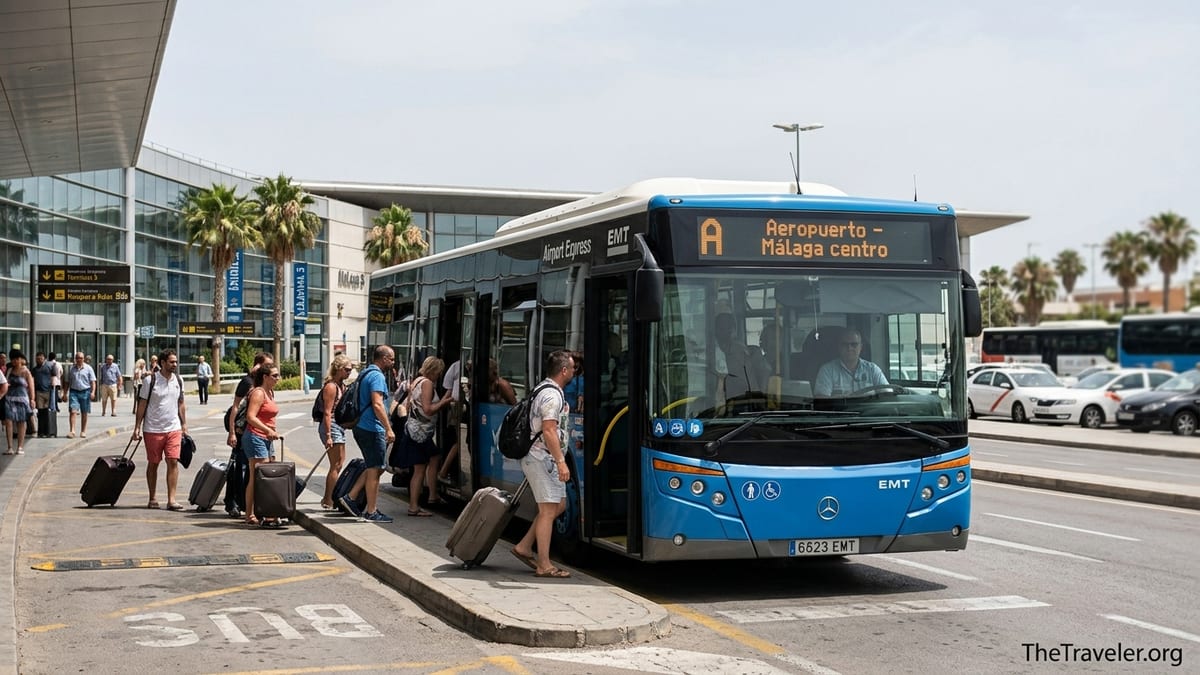
Malaga Airport Express Bus at a Glance
Malaga Costa del Sol Airport sits roughly 8 kilometres southwest of the city centre, and the municipal Airport Express bus Linea A has been designed specifically to bridge that gap. It is operated by EMT Malaga, the city’s public bus company, and runs between the airport and central stops such as Avenida de Andalucía, Alameda Principal and Paseo del Parque, all within walking distance of popular areas like the historic centre and Soho. In normal traffic the journey typically takes around 20 to 25 minutes, compared with about 12 minutes on the commuter train to Maria Zambrano station.
The Linea A is a flat fare service, currently priced at around 4 euros for a single ticket between the airport and the city centre for 2026. This makes it more expensive than the local C1 commuter train, which is usually under 2 euros, but still cheaper than a metered taxi that will often cost 25 to 30 euros for the same route, depending on time of day and traffic. For solo or budget travellers, the bus offers a predictable, mid range option that balances cost with door to door convenience into the heart of Malaga.
Frequency is one of the bus line’s biggest strengths. The Airport Express generally runs every 20 to 25 minutes throughout the day, from early morning until late at night, with slightly longer gaps at off peak hours and overnight. For many arrivals this means you are unlikely to wait more than one full TV episode’s worth of time before you are on your way into town. Schedules can vary slightly in summer or during festivals, so it is wise to glance at the current timetable inside the terminal or at the bus stop before you travel.
The Airport Express is a standard modern city bus, not a luxury coach, but it is equipped to handle air passengers. Coaches are low floor and step free, with space near the doors for suitcases and strollers and overhead bars and handles for standees. Seating is comparable to any urban bus in Spain, which is fine for a 20 minute journey but not set up for sleeping off a long haul flight.
Finding the Airport Bus Stop and Understanding the Route
When you exit the arrivals hall in Terminal 3 and step outside, the airport bus stop is directly in front of the terminal complex on the main roadway, alongside other public transport bays. Look for EMT branded blue and white buses marked with a large letter A and signage that usually reads something close to “Aeropuerto – Málaga Centro.” The stop is only a couple of minutes’ walk from the baggage reclaim area, so you do not need to cross any major roads or search for a distant station. You simply walk out, follow the bus icons overhead and you will see a line of people with suitcases waiting under the shelter.
On the airport side, there is typically a ticket office or information point nearby that sells local transport cards and regional bus tickets. This can be useful if you plan to connect from the Airport Express to other buses around Malaga or along the Costa del Sol. Many travellers, however, simply board at the stop and pay the driver in cash or tap a contactless payment card, which is generally the quickest option when you have just landed and want to get moving.
The route from the airport into the city traces the main access road past the airport perimeter and along Avenida de Velázquez before heading towards the centre. While the exact stop list is subject to change, you can expect key stops around the main bus station area close to Maria Zambrano train station, the Alameda Principal corridor and Paseo del Parque next to the port and old town. For instance, a visitor staying near Calle Larios, Malaga’s central shopping street, can get off at the Alameda Principal stop and be at their hotel in about five minutes on foot.
Because this is an express line, the bus does not stop at every local stop along the way. It focuses on important interchange points and central locations so that airport passengers can transfer easily to other urban or intercity lines. If you are heading beyond Malaga, for example to Nerja or Marbella by coach, you may prefer to take the Airport Express to the central bus station and then change to an ALSA or Avanza coach. This often works out cheaper and more flexible than arranging a private transfer from the airport directly to your final resort.
Tickets, Prices and Payment Options
The standard fare for the Airport Express bus between Malaga Airport and the city centre in 2026 is around 4 euros for a one way ticket. This is a flat fare that covers the full route in either direction, whether you ride only a few stops or all the way from the airport to the last central stop. Children typically pay the same single fare once they are above the age where they require their own seat, although very young children riding on an adult’s lap are often carried free, in line with common practice on Spanish urban buses. Families should confirm the exact child policy with the driver or at the information desk on the day of travel.
Travellers have several ways to pay for the Airport Express. The simplest method is to pay the driver directly when boarding. Cash in euros is accepted and drivers generally prefer small notes and coins. If you hand over a 20 euro note for one ticket, you will probably receive change, but carrying a 5 euro note or coins will speed boarding and avoid awkwardness. Increasingly, EMT Malaga has rolled out contactless payment, so international visitors can tap a contactless debit or credit card, or even a mobile wallet, on the onboard reader and have the correct fare deducted automatically.
Frequent visitors or longer stay guests can benefit from local transport cards issued by the Malaga Area Transport Consortium or EMT Malaga. These rechargeable cards, which you can often buy at kiosks, tobacconists or the airport information point, offer discounted fares on city buses and some regional services. In some cases the Airport Express Linea A is included on these multi trip cards at a reduced rate compared with paying a single cash fare. A digital nomad staying several months in Malaga, for example, might load credit onto a consortium card and use it not only for the airport run but also for daily commuting across the city, bringing their effective airport journey cost down.
It is worth noting that tickets for the Airport Express bus are not currently integrated with the commuter train network in a way that allows you to buy a single combined ticket covering both modes. If you plan to mix bus and train, such as taking the Airport Express into the centre and then a C1 train out to a coastal town, you will need to purchase each ticket separately. This is usually not a major inconvenience in practice, but it is helpful to carry some extra coins or have a bank card handy for the second leg.
Luggage, Comfort and Accessibility
The Airport Express bus has been set up with air travellers in mind, and that shows in the way luggage is handled. Instead of underfloor luggage bays like a long distance coach, the bus uses wide doorways, low floors and open standing areas near the doors where passengers can park their suitcases. You simply roll your bag onboard and keep it next to you or in the designated area. For typical holiday luggage such as a medium sized wheeled suitcase plus a backpack, this works smoothly. During peak summer hours you may have to shuffle bags to make space, but drivers are used to helping arrange luggage so aisles remain clear.
Cabin style baggage such as small trolleys, duffel bags and daypacks are easily accommodated inside the seating area. Overhead shelves are limited, so it is better to keep heavier bags on the floor. If you are travelling with oversized items such as golf clubs, surfboards or large musical instruments, the Airport Express can still be an option, but you should be considerate about blocking doors or emergency exits. In those cases a taxi or pre booked transfer may offer more comfort, especially if you are arriving at a busy time.
In terms of comfort, the bus provides basic amenities suitable for a short hop into town. Seats are padded but upright, there is no onboard toilet and air conditioning is standard but can feel stretched during Andalusia’s hottest summer days. The upside is that the large windows provide views of the coast and city skyline as you approach Malaga, which is a pleasant way to orient yourself after a flight. If you are arriving late at night, interior lighting remains on, and stops are usually announced both visually and audibly, allowing you to track progress easily.
Accessibility is generally strong. Buses on Linea A are low floor with kneeling function and retractable ramps, making it possible for wheelchair users, travellers with reduced mobility and parents with strollers to board without climbing steps. Designated wheelchair spaces and priority seats are marked clearly. Someone using a folding wheelchair, for example, can roll straight onboard, secure their chair in the allocated space and ride to the city without needing a separate adapted taxi, which can be harder and more expensive to arrange at short notice.
Journey Time, Frequency and Realistic Expectations
On paper, the Airport Express bus takes roughly 20 to 25 minutes between the airport and central Malaga in light to moderate traffic. In reality, journey times can stretch closer to 30 or even 40 minutes during the height of summer, rush hour or when there are roadworks near the port or major junctions. Visitors arriving around 9 am on a weekday in July, for example, might experience a slower run into the centre as commuters and delivery vehicles clog the main avenues.
Frequency is typically every 20 to 25 minutes, giving around two to three buses per hour for most of the day. Early morning and late night services may thin out slightly, but the route is generally maintained from very early until just before or after midnight, reflecting the airport’s role as a busy tourist gateway. If your flight lands at 23:30, there is often still at least one more Airport Express departure to catch, whereas the train schedule may already be winding down for the night.
For trip planning, it is sensible to add a buffer of at least 15 minutes on top of the published journey time, especially if you have a time sensitive commitment like a dinner reservation or theatre ticket. Suppose you land at 15:00, clear passport control and baggage by 15:45 and reach the bus stop at 16:00. You might catch a bus by 16:10 and be in central Malaga by 16:35 in good conditions, but planning to arrive by 17:00 provides margin for a longer wait or slower traffic. This conservative approach reduces stress and makes the bus a relaxed, budget friendly start to your stay.
When returning to the airport, remember that you must also factor in airline check in and security times. A common strategy is to leave central Malaga on the Airport Express around two to two and a half hours before your scheduled departure time for flights within Europe, and even earlier for long haul. Someone with a 10:00 flight to London in August might take the 7:30 or 7:50 bus from the centre, arriving before 8:20, leaving ample time for check in and potential queues.
When the Airport Bus Beats the Train
Malaga is fortunate to have both a good airport bus and a fast commuter train, and many visitors naturally wonder which is better. In pure speed, the C1 train from Aeropuerto station to Maria Zambrano or Centro Alameda often wins, with journey times of around 12 minutes and fares usually under 2 euros. However, there are several scenarios where the Airport Express bus is the smarter choice, even if it costs a couple of euros more.
First, hotel location matters. If you are staying near the port, in the lower half of Calle Larios, or around Paseo del Parque, the Airport Express may drop you much closer to your accommodation than the train. A couple staying at a hotel near Malaga’s cathedral, for example, can ride the bus to a stop on Paseo del Parque and walk five minutes to their hotel, rather than taking the train to Centro Alameda and walking 15 to 20 minutes or transferring to another bus or taxi.
Second, luggage and mobility considerations can tip the balance. The Airport Express allows you to roll your suitcase straight from arrivals onto the bus and off again at a central boulevard, often without needing to navigate stairs or long station corridors. For an older traveller with a heavy suitcase or a family juggling a stroller and multiple bags, that step free simplicity can be worth paying an extra euro or two. The train platforms at Aeropuerto station are accessible, but the combination of escalators, ticket machines and turnstiles can feel more complex after a long journey.
Third, late night and very early morning flights can favour the bus. While both the bus and train operate long hours, there are times, particularly after midnight or before dawn, when headways on the bus are more forgiving or when a single missed train would create a long gap. A solo traveller landing at 00:15 on a delayed summer flight might find the last or near last Airport Express bus waiting outside, while the next train departure is not until much later, or requires crossing to the station in the dark.
Finally, if you are connecting to another bus from Malaga’s main bus station, taking the Airport Express can streamline your journey. The bus often stops within short walking distance of the intercity coach terminal, allowing you to step off and board a waiting coach to Granada, Seville or the eastern Costa del Sol without changing modes. Budget travellers planning to continue from the airport to somewhere like Nerja on a single day might spend under 10 euros total by combining the Airport Express with a regional coach ticket, compared with significantly more for a door to door private transfer.
Budget Tips and Real World Itineraries
For travellers watching every euro, the key is to think in terms of total journey cost rather than just the airport to city leg. A solo backpacker arriving in Malaga and heading straight to a hostel near Plaza de la Merced could take the Airport Express for around 4 euros, then walk 10 to 15 minutes from a central stop, keeping the total transfer under the cost of a single drink in many European capitals. If that same traveller instead took a taxi directly from the airport to the hostel, they might spend over 25 euros for a 15 minute ride.
Couples and small groups should do simple math at the airport curb. Two people taking the Airport Express will pay roughly 8 euros in total, while the same two people sharing a taxi might pay around 25 to 30 euros. A group of four might find that a taxi or ride hail service edges closer in price to the collective bus fares, especially late at night or with heavy luggage, but the bus still delivers significant savings if you are willing to walk a few extra minutes at the city end.
Another budget strategy is to combine modes. For example, a family staying in Torremolinos or Benalmádena could ride the very cheap C1 train directly from the airport to their coastal station, but someone aiming for an Airbnb in the western suburbs of Malaga might find it quicker to take the Airport Express to a major bus interchange and then transfer to a neighbourhood bus line. The marginal extra euro or so for the airport bus, offset against avoiding a taxi or long walk, can keep the overall daily transport budget modest.
Finally, if you expect to use Malaga’s city buses several times during your stay, consider picking up a rechargeable transport card at the airport bus information point. By loading a reasonable amount, perhaps 10 or 20 euros, you can take advantage of lower per journey fares on urban routes compared with buying single tickets each time. Over a week of sightseeing that includes daily bus rides to the beach, the Gibralfaro viewpoint and different neighbourhoods, those discounts add up, effectively covering the cost difference between the Airport Express and the cheaper train on your arrival day.
The Takeaway
The Airport Express bus from Malaga Costa del Sol Airport to the city centre strikes a practical balance between cost, convenience and comfort. It is not the absolute cheapest or fastest option, but for many visitors it is the most straightforward way to roll out of the terminal and into the heart of the city without needing to navigate train timetables or hail a taxi. With a simple flat fare of around 4 euros, frequent departures and stops close to key hotel and sightseeing areas, it earns its place as a go to choice for budget conscious travellers.
Understanding the layout of the bus stop, the typical journey time and the payment options available will help you make confident decisions as soon as you step into the arrivals hall. In some circumstances the commuter train or even a taxi will be a better fit, particularly if you are rushing for a connection or travelling as a larger group with heavy luggage. Yet in many everyday scenarios, especially for solo travellers, couples and light packing city breakers, the Airport Express delivers exactly what its name promises: an express, low fuss route into Malaga.
By thinking ahead about your hotel location, mobility needs and onward plans, you can decide in minutes whether the bus or the train provides the smarter route, and move from airplane seat to city street with minimal expense. For countless visitors arriving in 2026, the first glimpses of Malaga’s palm lined avenues and historic skyline will be from the window of the Airport Express bus, making it a small but memorable part of their Costa del Sol journey.
FAQ
Q1. How much does the Malaga Airport Express bus to the city centre cost in 2026?
The single fare for the Airport Express Linea A is around 4 euros in 2026, charged as a flat rate between the airport and the city centre, regardless of where you get off along the route.
Q2. Where exactly do I catch the airport bus at Malaga Airport?
The Airport Express bus stop is located directly outside Terminal 3 arrivals on the main road in front of the building. After leaving the baggage area, follow the bus signs to the forecourt and look for EMT buses marked with a large letter A.
Q3. How long does the journey from Malaga Airport to the city centre take by bus?
In normal traffic the Airport Express takes about 20 to 25 minutes to reach central stops such as Alameda Principal or Paseo del Parque, though at busy times you should allow up to 35 or 40 minutes.
Q4. Can I pay for the Malaga Airport bus with a card, or do I need cash?
You can usually pay the driver in cash using euros or tap a contactless bank card or mobile wallet on the onboard reader. Having small notes or coins is still helpful to speed up boarding.
Q5. Is the bus or the train cheaper from Malaga Airport to the city centre?
The commuter train on line C1 is generally cheaper, often under 2 euros one way, while the Airport Express bus costs around 4 euros. However, the bus may drop you closer to many central hotels and sights.
Q6. How often does the Airport Express bus run?
The bus typically runs every 20 to 25 minutes for most of the day, with early morning and late night services slightly less frequent. You can usually expect two to three buses per hour during core hours.
Q7. Can I take large luggage or a stroller on the Malaga Airport bus?
Yes. The Airport Express is designed for travellers and has low floors and open spaces near the doors where you can place suitcases, strollers and other baggage, as long as exits remain clear.
Q8. Is the Airport Express bus accessible for wheelchair users?
Most buses on Linea A are low floor vehicles with ramps and designated wheelchair areas, making them suitable for passengers with reduced mobility. If you need assistance, you can ask the driver when boarding.
Q9. When is the bus a better option than the train from Malaga Airport?
The bus is often better if your hotel is near the port, cathedral or lower Calle Larios, if you have heavy luggage or limited mobility, or if you arrive very late at night when train options are more limited.
Q10. Do I need to buy a ticket in advance for the Malaga Airport bus?
No advance purchase is required. Most passengers simply buy a ticket or tap a contactless card when boarding. At busy times you may need to wait for the next bus if one becomes full, but this is uncommon.