


More news on this day
Super Typhoon Bavi is disrupting air travel across East Asia, with Hong Kong and Taiwan facing widespread flight cancellations and schedule changes just as the summer holiday peak intensifies.
Get the latest news straight to your inbox!
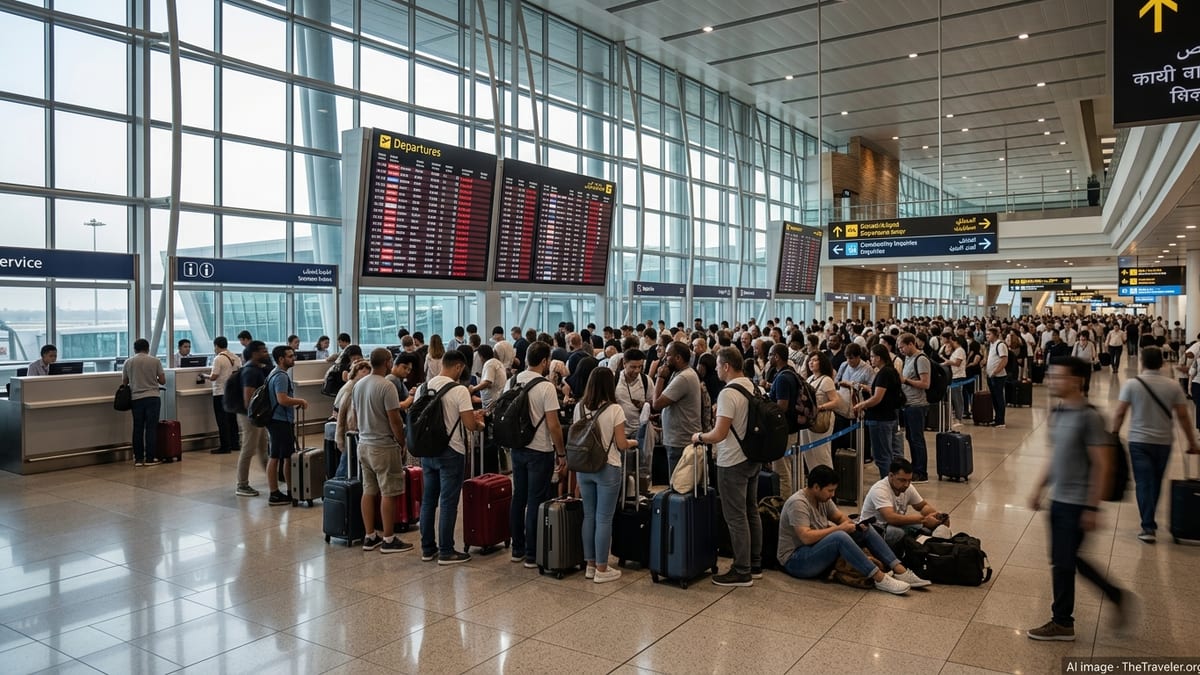
Airlines Slash Services Between Hong Kong, Taiwan and Japan
Publicly available airline notices show that multiple carriers have suspended or curtailed flights between Hong Kong, Taiwan and nearby island destinations as Bavi approaches the region. Routes linking Hong Kong with Taipei, Taichung, Kaohsiung, Okinawa and other coastal cities are among the hardest hit, with cancellations concentrated on July 10 and 11, when the storm’s impact is forecast to peak.
Information compiled from Hong Kong media coverage indicates that Hong Kong Express has cancelled dozens of flights over the weekend, including at least 18 round trips between Hong Kong and Taiwan’s three major cities. Services to Okinawa and Japan’s Ishigaki Island have also been either cancelled or postponed by 24 hours in an effort to keep aircraft and crews away from the strongest winds and heaviest rain.
China Airlines and EVA Air have likewise adjusted their Hong Kong schedules. Reports from travel and aviation outlets note that China Airlines has cancelled multiple Hong Kong to Taipei and Hong Kong to Kaohsiung services from Friday evening through Saturday, while EVA Air is suspending several Friday night flights and most Saturday rotations on the same routes. Additional disruptions remain possible as Bavi’s track and intensity continue to evolve.
Low cost and regional operators are taking similar steps. Hong Kong Airlines and Greater Bay Airlines have both announced cancellations of Hong Kong services to Taipei, Okinawa and Zhoushan over the coming two days, advising passengers to confirm flight status before heading to the airport.
Typhoon Bavi’s Track Raises Risk for Coastal Hubs
Forecasts referenced by regional news outlets describe Bavi as a strong typhoon tracking toward the East China Sea and the coastal provinces of Fujian and Zhejiang, with its outer circulation affecting Taiwan and the wider northern South China Sea. Meteorological projections suggest that Bavi will be closest to northern Taiwan late on July 10 into July 11, before making landfall along China’s southeastern coast.
The combination of powerful winds and intense rainfall is particularly challenging for aviation hubs clustered along the storm’s path. Hong Kong International Airport and Taiwan Taoyuan International Airport both sit on exposed coastal sites, meaning crosswinds, low visibility and potential flooding can quickly render runways unusable. Airlines have responded by consolidating schedules, moving departure times forward or backward, and positioning aircraft outside the projected impact zone.
Domestic and regional ferry links around Taiwan are also affected. Information issued through Taiwan’s transport channels indicates that several east coast and offshore island routes are suspending services from July 8 through July 11, reducing onward travel options for passengers whose flights are cancelled. Travelers returning from offshore islands have been urged to take advantage of remaining sailings before the worst of the weather arrives.
With Bavi described in some regional coverage as one of the strongest storms to threaten the area in recent years, authorities across mainland China, Taiwan and the wider region have been activating flood controls and contingency plans, adding further pressure on transport networks already operating near capacity during the school holiday season.
Flexible Ticket Policies Aim to Ease Passenger Disruption
Airlines are pairing cancellations with expanded flexibility for affected travelers. Public advisories from major carriers such as Cathay Pacific, China Airlines and several low cost operators outline temporary waivers of rebooking fees and, in some cases, fare differences for passengers travelling to or from impacted airports over the next several days.
China Airlines, for example, has published dedicated guidance for passengers holding tickets issued on or before early July for travel between July 9 and 11. Under the temporary policy, qualifying passengers whose flights are cancelled, heavily delayed or rescheduled by several hours may change to new dates on the same route and booking class without paying the usual reissue charges, provided travel remains within the ticket’s validity period.
Hong Kong based carriers have introduced comparable measures for customers booked between Hong Kong and Taiwanese destinations. According to airline statements quoted in regional news, Cathay Pacific is allowing one free change of date or destination within a defined window for tickets issued prior to the storm, while Hong Kong Airlines, Hong Kong Express and Greater Bay Airlines are offering fee waivers or simplified refund procedures for passengers on cancelled flights.
Travel industry observers note that such policies are increasingly standard for major weather events in East Asia, where tropical cyclones can disrupt operations several times each season. Nonetheless, passengers report crowded customer service lines and busy online channels as thousands attempt to secure new itineraries around Bavi’s expected landfall.
Major Airports Brace for Peak Impact on July 10–11
Operational updates from airport operators and media coverage point to the late hours of Friday, July 10, through the early morning of Sunday, July 12, as the most critical period for aviation in the region. Taiwan Taoyuan International Airport has indicated that all flights operated by Taiwanese carriers on July 11 are cancelled, while Friday evening and early Sunday services have been sharply reduced.
In Hong Kong, the schedule for July 10 and 11 shows a dense cluster of cancellations to and from Taipei and Kaohsiung, alongside suspensions of flights to Okinawa and other Japanese islands. While some long haul services remain on the board, airlines have warned that further adjustments are possible at short notice if Bavi changes speed or direction.
Ground transport around the airports is also under review. Hong Kong media reports mention the cancellation of selected cross border high speed rail services between Hong Kong West Kowloon station and Shanghai, as operators seek to avoid sending trains through areas expecting high winds and heavy rainfall. Taiwan’s high speed rail operator has indicated that trains remain scheduled at present but is applying special ticketing rules for passengers who choose not to travel during the typhoon warning period.
Airport authorities and transport operators are using social media feeds, mobile apps and public announcements to highlight the potential for long queues, crowded terminals and rapidly changing departure boards over the weekend.
Advice for Affected Travelers in the Region
Travel advisories compiled from airline and airport announcements consistently urge passengers to check flight status and transport updates before leaving home, rather than relying on itineraries issued days or weeks earlier. With cancellations concentrated around Saturday, July 11, but additional disruption possible on surrounding days, observers recommend allowing extra time for check in, security and immigration formalities.
Passengers whose flights are cancelled or significantly delayed are generally being encouraged to use airlines’ official mobile apps, websites or automated messaging links where available, as these channels may offer faster rebooking options than call centers. Some carriers are prioritizing automated reallocation onto the next available service on the same route, while others are inviting travelers to select alternative dates within the validity window of their tickets.
For those already en route or in transit, publicly available guidance advises staying close to official airport announcement boards and information desks, especially where connecting flights pass through Hong Kong or Taipei during the peak of the storm. Given the likelihood of knock on delays after Bavi moves inland, travelers heading to more distant destinations via these hubs are being warned to anticipate potential missed connections and overnight stays.
With Bavi still evolving, regional coverage suggests that further changes to flight schedules are probable over the coming 48 hours. Passengers are being reminded that conditions can improve or deteriorate rapidly near a major typhoon, and that airlines may restore or cancel services at short notice as updated forecasts become available.