


More news on this day
Passengers traveling through Manchester Airport on 2 September are experiencing a mix of short and more sustained delays, with disruption affecting a range of busy European leisure routes and selected long haul services, according to live flight tracking and airport information boards.
Get the latest news straight to your inbox!
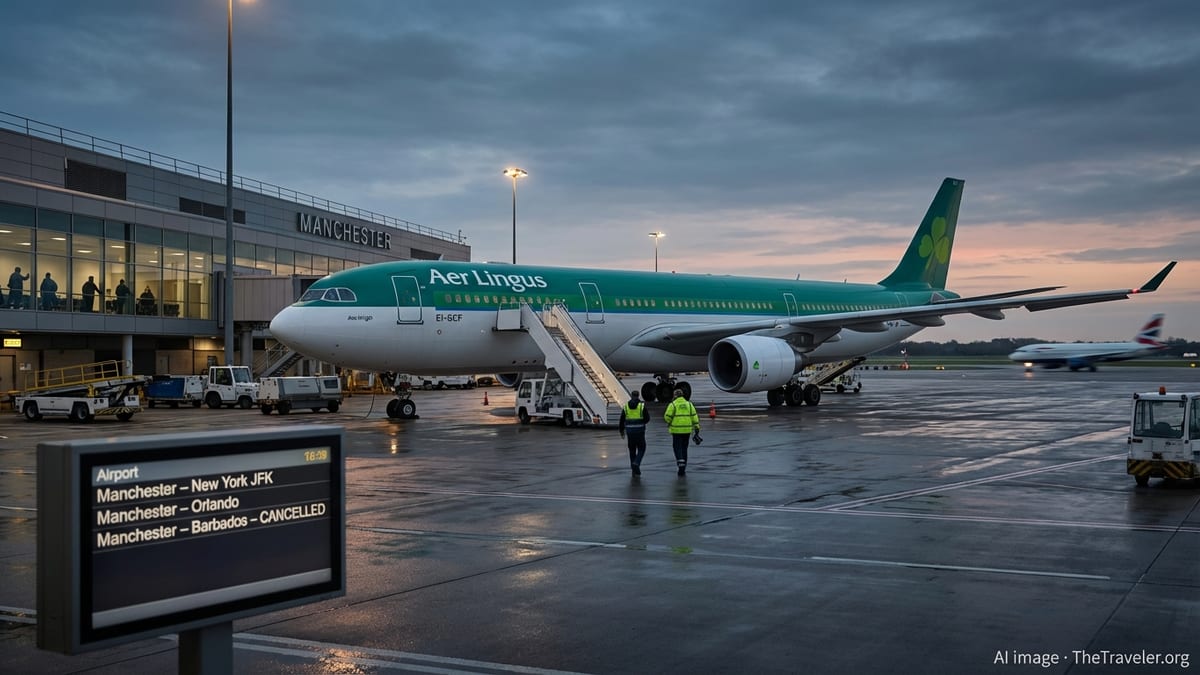
Overall delay picture across departures and arrivals
Publicly available flight trackers and airport information for Manchester Airport on 2 September indicate a medium level of disruption, with delays spread across the day rather than concentrated in a single shutdown period. Delays are most visible on popular short haul services serving Mediterranean holiday destinations, along with several inbound long haul flights arriving from overnight and early morning departures.
Airport-delay monitoring tools classify Manchester Airport on 2 September as experiencing moderate disruption, rather than severe congestion or gridlock. That places the airport in a middle band where a significant minority of flights are running behind schedule, while a large number still depart and arrive close to their planned times.
Arrivals data shows a sequence of services landing later than scheduled from hubs such as Doha, Toronto and Beijing, alongside leisure markets including Cancun and Dalaman. These late inbound flights can in turn create knock-on effects for later departures using the same aircraft, which is reflected in revised departure estimates across the live boards.
Departure boards for Manchester show rolling updates through the morning, afternoon and evening periods as airlines adjust timings. While many early wave departures operate more or less on time, a pattern of extended turnarounds and creeping delays emerges on some mid-morning and afternoon rotations, particularly on busy sun routes.
Key delayed routes and airlines on 2 September
According to live flight-status services tracking Manchester Airport on 2 September, a notable share of the delays are concentrated on short haul leisure services operated by low cost and holiday carriers. Flights to Mediterranean destinations such as Dalaman, Antalya, the Greek islands and Spanish coastal airports show revised arrival or departure times and, in some cases, extended holding on the ground.
Arrivals listings highlight delays on inbound services from major long haul gateways including Doha and Toronto, as well as flights from Beijing and Shanghai. These long haul arrivals, some of which are part of complex codeshare arrangements, often operate on tight turnaround schedules into Manchester, meaning any delay on the incoming leg increases the risk of a later-than-planned departure on the outbound sector.
Short haul European flights on carriers such as easyJet, Ryanair and TUI feature throughout the day’s schedule, and tracking data shows a mix of on-time and delayed movements among these operators. Some departures to popular holiday spots depart broadly as scheduled, while others run behind by varying margins, reinforcing the uneven nature of the disruption.
Additional monitoring sites that aggregate delay and diversion information also flag isolated instances of flights being rerouted or arriving later than expected at their final destination after leaving Manchester. These cases appear to be exceptions rather than an airport-wide pattern but add to the overall picture of a slightly stretched operation.
Impact by terminal and time of day
Manchester Airport’s three terminals all see a share of today’s delays, but the extent varies based on airline mix and time of day. Terminals handling a higher volume of low cost and leisure operations experience busier peaks, particularly in the early morning and late afternoon waves when multiple departures are scheduled just minutes apart.
Live departure boards indicate that the first bank of early morning flights contains a mixture of on-time and modestly delayed services, many of them bound for Spanish and Mediterranean destinations. As the day progresses into the mid-morning and lunchtime periods, a rolling pattern emerges where some flights depart roughly on schedule while others accumulate delays as aircraft and crews rotate through busier parts of the network.
Later in the day, long haul departures to hubs in the Middle East and beyond can be affected by the arrival times of inbound aircraft, which occasionally land behind schedule after extended sectors. This can push back boarding and departure times for evening services, creating a secondary cluster of delays that differs from the early morning leisure peak.
Passengers connecting through Manchester or relying on tight transfer windows are more exposed to these timing shifts, particularly when arriving from or departing to long haul destinations. Even when the airport as a whole is not classed as severely disrupted, moderate delays can still create missed connections and rebooking challenges at busier times.
How to check the full list of delayed flights
Travelers looking for the full, up-to-the-minute list of delayed flights at Manchester Airport on 2 September are advised to consult multiple live sources rather than relying on a single snapshot. The airport’s own departures and arrivals pages allow users to filter by date and terminal and to search by route or flight number, providing official schedule and status information that is regularly updated.
Independent flight-tracking platforms supplement this view with additional details such as historical performance, delay duration and in some cases real time aircraft positions. These services can be useful for confirming whether an inbound aircraft has left its origin airport on time, which often gives an early indication of potential knock-on delays to the return leg from Manchester.
Specialist flight-status portals that list arrivals and departures by airport and date can also be used to generate a near-complete manifest of the day’s operations. For 2 September, these tools show hundreds of scheduled movements at Manchester, with status fields indicating which flights are on time, delayed, en route or diverted.
Because flight status can change quickly, particularly during busy periods or when weather and air traffic conditions are variable, passengers are encouraged to recheck timings close to departure and to use airline apps, email notifications or text alerts where available. Combining official airport information with third party trackers generally offers the clearest real time picture of delays across the full schedule.
Advice for passengers flying through Manchester today
Given the moderate but uneven disruption at Manchester Airport on 2 September, passengers are being urged by published travel guidance to build extra time into their journeys. Arriving at the airport earlier than the minimum check-in recommendation can help absorb the impact of queues, gate changes and last minute schedule adjustments.
For those traveling on routes or with airlines that appear frequently in delay reports today, monitoring flight status from several hours before departure is prudent. If a significant delay is posted, passengers may have more flexibility to adjust ground transport, parking or hotel plans, reducing the risk of unnecessary waiting at the terminal.
Travel information services also highlight the value of understanding from which terminal a flight is operating, as Manchester’s three-terminal layout can add walking time between check-in, security and departure gates. Checking terminal information before leaving for the airport and following wayfinding signs on arrival can reduce stress when schedules are under pressure.
While the majority of flights are still operating, the pattern of rolling delays means that travel plans may not run exactly to timetable for many passengers. Staying informed through official channels and reputable tracking tools remains the most reliable way to navigate today’s changing schedule at Manchester Airport.
Manchester Airport live departures
Manchester Airport live arrivals
FlightStats arrivals for Manchester Airport, 2 September