


More news on this day
Air travelers across the United States faced mounting disruptions on September 2, 2026, as more than 896 flights were delayed and roughly 200 were canceled nationwide, with major hubs reporting cascading operational challenges and thousands of passengers struggling to reach their destinations.
Get the latest news straight to your inbox!
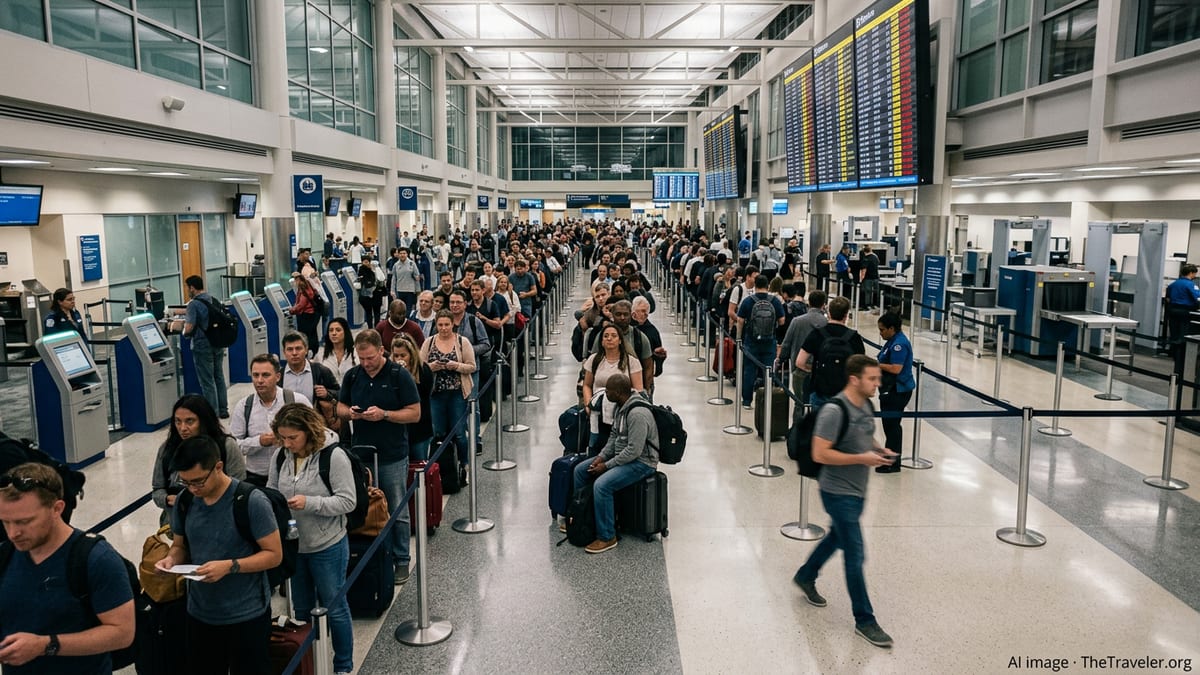
Nationwide Delays Hit Major Airport Hubs
Publicly available tracking data and travel-industry reports show that U.S. airspace experienced significant disruption on September 2, 2026, with flight delays and cancellations concentrated at the country’s largest hubs. More than 896 departures and arrivals were delayed and about 200 flights were canceled by later in the day, affecting coast to coast travel corridors.
Major airports including New York’s John F. Kennedy International, Newark Liberty, Chicago O’Hare, Atlanta, and Dallas Fort Worth reported some of the highest numbers of impacted flights, according to multiple aviation dashboards and travel-news coverage. These hubs function as critical connection points for domestic and international itineraries, so schedule problems at a few locations quickly rippled through airline networks.
While the totals remained below the most extreme meltdowns seen in recent years, the volume of impacted flights was still enough to snarl same-day travel plans for tens of thousands of passengers. Reports from flight-tracking services indicate that late-afternoon and evening departures were hit particularly hard, a pattern that often emerges when morning disruptions compound throughout the day.
Industry analyses note that disruptions of this scale rarely stay confined to a single calendar date. When aircraft and crew end up in the wrong locations, airlines can face knock-on delays and scattered cancellations over subsequent days, even after the initial weather or traffic constraints ease.
Mix of Storms, Staffing Strains, and Tech Problems
Travel-news outlets and aviation analysts point to a combination of severe late-summer thunderstorms, air traffic control constraints, and ongoing technology vulnerabilities as key drivers of the latest disruption. Thunderstorm activity across parts of the East Coast and Midwest led to temporary ground stops and rerouting, reducing the capacity of already busy flight corridors.
In several regions, air traffic flow management initiatives limited the rate of departures and arrivals, forcing airlines to hold aircraft at gates or on taxiways and to adjust schedules on short notice. These traffic-management steps are designed to maintain safety margins when convective weather or congestion threatens to overwhelm available airspace or controller staffing.
Operational strain has been an ongoing challenge for the U.S. aviation system, with prior government and industry reports documenting air traffic controller shortages and tight airline staffing levels. As demand for air travel has remained above many pre-pandemic benchmarks, the margin for absorbing weather or technical shocks has narrowed, increasing the likelihood that a localized problem will translate into nationwide delays.
Recent history underscores those vulnerabilities. In July 2026, an information-technology outage at a major U.S. carrier prompted a nationwide ground stop for that airline, delaying roughly a third of its schedule and canceling more than 200 flights. Earlier system incidents at other carriers and a 2024 technology outage affecting multiple airlines also triggered thousands of cancellations, highlighting how software and network failures can quickly become an industry-wide issue.
Passenger Impacts: Long Lines, Missed Connections, Frayed Itineraries
With nearly 900 delayed flights and about 200 cancellations in a single day, passenger impacts extended well beyond airport departure boards. Travelers at busy hubs reported extensive queuing at check-in counters, security checkpoints, and rebooking desks as airlines attempted to accommodate stranded customers and reconnect them with onward flights.
Missed connections were a particular concern at large transfer hubs, where itinerary timing is often tightly choreographed. When an early segment arrives late, passengers can lose protected connections and face long waits for the next available seat, especially on heavily booked routes at the tail end of the summer travel season.
Travel-industry guidance notes that disruptions on this scale can also affect baggage handling and aircraft utilization. Bags checked through to final destinations risk separation from passengers when itineraries are rebooked, while aircraft operating later in the day may depart out of position, further complicating recovery efforts and contributing to rolling delays.
Analysts point out that such events also carry financial and reputational implications for airlines and airports. Carriers must cover the operational costs of irregular schedules and may choose to provide vouchers or accommodations in certain circumstances, while airports face pressure on terminal facilities, concessions, and ground transport as passenger volumes remain elevated for longer periods.
What Travelers Can Do During Widespread Disruptions
Consumer advocates and travel organizations emphasize that during periods of heavy disruption, travelers benefit from monitoring their flight status frequently and using airline digital tools whenever possible. Airline websites and mobile apps typically display schedule changes and gate information before airport screens update, and many carriers allow same-day flight changes or rebooking through self-service channels.
Public information from the U.S. Department of Transportation highlights that passengers are entitled to a refund when a flight is canceled and the traveler chooses not to rebook, or when a significant schedule change results in a traveler declining alternative arrangements. Separate from these refund rights, each airline’s customer service plan or contract of carriage outlines when it may voluntarily provide meals, hotel stays, or ground transportation during disruptions, particularly when the cause is within the carrier’s control.
Travel analysts recommend that passengers review these policies before they fly, especially during seasons with volatile weather or when large operational issues have recently affected specific carriers. Knowing in advance what a given airline publicly commits to offer can help travelers advocate more effectively at the airport or through call centers and online chat.
Experts also encourage building extra time into itineraries when connecting through delay-prone hubs or during peak travel periods. Early-morning departures tend to offer the best odds of operating on time because they are less affected by earlier disruptions. Maintaining flexibility on travel dates, keeping essential items in carry-on bags, and considering alternative airports within driving distance can all reduce the personal impact when delays and cancellations escalate.
Disruptions Reflect a System Under Sustained Pressure
Recent disruption patterns, including the latest wave of delays and cancellations, reflect a U.S. air travel system operating close to capacity as high demand meets infrastructure and staffing limits. Government flight performance data from recent years show elevated rates of delays and cancellations during peak travel seasons, particularly when major storms, technology incidents, or extended operational issues intersect.
Policy analyses from federal agencies and independent researchers have pointed to several underlying factors: persistent air traffic controller staffing gaps, airline schedule growth outpacing support resources at some airports, susceptible legacy IT systems, and a congested national airspace around the busiest metro areas. Together, these pressures mean that relatively routine summer thunderstorms or a brief system outage can escalate into widespread gridlock across multiple carriers.
Industry observers note that airlines and regulators have proposed various measures to strengthen resilience, from technology modernization and expanded controller hiring to more conservative scheduling during periods of known constraint. Progress has been uneven, however, and the experience of passengers on September 2 illustrates how even incremental shocks can reshape a travel day for large numbers of people.
With fall and holiday travel seasons ahead, the combination of high demand and structural constraints suggests that travelers may continue to see pockets of severe disruption. The latest episode of nearly 900 delays and about 200 cancellations serves as another reminder that in the current environment, planning for contingencies has become an essential part of flying in the United States.
https://travel.yahoo.com/news/articles/over-896-flights-delayed-200-145631097.html
https://www.airhelp.com/en/flight-disruptions/us-flight-delays-cancellations-02092026/
https://www.transportation.gov/airconsumer/airline-customer-service-dashboard