


More news on this day
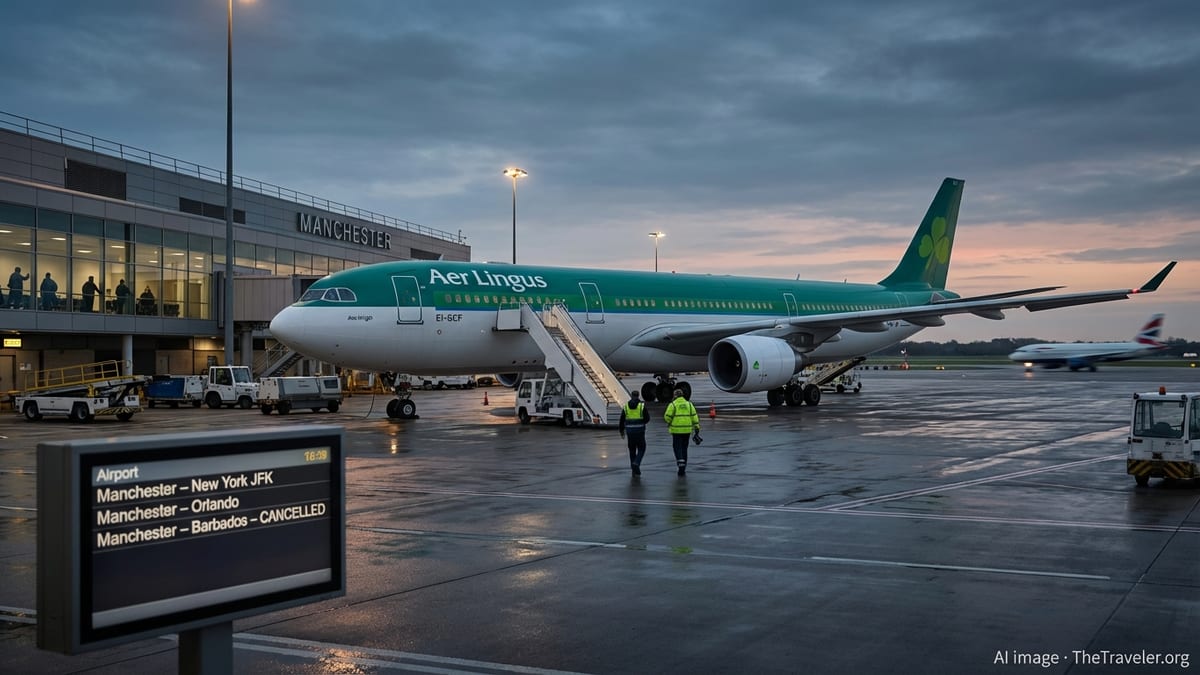
Passengers using Manchester Airport on September 2 are facing a mixed picture of disruption, with live departure boards and tracker sites showing a spread of delays across all three terminals rather than a single, headline-grabbing incident.
Get the latest news straight to your inbox!
Overall disruption level and how today compares
Publicly available flight-tracking tools and the airport’s own online departure board indicate that Manchester Airport is experiencing a moderate level of disruption today, September 2. Delays are spread across the schedule, with some individual services running significantly late while many others are departing close to their planned time.
Monitoring platforms that classify airport performance by delay severity generally place Manchester in the middle of the scale today, rather than in the “severe” or “gridlock” categories sometimes seen during major weather or airspace events. The pattern is more in line with a busy late-summer day where tight schedules and high load factors leave limited margin for recovery when an inbound aircraft or air traffic slot runs late.
Capacity planning documents for the airport’s Summer 2026 season show that daytime runway and stand usage is tightly managed, especially in peak waves between early morning and early afternoon. When flight programmes run close to their declared limits in these peak hours, even short knock-on delays can ripple across the board, contributing to the patchwork of late departures recorded today.
Morning peaks: short haul delays and knock-on effects
In the early and mid-morning period, short haul flights to European leisure and city destinations show some of the most visible disruption. Live departure feeds list services to holiday hotspots among those departing behind schedule, often by 30 to 60 minutes. These routes typically rely on quick turnarounds of aircraft that have already operated at least one leg before arriving in Manchester, magnifying the impact of earlier timekeeping issues.
Reports from tracker sites indicate that several inbound flights landed later than planned in the first wave of the day. When those aircraft are rostered to operate outbound sectors shortly afterwards, ground handling teams have limited time to turn them around, which can result in subsequent departures leaving the gate late even if local conditions are otherwise normal.
The combination of high seasonal demand, packed aircraft and fixed runway slots adds further pressure. Where a departing service misses its assigned slot because of a late pushback or extended boarding, it may be held on the ground until a new slot becomes available. That, in turn, feeds into the overall picture of delays on the departures board, particularly to popular Mediterranean destinations.
Long haul services and transatlantic delays
Long haul operations from Manchester, particularly on transatlantic routes, also show notable delays in today’s schedule. According to live data from one major flight-tracking provider, Virgin Atlantic flight VS073 from Manchester to Orlando on September 2 has an updated departure time of 1:11 p.m., significantly later than its originally scheduled morning pushback, with the estimated arrival time in Florida also adjusted accordingly.
Other long haul services to North America appear more in line with schedule. For example, separate tracker data for Virgin Atlantic flight VS075 on the same Manchester to Orlando route today shows that this service departed at 11:55 a.m. local time and is projected to arrive in Orlando at 3:34 p.m. local time, indicating that not all long haul departures are affected to the same extent.
Industry coverage suggests that long haul delays from Manchester today often originate with late-arriving inbound aircraft from previous sectors, weather-related routing in the North Atlantic airspace, or air traffic control restrictions that adjust individual flight plans. Because these flights operate on longer block times and work within regulated transatlantic tracks, even modest schedule changes can push departures into later windows, as reflected in today’s departure board.
Terminal-by-terminal picture across the three terminals
Manchester Airport’s three terminals are all handling delayed flights today, although the intensity of disruption appears to vary by airline and time band. Terminal 1, which is home to a mix of legacy and low-cost carriers, shows scattered delays on short haul European routes throughout the day. Passengers on these services are commonly advised via online tools to keep checking their flight status as airlines adjust departure estimates.
Terminal 2, which has become the main base for a number of long haul and network carriers, is where some of the more substantial long haul delays are visible, including the later-than-planned Orlando departure described above. Real-time feeds from third-party trackers list a mixture of on-time and delayed departures from this terminal, reinforcing the picture of selective rather than systemic disruption.
Terminal 3, largely handling domestic and regional European flights, appears somewhat less affected at certain points in the schedule, although delays still appear on specific services. Airline and airport information available online show that terminal allocations remain standard today, meaning passengers can continue to rely on previously advised check-in locations even where departure times have shifted.
Guidance for passengers flying from Manchester today
Travel information services advise anyone flying from Manchester Airport on September 2 to monitor their flight closely using live departure boards on the airport’s website and recognised flight-tracking platforms. These tools are being updated throughout the day with revised departure times, gate changes and, where applicable, indications that a flight has departed, is boarding or has been cancelled.
Consumer-facing guidance on UK and EU air passenger rights notes that travellers experiencing prolonged delays may be entitled to care and assistance from their airline, including refreshments and communication support once certain thresholds are met. In some cases, if the cause of delay falls within the airline’s control and the delay length exceeds set limits, financial compensation may also be available under EU261 and its UK equivalent.
Passenger advice published by travel organisations stresses the importance of arriving at the airport in line with airline check-in recommendations, even if online tools show a delay. Check-in and baggage drop deadlines generally remain linked to the original schedule unless the airline has explicitly advised otherwise. Once at the airport, travellers are encouraged to proceed through security promptly and stay close to the departure gate or main concourse screens so they can respond quickly to any final boarding calls or further time changes.
For those with onward connections, either on separate tickets or via other hubs, today’s disruption underlines the value of allowing generous connection times and checking the rebooking policies that apply to their itinerary. Publicly available information suggests many carriers continue to offer online self-service options for rebooking when delays make planned connections unworkable, although the exact choices depend on fare type and route.
Manchester Airport official live departures board
Plane Finder live Manchester Airport departures
Trip.com live status for Virgin Atlantic VS073 (Manchester to Orlando)
Trip.com live status for Virgin Atlantic VS075 (Manchester to Orlando)